Our verdict
Located in Kyoto's Higashiyama district at the foot of the Sanneizaka slope, 京ゆば工房 specialises in yuba, the delicate skin formed when soy milk is heated, a preparation deeply embedded in Kyoto's Buddhist culinary tradition. The workshop format places the craft of yuba-making at the centre of the visit, making it a reference point for understanding Kyoto's shojin ryori heritage rather than simply a place to eat.

Pearl is the En Primeur Club membership app, where members save venues, book tables and use the concierge.
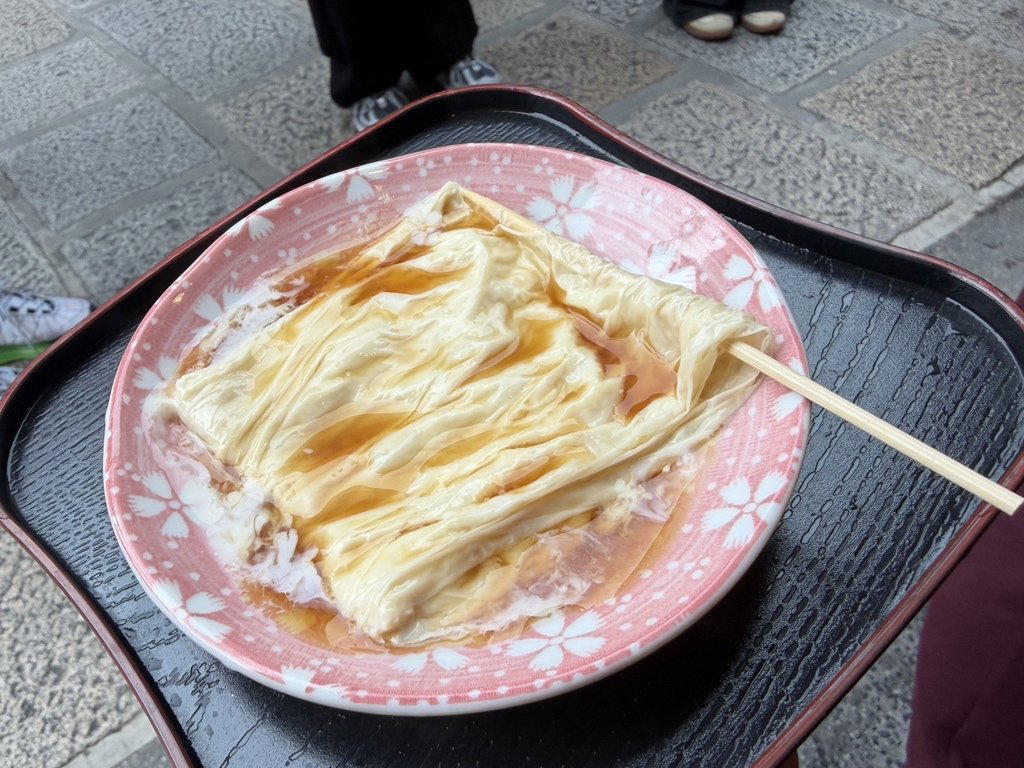
The menu
What to order
- Fresh_yuba
Yuba and the Architecture of Kyoto's Soy Tradition
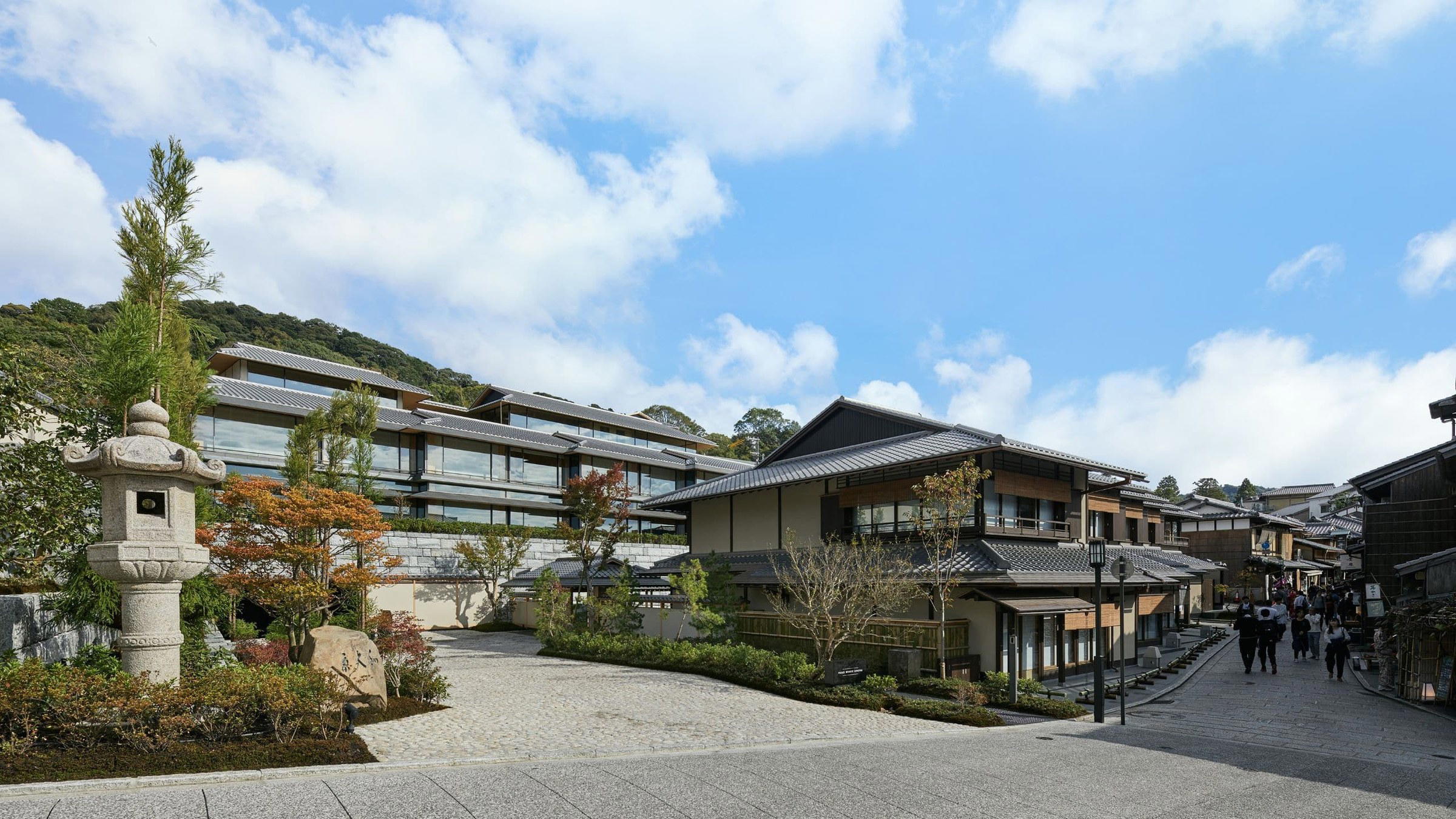
Higashiyama in autumn, the maples along Ninenzaka turning copper, the stone-paved lanes narrowing as you climb toward Kiyomizudera, is when Kyoto's craft food producers draw their steadiest crowds. Among the workshops tucked into this district, 京ゆば工房 sits at the address 玉水町71-8, east of the Ōtani-bashi junction on 東大路, close enough to the temple approaches to catch foot traffic from serious visitors rather than the souvenir-only crowd. The setting matters because it places this yuba workshop inside a neighbourhood that has historically separated Kyoto's living artisan culture from its museum pieces.
Yuba, the thin film that rises and is lifted from the surface of heated soy milk, sits at the intersection of two dominant threads in Kyoto's food identity: Buddhist temple cooking (shojin ryori) and the city's centuries-long role as a supplier of refined plant-based ingredients to the imperial court. Unlike tofu, which requires coagulants and pressing, yuba is a purer expression of the soy milk itself; its quality depends almost entirely on the soy beans and the heat control of whoever is making it. That dependency on process over ingredient transformation is why the workshop format, rather than the restaurant format, makes sense as the primary vehicle for presenting it.
What the Workshop Format Reveals
Menu architecture at a yuba specialist is not organised around courses in the kaiseki sense. Where Kyoto's high-end kaiseki counters, Gion Sasaki, Kikunoi Honten, or Mizai, structure their progression around seasonality, protein, and the interplay of cooking methods, a yuba workshop structures its offering around states of the ingredient itself: fresh yuba lifted directly from the pot (nama yuba), yuba that has been dried or pressed into secondary forms, and preparations that use yuba as a wrapping or enriching agent in broths and simmered dishes. The menu, in this sense, is a taxonomy of the ingredient rather than a narrative of the season.
This is a meaningful distinction. At Hyotei or Isshisoden Nakamura, the kaiseki sequence teaches you about Kyoto's relationship with time and transition. At a yuba workshop, the sequence teaches you about a single ingredient's range. Both are legitimate editorial positions, but they serve different kinds of curiosity, and visitors who arrive at 京ゆば工房 expecting kaiseki pacing will read the format wrong.
Nama yuba, pulled from the surface of soy milk and served with minimal accompaniment, is where the technique is most transparent. The correct comparison here is not with a restaurant course but with a direct demonstration: you are watching and tasting craft in its least mediated state. This is closer to visiting a Nishiki Market tofu producer or a Uji matcha grower than it is to sitting at a kaiseki counter, and the visit should be approached accordingly.
Positioning Within Kyoto's Specialty Food Scene
Kyoto's food identity at the premium end is dominated by kaiseki, which means the city has a large and well-documented tier of ¥¥¥¥ tasting-menu restaurants. The specialty producer and workshop sector, yuba, tofu, fu (wheat gluten), pickles, matcha, occupies a different tier and serves a different function. It is where ingredient literacy is built, and where visitors who want to understand why Kyoto's kaiseki tastes the way it does can trace the supply chain back toward its source.
Within that specialty segment, yuba producers in Kyoto tend to cluster in two areas: Nishiki Market and the Higashiyama temple approaches. The Higashiyama positioning of 京ゆば工房 aligns it with a visitor who is already moving through the heritage corridor, Kiyomizudera, Ninenzaka, Sannenzaka, rather than one navigating a market-focused itinerary. That foot traffic pattern shapes who uses the workshop and how they engage with it.
For context on what distinguishes Kyoto's yuba tradition from its counterparts in Tokyo or Nikko: Kyoto-style yuba tends to be served fresh (nama) rather than dried, a preference that developed alongside the city's Buddhist temple economy, where fresh daily production was practical and the delicacy of the fresh product was prized. Tokyo's yuba tradition, developed separately and in part through trade routes from Kyoto, skews more toward dried yuba used in simmered preparations. The distinction is not absolute, but it explains why Kyoto workshops tend to foreground the fresh-pulled experience as the primary product.
How This Fits Into a Kyoto Itinerary
Visitors building a food itinerary around Kyoto's ingredient culture rather than its restaurant culture will find 京ゆば工房 relevant alongside temple visits in the Higashiyama zone. The workshop is not a substitute for dinner at Gion Sasaki or lunch at a kaiseki specialist; it occupies a different part of the day and a different part of the culinary vocabulary. A logical sequence for a serious food visitor might move from a morning workshop visit here to afternoon exploration of the Nishiki food market, before an evening reservation at one of Kyoto's formal dining rooms.
For those extending their Kansai itinerary beyond Kyoto, the regional context is worth noting. HAJIME in Osaka and akordu in Nara each represent different registers of the region's dining identity, while Goh in Fukuoka offers a point of comparison for how Japanese regional cuisines are being reinterpreted at the fine-dining level. None of these replace what a yuba workshop in Higashiyama offers, which is proximity to an ingredient tradition rather than to a chef's interpretation of it.
Autumn (October to November) and the early spring cherry blossom period (late March to early April) are the highest-traffic windows in the Higashiyama district. Visiting midweek during these periods will reduce congestion on the approach lanes. Summer in Kyoto is humid and often extremely hot, but the early mornings in Higashiyama remain navigable and the neighbourhood is quieter before 9am.
For a broader picture of where this workshop fits within Kyoto's food and restaurant scene, EP Club's full Kyoto restaurants guide covers the city's kaiseki tier, specialty producers, and neighbourhood-by-neighbourhood dining character in detail.
Know Before You Go
- Address: 東大路松原上る2丁目玉水町71-8, 東山区, 京都市 605-0851
- District: Higashiyama, close to the Ninenzaka and Sannenzaka heritage lanes
- Leading season: Autumn foliage (October to mid-November) and early spring (late March to early April) for the neighbourhood at its most atmospheric; arrive early on these dates
- Getting there: The address sits on 東大路通, accessible by bus from Kyoto Station (routes 206 and 100 serve the Higashiyama zone); the nearest bus stop is Higashiyama-Yasui or Kiyomizu-michi
- Booking: Contact details are not currently listed; walk-in availability should be confirmed in advance through the venue directly or via local concierge
- Context: This is a workshop and specialty producer, not a kaiseki restaurant; plan it as a mid-morning or early afternoon visit rather than a primary dining event
Frequently asked questions
What is the signature dish at 京ゆば工房?
The workshop does not operate around a fixed menu in the kaiseki sense, so the concept of a single signature dish is less applicable than at a formal restaurant. The central experience at any Kyoto yuba specialist is nama yuba: fresh yuba lifted directly from the surface of heated soy milk and served with minimal seasoning. This is where the craft is most visible and the product most dependent on execution. For reference, Kyoto's kaiseki counters such as Kikunoi Honten use yuba as one element within a seasonal progression; here it is the subject of the entire visit.
How hard is it to get a table at 京ゆば工房?
The Higashiyama district peaks sharply during autumn foliage and cherry blossom season, when the approach lanes reach capacity by mid-morning. Compared to the city's high-demand kaiseki counters, some of which, like Mizai, require weeks of advance booking, a specialist workshop of this type typically operates on a walk-in or short-notice basis, but verifying this directly before visiting is advisable.
Is 京ゆば工房 suitable for visitors with no prior knowledge of yuba or Japanese food traditions?
The workshop format is particularly well-suited to visitors without specialist knowledge, because the ingredient itself is the teacher: watching yuba being lifted from heated soy milk makes the process immediately legible, even without cultural context. Kyoto's yuba tradition developed within Buddhist temple cooking over several centuries, which means the product has a documented history that local producers can often speak to directly. Visitors who have eaten at kaiseki restaurants in Kyoto, or at internationally recognised Korean-inflected Japanese counters such as Atomix in New York, will find the workshop a useful backstep into the ingredient logic that underlies those more composed formats.
Comparable Options
A quick peer reference to anchor this venue in its category.
| Venue | Cuisine | Price | Awards | Notes |
|---|---|---|---|---|
| 京ゆば工房This venue (the venue you are viewing) | Kyoto Yuba Workshop | $1–10 | Not listed | Not listed |
| Gion Sasaki | Modern Kaiseki | $300–500 | 3 Michelin Stars · La Liste Top Restaurants | Kaiseki, Japanese |
| cenci | Innovative Italian-Japanese Fusion | $100–150 | 1 Michelin Star · World's 50 Best #76 | Italian |
| Ifuki | Sumibi Kappo Kaiseki | $200–300 | 2 Michelin Stars · La Liste Top Restaurants | Kaiseki |
| Kyokaiseki Kichisen | Kyoto Kaiseki | $200–300 | 2 Michelin Stars · La Liste Top Restaurants | Japanese |
| Kyo Seika | Modern Chinese Fine Dining | $150–200 | 1 Michelin Star · Tabelog Bronze #216 | Chinese |
Continue exploring
More in Kyoto
Restaurants in Kyoto
All restaurants in Kyoto →
Bars in Kyoto
All bars in Kyoto →
Hotels in Kyoto
All hotels in Kyoto →

Wineries in Kyoto
Browse all →
Details
- Rustic
- Cozy
- Casual Hangout
- Open Kitchen
- Street Scene
- A La Carte
- Vegetarian Friendly
Casual workshop atmosphere with visible yuba making and simple outdoor chairs.