
MASH Kyoto belongs to Kyoto’s practical bread culture rather than its ceremonious dining circuit: a takeout bakery near Shijo where the ritual is selection, timing, and carrying the day’s bread into the city. Tabelog selected it for Bread WEST “Tabelog 100” in 2020 and 2022, placing it within the region’s serious bakery conversation without turning the visit into a formal restaurant occasion.
Pearl is the En Primeur Club membership app — saves, bookings, and concierge access live there. Same editors, same standards.
- Address
- Japan, 〒600-8401 Kyoto, Shimogyo Ward, Torocho, 568
- Phone
- +81 75-352-0478
- Website
- mashkyoto.com
 Saves & bookings on Pearl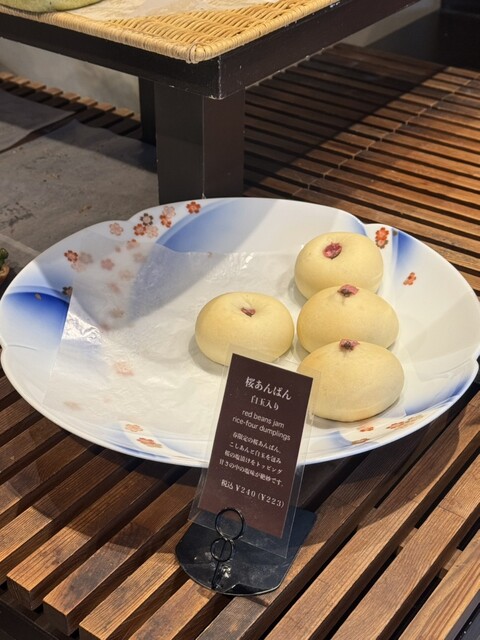
South of Shijo, Kyoto’s food rhythm shifts from temple-route grazing to the weekday grammar of commuters, hotel guests, office workers, and residents buying something portable before the day starts. A bakery counter suits that rhythm better than a dining room. Bread in Kyoto is less Western import than daily object: bought early, carried carefully, eaten later with coffee, tea, or between appointments. MASH Kyoto belongs to that habit. The point is not a long meal, but arriving with intent, choosing quickly, and understanding that takeout has etiquette.
Kyoto bread culture rewards timing over ceremony
Kyoto is usually framed through kaiseki, wagashi, tofu, tea, and counter cuisine, but its bakery culture is a serious parallel track. The city has absorbed European bread technique into Japanese retail pacing: compact shops, limited display space, individual portions, and customers expected to move through a counter without turning the room into a lounge. Here, the format is takeout, not café dining. There is no afternoon to build around a table. The ritual is closer to a market stop: read the case, decide, pay, and leave the narrow street clear for the next customer.
The Tabelog Bread WEST “Tabelog 100” selections in 2020 and 2022 are useful signals because bread shops rarely get the international shorthand given to sushi counters or kaiseki rooms. A Tabelog score of 3.70 places the bakery in a competitive local category where regularity matters as much as novelty. In Kyoto, that can be the more telling recognition. The city often rewards patience and repetition over spectacle, and bakeries are judged by how reliably they fit daily life.
That makes the visit different from a restaurant crawl. A guest in central Kyoto might schedule a formal meal at 3TOKU6MI Shijo karasuma ten, compare casual city eating with 551蓬莱, or look toward sharper contemporary formats such as [ki:] and Abbesses. A bakery stop operates on another register. It does not compete with those meals; it fills the spaces between them, especially where walking, trains, and hotel check-ins decide what lunch becomes.
The takeout counter as dining ritual
Takeout can look casual, but in Japan it carries rules. Do not block the frontage, treat a small shop as a waiting room, or assume nearby streets are an open dining area. This matters on narrow Kyoto roads, where cars, bicycles, delivery vehicles, and pedestrians share tight margins. MASH Kyoto’s no eat-in format makes the etiquette clear: the purchase is the experience, and eating happens elsewhere.
That structure suits bread. Unlike a tasting menu, where the guest surrenders pacing to the kitchen, a bakery hands pacing back to the city. Morning purchases can become a train snack, hotel breakfast supplement, or low-friction lunch between appointments. The categories are bread, sandwiches, and sweets, placing the shop in the broad Japanese bakery tradition rather than the pâtisserie-only lane. Think in use-cases rather than courses: something for immediate eating, something durable enough to carry, something sweet if the day is built around walking.
The useful comparison is not with Kyoto’s higher-priced Japanese dining rooms, but with other low-ceremony city formats. Saketosakana DNA sits in izakaya territory; Shinjuku Menya Fuuka belongs to the affordable noodle rhythm; Kanzan and Wagokoro Izumi point toward more formal Japanese dining expectations. A bakery counter asks less time and money, but sharper timing. Arrive late and the choice narrows. Arrive on the wrong day and the plan fails. That is the operating logic of a small specialist shop, not an inconvenience.
For travelers, the strongest move is to treat the bakery as part of a central Kyoto route, not a standalone expedition. Shijo and Karasuma form one of the city’s practical spines, with subway access, department stores, business hotels, and easy onward movement toward downtown, Higashiyama, or Kyoto Station. Pair a bread stop with a morning walk or onward train rather than forcing it into a kaiseki-led day. For older sweet traditions, Aburi Mochi Honke Nemoto Kazariya shows another Kyoto logic: fixed heritage, destination sweets, and a slower pilgrimage pattern.
How to place it in a Kyoto itinerary
MASH Kyoto’s practical value is how little ceremony it requires. Credit cards are accepted, while electronic money and QR code payments are not part of the setup, so do not assume every cashless habit transfers. Reservations are listed as available, but the core experience remains retail takeout rather than a seated meal. The shop is non-smoking; private rooms and private use are not part of the format; parking is not provided, reinforcing arrival on foot or by public transport rather than as a drive-up stop.
Kyoto rewards travelers who separate meal types instead of forcing every address into the same hierarchy. A bakery need not perform like a counter restaurant, and a counter restaurant should not be judged by bakery convenience. Use Our full Kyoto restaurants guide for the city’s broader dining map, then layer in Our full Kyoto hotels guide, Our full Kyoto bars guide, Our full Kyoto wineries guide, and Our full Kyoto experiences guide if the trip needs structure beyond meals.
For readers building a wider Japan file, the same logic applies across cities: match format to moment. A focused stop such as -Grilled beef Sukiyaki- KAMAKURA TANUKIAN 鎌倉 たぬき庵 in Kamakura asks for a different appetite than. 鮪と炭火焼き うお炭 秋葉原店 in Tokyo.cafe in Osaka.know in Kumamoto, (Shoku) Vietnam in Kawasaki, or [Curry Senmon Ten] Maruyama Kyoju. in Sapporo. Even outside Japan, the format-first approach holds for Jōdo Saké Bar in Los Angeles and Onigiri Time in Pasadena. The smart read on Kyoto’s bakery culture is simple: do not overcomplicate it. Buy well, move on, and let the city decide when the bread becomes the meal.
- French bread baguette
- Epi bread
- Kyoto wagashi-style sweet breads
- Purple sweet potato anpan "Hana no Iroha"
- Matcha anpan "Fujitsubo"
- Melon pan (cherry blossom style)
Style and Standing
Comparable venues to calibrate price, style, and recognition.
| Venue | Cuisine | Price | Notes |
|---|---|---|---|
| MASH KyotoThis venue — the venue you are viewing | Kyoto bakery & sweet breads | $ | Not listed |
| Kamesuehiro | Traditional Kyoto Wagashi (Japanese Sweets) | $ | Nakagyō |
| Nijo Wakasaya Teramachi ten | Traditional Kyoto wagashi & kakigori cafe | $ | Nakagyō |
| Ramen Tsurumusha | Kyoto-style Ramen Shop | $ | Ukyō |
| Takagi Coffee Ten Takatsuji honten | Japanese kissaten & coffee shop | $ | Shimogyō |
| Okonomiyaki Yoshino | Traditional Okonomiyaki & Teppanyaki | $ | Higashiyama |
Recognition history
Dated appearances from independent guides and award organizations, with the underlying list record or original source where available.
Tabelog 100 #76 · No. 76
Tabelog · Tabelog 100 - Bread - WEST - 2022
Continue exploring
More in Kyoto
Restaurants in Kyoto
Browse all →


Bars in Kyoto
Browse all →


Hotels in Kyoto
Browse all →

Wineries in Kyoto
Browse all →
At a Glance
- Cozy
- Classic
- Solo
- Casual Hangout
- Standalone
- Historic Building
- Design Destination
Current opening hours
- Monday
- 8 AM–7:30 PM
- Tuesday
- Closed
- Wednesday
- Closed
- Thursday
- 8 AM–7:30 PM
- Friday
- 8 AM–7:30 PM
- Saturday
- 8 AM–7:30 PM
- Sunday
- 8 AM–7:30 PM
Hours can change for holidays and private events. Last verified .
Warm, nostalgic bakery atmosphere in a traditional Kyoto townhouse, with displays packed with inventive breads; feels like a compact ‘bread wonderland’ more suited to quick visits and takeaway than lingering.