

Michelin Plate · Black Pearl 1 Diamond
Our verdict
Rong Pao brings Sichuan cooking to Beijing's Chaoyang district at a level that has earned consecutive Michelin Plate recognition in 2024 and 2025. The kitchen works within the established grammar of the cuisine, heat, numbing spice, and layered aromatics, while operating in a city where Sichuan restaurants must compete for space against deep-rooted Beijing and northern Chinese traditions. It sits in the mid-to-upper price tier, comparable to French contemporary rooms like Jing and well below the city's ¥¥¥¥ bracket.

Pearl is the En Primeur Club membership app, where members save venues, book tables and use the concierge.
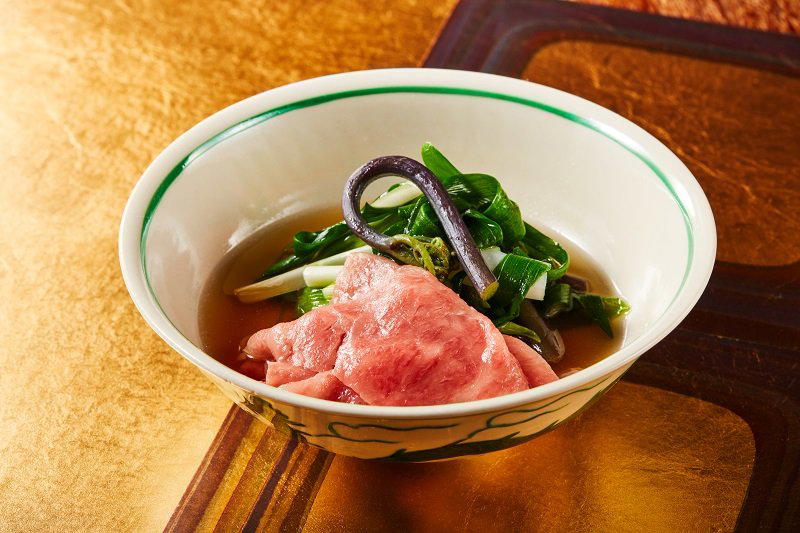
The menu
What to order
- Plateau loach hot pot with green Sichuan peppercorns
- Quick-fried pork liver and kidney
Sichuan in the Capital: A Cuisine Playing Away From Home
Sichuan food has always travelled well within China, but it travels differently when it lands in Beijing. The capital's own culinary gravity pulls toward roasted meats, wheat-based staples, and the subtler salinity of northern Chinese cooking. A Sichuan kitchen operating in Chaoyang is, in that sense, making an argument: that the logic of málà, the numbing, fiery interplay of Sichuan peppercorn and chilli, can hold its own against a dining culture with very different instincts about heat and seasoning. Rong Pao, positioned in the Baiziwan South corridor of Chaoyang, has been making that argument with enough consistency to earn Michelin Plate recognition in both 2024 and 2025.
The Michelin Plate sits below the starred tier but carries a clear signal: inspectors have visited, assessed the kitchen, and found the cooking worthy of attention. In Beijing's Sichuan category, that distinction separates a small group of restaurants from a much larger field of casual and mid-market operators. For context, the city's ¥¥¥¥ bracket is dominated by regional Chinese kitchens focused on Chao Zhou, Taizhou, and Beijing cuisine itself. Rong Pao operates at ¥¥¥, a tier shared with French contemporary rooms and upscale casual formats, which means it competes on perceived value as much as culinary authority.
The Ritual of a Sichuan Meal
Eating Sichuan food well is less about ordering individual dishes and more about managing a sequence. The cuisine is built around contrast, cool and gelatinous against scorching oil, fresh aromatics against deep fermentation, the slow creep of numbing spice against the immediate punch of dried chilli. A table that rushes through a Sichuan menu misses the cumulative effect the kitchen is engineering. The ritual here demands patience: cold dishes first, to calibrate the palate; then the main event of wok-fired and braised preparations; then something lighter to close.
At a Beijing address like Rong Pao, that ritual carries an additional layer. The city's diners tend toward a certain restraint in spice tolerance compared to the Chengdu baseline, and serious Sichuan kitchens operating in the capital often calibrate accordingly, preserving the structural logic of the cuisine while allowing for some modulation. This is not dilution; it is adaptation, and it is a tension that has defined how Sichuan food travels across China for decades. Restaurants that hold the calibration well earn repeat business and, eventually, the kind of sustained critical recognition that consecutive Michelin acknowledgment implies.
Chaoyang's Dining Position
Chaoyang is Beijing's most internationally oriented district, home to embassy clusters, multinational office corridors, and a dining scene that reflects both global and regional Chinese ambition. The Baiziwan South area sits in the eastern stretch of the district, away from the high-visibility corridors of Sanlitun and Workers' Stadium. Restaurants that build reputations in this part of Chaoyang tend to rely on word-of-mouth and repeat visits rather than foot traffic or tourist proximity.
Within Beijing's broader Sichuan restaurant tier, Rong Pao's position is instructive. It sits alongside other Michelin-recognised Sichuan addresses in a city where the cuisine has carved out a distinct premium niche, separate from the homestyle hotpot format that dominates volume. For comparison, Chengdu-based Sichuan dining at the highest level, represented by rooms like Yu Zhi Lan and Fang Xiang Jing, operates in the cuisine's home territory with the full weight of local ingredient sourcing and culinary lineage. A Beijing address must compensate through kitchen discipline and sourcing rigour rather than geographic proximity to the tradition.
Peer Context in Beijing
Beijing's mid-to-upper tier Chinese restaurant scene has become increasingly segmented. Regional Chinese cuisines, Cantonese, Sichuan, Taizhou, Chao Zhou, each occupy distinct positions in the hierarchy, and the Michelin framework has been a useful tool for mapping those positions since the guide entered Beijing. Among the restaurants in EP Club's Beijing coverage, Chef 1996 and Ji Chuan represent the Sichuan category alongside Rong Pao, while Gongyuan Shulou, Lao Chuan Ban, and Yibin each address different segments of the city's Chinese dining spectrum. The Sichuan tier in Beijing is competitive enough that two consecutive Michelin Plate awards represent a sustained performance, not an anomaly.
For readers moving between Chinese cities, the contrast in Sichuan dining registers is worth noting. Xin Rong Ji in Chengdu operates in a different culinary language entirely. Further afield, 102 House in Shanghai and Ru Yuan in Hangzhou illustrate how premium Chinese regional dining adapts to its host city's expectations, and Chef Tam's Seasons in Macau, Imperial Treasure Fine Chinese Cuisine in Guangzhou, and Dai Yuet Heen in Nanjing each represent a version of serious Chinese restaurant ambition in their respective markets. Rong Pao belongs to this broader pattern of regional Chinese kitchens operating with formal recognition outside their home province.
Planning Your Visit
Know Before You Go
- Cuisine: Sichuan
- Price range: ¥¥¥ (mid-to-upper tier; comparable to upscale casual and French contemporary rooms in Beijing)
- Recognition: Michelin Plate 2024 and 2025
- Location: Baiziwan South 2 Road, Chaoyang District, Beijing (postal code 100124)
- Hours:; verify ahead of arrival
- 4.5 from early review base
For broader planning, see our full Beijing restaurants guide, our full Beijing hotels guide, our full Beijing bars guide, our full Beijing wineries guide, and our full Beijing experiences guide.
Frequently asked questions
Is Rong Pao Michelin-listed?
Rong Pao has received recognition including: Michelin Plate (2025); Michelin Plate (2024).
What do regulars order at Rong Pao?
EP Club does not hold verified dish-level data for Rong Pao's current menu. At a ¥¥¥ Sichuan restaurant with consecutive Michelin Plate recognition, the standard approach is to build a table around contrast: one numbing-hot dish, one cold appetiser, and a slow-braised centrepiece. Ask staff what is in season or prepared that day rather than anchoring to a fixed list.
What's the price range at Rong Pao?
Pricing at Rong Pao is listed as ¥¥¥.
Where is Rong Pao in Beijing?
Rong Pao is located at China, Beijing, Chaoyang, Baiziwan South 2 Rd, 1725号, 77 邮政编码: 100124, Beijing.
Is Rong Pao reservation-only?
Given the ¥¥¥ price point and two consecutive Michelin Plate awards (2024 and 2025), securing a table in advance through the restaurant directly or via a concierge is advisable, particularly for weekend evenings.
What's the standout thing about Rong Pao?
The most concrete differentiator is sustained external validation: back-to-back Michelin Plate recognitions in 2024 and 2025 place Rong Pao within a small group of Beijing Sichuan restaurants earning consistent guide-level acknowledgment. In a city where Sichuan cooking competes against the capital's own culinary defaults, that consistency carries weight.
A Lean Comparison
| Venue | Cuisine | Price | Awards | Notes |
|---|---|---|---|---|
| Rong PaoThis venue (the venue you are viewing) | Yibin Sichuan Cuisine | Not listed | Michelin Plate · Black Pearl 1 Diamond | Not listed |
| Jing | Modern French with Asian Influences | $300–500 | 1 Michelin Star · Black Pearl 1 Diamond | French Contemporary |
| Xin Rong Ji (Xinyuan South Road) | Taizhou Chinese Fine Dining | $300–500 | 3 Michelin Stars · World's 50 Best #84 | Taizhou |
| Chao Shang Chao (Chaoyang) | Modern Teochew (Chaoshan) Fine Dining | $200–300 | Michelin Plate · La Liste Top Restaurants | Chao Zhou |
| Lamdre | Modern Plant-Based Chinese Vegetarian | Not listed | 2 Michelin Stars · World's 50 Best #17 | Vegetarian |
| Jingji | Imperial Beijing Royal Cuisine | $200–300 | 2 Michelin Stars · La Liste Top Restaurants | Beijing Cuisine |
Recognition history
Dated appearances from independent guides and award organizations, with the underlying list record or original source where available.
Michelin Plate
Michelin
Black Pearl 1 Diamond
Black Pearl
Full recognition history (3 entries)
Michelin Plate
Michelin
Continue exploring
More in Beijing
Restaurants in Beijing
All restaurants in Beijing →
Bars in Beijing
All bars in Beijing →

Details
- Elegant
- Sophisticated
- Business Dinner
- Special Occasion
- Hotel Restaurant
- Extensive Wine List
- Sommelier Led
- Local Sourcing
- A La Carte
- Wine
- Sichuan Sparkling Tea
- Vegetarian Friendly
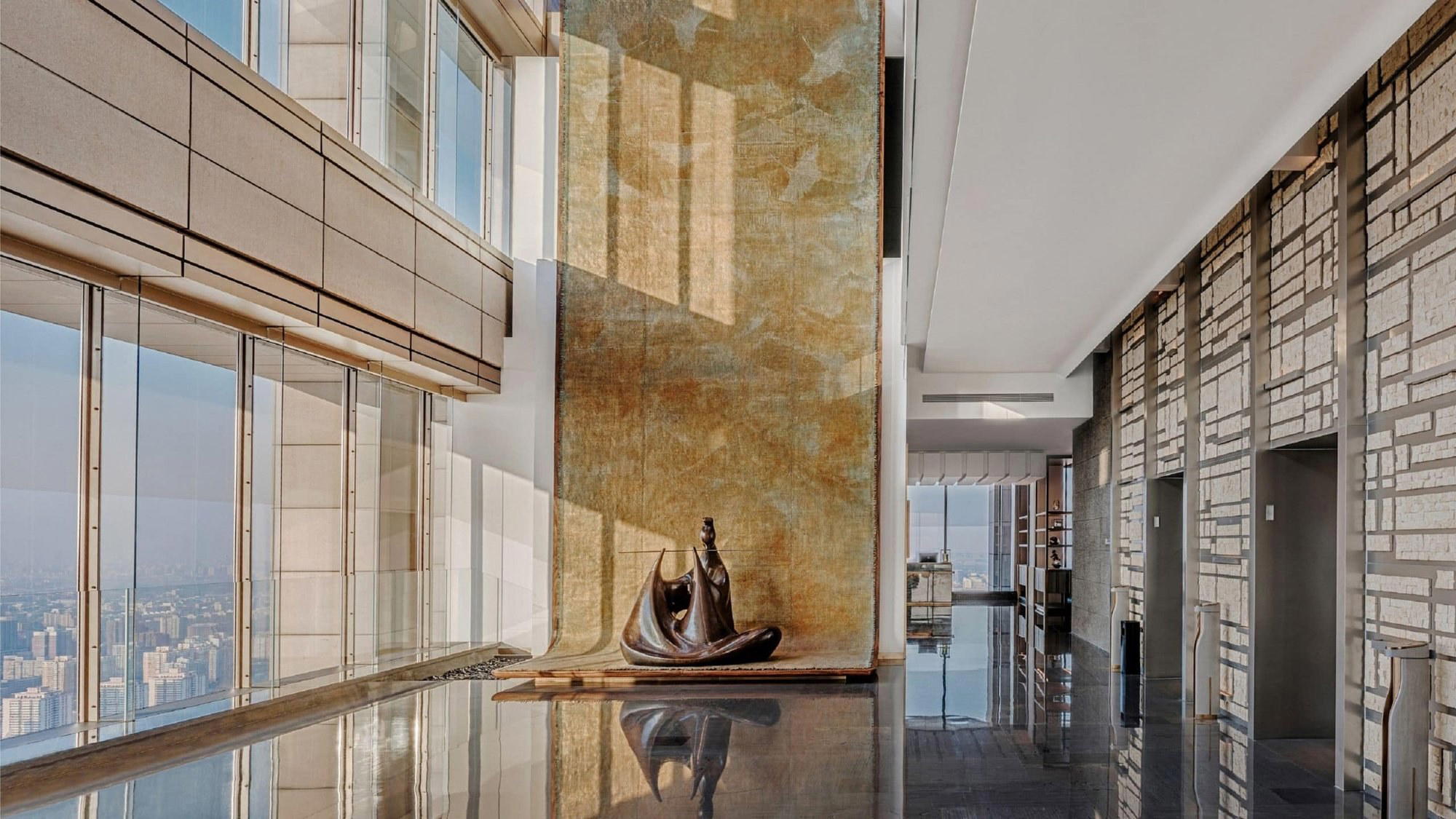
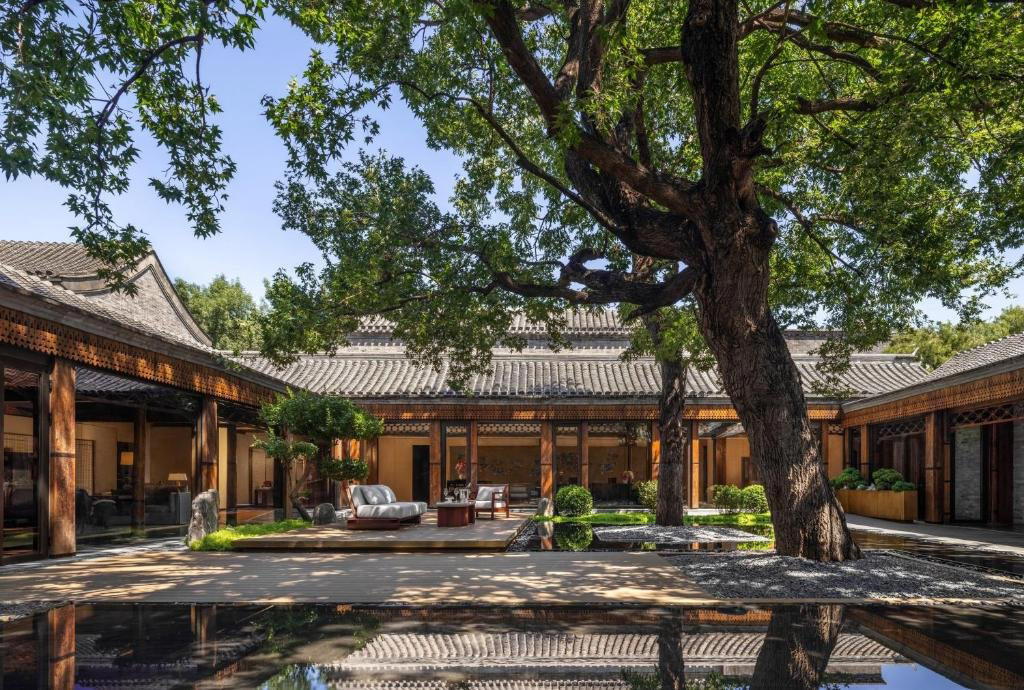
Sophisticated dining room with professional service focused on authentic regional flavors.