JEFF
Our verdict
JEFF occupies a ground-floor address on Stationsstraat in Diepenbeek, a small Flemish municipality in Limburg province that sits outside the usual Belgian fine-dining circuit. The restaurant draws attention for placing ingredient sourcing at the centre of its offer, positioning it alongside a growing cohort of Flemish addresses where the provenance question precedes everything else on the plate. For visitors planning around Belgium's broader dining geography, it warrants a place in the itinerary alongside the region's more established names.

Pearl is the En Primeur Club membership app — saves, bookings, and concierge access live there. Same editors, same standards.
- Address
- Stationsstraat 6, 3590 Diepenbeek, Belgium
- Phone
- +3211190301
- Hours
- Mon–Tue ClosedWed 7–9 PMThu–Fri 12–2 PM, 7–9 PMSat 7–9 PMSun Closed
- Website
- restojeff.be
- Directions
- Get directions
- Booking
- Book on Zenchef
The menu
What to order
- Cordon bleu deluxe
- Lobster roll
- Grilled turbot
- Black-legged chicken with wheat risotto
Diepenbeek and the Flemish Interior: A Different Kind of Dining Address
Belgium's most-discussed restaurant addresses tend to cluster in Antwerp, Ghent, or along the coast, with occasional gravitational pulls toward Bruges and Brussels. The Flemish interior, by contrast, receives less editorial attention despite producing a consistent stream of serious cooking. Diepenbeek, a municipality of roughly 20,000 people in Limburg province, sits in that quieter geography: close enough to Hasselt to benefit from a provincial capital's appetite, far enough from the established circuits that arriving there requires a deliberate decision. That deliberateness, in practice, tends to filter the room. Restaurants in these smaller Flemish towns draw guests who have done the research, not those passing through on habit. For context on the wider Diepenbeek dining picture, see our full Diepenbeek restaurants guide.
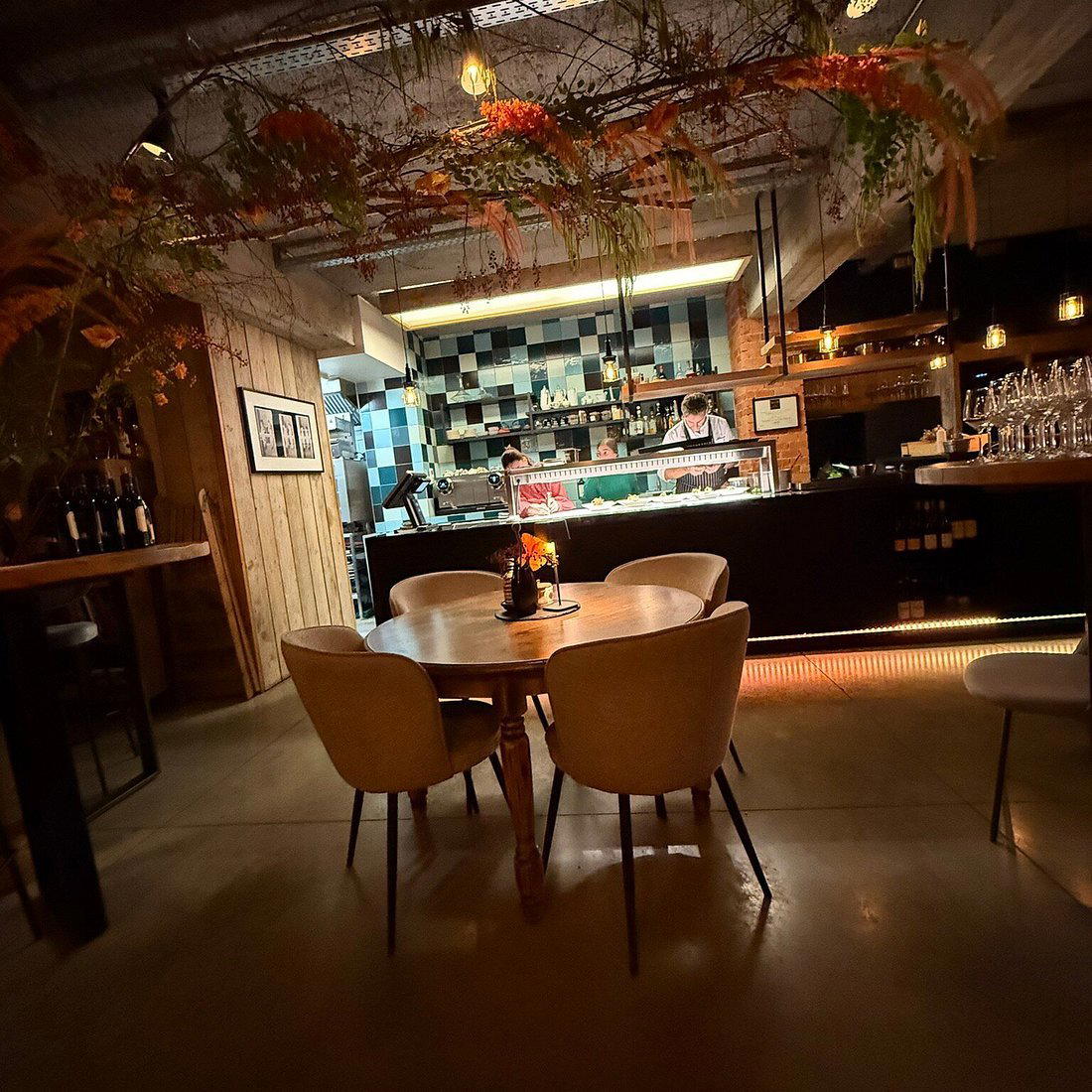
JEFF occupies a ground-floor space at Stationsstraat 6, a location that signals neither the converted farmhouse aesthetic common across rural Limburg nor the polished urban room that defines Antwerp's upper tier. Stationsstraat addresses in Belgian provincial towns tend to be workmanlike streets, their character shaped by proximity to rail infrastructure rather than heritage architecture. Whether JEFF has transformed that context or worked within it is something the room itself answers on arrival.
Where the Ingredient Sourcing Argument Stands in Flemish Cooking
The sourcing-forward model has become one of the defining organising principles of serious Flemish restaurants over the past decade. What began as a provenance declaration on menus, listing farm names and regions, has evolved into something more structurally embedded at the leading edge of the category. At addresses like Willem Hiele in Oudenburg, the sourcing logic is not a marketing layer but an operational constraint: what can be foraged, fished, or grown within a tightly defined radius shapes the menu before any other creative decision is made. De Jonkman in Sint-Kruis operates within a modern Flemish creative framework where local produce functions as both material and argument. The pattern repeats across the region's better addresses.
This broader shift has changed what Belgian diners at the upper end of the market expect from a serious meal. The question of where ingredients come from, and what chain of decisions placed them on the plate, has moved from optional context to baseline expectation at the €€€€ tier. It also sets up a meaningful competitive distinction between restaurants that narrate sourcing and those that build their entire operational logic around it. JEFF, based in a Limburg municipality with direct access to the agricultural networks of the province, occupies a position where that sourcing argument is geographically plausible rather than aspirational. Limburg's landscape includes significant horticultural production, and the province's proximity to the Dutch border extends the range of quality producers accessible within a short supply chain.
The Limburg Context and Its Culinary Logic
Understanding what JEFF represents requires some grounding in what Limburg province actually offers as a culinary territory. The region is not primarily known as a gastronomic destination in the way that the West Flemish coast or the Antwerp metropolitan area is, but it carries a distinct agricultural character: fruit orchards, market gardens, and a productive landscape that feeds both local and regional supply chains. Hasselt, the provincial capital, has historically been associated with jenever production, and the province's foodways carry a practical, seasonal quality that differs from the more cosmopolitan influences visible in Ghent or Brussels.
For a restaurant in Diepenbeek to build a serious sourcing argument, it needs access to that provincial supply base, and the geography supports it. The question is how directly that access translates into what arrives at the table. Belgium's most sourcing-credible restaurants tend to name their producers explicitly, build their menus around seasonal availability rather than fixed signatures, and often operate with smaller teams because the labour of working with unprocessed, variable produce is considerably higher than working with standardised supply. That operational model is increasingly visible at addresses like Castor in Beveren and Maison Colette in Tongerlo, both of which operate in smaller Flemish towns with a similar logic of deliberate destination dining.
Belgium's Provincial Restaurant Circuit in Perspective
Belgium has long maintained a dense concentration of serious restaurants relative to its population, a fact that the Michelin Guide's annual Belgium and Luxembourg edition reflects year after year. The country's three-star tier includes addresses distributed across both urban and rural settings, and the distinction between a Brussels institution like Bozar Restaurant and a rural destination like Hof van Cleve in Kruishoutem illustrates how the country rewards travel outside the capitals. The provincial circuit carries real weight: Boury in Roeselare, La Durée in Izegem, and Nuance in Duffel all require diners to commit to a specific journey, and that commitment is part of the experience's value.
JEFF sits within that provincial circuit, in a municipality that lacks the established dining reputation of a Kruishoutem or a Roeselare but benefits from the broader pattern: Belgian diners and international visitors familiar with the country's restaurant geography are increasingly willing to travel for addresses that do one thing with real conviction. For those building a Flemish itinerary that extends into Limburg, the restaurant functions as the kind of anchor around which a two-day trip to the province can be organised, with Hasselt's city offer as a complement. Restaurants further afield in Belgium's broader geography, from Bartholomeus in Heist to L'air du Temps in Liernu, demonstrate how widely spread serious Belgian cooking has become across the country's geography.
Planning a Visit to JEFF
Diepenbeek is accessible by rail from Hasselt, with the station giving the Stationsstraat address its name and its most direct arrival logic. Hasselt itself connects to Antwerp, Brussels, and Liège via the Belgian rail network, making a Limburg day trip achievable from any of the country's major cities. Driving from Antwerp takes approximately 70 kilometres via the E313, with Hasselt as the natural base for overnight stays. The Stationsstraat 6 address places JEFF close to the station, which simplifies arrival without a car. For international visitors structuring a broader European dining trip, addresses like Zilte in Antwerp, Le Chalet de la Forêt in Uccle, or La Table de Maxime in Our offer complementary reference points across different Belgian regions, while globally minded diners might also benchmark the sourcing-forward approach against Le Bernardin or Atomix in New York City, where the ingredient provenance argument has moved into fine-dining's top tier internationally.
Frequently asked questions
Is JEFF a family-friendly restaurant?
JEFF is located on Stationsstraat in Diepenbeek, a small Limburg town where the dining scene tends toward considered, sit-down formats rather than casual drop-in meals. It is worth contacting the restaurant directly to confirm arrangements.
Is JEFF formal or casual?
JEFF sits in Diepenbeek, a Limburg provincial town that shapes a different register than an Antwerp or Brussels address. Flemish restaurants in this circuit typically occupy a middle ground: serious about the food without enforcing black-tie conventions.
Is JEFF restaurant in Diepenbeek accessible by public transport from Hasselt?
Yes. JEFF is located at Stationsstraat 6 in Diepenbeek, a street that takes its name from the adjacent railway station. Hasselt, the provincial capital of Limburg, sits on the same rail line, making JEFF one of the few serious dining addresses in Belgium's interior that can be reached without a car. That station-side position gives the restaurant a practical arrival logic that most comparable Flemish provincial venues lack.
What's the must-try dish at JEFF?
What the Diepenbeek address and broader Limburg context suggest is a kitchen likely working with regional Flemish produce, consistent with the sourcing-forward direction that has defined serious cooking in this province over the past decade. For current menu details, contacting the restaurant via its Stationsstraat address is the direct route.
How do I find JEFF?
JEFF is located at Stationsstraat 6, 3590 Diepenbeek, Belgium, Diepenbeek.
Fast Comparison
Comparable venues nearby, for context on price, style, and recognition.
| Venue | Cuisine | Price | Notes |
|---|---|---|---|
| JEFFThis venue — the venue you are viewing | Modern European Gastropub | Not listed | Not listed |
| WhyNot | Modern Gastrobar | $30–50 | Sluizeken - Tolhuis - Ham |
| Anecdote | French-Italian Fusion | Not listed | Soumagne |
| Nightshop | Modern European Small Plates | $30–50 | Dansaert |
| Uw Zuster | Modern Belgian Tapas | $20–30 | city center |
| L'Uno Coll'Altro | Authentic Italian Trattoria | $50–100 | Peer |
Continue exploring
More in Diepenbeek
Restaurants in Diepenbeek
Browse all →
Bars in Diepenbeek
Browse all →
Hotels in Diepenbeek
Browse all →

Details
- Cozy
- Intimate
- Classic
- Casual Hangout
- Group Dining
- Special Occasion
- Open Kitchen
- A La Carte
- Tasting Menu
- Wine
Current opening hours
- Monday
- Closed
- Tuesday
- Closed
- Wednesday
- 7–9 PM
- Thursday
- 12–2 PM, 7–9 PM
- Friday
- 12–2 PM, 7–9 PM
- Saturday
- 7–9 PM
- Sunday
- Closed
Hours can change for holidays and private events. Last verified .
Cozy and welcoming atmosphere with an open kitchen concept, professional and relaxed service that enhances the dining experience.