
Known for its wineries, orchards, and hiking trails, Borgloon receives plenty of day trippers from Brussels and Maastricht. There are just a few lodgings in town, including the elegant Villa Copis, a hotel that singlehandedly makes a longer stay worthwhile. This stately Flemish-style mansion, built in 1929, was the home of a prominent fruit-growing family for three generations before it was converted into a boutique hotel. Many of its fine original features remain inside and out. Decorative woodwork, crystal chandeliers, hand-painted murals, and marble-framed fireplaces, no longer in use, but charming nonetheless, grace the ground-level common spaces, with large windows looking out to the surrounding gardens with their quiet paths and picturesque gazebo. Rooms are more modern with pale parquet flooring and a sleek white and gray color palette, though they also feature quaint period details like antique writing desks and ornamental lamps. Those on the uppermost level have exposed brick walls painted white, vaulting wood-beamed ceilings, high arched windows, and freestanding tubs. A lovely breakfast buffet showcases regional products from cheese and charcuterie to homemade jams and pastries. It’s served late on weekends, a concession to the leisurely way of life in the Belgian countryside, and the village and surrounding landscapes await exploration on foot or bicycle.
Pearl is the En Primeur Club membership app — saves, bookings, and concierge access live there. Same editors, same standards.
- Address
- Stationsstraat 34, 3840 Tongeren-Borgloon, Belgium
- Phone
- +32 472 90 20 62
- Website
- villacopis.be
- Directions
- Get directions
 Saves & bookings on Pearl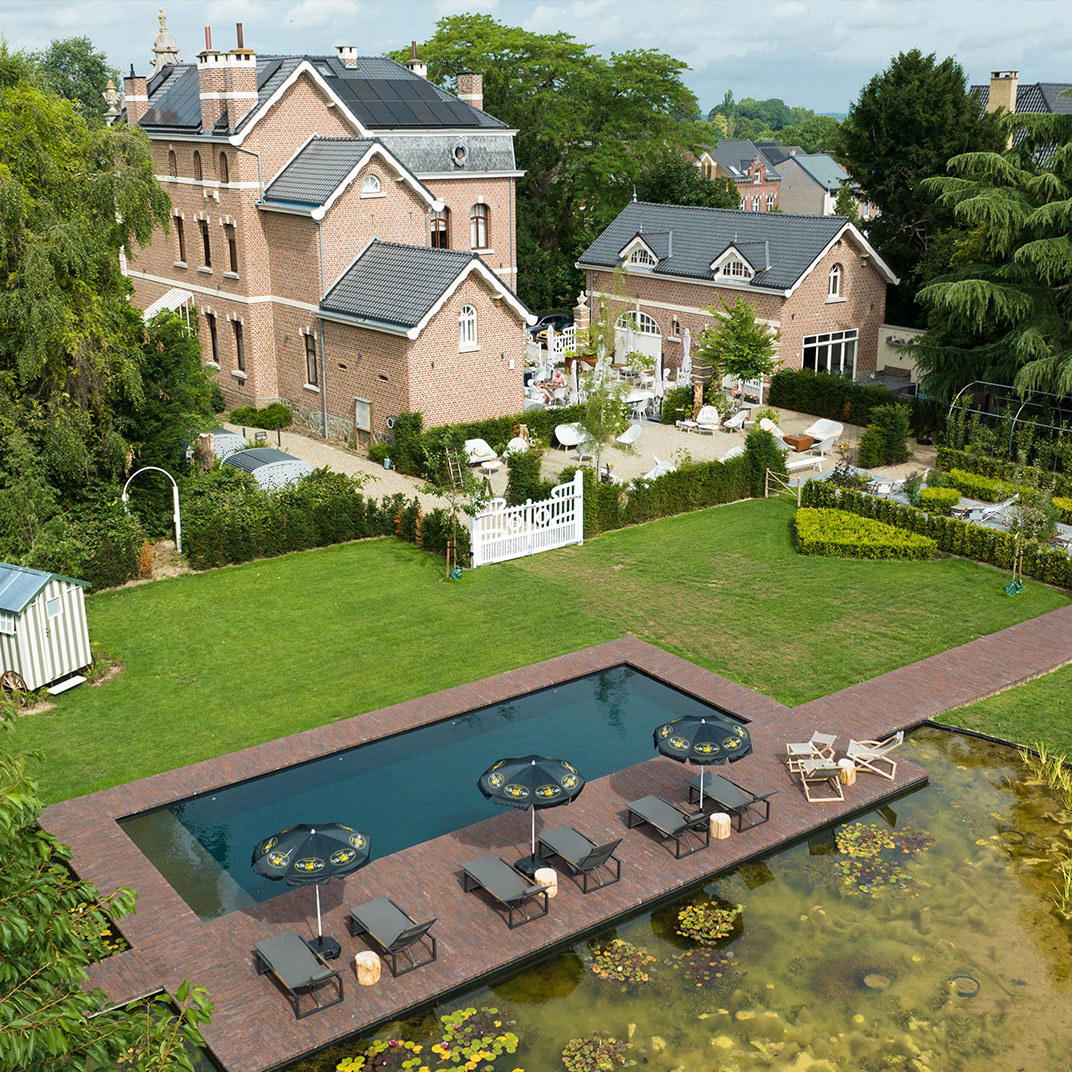
Where Flemish Countryside Meets Considered Design
Arriving at Stationsstraat 34 in Borgloon, the approach matters. The Haspengouw region of Flemish Brabant is fruit-orchard country: flat-topped hills, apple and pear orchards in orderly rows, and a quietness that cities rarely produce. Villa Copis sits within this context, a property whose architecture reads as deliberate counterpoint to the agricultural vernacular around it. In a region where the built environment tends toward solid, gabled farmhouses and abbey remnants, a villa-format property announces a different register entirely.
The Michelin Selected distinction awarded to Villa Copis in 2025 places it in a specific tier of Belgian hospitality. Michelin's hotel selection process evaluates properties against criteria including design coherence, service caliber, and the quality of the guest experience as a whole, not simply the food program. Inclusion signals that the physical space and the hospitality offering meet a standard that positions Villa Copis alongside a small cohort of properties in Belgium that Michelin considers worth a traveler's attention on their own terms, not merely as adjuncts to starred restaurant dining nearby.
The Architecture of Staying Still
In Belgium, the relationship between heritage building stock and contemporary hospitality design has produced two dominant strains. The first reactivates historic structures, layering modern interiors into castle shells, former monasteries, or 19th-century manor houses. Properties like Manoir de Lébioles in Liège or Le Château de Mirwart in Mirwart represent that lineage. The second builds or restores with a cleaner hand, using the language of the villa or the curated country house to produce spaces that feel both rooted and refined. Villa Copis belongs to the latter type.
The villa format, as a hospitality proposition, makes specific spatial promises. Rooms tend to be fewer and proportionally generous. Shared spaces carry more architectural intention than a hotel corridor of equivalent square footage. The guest is meant to feel they are occupying a residence, however temporarily, rather than passing through a building designed for throughput. In Borgloon, this proposition is reinforced by the setting: the scale of the town, the width of the surrounding orchards, and the absence of urban noise all encourage a slower pace of engagement with the physical environment.
For travelers comparing options in the region, the distinction between Villa Copis and a property like Kasteelhoeve de Kerckhem in Wijer or Martin's Rentmeesterij in Bilzen is partly architectural and partly geographic. Bilzen and Wijer sit in the same Limburg province cluster, each offering a different reading of the country-house stay. Borgloon, as a designated Cittaslow town, adds a layer of civic intention to the surrounding environment: the town actively promotes slow living, local produce, and unhurried commerce, which shapes the texture of any stay in the area.
Borgloon as Context
Borgloon, sometimes spelled Looz in older French-language references, has a medieval history as a county seat, and its small streets retain the compact, stone-built character of Haspengouw market towns. The fruit-growing heritage is serious here: the region produces some of Belgium's most respected lambic and jenever-adjacent fruit spirits, and the orchards that frame the horizon are working agriculture, not decorative landscaping. Staying in Borgloon means having direct access to a food culture built around seasonal produce in a way that few Belgian cities can match.
The nearest major urban reference point is Hasselt, roughly 20 kilometers to the northeast, which functions as Limburg's provincial capital and carries a reputation for retail and dining that punches beyond its size. Liège sits further south, offering a different cultural register. Borgloon itself is walkable at town scale, and the surrounding countryside rewards cycling along established Haspengouw routes. Visitors arriving by train will find Borgloon on the line between Hasselt and Tongeren, though a car remains the most practical option for exploring the orchard roads that define the area's character.
For those building a multi-property itinerary through Belgium's quieter provinces, Villa Copis pairs logically with properties anchored in the Ardennes or along the Meuse. Le Sanglier des Ardennes in Durbuy and Château Beausaint in La Roche en Ardenne represent the southern Belgian countryside in a different idiom, heavier on forest and river valley than the Haspengouw plateau. The contrast between the two landscapes, and the two hospitality registers they produce, is worth planning around.
The Michelin Selection and What It Implies
Being listed in the Michelin Selected Hotels 2025 program is not the same as holding a Michelin star, and it is worth being precise about what the credential means for a traveler's decision. Michelin's hotel selection is curated separately from its restaurant guide, and a property can appear in one without appearing in the other. The selection process emphasizes the overall quality of the stay: atmosphere, design, welcome, and comfort are weighted alongside any food offering.
Across Belgium, the spread of Michelin Selected properties covers urban addresses in Brussels, Bruges, and Ghent alongside country properties in Flanders, Wallonia, and the Ardennes. Within that spread, a Limburg villa in a Cittaslow town occupies a specific niche: the kind of address that rewards travelers seeking architectural quiet and regional specificity over the infrastructure of a larger hotel. Properties like Ganda Rooms and Suites in Ghent or Louis1924 in Dilbeek occupy adjacent positions in the Belgian design-led property category, though each anchors to a distinct urban or peri-urban context. For broader Belgian hotel context across price tiers and styles, see our full Borgloon guide.
Planning a Stay
Booking details for Villa Copis are best confirmed directly, as the property's contact information and availability are not published through major aggregators in the same way larger hotel groups manage their inventory. Michelin's own hotel platform lists the property under the 2025 Selected Hotels program and can serve as a starting reference. Given the property's villa format and likely limited room count, advance planning is advisable, particularly for spring and early summer when the Haspengouw orchards are in blossom, a period that draws visitors from across Belgium and the Netherlands to the region. Autumn, when the fruit harvest is underway, represents an equally compelling seasonal window.
Travelers comparing Villa Copis against coastal or urban Belgian options for a weekend stay should weigh what the Haspengouw setting specifically offers: a working agricultural landscape, Cittaslow-designated town culture, and proximity to Tongeren's antique markets, which draw serious collectors on weekends. The property at Stationsstraat 34 is positioned to function as a base for all of these, not simply as a destination in isolation. For those extending further into Belgium, the contrast between this kind of country-house stay and the urban register of Juliana Hotel Brussels or Botanic Sanctuary Antwerp is worth building into a longer itinerary.
How Villa Copis Borgloon: MICHELIN-Selected Hotel compares with similar nearby venues.
| Venue | Awards |
|---|---|
| Villa Copis | MICHELIN Guide, Hotels Selected (2025) |
Recognition history
Dated appearances from independent guides and award organizations, with the underlying list record or original source where available.
Michelin Selected
Michelin
Continue exploring
More in Borgloon
Hotels in Borgloon
Browse all →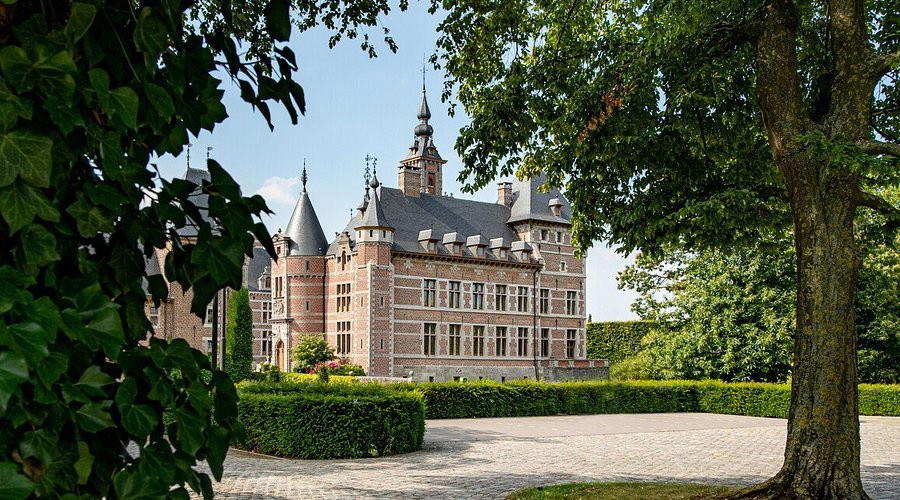
Bars in Borgloon
Browse all →
Restaurants in Borgloon
Browse all →

At a Glance
- Elegant
- Quiet
- Cozy
- Scenic
- Romantic Getaway
- Weekend Escape
- Garden
- Terrace
- Historic Building
- Wi Fi
- Pool
- Garden
- Bar
- Garden
- Wi Fi
- Pool
- Garden
- Bar
Traditional elegance with quiet, refined atmosphere complemented by a charming garden and cozy bar/lounge.
Know Before You Go
- Getting there
- Stationsstraat 34, 3840 Tongeren-Borgloon, Belgium