


Ranked 62nd on the World's 50 Best list in 2025 and holding a Michelin star, Willem Hiele operates from a quiet address in Oudenburg, a small West Flemish town that most diners would not expect to anchor a restaurant of this standing. The creative kitchen draws on coastal Flemish produce and a distinctly personal culinary language, placing it in a comparable set closer to Boury in Roeselare than to the Belgian urban fine-dining circuit.
Pearl is the En Primeur Club membership app — saves, bookings, and concierge access live there. Same editors, same standards.
- Address
- Kapittelstraat 71, 8460 Oudenburg, Belgium
- Phone
- +32 468 00 66 99
- Website
- willemhiele.be
- Directions
- Get directions
 Saves & bookings on Pearl
A Small Town with a Serious Table
West Flanders has a long tradition of placing serious kitchens in unlikely addresses. The region's flat polders, proximity to the North Sea, and dense network of small towns have historically supported a style of destination dining where the journey is part of the proposition. Willem Hiele, at Kapittelstraat 71 in Oudenburg, sits squarely in that tradition: a town of fewer than 10,000 residents that, in 2025, holds a restaurant ranked 62nd on the World's 50 Best list. For context, that places it ahead of many restaurants in cities with far greater culinary infrastructure. The closest Belgian peer in terms of creative ambition and rural positioning is Boury in Roeselare, though the two kitchens operate with different registers and source material.
Oudenburg itself offers little in the way of conventional tourist infrastructure. Arriving here requires intent. The surrounding landscape is characteristically Flemish: low light, open fields, a horizon that sits further away than it looks. That deliberate remoteness is not incidental to the restaurant's identity. Kitchens that require a drive tend to shape their menus around the logic of a full evening rather than a quick meal, and Willem Hiele is no exception to that pattern.
The Chef's Formation and What It Produced
Understanding the cooking at Willem Hiele requires some attention to how the chef's formation diverged from the standard Belgian fine-dining trajectory. Belgian haute cuisine has, for most of the past three decades, operated within a broadly French technical framework, the tradition that runs through Hof van Cleve in Kruishoutem and, in a more classical register, through kitchens like Comme chez Soi in Brussels. Willem Hiele's cooking sits at an angle to that lineage. The chef has been publicly associated with a more foraging-led, produce-obsessive approach that privileges the coastline and the Flemish interior over imported luxury ingredients.
That orientation places the restaurant closer to a northern European cooking tradition, one shaped by Scandinavia's influence on fine dining over the past fifteen years, than to the cream-sauce classicism that still defines parts of the Belgian fine-dining circuit. The Opinionated About Dining ranking of 43rd in Europe for 2025, combined with the World's 50 Best position, suggests that this approach has found a clear and appreciative audience among the type of critics and frequent diners who drive those lists. OAD rankings in particular are built on repeat visits by experienced eaters, which gives them a different weighting than single-judge awards.
The Michelin star confirms technical consistency, but it is the international list placements that signal the broader critical consensus: this is a kitchen that has developed a recognisable point of view, not merely a reliable execution of an established format. For comparison, Zilte in Antwerp operates at a similar price tier and award level within Belgium, though from an urban perch with different source material and theatrical register.
Creative Cuisine in the Flemish Coastal Register
Belgium's creative restaurant tier has expanded and differentiated considerably since 2015. The country now sustains a range of kitchens working under the broad label of creative cuisine, from urban destination restaurants like Bozar Restaurant in Brussels to rural properties with strong local-sourcing philosophies. The restaurant belongs to the latter category, where the menu is shaped primarily by what the surrounding region produces rather than by what the global luxury ingredient market offers.
The West Flemish coast and its immediate hinterland provide a specific larder: North Sea fish and shellfish, estuary-edge produce, game from the polders, dairy from Flemish farms. Kitchens that commit to this source material tend to develop a more seasonal and variable menu structure than those that anchor their identity in consistent signature dishes. This also means that the experience shifts considerably depending on when you visit. The spring and autumn seasons, when coastal foraging and transitional ingredients produce the greatest variation, tend to reward visitors who have the flexibility to time their booking accordingly.
The €€€€ price designation places the restaurant at the summit tier of Belgian restaurant pricing, in line with peers such as La Durée in Izegem and Bartholomeus in Heist. The pricing reflects the tasting menu format that almost all kitchens at this award tier in Belgium now operate.
Where It Sits in the Belgian Scene
Belgium punches above its weight in the global fine-dining conversation, partly because of a dense concentration of technically serious kitchens operating at relatively accessible price points compared to equivalent restaurants in London, Paris, or Copenhagen. The country's Michelin density per capita is among the highest in Europe, and its restaurant culture has historically valued substance over theatre.
The restaurant's position at #62 on the World's 50 Best list makes it the kind of restaurant that draws international visitors who structure trips around tables rather than cities. That is a different traveller profile from those visiting Alléno Paris au Pavillon Ledoyen or Enrico Bartolini in Milan, where the city itself provides context and infrastructure. Oudenburg offers little beyond the meal, which concentrates the experience entirely on what happens at the table. For some diners, that purity of purpose is the point.
Within Belgium, the restaurant sits in an interesting position relative to its peers. The kitchens that share its award tier, Hof van Cleve, Comme chez Soi, Boury, each represent a different strand of Belgian creative cooking. Hof van Cleve carries the weight of the classical Flemish fine-dining tradition; Boury works within a more contemporary French-Flemish idiom; the restaurant occupies a more idiosyncratic position, one defined less by a recognisable European cooking school and more by a specific geography and a set of self-imposed constraints around sourcing and technique. This makes it, for the international diner building a Belgian itinerary, a useful counterpoint rather than a substitute for those other tables.
Kitchens elsewhere in Belgium working with similar creative ambitions include d'Eugénie à Emilie in Baudour, L'Eau Vive in Arbre, Ralf Berendsen in Neerharen, and Sir Kwinten in Sint-Kwintens-Lennik, as well as Slagmolen in Opglabbeek for those drawn to the rural destination format.
Planning a Visit
Oudenburg is accessible by car from Bruges in under 20 minutes and from Ghent in roughly 50 minutes, making either city a practical base for an overnight stay. The restaurant's. Given the World's 50 Best ranking and the small-town address, booking well in advance is advisable; for high-profile tasting menu restaurants in Belgium at this award level, a window of six to eight weeks at minimum is a reasonable planning assumption, with popular weekend slots likely requiring more lead time.
Side-by-Side Snapshot
Comparable venues nearby, for context on price, style, and recognition.
| Venue | Cuisine | Price | Awards | Notes |
|---|---|---|---|---|
| Willem HieleThis venue — the venue you are viewing | Creative Seasonal Seafood | $$$$ | Michelin 1 Star | Not listed |
| La Coupole | Seafood Bistro | $$$ | Michelin Plate, World's 50 Best #13 | De Panne |
| The Jane | Modern Creative with Asian Influences | $$$$ | World's 50 Best #23 | Eilandje (Harbour District) |
| La Villa Lorraine by Yves Mattagne | Modern French Fine Dining | $$$$ | Michelin 2 Star | Boendael |
| L'air du temps | Modern Creative French | $$$$ | Michelin 2 Star | Liernu |
| Castor | Modern French Fine Dining | $$$$ | Michelin 2 Star | Beveren-Leie |
Recognition history
Dated appearances from independent guides and award organizations, with the underlying list record or original source where available.
Michelin 1 Star
Michelin
Michelin 1 Star
Michelin
Opinionated About Dining Top Restaurants in Europe Ranked #43
Opinionated About Dining
The Best Chef Two Knives
The Best Chef
World's 50 Best Best Restaurants #62
World's 50 Best
Michelin 1 Star
Michelin
World's 50 Best Best Restaurants #83
World's 50 Best
Continue exploring
More in Oudenburg
Restaurants in Oudenburg
Browse all →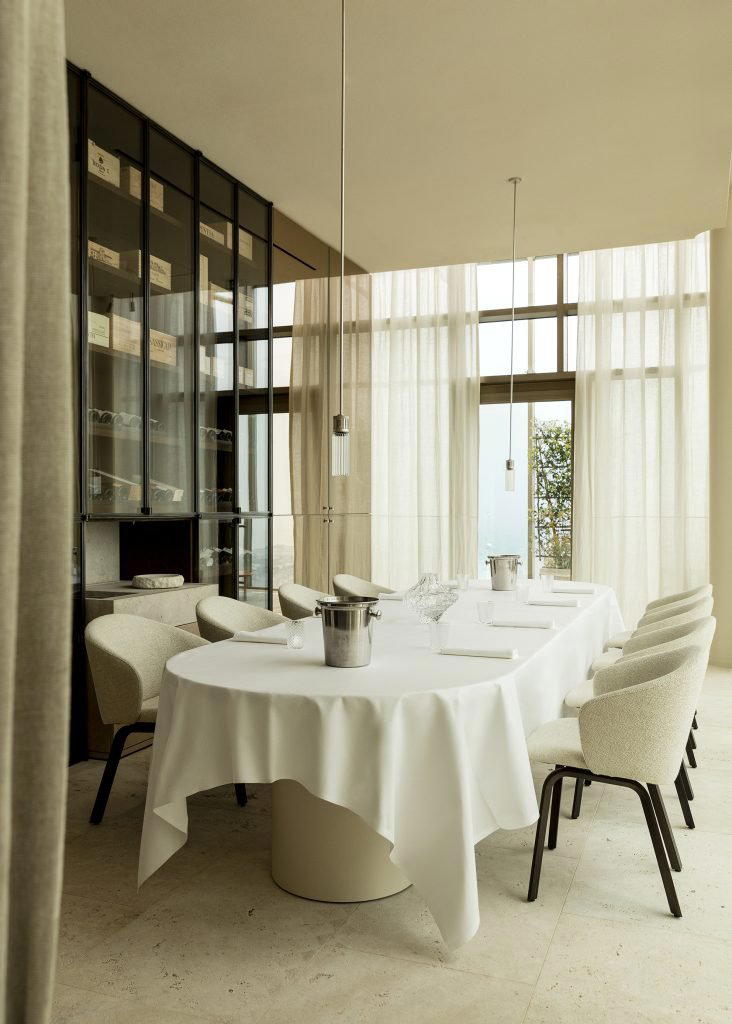
Bars in Oudenburg
Browse all →
At a Glance
- Minimalist
- Intimate
- Sophisticated
- Special Occasion
- Date Night
- Chefs Counter
- Open Kitchen
- Local Sourcing
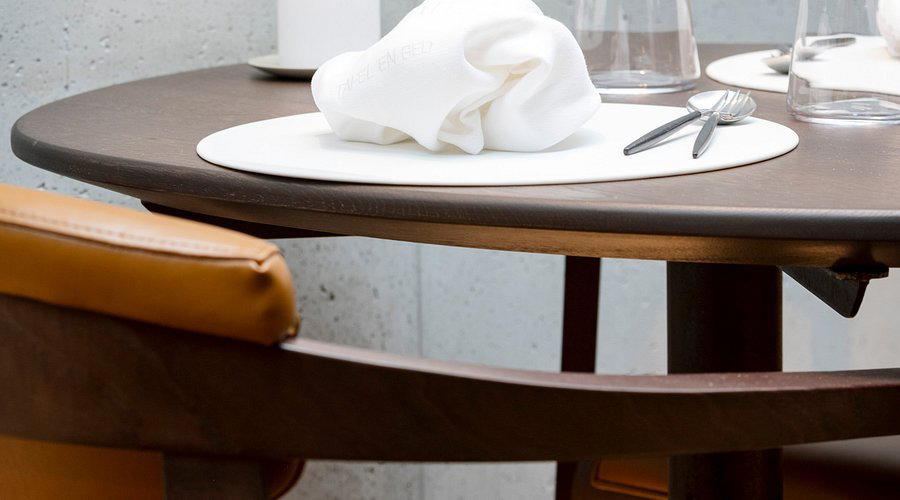
Minimalist brutalist interior with vast floor-to-ceiling windows overlooking polders and expansive skies, creating a serene, nature-immersed atmosphere.