






2 Michelin Stars · La Liste Top Restaurants · Star Wine List
Our verdict
L'Air du Temps holds two Michelin stars and an 88.5-point La Liste ranking, operating from a rural property in Liernu where a multi-acre kitchen garden supplies the bulk of what arrives on the plate. Chef Sang-Hoon Degeimbre works within a French-Asian creative register that treats vegetables as the structural core of the menu, with fish and meat serving as secondary elements. Dinner runs Tuesday through Saturday, evenings only.

Pearl is the En Primeur Club membership app, where members save venues, book tables and use the concierge.
A Garden-Rooted Counter to the Urban Fine Dining Circuit
Belgium's two-star tier has historically concentrated in its cities: Brussels, Ghent, Antwerp. The outliers tend to be the most instructive. Liernu, a village in the Namur province with no particular culinary infrastructure around it, is home to one of the country's most-discussed fine dining addresses. What makes that pattern interesting is not the geographic anomaly itself but what it signals about how seriously a kitchen has committed to its own supply chain. When a restaurant operates from the countryside because the land is the point, rather than the postcode, the menu tends to reflect it.
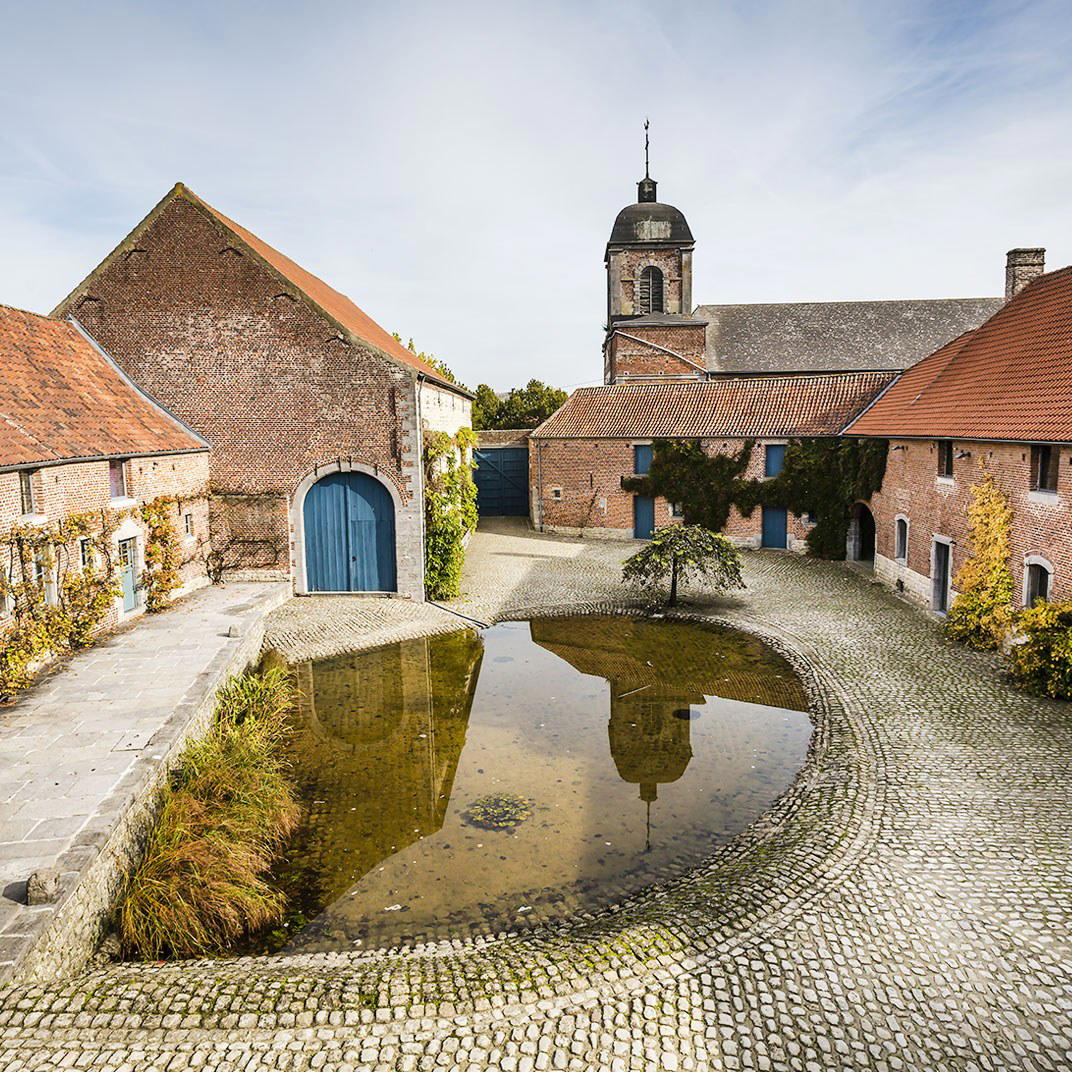
L'Air du Temps sits on Rue de la Croix Monet in Éghezée, and the property includes a kitchen garden that now spans multiple acres with a dedicated team managing it. That scale of cultivation is not decorative. It determines what appears on the plate and, by extension, what the menu can and cannot do on a given week. The approach places L'Air du Temps in a specific tier of European fine dining: kitchens where the sourcing infrastructure is as constructed as the cooking itself.
Between French Structure and Asian Precision
The French-Asian creative register that defines the kitchen here is worth examining in context. It is not the fusion idiom of the 1990s, where the blend itself was the statement. Nor is it the restrained Japanese-inflected French cooking that has become prevalent at high-end counters in Paris and London over the past decade. What Sang-Hoon Degeimbre has developed at L'Air du Temps is something more specific: a cuisine in which French technical discipline frames ingredients that are treated with an Asian sensitivity to texture, temperature contrast, and vegetable primacy.
That last element is the most distinctive marker. At most restaurants in the €€€€ bracket, including Belgian peers such as Boury in Roeselare and Hof van Cleve in Kruishoutem, protein remains the structural anchor of the meal. L'Air du Temps inverts that logic. Vegetables and fruits from the estate garden form the core of the menu; fish and meat arrive as accents rather than foundations. We're Smart, the organisation that recognises vegetable-forward kitchens in fine dining, has cited L'Air du Temps as a model for what it calls the restaurant of the future. That recognition from a specialist organisation carries more weight than a general sustainability badge because it reflects a judgment about structural menu philosophy, not ingredient provenance alone.
The Award Record and What It Implies
Two Michelin stars, held in both 2024 and 2025, position L'Air du Temps within a cohort of Belgian kitchens that operate at a consistent level without the volatility that sometimes accompanies chefs working at the outer edge of experimentation. The La Liste score of 88.5 points in 2025 (down slightly from 88.5, with 87 points recorded in 2026) places the restaurant within the upper tier of European fine dining without reaching the 90-point threshold that separates the globally discussed from the regionally prominent. That is a meaningful distinction: L'Air du Temps is not a trophy destination for international circuit travellers but a serious address for readers who follow European fine dining closely.
Opinionated About Dining's European rankings offer a more granular signal. The restaurant appeared at number 61 in the 2024 European ranking and at number 38 in the 2023 New Restaurants in Europe list, a different list, but one that indicated the kitchen was gaining momentum with the informed-diner audience that OAD surveys. The Star Wine List White Star recognition, published in October 2023, adds a wine program dimension that aligns with the property's positioning in the €€€€ tier.
The Les Grandes Tables du Monde membership, awarded in 2025, is worth noting separately. That association requires sponsorship from existing members and alignment with a specific set of criteria around service, dining room standards, and kitchen consistency. It is a peer-recognition signal rather than a critic-driven one, which makes it a different kind of trust indicator from Michelin.
The Bistro Tradition and Its Limits
The editorial angle of the bistro tradition is relevant here precisely because L'Air du Temps sits outside it, and understanding why illuminates what the restaurant is actually doing. The classic French bistro, and its Belgian equivalents, organised itself around conviviality, affordable protein-centred plates, and the implicit promise that a good meal was accessible rather than ceremonial. Addresses like d'Eugénie à Emilie in Baudour or L'Eau Vive in Arbre work within a more recognisably French-Belgian register that retains that connection to bistro values even at higher price points.
L'Air du Temps is the counter-argument. It takes the French structural inheritance, the classical technique, the precision service, the wine program, but strips away the protein-centric logic that defined the bistro's culinary DNA. What replaces it is a garden-driven sequence in which the season and the soil determine the menu's shape. That is not a bistro ethos. It is something closer to what a handful of European kitchens, including Bartholomeus in Heist in the seafood-forward coastal register, have been building: a fine dining model that uses French technique as a tool rather than a tradition to be preserved.
For readers who want the bistro experience from the region, the Bistro Air du Temps on the same property offers a more accessible entry point, operating in a farm-to-table format that connects to the estate garden without the full tasting menu commitment. The two addresses serve different purposes and should not be treated as interchangeable.
Planning a Visit
L'Air du Temps operates Tuesday through Saturday, with dinner service beginning at 7:00 pm and last entry at 8:30 pm. The restaurant is closed Sunday and Monday. The location in Liernu means that a car is the practical way to arrive; the village is roughly equidistant from Brussels, Namur, and Liège, making it accessible as a standalone dinner destination from any of those cities without requiring an overnight stay, though the length of a tasting menu at this level makes staying locally in Liernu or the surrounding area worth considering.
For readers building a broader itinerary around the Wallonia or Namur region, the La Durée in Izegem and Ralf Berendsen in Neerharen offer different points on the Belgian creative fine dining spectrum, while the Bozar Restaurant in Brussels provides an urban counterpoint before or after a rural dinner. The full range of local options is covered in our Liernu bars, wineries, and experiences guides.
Frequently asked questions
What's the price range at L'air du temps?
Pricing at L'air du temps is listed as €€€€.
What's L'air du temps known for in terms of accolades?
L'air du temps has received recognition including: L'Air du Temps is a restaurant in Liernu, Belgium. It was published on Star Wine List on October 19, 2023 and is a White Star.; La Liste Top Restaurants (2026): 87pts; Sang-Hoon Degeimbre is a chef who not only understands the art of commun….
What do regulars order at L'air du temps?
L'Air du Temps runs a tasting menu format, so individual dish selection is not part of the experience. The kitchen's identity, as recognised by We're Smart and two consecutive Michelin stars through 2024 and 2025, centres on vegetables grown in Degeimbre's on-site garden, with fish and meat appearing as secondary elements rather than the main event. Arriving with an appetite for produce-led courses rather than a protein-anchored meal is the relevant frame.
Budget Reality Check
| Venue | Cuisine | Price | Awards | Notes |
|---|---|---|---|---|
| L'air du tempsThis venue (the venue you are viewing) | Modern Creative French | $200–300 | 2 Michelin Stars · La Liste Top Restaurants | Not listed |
| Boury | Creative French Fine Dining | $300–500 | 3 Michelin Stars · La Liste Top Restaurants | Modern Frlemish, Creative French |
| Comme chez Soi | French - Belgian, Classic Cuisine | Not listed | Michelin 1 Star | Not listed |
| Hertog Jan at Botanic | Modern Japanese Omakase Fine Dining | Not listed | 2 Michelin Stars · La Liste Top Restaurants | Modern Flemish, Creative |
| L'Eau Vive | Modern French Fine Dining | $150–200 | 2 Michelin Stars · La Liste Top Restaurants | French, Modern French |
| La Durée | Modern French Fine Dining | $150–200 | 2 Michelin Stars · La Liste Top Restaurants | French-Belgian, Creative |
Recognition history
Dated appearances from independent guides and award organizations, with the underlying list record or original source where available.
Michelin 2 Stars
Michelin
La Liste Top Restaurants
La Liste
Star Wine List
Star Wine List
Falstaff Restaurant - 97 Falstaff Points
Falstaff
Les Grandes Tables du Monde Member
Les Grandes Tables du Monde
Full recognition history (14 entries)
Opinionated About Dining Top Restaurants in Europe Ranked #69
Opinionated About Dining
La Liste Top Restaurants
La Liste
Michelin 2 Stars
Michelin
We're Smart World 5 Radishes
We're Smart World
We're Smart World Top 100 #17
We're Smart World
Michelin 2 Stars
Michelin
Opinionated About Dining Top Restaurants in Europe Ranked #61
Opinionated About Dining
Opinionated About Dining Top New Restaurants in Europe Ranked #38
Opinionated About Dining
Star Wine List
Star Wine List
Continue exploring
More in Liernu
Restaurants in Liernu
All restaurants in Liernu →
Bars in Liernu
Browse all →
Hotels in Liernu
Browse all →
Wineries in Liernu
Browse all →
L'air du temps
The wine
- Wine program
- Deep wine list
- Extensive wine list
- Sommelier-led
Details
- Elegant
- Modern
- Intimate
- Sophisticated
- Scenic
- Date Night
- Special Occasion
- Celebration
- Garden
- Open Kitchen
- Extensive Wine List
- Sommelier Led
- Farm To Table
- Local Sourcing
- Garden
- Tasting Menu
- Vegetarian Friendly
Current opening hours
- Monday
- Closed
- Tuesday
- 7–8:30 p.m.
- Wednesday
- 7–8:30 p.m.
- Thursday
- 12–1:30 p.m., 7–8:30 p.m.
- Friday
- 12–1:30 p.m., 7–8:30 p.m.
- Saturday
- 7–8:30 p.m.
- Sunday
- Closed
Hours can change for holidays and private events. Hours as of .
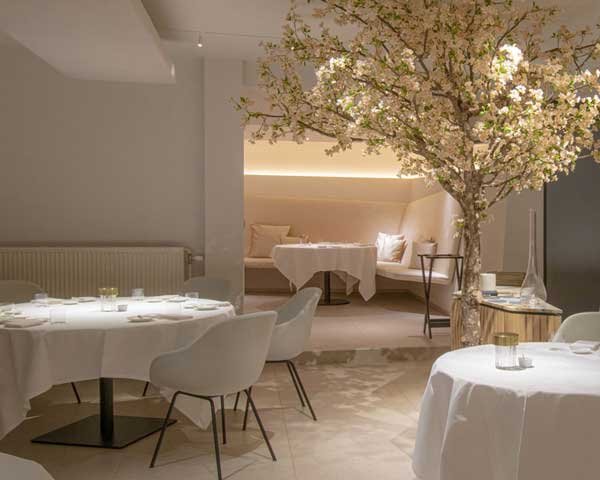
Minimalistic modern interior with warm golden tones, floor-to-ceiling windows offering serene views of surrounding fields and gardens, creating a tranquil and elegant atmosphere.