On Rue de Flandre in Brussels' Saint-Catherine quarter, Nightshop occupies a corner of the city where the old fish market's industrial character still lingers. The address places it inside one of Brussels' most densely interesting dining corridors, where neighbourhood bars and serious kitchens sit within the same block radius. For visitors working through the city's dining scene, it warrants attention alongside the broader Saint-Catherine repertoire.
Pearl is the En Primeur Club membership app — saves, bookings, and concierge access live there. Same editors, same standards.
- Address
- Rue de Flandre 167, 1000 Bruxelles, Belgium
- Website
- nightshop.world
- Directions
- Get directions
 Saves & bookings on Pearl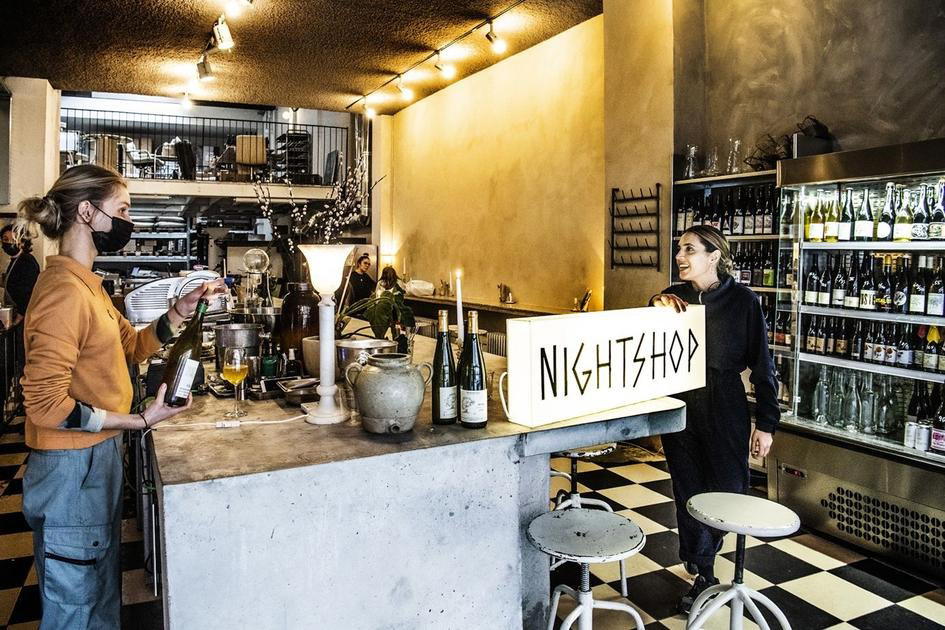
Rue de Flandre After Dark: What the Saint-Catherine Quarter Tells You About Brussels
There is a particular quality to Brussels' Saint-Catherine neighbourhood in the hours after the fish stalls close and the early diners clear out. The streets around Place Sainte-Catherine carry a specific urban atmosphere: the low light off the old canal basin, the limestone facades of buildings that have absorbed decades of kitchen smoke, the way sound travels differently on cobbled streets than on tarmac. At 167 Rue de Flandre, Nightshop sits inside this texture. The name itself signals something about positioning: not the formal register of the city's grand table tradition, not the studied casualness of a wine bar that wants you to know it has taste. Something between those poles, which is precisely where Brussels dining has been moving with the most interest over the past several years.
The Street and Its Context
Rue de Flandre runs northeast from the old fish market toward the canal, and it has become one of the more instructive streets in the city for understanding how Brussels' restaurant culture has evolved. The corridor includes everything from longstanding neighbourhood institutions to newer addresses that operate with a more international frame of reference. Brussels, unlike Paris or Amsterdam, has never fully consolidated its dining identity around a single dominant mode. The city's French-speaking and Flemish-speaking traditions produce different approaches to hospitality and service, and the cosmopolitan overlay of EU institutions adds another layer entirely. What emerges in a street like Rue de Flandre is a kind of negotiation between those influences, playing out in the formats and price points of the places that open and survive there.
For visitors who have worked through the city's more established addresses, such as the classic French-Belgian formality of Comme chez Soi or the contemporary ambition of La Villa Lorraine by Yves Mattagne, Nightshop represents a different register. The fine dining tier in Brussels, exemplified by venues like Bozar Restaurant, operates with a degree of institutional weight. Addresses like Nightshop occupy a less categorised space, which can make them harder to read from the outside but often more interesting to actually spend time in.
Atmosphere as the Primary Argument
The editorial angle on a venue called Nightshop is, fairly obviously, about what happens when it is dark outside. Brussels after ten in the evening operates differently from the city's lunchtime self. The Belgian capital is not a late-night dining city in the Mediterranean sense, but Saint-Catherine has enough density and enough venues with genuine late-night energy that the neighbourhood sustains itself past the point where other parts of the city quiet down. A venue at this address, with this name, is making an implicit argument about when it is leading experienced and by whom.
That argument connects to a broader shift in how European cities are thinking about the eating-and-drinking continuum. The clean separation between restaurant and bar, between a place you go to eat and a place you go to drink, has been collapsing for over a decade. In Brussels, as in Barge and Eliane, which both operate with formats that resist easy categorisation, the most interesting newer addresses tend to be the ones that have thought carefully about the relationship between what is on the plate and what is in the glass, and have structured the evening accordingly. Nightshop's positioning on that spectrum is worth understanding before you go, because it shapes both what to order and what time to arrive.
Brussels in the Belgian Dining Context
Belgium's serious dining culture extends well beyond the capital. The country produces a disproportionate number of Michelin-starred restaurants relative to its population, concentrated particularly in Flanders. Addresses like Hof van Cleve in Kruishoutem, Boury in Roeselare, and Zilte in Antwerp operate at a tier that competes with the leading tables in France and the Netherlands. Coastal venues such as Willem Hiele in Oudenburg and Bartholomeus in Heist have built international reputations around North Sea produce. Further afield, Castor in Beveren, d'Eugénie à Emilie in Baudour, De Jonkman in Sint-Kruis, L'air du temps in Liernu, and La Durée in Izegem each represent aspects of the country's broader seriousness about food at the table.
Brussels itself has historically punched below that weight at the formal end, but the city's informal and mid-register dining has been improving steadily. The neighbourhood around Saint-Catherine is probably where that improvement is most concentrated. Rue de Flandre, with its mix of price points and formats, reflects a moment when the city is working out what its dining identity actually is, separate from either the EU-institution expense-account scene or the grand French-Belgian classical tradition.
Planning a Visit
Rue de Flandre 167 is in the first arrondissement, walkable from the central station and from most of the city's main hotel cluster around the Grand Place. Saint-Catherine itself is leading reached on foot from the centre, roughly ten minutes northwest of the Bourse. The area is well served by tram lines along the nearby boulevard. Given the address and the name, an evening visit rather than a lunch call is the logical approach. Booking ahead is advisable for weekend evenings in this part of Brussels, where the neighbourhood's density means that walk-in options narrow quickly after eight. For a fuller picture of where Nightshop sits within the city's dining offer, the EP Club Brussels guide maps the key addresses by neighbourhood and register. International comparators worth holding in mind for frame of reference: Le Bernardin in New York and Atomix in New York both illustrate, in different ways, what happens when a city's dining scene fully commits to a particular register. Brussels is still in the process of making that commitment at the informal end, and addresses like Nightshop are part of where that process is most visible.
How Nightshop Brussels compares with similar nearby venues.
| Venue | Cuisine | Price |
|---|---|---|
| Kline | Modern Cuisine | €€ |
| Aster | Creative | €€€ |
| Henri | Modern French | €€€ |
Continue exploring
More in Brussels
Restaurants in Brussels
Browse all →
Bars in Brussels
Browse all →
Hotels in Brussels
Browse all →
Wineries in Brussels
Browse all →
At a Glance
- Trendy
- Industrial
- Cozy
- Lively
- Date Night
- Group Dining
- Casual Hangout
- Open Kitchen
- Natural Wine
- Local Sourcing
Current opening hours
- Monday
- Closed
- Tuesday
- Closed
- Wednesday
- Closed
- Thursday
- 5–11 PM
- Friday
- 12–11 PM
- Saturday
- 12–11 PM
- Sunday
- Closed
Hours can change for holidays and private events. Last verified .
Dimly lit with candles, nonchalant cool vibe, and music creating a trendy, welcoming atmosphere.
Know Before You Go
- Getting there
- Rue de Flandre 167, 1000 Bruxelles, Belgium