
A Michelin Selected castle-farm estate in the Flemish Ardennes village of Wijer, Kasteelhoeve de Kerckhem offers a rare combination of agricultural heritage and considered hospitality. The property sits within Belgium's quieter interior, where historic rural architecture shapes the accommodation experience as much as the surrounding countryside. For travellers seeking an alternative to urban hotel stays, the estate format here represents a distinct category of Belgian lodging.
Pearl is the En Primeur Club membership app — saves, bookings, and concierge access live there. Same editors, same standards.
- Address
- Grotestraat 209, 3850 Nieuwerkerken, Belgium
- Phone
- +32 11 59 66 20
- Website
- dekerckhem.com
- Directions
- Get directions
 Saves & bookings on Pearl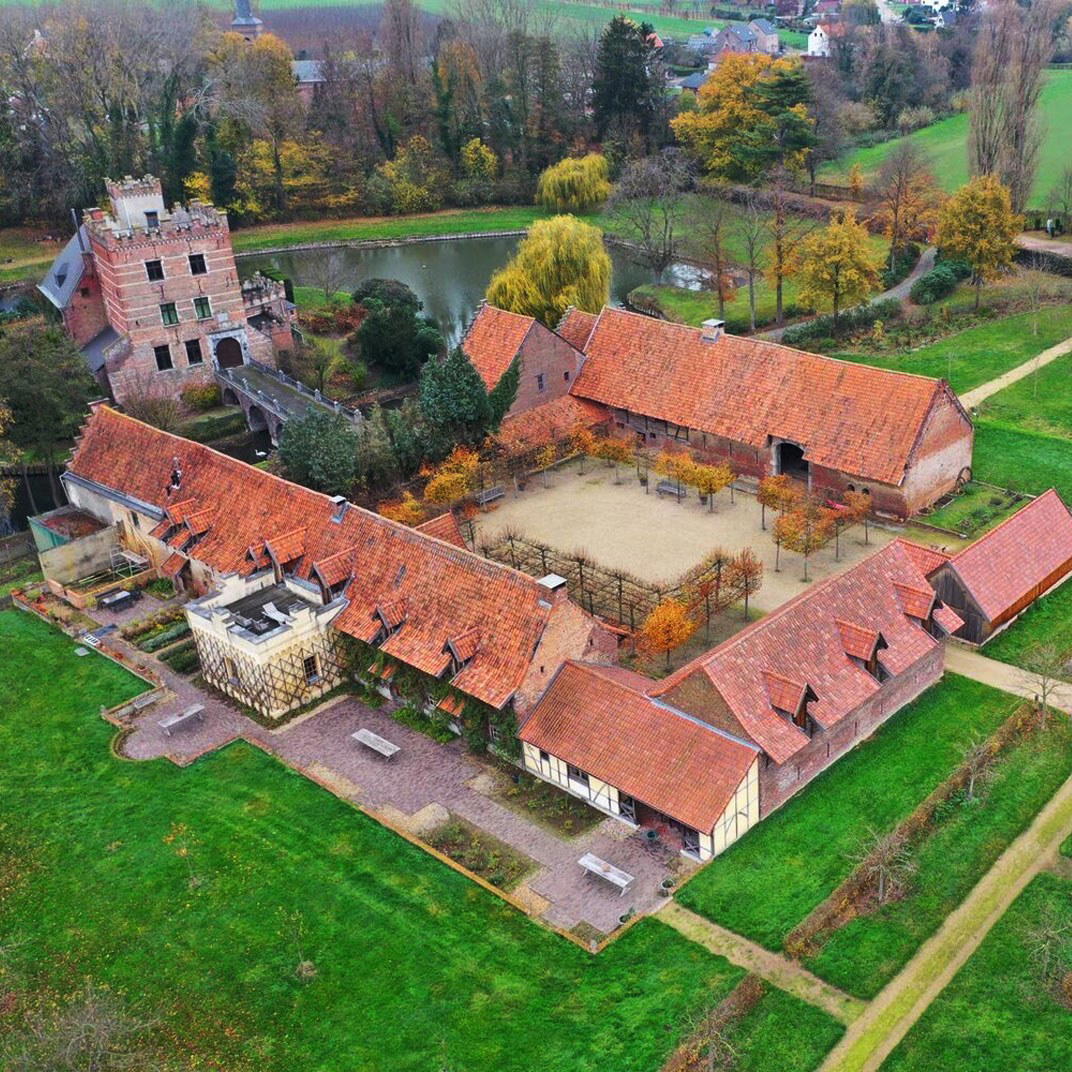
Castle-Farm Architecture and the Belgian Rural Estate Tradition
Across the Flemish interior, a particular category of heritage property has persisted largely outside the international hotel mainstream: the kasteelhoeve, or castle-farm, where working agricultural buildings cluster around a manor core behind a moat or courtyard wall. These estates were economic units before they were aesthetic ones, and the best-preserved examples carry that layered history in their stone, brick, and timber. Kasteelhoeve de Kerckhem, on Grotestraat in the village of Wijer, belongs to this tradition. The address places it in the Haspengouw region of Limburg, a stretch of Belgium known for its fruit orchards, rolling field patterns, and a density of historic farmstead properties that rarely appears in travel coverage focused on Bruges or Brussels.
The architecture of a kasteelhoeve follows a recognisable logic: a fortified or semi-fortified main house, ancillary farm buildings arranged around a central courtyard, and often a moat or water feature that originally served a defensive rather than decorative purpose. What distinguishes surviving examples like De Kerckhem is not picturesque charm in the brochure sense, but structural coherence — the sense that each element of the complex existed for a reason that pre-dates hospitality, and that the conversion to guest accommodation has worked with that logic rather than against it. Belgium has several comparable properties in Limburg and the Ardennes; Martin's Rentmeesterij in Bilzen, also in Limburg, occupies a similarly converted historic steward's house and operates within the same regional register of rural heritage lodging.
Michelin Selection in a Low-Profile Region
Kasteelhoeve de Kerckhem appears in the Michelin Selected Hotels list for 2025, which places it in a tier of Belgian accommodation that has passed editorial scrutiny without receiving the full star categorisation reserved for properties with more extensive service infrastructure. The Michelin Hotels selection process evaluates comfort, character, and setting alongside the more standard metrics of facilities and service, which means a property like this earns its place through accumulated integrity rather than lobby size. In practical terms, Michelin Selected status in a village of Wijer's scale signals that the property is operating above what the address alone would suggest.
Wijer is a sub-municipality of Lummen in the province of Limburg, and it sits well away from the circuits that bring international visitors to Belgium's better-known destinations. The Haspengouw region attracts cyclists and walkers, particularly during the spring blossom season when the orchards between Sint-Truiden and Borgloon are at their most visible, and the area has a quiet but established rural tourism infrastructure. Properties like Villa Copis in Borgloon serve the same regional visitor, and the Michelin selection of both properties reflects a pattern: Limburg's heritage rural accommodation has enough critical mass to constitute a recognisable tier of Belgian lodging.
What the Estate Setting Offers
The appeal of a kasteelhoeve stay over a conventional hotel rests on specificity of place. Where urban Belgium delivers proximity to museums, restaurants, and transit, a property in Wijer delivers the opposite: a defined, bounded environment where the architecture and landscape are the primary experience. The Haspengouw plateau has some of the most productive agricultural land in Belgium, and the visual cadence of the region, flat-to-rolling fields broken by farmstead clusters and fruit trees, reads very differently from the Ardennes forest landscape to the south. Travellers accustomed to Château Beausaint in La Roche en Ardenne or Le Sanglier des Ardennes in Durbuy will find Limburg a compositionally different experience, more open and agricultural, less forested and dramatic.
Within this setting, the castle-farm format concentrates experience in a way that a standalone hotel room cannot. Courtyards, working or semi-working farm elements, and the material texture of historic masonry create a durational sense of place that accumulates across a stay rather than resolving in a single amenity or meal. This is the implicit argument of the kasteelhoeve category, and it is why properties in this tradition attract a visitor who has already done the Bruges canal hotel, the Brussels design property, and is now looking for something with more agricultural specificity.
Regional Context and Peer Properties
Belgium's heritage hotel market has diversified considerably. In Flanders alone, the range runs from Botanic Sanctuary Antwerp at the urban boutique end to rural conversions like Hof Te Spieringen in Vollezele — see Hof Te Spieringen, which occupies a similar agrarian heritage register to De Kerckhem. In Wallonia, the equivalent properties tend toward the manor-house model: Manoir de Lébioles in Liège and Le Château de Mirwart in Mirwart represent the southern Belgian variant, where the forested Ardennes landscape frames a different set of architectural references. De Kerckhem's Flemish Limburg context places it in the northern agricultural tradition, which is architecturally less ornate but no less historically grounded.
For travellers building a broader Belgian itinerary, Wijer sits within reasonable driving distance of Hasselt, the provincial capital of Limburg with a small but active restaurant scene, and within the broader Haspengouw fruit region that runs south toward Sint-Truiden. The area is better navigated by car than public transport, which sets a practical baseline for the type of visitor De Kerckhem suits leading. Those arriving in Belgium via Brussels or Liège airport will find Limburg accessible without being immediate, which suits a multi-night rural stay rather than a single-night stopover. For a full map of what the region offers in dining and accommodation, our Wijer restaurants and venues guide covers the local options in more detail.
Planning a Stay
Contact and booking details for Kasteelhoeve de Kerckhem are available directly through the property at Grotestraat 209, Wijer, Belgium. Given the scale of the kasteelhoeve category generally, advance reservation is advisable, particularly for the spring blossom season in Haspengouw (typically late March through April), which represents a distinct high point in regional visitor interest. The Michelin Selected designation provides a baseline assurance of quality that is useful when planning around a property where website and online booking infrastructure may be less developed than larger hotel operations.
Travellers who want to benchmark the rural heritage experience against Belgium's urban hotel tier might consider the contrast available through Ganda Rooms and Suites in Ghent, Hotel De Orangerie in Bruges, or Juliana Hotel Brussels as counterpoints. The kasteelhoeve format is not a scaled-down version of those experiences. It is a different category of Belgian stay, where the architecture, the land, and the quiet are the product.
How Kasteelhoeve de Kerckhem compares with similar nearby venues.
| Venue | Awards |
|---|---|
| Kasteelhoeve de Kerckhem | MICHELIN Guide, Hotels Selected (2025) |
Recognition history
Dated appearances from independent guides and award organizations, with the underlying list record or original source where available.
Michelin Selected
Michelin
Continue exploring
More in Wijer
Hotels in Wijer
Browse all →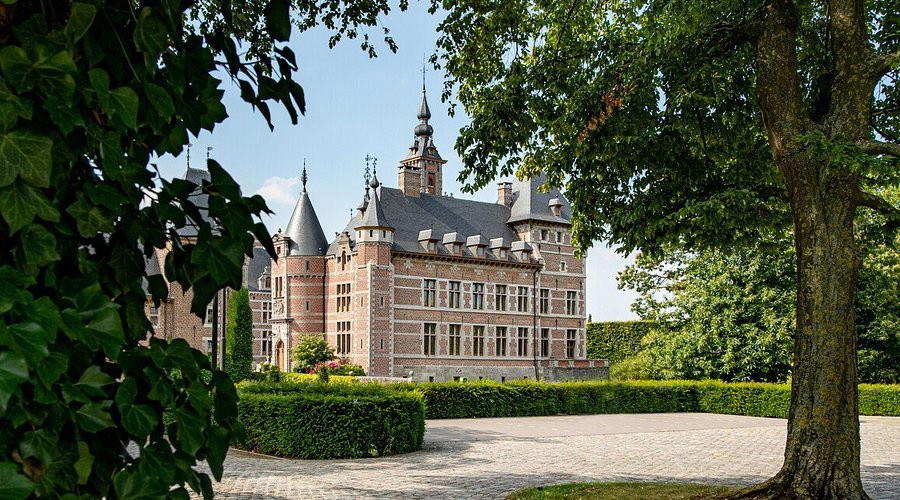
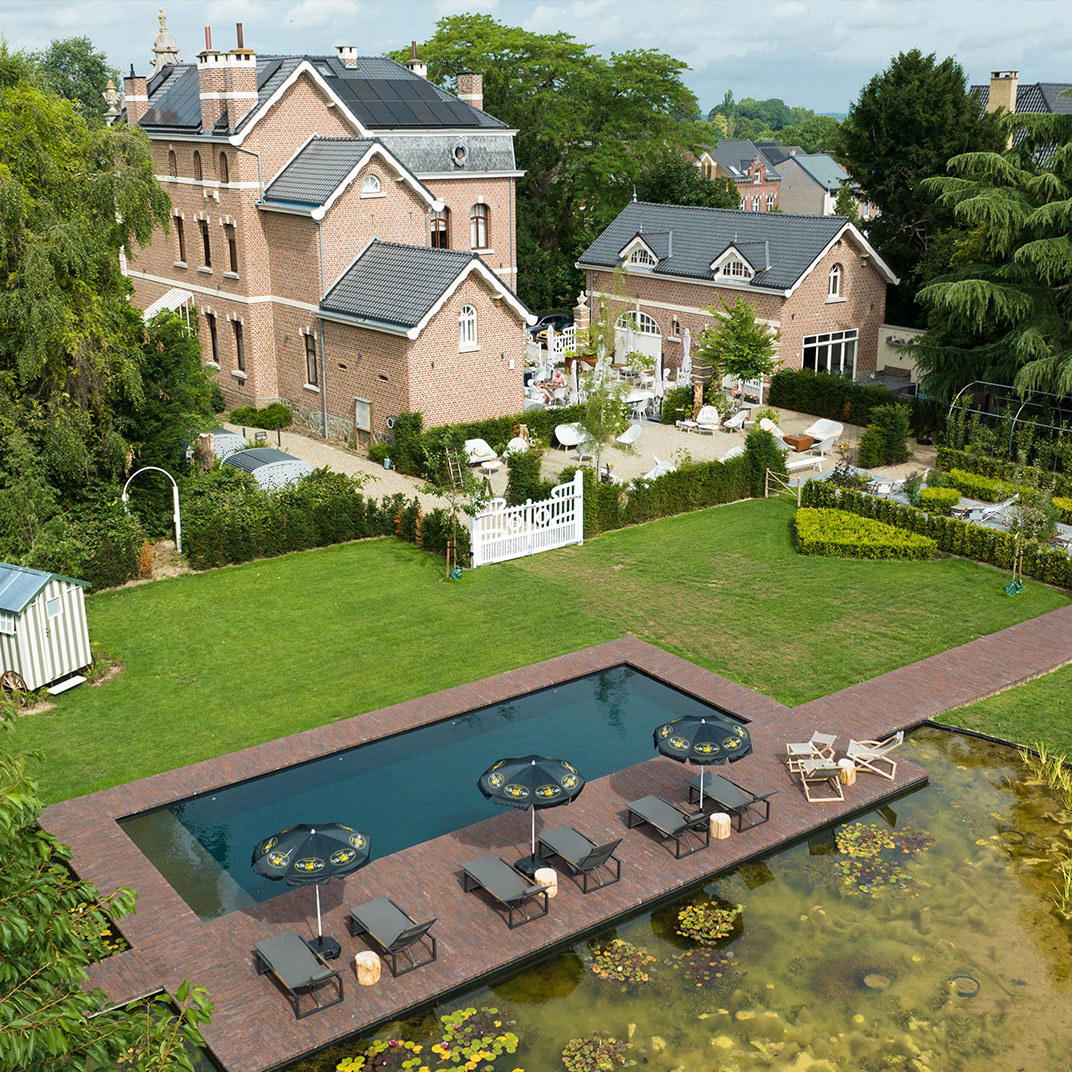
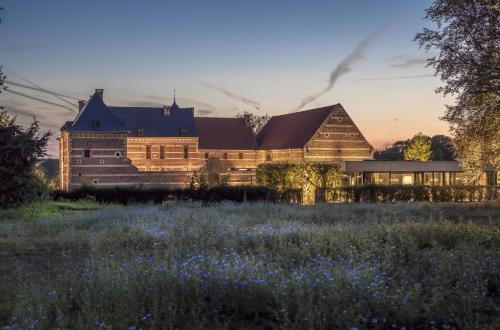
Bars in Wijer
Browse all →
Restaurants in Wijer
Browse all →

At a Glance
- Romantic
- Quiet
- Rustic
- Cozy
- Elegant
- Scenic
- Intimate
- Romantic Getaway
- Weekend Escape
- Anniversary
- Historic Building
- Garden
- Wi Fi
- Restaurant
- Bar
- Garden
- Bicycle Rental
- Garden
- Wi Fi
- Restaurant
- Bar
- Garden
- Bicycle Rental
Tranquil and relaxing atmosphere in lush gardens and courtyard, with warm country-style rooms featuring rich hues, soundproofing, open fireplaces, and a cozy library.
Know Before You Go
- Getting there
- Grotestraat 209, 3850 Nieuwerkerken, Belgium