
Iroha sits in Kumamoto’s izakaya tradition rather than the city’s formal dining tier, with horse meat dishes, tripe, sake and shochu anchoring the appeal. Its Tabelog 100 Izakaya WEST selections in 2024 and 2025 give it a useful trust signal for travelers trying to read the local drinking-and-eating scene beyond hotel dining rooms.
Pearl is the En Primeur Club membership app — saves, bookings, and concierge access live there. Same editors, same standards.
- Address
- 4-21 Suizenji Koen, Chuo Ward, Kumamoto, 862-0956, Japan
- Phone
- +81 96-382-6336
- Website
- tabelog.com
 Saves & bookings on Pearl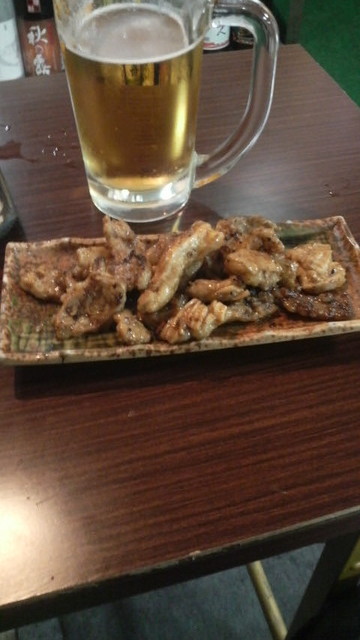
Approaching the Suizenji Park area in the evening, Kumamoto’s dining rhythm feels less like destination-restaurant theater than a sequence of working rooms: counters, tatami seating, shochu bottles, and menus built for conversation. That frames Iroha, an izakaya where the city’s drinking food carries more cultural weight than its modest format suggests.
Kumamoto is one of Japan’s more distinctive regional food cities because its identity is not built only around sushi, ramen, or kaiseki. Basashi, horse meat prepared in several styles across the prefecture, has local significance; tripe and offal cookery sit naturally beside it; shochu often matters as much as sake. Here, an izakaya can be a serious cultural address without looking formal. Tabelog’s Izakaya WEST 100 selections in 2024 and 2025 place Iroha in a regional conversation about quality, consistency, and local appeal rather than luxury theater.
Kumamoto izakaya culture, read through horse meat, tripe and shochu
The sharper way to understand this room is not as a generic Japanese tavern, but as part of Kyushu’s deeper drinking-food tradition. Izakaya in western Japan work as flexible social rooms, where grilled, simmered, raw, and fried dishes move across the table while beer, nihonshu, and shochu set the pace. Kumamoto adds its own vocabulary. Horse meat dishes are not novelty; they are a regional staple with enough range for specialist restaurants and everyday drinking rooms. Tripe also reflects a cooking culture that values texture and seasoning as much as luxury ingredients.
That makes the Tabelog recognition useful. It does not turn the room into fine dining, and should not be read that way. It signals that, among izakaya in western Japan, this is a serious local-format pick: grounded, specific, and more relevant to understanding Kumamoto than another polished multi-course room with little prefectural connection. Travelers comparing Kumamoto options will find a different register at antica locanda MIYAMOTO, where the spend is far higher, or at Amakusa Daiou Senmon Ten Tosaka, where the regional conversation turns to Amakusa chicken. Iroha belongs to the table-and-bottle end of the spectrum.
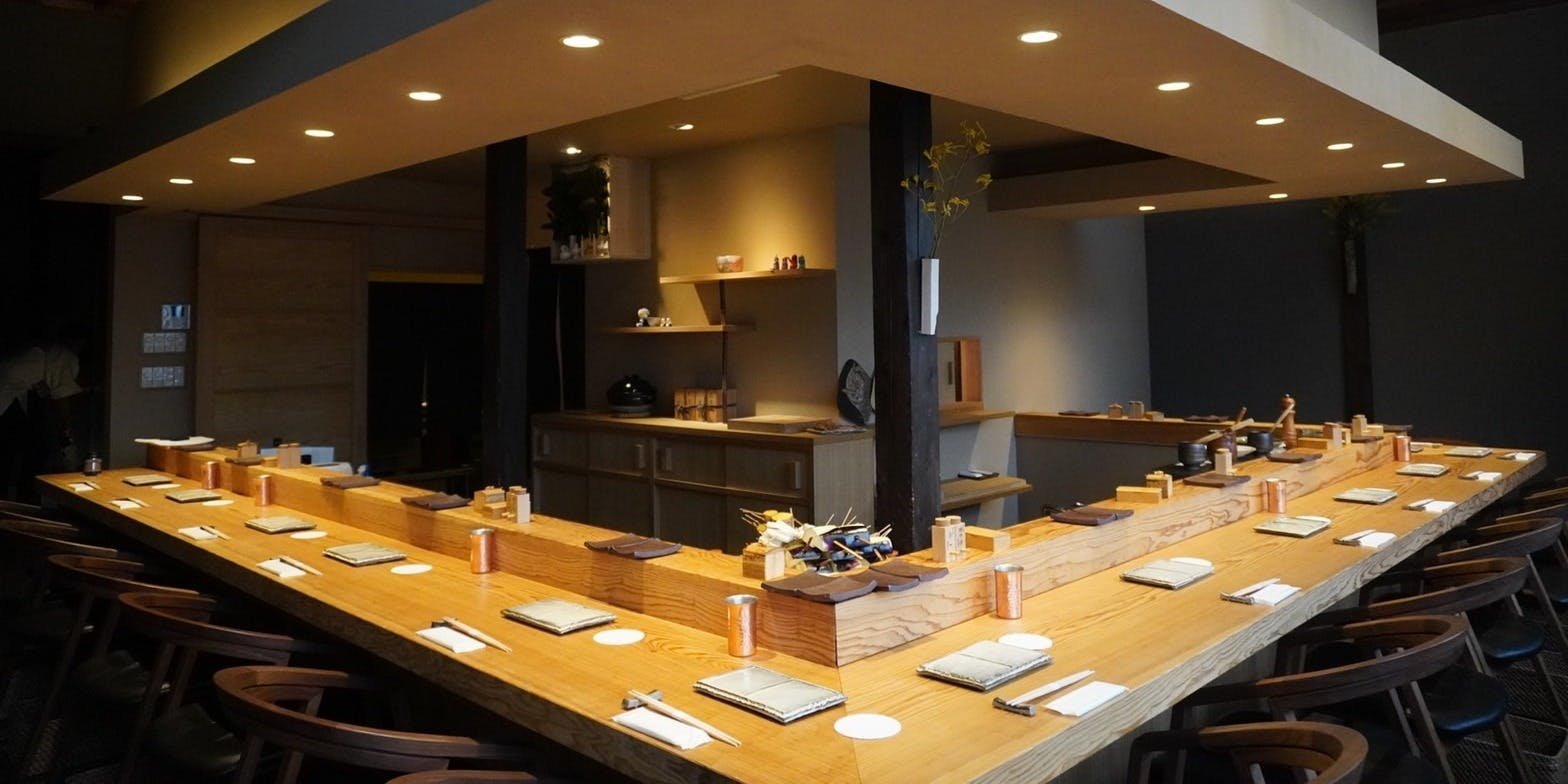
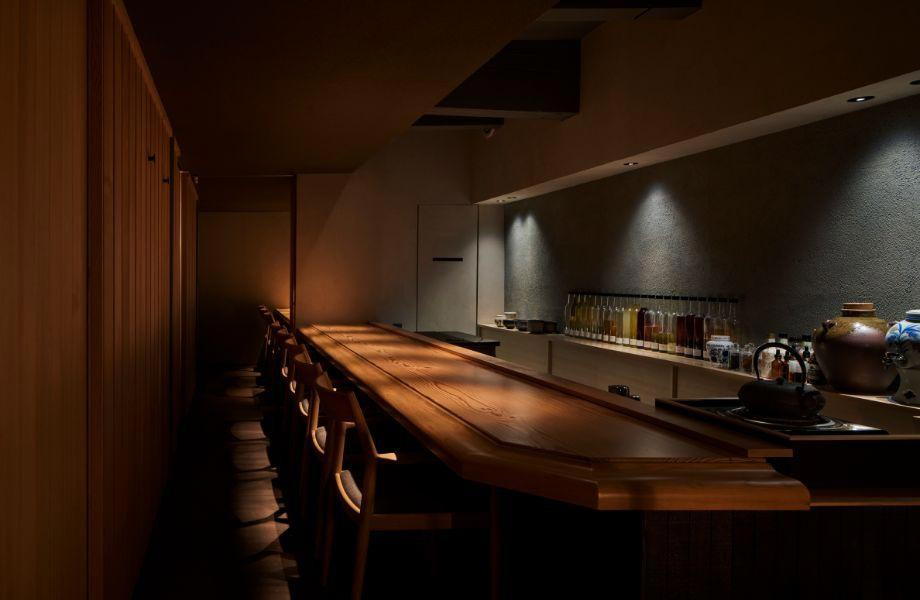
The listed counter seating and tatami space also matter. Counter seats suit solo diners or pairs who want izakaya pacing without making dinner an event; tatami seating fits groups settling in over multiple plates. That split is part of the format’s intelligence. Izakaya are casual not simply because they are inexpensive or informal, but because dinner can expand or contract around the people at the table.
A local room with a stronger editorial signal than its format suggests
Kumamoto’s restaurant map often asks visitors to choose between regional specificity and polish. Steak Matsushita sits in a higher spend category, while Jikka and Katsuretsu Tei Minami kumamoto ten occupy more everyday ranges; Mimuro sits elsewhere in the local field with less public detail attached. Iroha’s value is a direct line into the city’s izakaya habits without the grammar of a tasting menu. Its Tabelog score of 3.70, paired with back-to-back Izakaya WEST 100 selections, is a clearer signal than décor language or chef mythology.
The drinking side is part of the argument. Sake is listed, but shochu receives stronger emphasis, aligning with Kyushu’s broader preference for distilled spirits at the table. For travelers used to Tokyo cocktail bars or Kyoto sake counters, the center of gravity changes. Pairing becomes earthier and more flexible: horse meat dishes, tripe, and other izakaya plates keep pace with the glass rather than perform as isolated courses. For wider Japanese drinking-food comparison, the Kumamoto format sits far from the sake-bar framing at Jōdo Saké Bar in Los Angeles, and far from the grab-and-go rice-ball clarity of Onigiri Time in Pasadena.
Within Kumamoto, this address helps balance an itinerary. A traveler could read the city through Italian-inflected local sourcing at antica locanda MIYAMOTO, sharper contemporary dining at .know, or another angle at BARON and China Sichuan Togen. The point is not ranking them, but seeing Kumamoto’s plural dining culture: local tavern food, regional poultry, Chinese cooking, Italian technique, and contemporary rooms within a compact city frame.
How to place it in a Kumamoto itinerary
Iroha makes strongest sense for travelers wanting a Kumamoto-specific evening without formal reservation stiffness. Reservations are available, and the room is non-smoking, giving it a cleaner practical profile than some old-school taverns. Payment is cash-only, with no credit cards, electronic money, or QR payments accepted, so arrive with yen, treat the meal as a social izakaya session, and do not expect private-room dining.
The location near Suizenji Park shapes the night. This is not the dense neon grammar of a major station district; it reads as a neighborhood dining stop, useful before or after time around one of Kumamoto’s better-known garden areas. The venue lists limited parking, but rail access through Suizenji Park Station is cleaner for visitors. Closed days and service times can shift across Japan’s independent restaurants, so confirm the current schedule before building an evening around it.
For broader planning, Our full Kumamoto restaurants guide maps this against other meals, while Our full Kumamoto hotels guide, Our full Kumamoto bars guide, Our full Kumamoto wineries guide, and Our full Kumamoto experiences guide set the wider trip structure. Readers comparing Japanese regional formats outside Kyushu can also look at -Grilled beef Sukiyaki- KAMAKURA TANUKIAN 鎌倉 たぬき庵 in Kamakura,. 鮪と炭火焼き うお炭 秋葉原店 in Tokyo,.cafe in Osaka, (Shoku) Vietnam in Kawasaki, [Curry Senmon Ten] Maruyama Kyoju. in Sapporo, and [ki:] in Kyoto.
The editorial verdict is simple: this is a Kumamoto izakaya to read culturally, not ceremonially. Its appeal lies in local ingredients, shochu-led drinking, counter-and-tatami informality, and enough third-party recognition to separate it from an ordinary neighborhood stop. For a city whose food identity is often underexplained to visitors, that combination carries real weight.
A Pricing-First Comparison
Comparable venues by cuisine and price in the same metro.
| Venue | Cuisine | Price | Awards | Notes |
|---|---|---|---|---|
| IrohaThis venue — the venue you are viewing | $$ | , | ||
| Katsuretsu Tei Shinishigai honten | $$ | , | Shinshigai, Chuo Ward, Traditional Kumamoto Tonkatsu Restaurant | |
| Yoshoku no Mise Hashimoto | $$ | , | Kamitori-cho, Chuo Ward, Japanese-style Western Cuisine (Yoshoku) | |
| Tensho Katahei | $$$$ | , | Chuo Ward, Seasonal Tempura & Soba Omakase | |
| Sushi Nakamura | Chuo-Ku, Traditional Japanese Sushi | $$$ | ||
| Sekka Sanbo | $$ | , | Chuo Ward, Kamidori / Kaminoura-dori area, Handmade Soba & Sake |
At a Glance
- Lively
- Cozy
- Classic
- Hidden Gem
- Energetic
- After Work
- Casual Hangout
- Group Dining
- Solo
- Celebration
- Late Night
- Standalone
- Sake Program
- Beer Program
Cozy, lively neighborhood izakaya with counter seats and tatami rooms, a classic Kumamoto feel, and an atmosphere suited to relaxed drinking and sharing plates with friends over long, unhurried meals.