On a narrow lane steps from the Uffizi, Ino occupies a particular niche in Florence's eating culture: the serious wine bar where the focus falls on what's in the glass as much as what's on the plate. The address on Via dei Georgofili puts it at the centre of one of Italy's most competitive dining districts, where the bar for both bottle depth and kitchen craft runs consistently high.
Pearl is the En Primeur Club membership app — saves, bookings, and concierge access live there. Same editors, same standards.
- Address
- Via dei Georgofili, 3r/7r, 50122 Firenze FI, Italy
- Phone
- +39 348 784 9980
- Website
- inofirenze.com
- Directions
- Get directions
 Saves & bookings on Pearl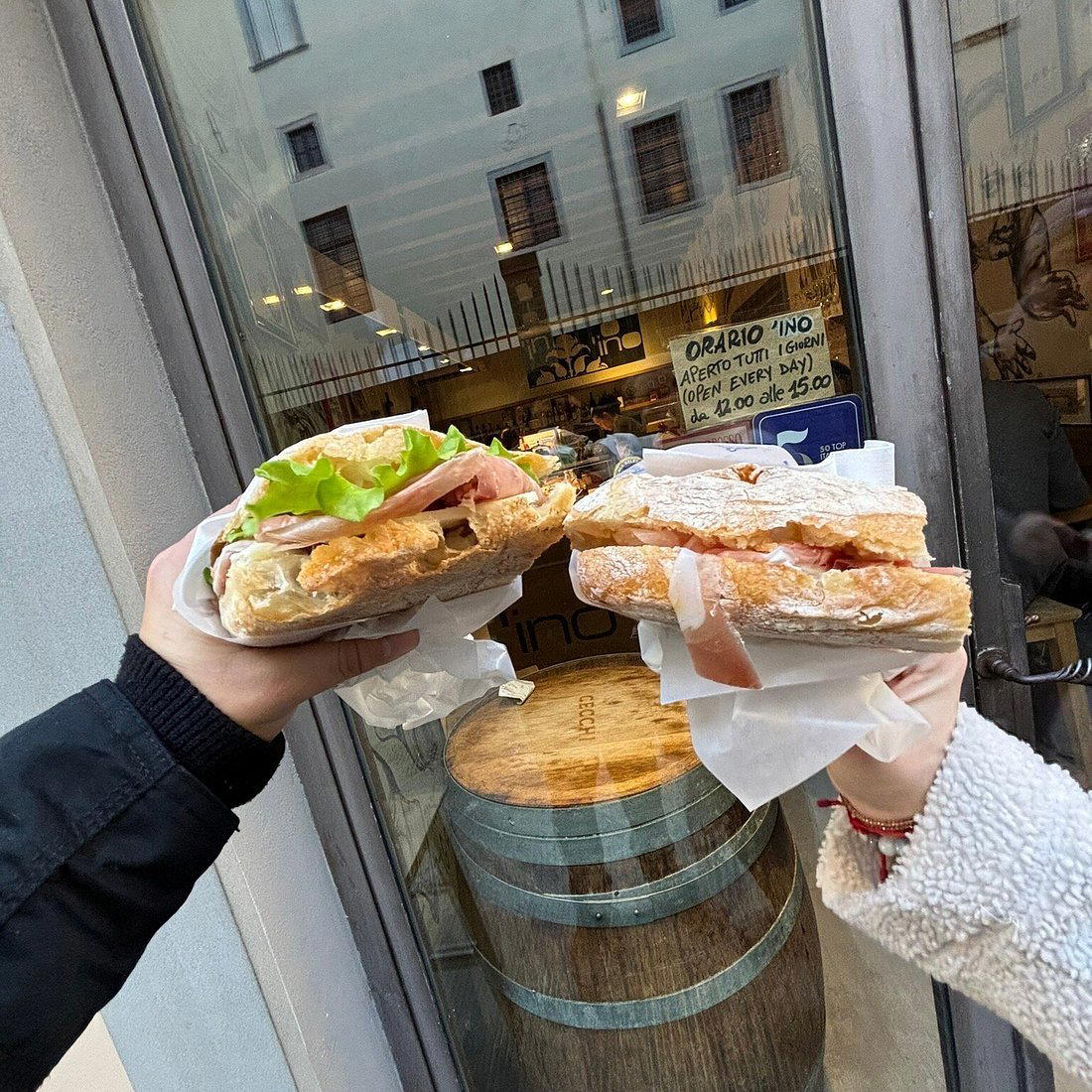
Via dei Georgofili runs between the Uffizi colonnade and the Arno, a lane so narrow that the buildings on either side seem to lean toward each other in the afternoon shade. The address means foot traffic from one of Europe's most-visited museums, but the corridor also happens to sit inside one of Florence's densest concentrations of serious eating and drinking. Enoteca Pinchiorri holds court a few streets east with a cellar that runs to tens of thousands of labels; Santa Elisabetta and Atto di Vito Mollica work at the formal tasting-menu end of the spectrum; Borgo San Jacopo and Gucci Osteria da Massimo Bottura anchor the Oltrarno and Santa Croce ends of the conversation. Ino sits in a different register entirely: the wine bar format that treats the bottle as the primary text and the food as a considered companion rather than an afterthought.
The Wine Bar Format and Why Florence Produces Good Ones
The enoteca tradition in Tuscany is old enough that the word predates most of the region's modern restaurant culture. In its original form it meant a place where wine was the sole commerce, poured from demijohns into whatever vessel the customer brought. The contemporary Florentine wine bar occupies a middle ground between that utilitarian model and the full restaurant: a curated list, a compact kitchen, and a room designed for conversation over a glass rather than ceremony over multiple courses. That format rewards cellar depth and bottle selection in ways that a full tasting-menu operation does not, because there is nowhere to hide a mediocre list behind an elaborate kitchen.
Italy's broader premium dining circuit has been extending its reach in recent years. Osteria Francescana in Modena and Piazza Duomo in Alba have established that Italian fine dining competes with any European comparable set. Le Calandre in Rubano, Uliassi in Senigallia, and Reale in Castel di Sangro all demonstrate how far regional Italian kitchens have travelled from simple trattoria cooking. But not every visit to Florence calls for a three-hour tasting menu. The wine bar format answers a different question: where do you drink well, eat honestly, and stay close to the texture of the city without committing to the full apparatus of a formal dinner?
What the Address Signals About the List
A wine operation in this part of Florence operates inside a competitive frame set partly by Enoteca Pinchiorri, whose cellar is one of the reference points for Italian wine depth anywhere in the country. That proximity creates an implicit standard of seriousness for any bottle-focused address in the neighbourhood. The expectation among the clientele who wander this part of the centro storico is not simply that wine will be available, but that it will be chosen with intent: Tuscan producers positioned correctly by vintage, Super Tuscans represented across their hierarchy, and enough reach beyond the region to give the list genuine range.
Tuscan wine at this level operates through appellations that reward close attention: Brunello di Montalcino, Vino Nobile di Montepulciano, the Bolgheri corridor from which Sassicaia and Ornellaia emerged, and the Chianti Classico Gran Selezione tier introduced formally in 2014. A serious house list in Florence will typically show range across these, with vintage depth on the Brunello side where the gap between a good year and a great one translates directly into the character of what ends up in the glass. International peers operating at comparable levels of bottle curation include Le Bernardin in New York City and Lazy Bear in San Francisco, both of which treat the wine program as a department with its own editorial logic, not a supplement to the kitchen.
The Food Counterpart
The schiacciata sandwich is Florence's everyday bread vehicle: a flat, olive-oil-rich focaccia split and filled, built for portability and immediate consumption. In its simplest form it is street food. In a serious wine bar it becomes a more deliberate thing: the quality of the bread, the selection of what goes inside, and the sourcing of the components all become as legible as the wine list because there is nothing else on the plate to distract from them. The format compresses the kitchen's choices into a small number of decisions, each of which is consequently more visible.
That compression is what makes the wine bar format a useful critical lens. At a full tasting-menu restaurant like Dal Pescatore in Runate or Quattro Passi in Marina del Cantone, quality is distributed across many courses, pairings, and service moments. At a wine bar the edit is tighter. The sourcing either holds up or it does not. Italian wine bars that get this right tend to work with a short, rotating set of producers and a kitchen that knows how to make bread worth eating alongside a good bottle of Morellino or Vernaccia.
Placing Ino in the Florence Conversation
Florence's dining options at the premium end cluster toward formal Italian Contemporary, a category well represented by Enrico Bartolini and, further north, by Atelier Moessmer Norbert Niederkofler in Brunico and Casa Perbellini 12 Apostoli in Verona. Ino operates in a narrower niche: the daytime or early-evening wine bar that does not compete with tasting menus for the same occasion. The visitor who has booked dinner at a Michelin-starred address and wants a focused glass and a plate of something honest at midday is exactly the person this format serves. That is not a lesser experience; it is a different one, and Florence, given its density of serious cellars and its bread culture, is a city that does it well.
For a broader orientation to the city's eating options,
Planning Your Visit
Via dei Georgofili is pedestrian, close to the Ponte Vecchio end of the Uffizi complex, and easiest reached on foot from either the Santa Croce or Oltrarno directions. The proximity to the museum means the lane is busiest during mid-morning and post-museum afternoon hours; arriving outside those windows typically means a quieter room.
A Quick Peer Check
Comparable venues nearby, for context on price, style, and recognition.
| Venue | Cuisine | Price | Notes |
|---|---|---|---|
| InoThis venue — the venue you are viewing | Tuscan Artisanal Panini | $ | Not listed |
| Trippaio Albergucci Mario | Florentine Tripe and Lampredotto Street Food | $ | Bobolino |
| Semel Street Food | Tuscan Street Food Panini | $ | Ricorboli |
| PIZZA A TAGLIO RICCIARDI | Pizza a Taglio | $ | Nave A Petriolo |
| Osteria Belle Donne | Traditional Tuscan Osteria | $$$ | Santo Spirito |
| Trattoria I'raddi | Traditional Tuscan Trattoria | $$ | Santo Spirito |
Continue exploring
More in Florence
Restaurants in Florence
Browse all →
Bars in Florence
Browse all →
Hotels in Florence
Browse all →
At a Glance
- Rustic
- Cozy
- Casual Hangout
- Solo
- Brunch
- Standalone
- Beer Program
- Local Sourcing
- Farm To Table
- Street Scene
Current opening hours
- Monday
- 12–3 PM
- Tuesday
- 12–3 PM
- Wednesday
- 12–3 PM
- Thursday
- 12–3 PM
- Friday
- 12–3 PM
- Saturday
- 12–3 PM
- Sunday
- 12–3 PM
Hours can change for holidays and private events. Last verified .
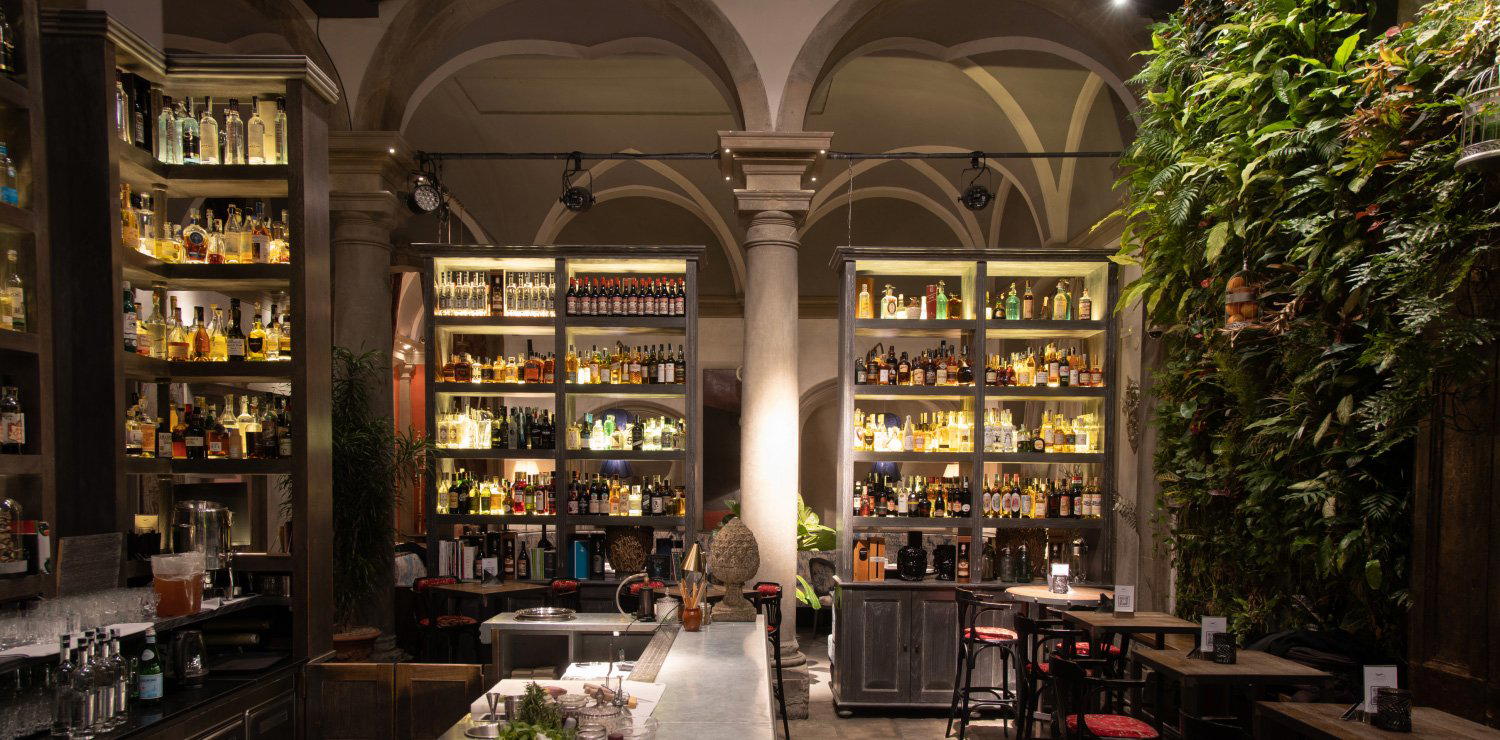
Cool and contemporary interior with friendly, welcoming staff; casual wooden stools and intimate counter seating create an unpretentious yet refined atmosphere.