
Michelin Plate
Our verdict
The menu covers classic meat and fish dishes, with a shorter format at lunch and fuller options in the evening. Booking is required, and the logistics of visiting a working correctional facility demand more planning than most Milan restaurants.

Pearl is the En Primeur Club membership app, where members save venues, book tables and use the concierge.
The menu
What to order
- Manzo all'olio with polenta and cocoa
- Risotto with mojito and raw scallops
- Spaghetti alla chitarra with bluefin tuna
A Dining Room Inside a Working Prison
The approach to InGalera does not resemble any other restaurant arrival in Milan. Via Cristina Belgioioso runs through the Bollate district, well north-west of the city centre, and the building at number 120 is a functioning correctional facility. Guests pass through security protocols before reaching the dining room, a process that sets the tone more effectively than any interior design choice could. By the time you sit down, the context has done its work: this is not a restaurant that borrows prison aesthetics for theatrical effect. It is, straightforwardly, a restaurant inside a prison.
Italy has a longer tradition of carceral rehabilitation programmes than many European neighbours, and InGalera sits within that framework. Dishes are prepared with the active contribution of inmates as part of a structured reintegration initiative, and the dining room operates as a genuine commercial kitchen rather than a training annex.
The Booking Experience: What You Need to Know Before You Go
Of all the restaurants in Milan where advance planning makes a material difference, InGalera is the most logistically specific. The constraints here are not driven by fashionable demand or a small counter format, as they are at the city's Michelin-starred omakase and tasting-menu addresses. They are structural. Entry to a correctional facility requires pre-registration, and the restaurant cannot accept casual walk-ins in the way that a trattoria on Navigli can. Guests who arrive without a reservation will not be seated; they will not get past the gate.
The practical sequence matters: confirm your reservation well in advance, ensure all guests in your party are accounted for on the booking, and carry valid identification on the day. The prison's own administrative requirements mean the restaurant has less flexibility than a private venue would in accommodating late additions or name changes. Build extra time into your journey, the Bollate location is not central, and public transport options require planning. The dining experience itself is unhurried, but the access process is procedural, and that rhythm begins before you reach the table.
Lunch operates on a shorter format with a restricted menu, making it the more accessible entry point if your schedule is flexible. The evening service offers a fuller range of meat and fish dishes. Neither format is prix-fixe in the way that Milan's high-end tasting menus operate at places like Seta or Andrea Aprea; InGalera's pricing sits at the €€ tier, positioning it closer to the city's neighbourhood restaurants than to its Michelin-starred circuit.
Classic Cuisine in an Unconventional Frame
The cuisine at InGalera falls into the classic Italian category: defined by recognisable preparations, seasonal produce, and the kind of direct execution that characterises mid-range dining across northern Italy rather than the technique-forward cooking at Enrico Bartolini or the reinterpreted modernism at Cracco in Galleria. The choice between meat and fish dishes gives the menu a traditional Italian bifurcation that will be familiar to anyone who has eaten in trattorias across Lombardy.
Michelin's Plate recognition, awarded in both 2024 and 2025, is the relevant benchmark here. The Plate designation, distinct from a star, signals food that meets Michelin's quality threshold without the additional layers of creativity or technical ambition required for star status. Within Milan's dense and competitive restaurant scene, which contains starred addresses from the neighbourhood-level to the three-star tier of Enrico Bartolini, a Michelin Plate at the €€ price point represents solid, consistent cooking. The rating is also a practical signal for first-time visitors uncertain whether the social enterprise context affects the food quality: it does not, at least not in the direction you might expect.
For context within the wider Italian fine-dining conversation, InGalera occupies a different register entirely from Italy's most celebrated addresses. The creative ambition of Osteria Francescana in Modena, the pastoral depth of Dal Pescatore in Runate, or the Piedmontese precision of Piazza Duomo in Alba are not the comparison set. InGalera's significance is contextual rather than gastronomic, and understanding that distinction is the starting point for deciding whether it belongs in your Milan itinerary.
Where InGalera Sits in Milan's Dining Picture
Milan's restaurant offer in 2025 spans a wide range, from the neighbourhood wine-bar format of places like La Cantina di Manuela to multi-starred destinations that benchmark against Europe's leading tables. InGalera occupies a category that none of those addresses can share: a restaurant whose reason for existing is as much civic as culinary. That framing is not a criticism. Restaurants that operate rehabilitation programmes within the prison system have demonstrated, across several European contexts, that the model produces real outcomes for participants, and the commercial restaurant operates as the mechanism that funds and justifies the programme.
Within Italy, this model has a small but established peer group, similar projects operate in Turin and Naples, but InGalera at Bollate has accumulated the most sustained critical attention, reflected in consecutive Michelin recognition. For a city that produces some of Italy's most ambitious cooking, from the alpine-influenced work at Atelier Moessmer Norbert Niederkofler in Brunico to the classical rigour of Enoteca Pinchiorri in Florence or the long pedigree of Le Calandre in Rubano, InGalera is a reminder that the Italian table also functions as a vehicle for social infrastructure.
Visitors looking for a broader view of Milan's options can consult our full Milan restaurants guide, along with coverage of the city's hotels, bars, wineries, and experiences. For classic cuisine in a more conventional setting, comparisons with KOMU in Munich and Maison Rostang in Paris offer a European peer frame for the format.
Know Before You Go
- Address: Via Cristina Belgioioso, 120, 20157 Milan, inside Bollate prison
- Price range: €€ (mid-range by Milan standards)
- Recognition:
- Reservations: Required, walk-ins are not possible due to facility access protocols
- Identification: Carry valid photo ID for all members of your party
- Format: Shorter restricted menu at lunch; fuller meat and fish menu in the evening
- Getting there: Bollate is north-west of the city centre; allow additional travel time
Frequently asked questions
Do they take walk-ins at InGalera?
No. InGalera operates inside a working correctional facility at Via Cristina Belgioioso, 120, Bollate, and entry requires advance registration, guests cannot simply arrive at the door. Plan well ahead, as the combination of limited covers and the administrative requirements of prison access makes last-minute visits impossible.
Comparable Spots
| Venue | Cuisine | Price | Awards | Notes |
|---|---|---|---|---|
| InGaleraThis venue (the venue you are viewing) | Modern Northern Italian | $50–100 | Michelin Plate | Not listed |
| Enrico Bartolini | Modern Italian Fine Dining | $300–500 | 3 Michelin Stars · World's 50 Best #85 | Creative |
| Cracco in Galleria | Modern Italian Fine Dining | $150–200 | 1 Michelin Star · World's 50 Best #33 | Modern Cuisine |
| Andrea Aprea | Modern Italian Fine Dining | $200–300 | 2 Michelin Stars · La Liste Top Restaurants | Modern Italian, Italian Contemporary |
| Seta | Modern Italian Fine Dining | $150–200 | 2 Michelin Stars · La Liste Top Restaurants | Modern Italian |
| Contraste | Modern Italian Fine Dining | $150–200 | 1 Michelin Star · La Liste Top Restaurants | Progressive Italian, Modern Cuisine |
Recognition history
Dated appearances from independent guides and award organizations, with the underlying list record or original source where available.
Michelin Plate
Michelin
Full recognition history (3 entries)
Michelin Plate
Michelin
Michelin Plate
Michelin
Continue exploring
More in Milan
Restaurants in Milan
All restaurants in Milan →
Bars in Milan
All bars in Milan →

Details
- Well Known
- Modern
- Elegant
- Sophisticated
- Special Occasion
- Date Night
- Group Dining
- Celebration
- Private Dining
- Open Kitchen
- Historic Building
- Design Destination
- Extensive Wine List
- Local Sourcing
- A La Carte
- Tasting Menu
- Wine
- Vegetarian Friendly
Current opening hours
- Monday
- Closed
- Tuesday
- 12:15–2 PM, 7:30–10 PM
- Wednesday
- 12:15–2 PM, 7:30–10 PM
- Thursday
- 12:15–2 PM, 7:30–10 PM
- Friday
- 12:15–2 PM, 7:30–10 PM
- Saturday
- 12:15–2 PM, 7:30–10 PM
- Sunday
- Closed
Hours can change for holidays and private events. Hours as of .
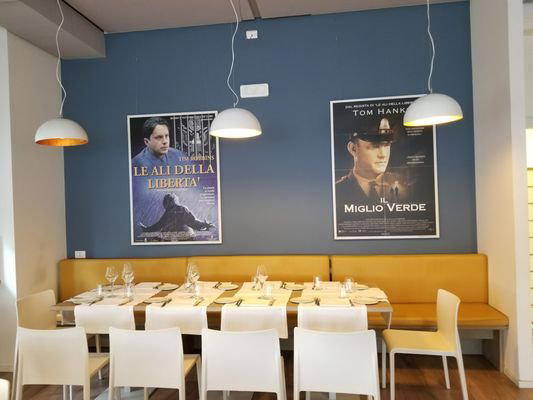
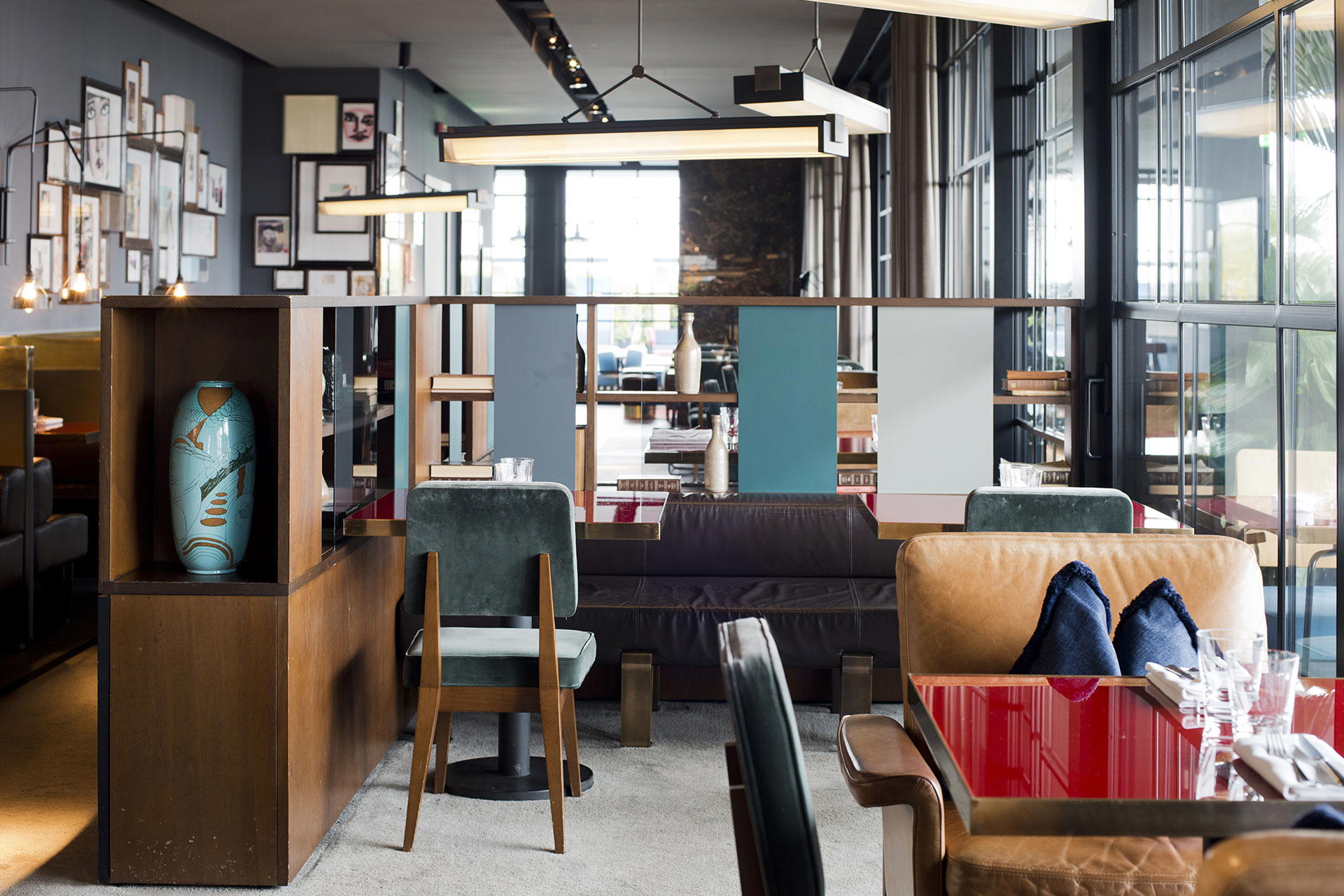
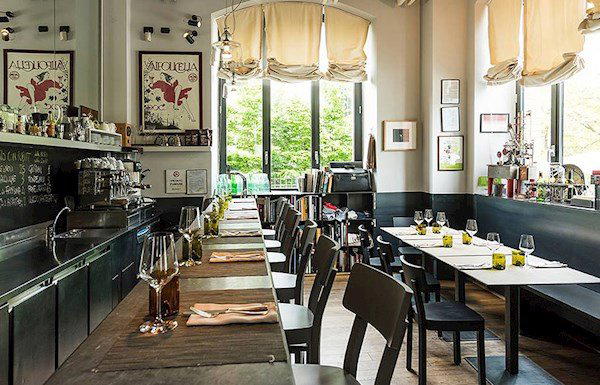
Modern and airy with sleek design, deep blue accent walls, bright gold-rimmed light fixtures, and floor-to-ceiling posters of famous prison movies; deliberately lighthearted despite the prison setting to avoid a voyeuristic or depressing atmosphere.