


Technical mastery defines Ristorante Berton Milan, where Gualtiero Marchesi protégé Andrea Berton creates refined Italian cuisine through playful precision. Located in the elegant Porta Nuova district, this fine dining destination showcases signature dishes like temperature-contrast risotto with red shrimp tartare and innovative broth-focused tasting menus.
Pearl is the En Primeur Club membership app — saves, bookings, and concierge access live there. Same editors, same standards.
- Address
- Via Mike Bongiorno, 13, 20124 Milano MI, Italy
- Phone
- +39 02 6707 5801
- Website
- ristoranteberton.com
- Directions
- Get directions
 Saves & bookings on Pearl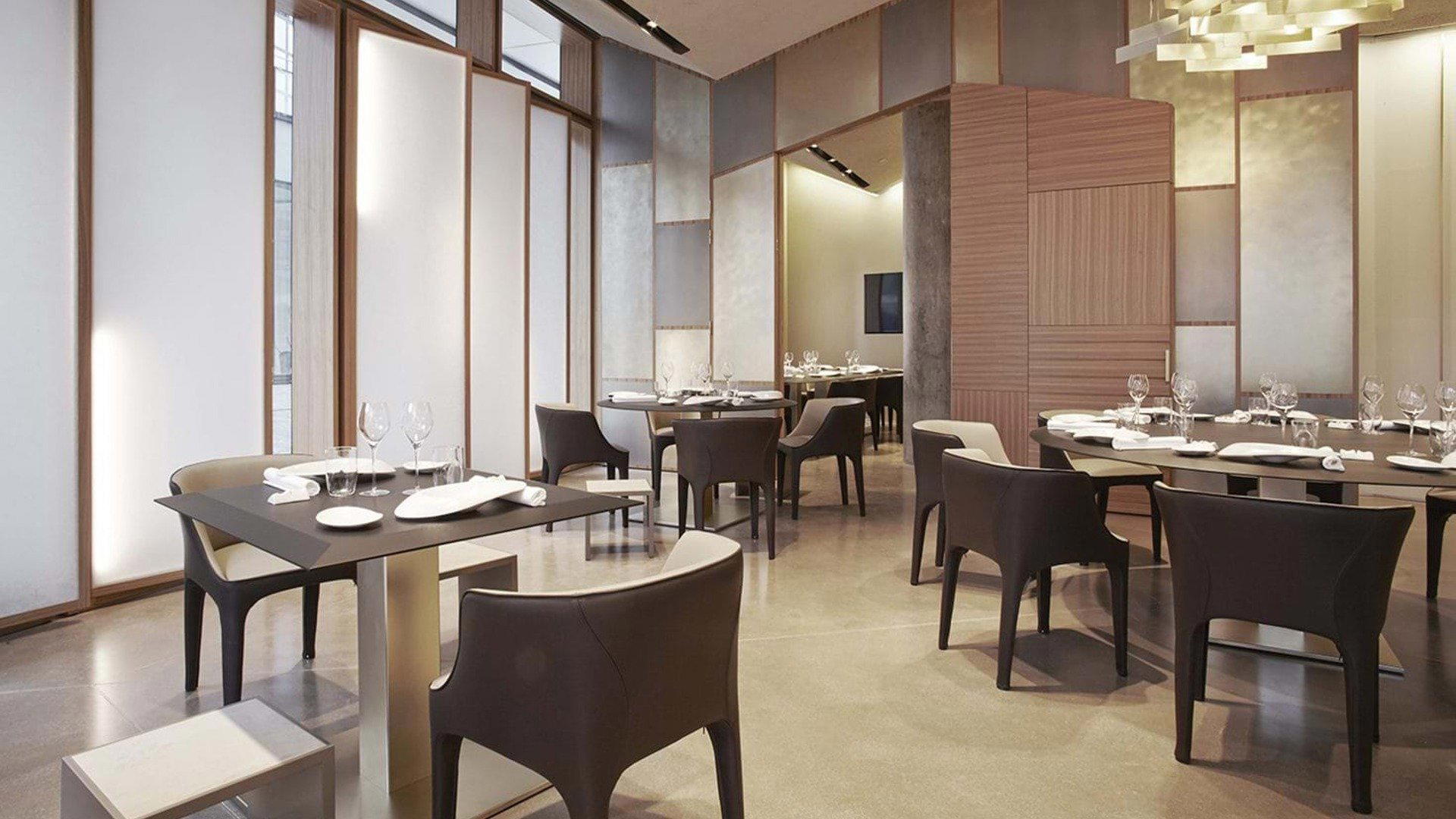
Porta Nuova and the Architecture of Restraint
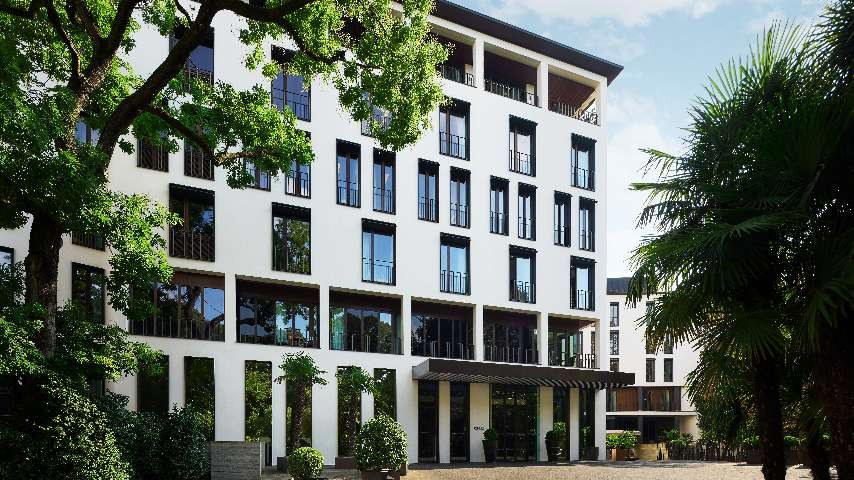
Milan's Porta Nuova district arrived fully formed in the early 2010s as the city's statement on what contemporary urban Italy could look like: glass towers, landscaped public plazas, and a deliberate break from the cobblestone centro storico. The dining scene that took root here follows a similar logic. The restaurants that work here operate at the intersection of technical rigour and architectural minimalism, and Ristorante Berton, on Via Mike Bongiorno, is among the clearest expressions of that positioning.
The room itself signals the register immediately. The dining space is contemporary in the precise sense of the word: considered proportions, clean sightlines, a palette that recedes rather than competes with what arrives on the plate. In a city where many leading tables rely on historic interiors to do half the atmospheric work, the deliberate modernity here asks the cooking to carry its own weight.
Where Berton Sits in Milan's Starred Tier
Milan's Michelin-starred contemporary Italian category has grown competitive over the past decade. At the €€€€ price point, a reservation at Ristorante Berton puts you alongside a comparable set that includes Enrico Bartolini, Cracco in Galleria, Andrea Aprea, and Seta. Each of these tables holds a Michelin star and operates at comparable price levels, which means the differentiating logic comes down to culinary philosophy rather than tier. Ristorante Berton's position within that group is defined by a specific formal constraint: the emphasis on broth as a structural and flavour element rather than as a background preparation.
6 from 683 reviews suggests consistent execution rather than occasional brilliance.
The Broth as Inheritance: Reading the "Non Solo Brodo" Menu
Italian kitchen tradition has always treated broth as foundational rather than incidental. The French codified fond and bouillon into a formal grammar; Italian cooking absorbed the logic through different channels, from ribollita to brodetto, from brodo di cappone at Christmas to the slow extraction of bones in Milanese ossobuco preparation. The generational kitchen passes down the broth alongside the recipe, treating it as a form of accumulated knowledge rather than a simple cooking step.
The "Non Solo Brodo" menu at the restaurant reads as a contemporary reckoning with that inheritance. The format dedicates tasting menu courses to different broths, each served in relation to the primary component: sometimes poured tableside over the dish, sometimes alongside in a glass as a separate drink-and-eat rhythm. The squid with cherries and aubergines, for example, receives an intensely reduced squid broth at the table, which changes the dish's flavour architecture mid-course. The lamb with cardamom and coffee arrives with a cardamom-scented lamb broth served separately in glass, intended to be taken alongside the main plate. This is not garnish or sauce in the conventional sense; it is a deliberate separation and then reunion of the cooking liquid from the protein, which asks the diner to engage with the broth as a distinct act of taste rather than a backdrop. The technique has become sufficiently associated with the kitchen that "Non Solo Brodo" is described as a classic of the restaurant's programme. In the context of how Italian fine dining has evolved, this is a notable designation: a tasting menu format becoming a signature at a time when most tasting menus compete on novelty rather than continuity.
The broader menu structure supports this focus. Chef Andrea Berton's approach works with a limited number of ingredients per dish, treating the constraint as an opportunity for precision rather than a stylistic affectation. Meat and fish courses appear on tasting menus but can also be ordered à la carte, which is a practical format that places the restaurant within a more accessible tier than pure tasting-menu-only tables while preserving the programme's integrity for guests who want the full sequence.
The Italian Fine Dining Lineage: Where Berton Connects Outward
Italy's contemporary fine dining conversation extends well beyond Milan, and situating the restaurant within that national context clarifies its significance. The country has produced a series of kitchens that have redefined what Italian fine dining means at the international level. Osteria Francescana in Modena operates at the conceptual extreme of that conversation. At the other end of the spectrum, multi-generational family restaurants like Dal Pescatore in Runate have maintained continuity across decades while earning comparable critical recognition. Kitchens like Uliassi in Senigallia and Enoteca Pinchiorri in Florence represent different regional inflections of the same serious intent. Further south, Quattro Passi in Marina del Cantone shows how coastal tradition can be worked into a formal dining framework, while Atelier Moessmer Norbert Niederkofler in Brunico represents the northern alpine strand of Italian fine cooking. Contemporary Italian in smaller cities shows up in kitchens like Il Piastrino in Pennabilli and Gagini in Palermo. The restaurant sits inside this national conversation from a specifically Milanese vantage: urban, technically modern, committed to a format that gives classical preparation (broth) a contemporary role.
Practical Orientation: Timing, Format, and Access
The restaurant is closed Monday and Sunday. Lunch service runs Wednesday through Saturday from 12:30 to 2 pm, with dinner from 7:30 to 10 pm Tuesday through Saturday. The weekday lunch is offered as a business lunch format, which makes the kitchen accessible at a price point below the full tasting menu, and is worth noting for visitors who want to experience the cooking without committing to a full evening programme. For broader city orientation, the full Milan restaurants guide maps the wider scene.
Know Before You Go
- Address: Via Mike Bongiorno, 13, 20124 Milan, Italy
- Cuisine: Contemporary Italian
- Price range: €€€€
- Lunch service: Wednesday to Saturday, 12:30 PM – 2:00 PM
- Dinner service: Tuesday to Saturday, 7:30 PM – 10:00 PM
- Closed: Sunday and Monday
- Awards: Michelin 1 Star (2024); La Liste 83pts (2026); OAD Classical in Europe #215 (2025) 6 from 640 reviews
- Format: Tasting menus with à la carte selection; weekday business lunch available
What It’s Closest To
Comparable venues nearby, for context on price, style, and recognition.
| Venue | Cuisine | Price | Awards | Notes |
|---|---|---|---|---|
| Ristorante BertonThis venue — the venue you are viewing | Modern Italian Fine Dining | $$$$ | Michelin 1 Star | Not listed |
| Horto | Contemporary Italian Fine Dining | $$$$ | Michelin 1 Star | Brera |
| Iyo Kaiseki | Traditional Japanese Kaiseki | $$$$ | Michelin 1 Star | Porta Garibaldi - Porta Nuova |
| Procaccini | Modern Italian Fine Dining | $$$$ | Michelin 1 Star | Sarpi |
| Sadler | Modern Italian Fine Dining | $$$$ | Michelin 1 Star | Brera |
| Contraste | Modern Italian Fine Dining | $$$$ | Michelin 1 Star | Porta Ticinese - Conca Del Naviglio |
Recognition history
Dated appearances from independent guides and award organizations, with the underlying list record or original source where available.
La Liste Top Restaurants
La Liste
La Liste Top Restaurants
La Liste
Michelin 1 Star
Michelin
Opinionated About Dining Classical in Europe Ranked #215
Opinionated About Dining
Michelin 1 Star
Michelin
Opinionated About Dining Classical in Europe Ranked #223
Opinionated About Dining
Opinionated About Dining Classical in Europe Recommended
Opinionated About Dining
Continue exploring
More in Milan
Restaurants in Milan
Browse all →
Bars in Milan
Browse all →
Hotels in Milan
Browse all →

At a Glance
- Elegant
- Modern
- Sophisticated
- Minimalist
- Date Night
- Business Dinner
- Special Occasion
- Open Kitchen
- Extensive Wine List
- Sommelier Led
Current opening hours
- Monday
- Closed
- Tuesday
- 7:30–10 pm
- Wednesday
- 12:30–2 pm, 7:30–10 pm
- Thursday
- 12:30–2 pm, 7:30–10 pm
- Friday
- 12:30–2 pm, 7:30–10 pm
- Saturday
- 12:30–2 pm, 7:30–10 pm
- Sunday
- Closed
Hours can change for holidays and private events. Last verified .
Elegant, modern, and minimalist with cozy, well-spaced tables, relaxing lighting, and a sophisticated atmosphere.