

Inaka no Taiho pulls Kyoto dining away from the temple-and-machiya circuit and into Ayabe’s rural north, where Chinese cooking is framed by farm-country quiet rather than downtown theatre. Its 2026 Tabelog 100 Chinese WEST selection and 4.02 Tabelog score place it in a serious regional conversation, with a reservation-only format that suits travellers building a meal around the journey.
Pearl is the En Primeur Club membership app — saves, bookings, and concierge access live there. Same editors, same standards.
- Address
- 京都府綾部市八津合町別当2-1 蓮ヶ峯農場
- Website
- tabelog.com
 Saves & bookings on Pearl
The approach to rural Ayabe changes the register of a Kyoto meal before the first plate arrives. The city’s restaurant mythology usually points visitors toward Gion lanes, counter kaiseki, or polished hotel dining, but the northern reaches of Kyoto Prefecture offer a different kind of drama: open ground, slower transit, and a dining room where the surrounding farm country is part of the atmosphere rather than decorative backdrop. Inaka no Taiho belongs to that less urban Kyoto, and its appeal starts with the shift in tempo.
That matters because Chinese cooking in Japan is often read through city cues: hotel dining rooms, Chuka lunch counters, Sichuan-leaning specialist rooms, and wine-friendly modern Chinese restaurants. Inaka no Taiho sits outside those assumptions. Its selection for Tabelog 100 Chinese WEST 2026, alongside a Tabelog score of 4.02, signals that the restaurant is not merely a countryside detour. It is part of the western Japan Chinese category conversation, but with a setting that changes how the meal is experienced.
Rural Kyoto gives Chinese cooking a different frame
Kyoto’s international dining reputation is still dominated by Japanese genres, especially kaiseki, sushi, soba, wagashi, and temple-adjacent vegetarian traditions. Chinese restaurants operate in a quieter lane, even when they draw serious local attention. The contrast is useful: a rural Chinese restaurant in Ayabe does not compete for the same visitor psychology as a central Kyoto splurge. It asks for planning, a small group, and an appetite for a meal that feels detached from the city’s standard tourist rhythm.
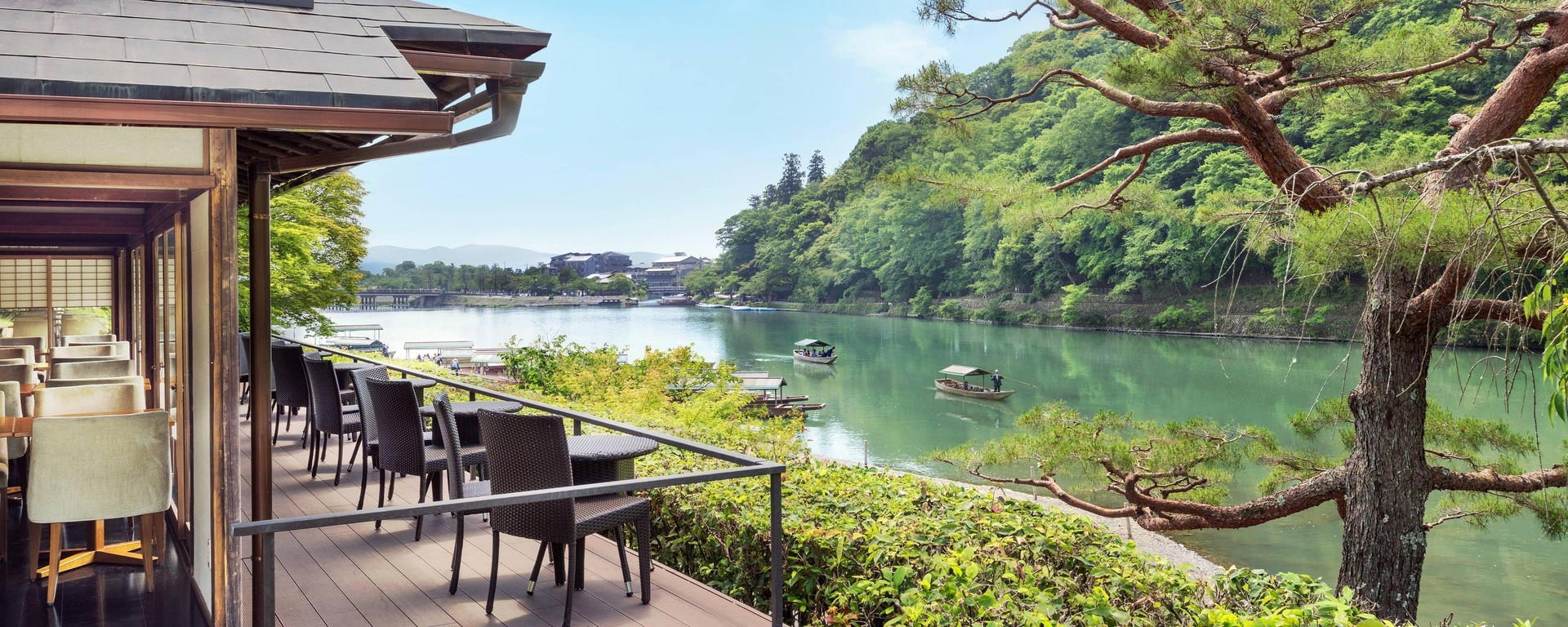
The sensory cue here is not a named signature dish or chef mythology; it is the environment. The listing notes an open terrace and a beautiful-view setting, which places the room closer to a countryside meal format than a tightly staged urban tasting counter. That distinction is editorially important. In Kyoto, where atmosphere can become heritage theatre, the quieter rural register can make Chinese cooking feel less like a category transplant and more like a regional expression shaped by pace, space, and distance.
Within the local range, that positioning is also price-tier specific. NOMI RESTAURANT occupies a much higher spending bracket in Kyoto’s Japanese and innovative category, while Yanagimachi, Torinago, Menya Somie's, and Soban Chi point to more casual or mid-range dining patterns around the prefecture. Inaka no Taiho lands in a more deliberate dinner bracket, but without the central-city cues that usually explain that spend to travellers. The case for going is not convenience. It is the rare combination of Chinese cooking, rural Kyoto atmosphere, and Tabelog category recognition.
The meal rewards travellers who plan around pace, not proximity
Kyoto rewards diners who understand that the prefecture is not the same thing as the city core. Ayabe sits in northern Kyoto Prefecture, and this changes the calculus. A meal here is better treated as a planned excursion rather than a flexible add-on after sightseeing. Public transport exists, but rural frequency changes the day’s shape; driving or arranging transport gives the itinerary more control. That logistical friction is part of the filter, and it helps explain why the restaurant reads more specialist than casual.
The format reinforces that filter. Reservations are required, with a minimum party size of four, so this is not a solo counter stop or a spontaneous dinner after a museum day. Payment is also old-school: credit cards, electronic money, and QR payments are not accepted. Those details are not inconveniences to gloss over; they define the kind of traveller who will enjoy the experience. A group that plans, carries cash, and treats the meal as the centre of the outing is better matched than a party trying to compress it into a dense central Kyoto schedule.
The Tabelog 100 Chinese WEST 2026 selection gives the restaurant its clearest external credential. Tabelog’s Hyakumeiten lists are useful in Japan because they often highlight depth within a category beyond the Michelin-visible circuit. For Chinese cuisine in western Japan, inclusion places a restaurant inside a peer group that serious local diners understand, even when the room is far from the obvious dining districts. The restaurant’s 4.02 score adds another signal of sustained attention.
For readers mapping a wider Kyoto trip, the contrast with the city’s other categories is instructive. Central Kyoto’s dining grammar can be sampled through places such as 3TOKU6MI Shijo karasuma ten, 551蓬莱, [ki:], Abbesses, and Aburi Mochi Honke Nemoto Kazariya. Those names trace a different urban pattern: shopping-district food, small-format restaurants, French influence, and older sweets traditions. Ayabe adds distance and rural atmosphere to the same prefectural map.
How to place it in a Kyoto itinerary
The stronger way to use this meal is to build around northern Kyoto rather than force it into a central Kyoto day. The restaurant’s appeal comes from Chinese cuisine experienced away from the city’s dense restaurant corridor, with the countryside doing as much contextual work as the room. That makes it a poor fit for travellers chasing maximum venue count, and a better fit for groups who prefer one carefully planned meal with a slower arc.
For broader planning, keep the category map clean. Our full Kyoto restaurants guide is the natural starting point for dining, while Our full Kyoto hotels guide, Our full Kyoto bars guide, Our full Kyoto wineries guide, and Our full Kyoto experiences guide help separate lodging, drinking, wine, and cultural time from the restaurant schedule. Travellers extending the Japan food map beyond Kyoto can compare how format changes across -Grilled beef Sukiyaki- KAMAKURA TANUKIAN 鎌倉 たぬき庵 in Kamakura. 鮪と炭火焼き うお炭 秋葉原店 in Tokyo.cafe in Osaka.know in Kumamoto, (Shoku) Vietnam in Kawasaki, and [Curry Senmon Ten] Maruyama Kyoju. in Sapporo. For a North American contrast in Japanese drinking and casual formats, Jōdo Saké Bar in Los Angeles and Onigiri Time in Pasadena show how Japanese categories shift when separated from their home context.
Quick Comparison
Comparable venues by cuisine and price in the same metro.
| Venue | Cuisine | Price | Notes |
|---|---|---|---|
| Inaka no TaihoThis venue — the venue you are viewing | Farm-to-table Chinese on a mountain farm | $$$$ | Not listed |
| 京、静華 | Modern Chinese Fine Dining | $$$$ | Okazaki |
| ベルロオジエ | Innovative Chinese Gastronomy | $$$$ | Kawaramachi |
| 鳥さき | Michelin-Starred Yakitori | $$$$ | Nakagyo Ward |
| Kyo-Suiran (京 翠嵐) | French-Inspired Traditional Kaiseki | $$$$ | Arashiyama |
| 要庵西富家 (要庵 西富家) | Traditional Kaiseki Ryokan | $$$$ | Gion/Kawaramachi |
Recognition history
Dated appearances from independent guides and award organizations, with the underlying list record or original source where available.
Tabelog 100 #68 · No. 68
Tabelog · Tabelog 100 - Chinese cuisine - WEST - 2026
The Japan Times Destination Restaurants Destination Restaurants Selection #7
The Japan Times Destination Restaurants
Continue exploring
More in Kyoto
Restaurants in Kyoto
Browse all →
Bars in Kyoto
Browse all →
Hotels in Kyoto
Browse all →
Wineries in Kyoto
Browse all →
At a Glance
- Rustic
- Scenic
- Cozy
- Intimate
- Special Occasion
- Celebration
- Date Night
- Group Dining
- Private Event
- Garden
- Terrace
- Panoramic View
- Standalone
- Design Destination
- Farm To Table
- Local Sourcing
- Sustainable Seafood
- Mountain
- Garden
A secluded open-air farm restaurant in the lush mountains of Ayabe with a rustic, nature-immersed setting and a calm, intimate atmosphere focused on the connection between landscape, animals, and the meal.