In a city where fine dining increasingly means tasting menus and Michelin credentials, In Town Hot Pot occupies a different register entirely. Located in Budapest's 10th district on Jegenye utca, it represents the communal, table-centred hot pot format that sits apart from Hungary's dominant Central European culinary tradition. For visitors curious about how interactive dining translates in a landlocked European capital, it warrants attention.
Pearl is the En Primeur Club membership app — saves, bookings, and concierge access live there. Same editors, same standards.
- Address
- Budapest, Jegenye u. 26/9, 1107 Hungary
- Phone
- +36303275994
- Website
- facebook.com
- Directions
- Get directions
 Saves & bookings on Pearl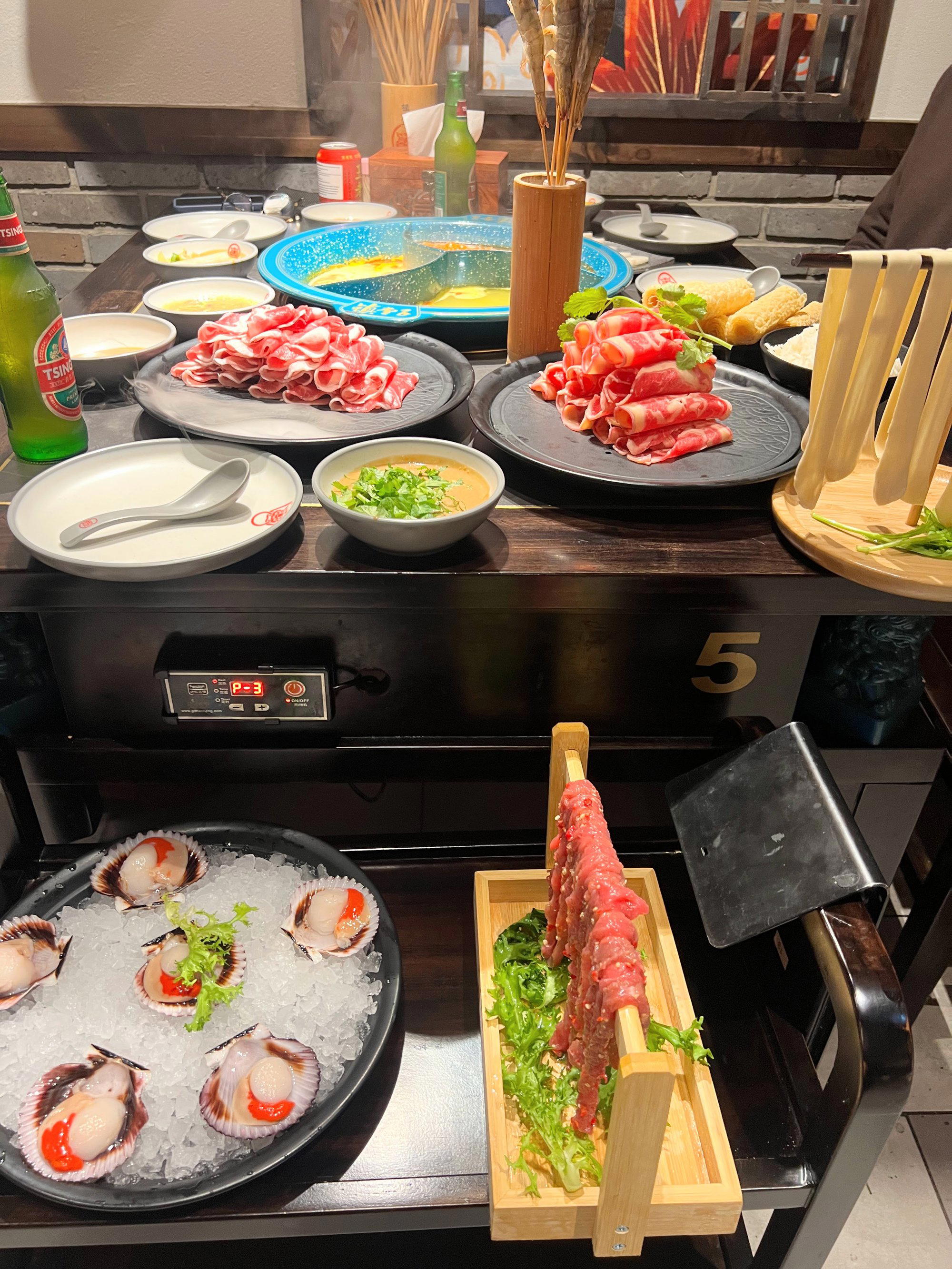
Budapest's Communal Table Tradition, Reframed
In Town Hot Pot is a casual Chinese hot pot restaurant in Budapest's 10th district, at Jegenye u. Budapest's dining scene has spent the better part of a decade consolidating around two poles: the Michelin-tracked fine dining corridor anchored by places like Costes (€€€€ · Modern Cuisine) and Stand (€€€€ · Modern Cuisine), and a parallel wave of neighbourhood bistros reclaiming Hungarian ingredients in less formal formats. Hot pot, as a category, fits neither bracket comfortably. It is loud, social, and built on shared ritual rather than individual plating, which is precisely what makes In Town Hot Pot's presence on Jegenye utca in the 10th district worth examining. This is not a neighbourhood typically covered in dining guides focused on the Belváros or the Buda hills. That geographical distance from Budapest's restaurant centre of gravity shapes who it serves.
The Physical Container: Space as Function
Hot pot dining places specific demands on interior architecture that most restaurant formats do not. Each table must accommodate an induction or gas heat source, individual or shared broth vessels, condiment trays, raw ingredient plates, and the ongoing circulation of food between kitchen and guest. The layout of a well-run hot pot room is closer to a laboratory than a dining room: station-based, systematic, with sightlines designed to enable rapid refills and clear plate removal without interrupting the cooking rhythm at the table.
In a European context, this format creates an interesting design challenge. Most restaurant interiors in Budapest, from the Habsburg-era coffeehouses of the inner districts to the ruin-bar aesthetic that spread outward from the 7th, were built around passive consumption. Hot pot inverts that logic. The table becomes a cooking surface, the guest becomes a participant, and the room must be engineered to support that participation without becoming chaotic. Ventilation is a non-trivial concern: a poorly ventilated hot pot space accumulates broth steam rapidly, affecting comfort over a meal that typically runs ninety minutes to two hours. How a hot pot venue manages these physical realities reveals a great deal about the seriousness of its operation.
In Town Hot Pot's address on Jegenye utca places it in a district with limited competition from international cuisine formats, which gives it a different kind of visibility than it would have in a denser urban grid. Compared to the concentrated dining blocks of the 5th and 6th districts, the 10th offers lower overhead and a more local, repeat-visitor clientele, conditions that tend to produce operations tuned to regulars rather than tourists.
The Format Itself: What Hot Pot Means as a Dining Structure
The hot pot format originated in regions of China and has spread across East and Southeast Asia in numerous regional variations, from Sichuan mala broths heavy with dried chilies and Sichuan peppercorns to the lighter, kelp-based dashi stocks of Japanese shabu-shabu. In European cities, the format has arrived primarily through Chinese diaspora communities and, more recently, through standalone venues targeting a broader audience curious about interactive dining. Budapest sits behind cities like Paris, Berlin, and Vienna in terms of exposure to this category, which means that venues operating in this format are working with a less experienced customer base, and carry more responsibility for guiding the experience.
The selection of broth is typically the first decision a hot pot diner makes, and it carries particularly consequence for everything that follows. A spiced broth will overwhelm delicate proteins; a mild stock will neutralize the impact of heavily marinated ingredients. What goes into the pot, and in what sequence, is the kind of knowledge that rewards return visits. First-timers at any hot pot venue benefit from paying attention to recommended cooking times, which vary significantly between thin-sliced beef (often fifteen to thirty seconds), leafy vegetables (under a minute), and denser proteins like fish tofu or pork belly (three to five minutes).
In the context of Budapest's wider dining options, the interactive structure of hot pot sits at the opposite end of the spectrum from the chef-driven tasting formats at Babel (€€€€ · Modern Cuisine) or essência (€€€€ · Modern Cuisine), and offers a different kind of value from the wine-forward, produce-led cooking at Borkonyha Winekitchen (€€€ · Modern Cuisine). The comparison is less about quality tier and more about what kind of experience the diner is looking for. Hot pot is a format that rewards groups over solo diners, extended evenings over quick meals, and curiosity over passive expectation.
Beyond the Capital: Hungary's Broader Table
For those extending their time in Hungary beyond Budapest, the regional dining circuit offers a genuinely different register. Platán Gourmet in Tata applies fine dining precision to a market town west of the capital, while Pajta in Őriszentpéter works with local ingredients in the Őrség region near the Slovenian border. In wine country, Halasi Pince Panzió in Villány connects table to cellar in Hungary's most recognized red wine appellation, while BoriMami in Gyöngyös represents the kind of local institution that rarely appears in international coverage.
Further afield, Aranysárkány Vendéglő in Szentendre draws from the Danube Bend's culinary traditions just north of Budapest, and Forst-Ház Étterem és Kávézó in Eger anchors the wine routes of northern Hungary. For a comparative European frame on what serious kitchen programs look like at the highest level, Le Bernardin in New York City and Atomix in New York City illustrate how tasting menus have evolved in a market with decades of Michelin-tracked competition. Classic Grill Serbian Restaurant Underground in Szeged, Astro Tea & Kávéház in Gyor, La Pizza Del Lupo in Onga, and Almalomb in Hosszúhetény round out a regional picture that extends well beyond Budapest's dining grid.
Planning Your Visit
In Town Hot Pot is located at Jegenye utca 26/9 in Budapest's 10th district, a residential area southeast of the city centre. Getting there from the inner districts typically involves public transport or a short taxi or rideshare journey; the address is outside walking range from most hotel concentrations. The restaurant is open daily from 11 AM to 10 PM and is walk-in friendly. Given the format, the venue is naturally suited to groups of three or more, where the communal broth model delivers its full return.
A Minimal comparable set
Comparable venues nearby, for context on price, style, and recognition.
| Venue | Cuisine | Price | Notes |
|---|---|---|---|
| In Town Hot PotThis venue — the venue you are viewing | Ferencvaros, Authentic Chinese Hot Pot | $$ | Not listed |
| Spicy Fish Budapest | Ferencvaros, Authentic Sichuan Chinese | $$ | Not listed |
| BESTIA | Not listed | $$ | Varhegy, Hungarian-American Steakhouse with International Fusion |
| Mazi Greek Kitchen | Terézváros, Authentic Greek Bistro | $$ | Not listed |
| IDA Bistro | Tabán, Austro-Hungarian Bistro | $$ | Not listed |
| Gléda Vendéglö | Obuda, Modern Hungarian | $$ | Not listed |
Continue exploring
More in Budapest
Restaurants in Budapest
Browse all →
Bars in Budapest
Browse all →
Hotels in Budapest
Browse all →

At a Glance
- Lively
- Cozy
- Group Dining
- Casual Hangout
- Open Kitchen
- Sake Program
Current opening hours
- Monday
- 11 AM–10 PM
- Tuesday
- 11 AM–10 PM
- Wednesday
- 11 AM–10 PM
- Thursday
- 11 AM–10 PM
- Friday
- 11 AM–10 PM
- Saturday
- 11 AM–10 PM
- Sunday
- 11 AM–10 PM
Hours can change for holidays and private events. Last verified .
Authentic and welcoming atmosphere with friendly service.