
Wine Spectator Award of Excellence
Our verdict
On Ybl Miklós tér in Budapest's Buda Castle district, IDA Bistro occupies a quieter register than the city's Michelin-decorated dining rooms, closer in spirit to the neighbourhood bistros that treat cooking as a daily practice rather than a performance. The address alone signals intent: a square named after Hungary's most celebrated architect, a stone's throw from the Danube embankment, where the city's culinary ambitions and its architectural heritage share the same pavement.

Pearl is the En Primeur Club membership app, where members save venues, book tables and use the concierge.

The menu
What to order
- Chicken paprikash
- Kaiserschmarrn
- Schnitzel
- Goulash
A Square Worth Sitting On
Ybl Miklós tér sits at the foot of the Castle District on the Buda side, a few metres from where the Chain Bridge meets the embankment. The square is named for the 19th-century architect responsible for the Hungarian State Opera House and the Customs Palace, now the Central Market Hall, and it carries the calm authority that comes with that pedigree. This is not the tourist-saturated stretch of Váci utca, nor the dense bar-and-restaurant corridor of the Seventh District. It is a neighbourhood address in a city that increasingly rewards those who cross the river.
Budapest's dining scene has spent the past decade sorting itself into tiers with more clarity than most Central European capitals. At the upper end, venues like Costes and Stand operate within the framework of Michelin recognition, their menus structured around formal progression and technical ambition. Below them, a mid-tier has grown around places that apply serious culinary thinking to shorter, more instinctive menus, closer to the European bistro tradition than to the tasting-menu format. IDA Bistro belongs to that middle register, and its address on Ybl Miklós tér places it in a Buda pocket that operates largely outside the pressure of high footfall.
How the Menu Reads
In the broader Budapest context, menu architecture has become a reliable signal of where a restaurant positions itself. The Michelin tier, Babel, essência, Costes, tends toward fixed tasting sequences that remove choice in favour of narrative arc. The bistro tier inverts that logic: shorter lists, more seasonal rotation, a structure that allows the kitchen to respond to what is available rather than commit months in advance to a printed story.
Bistro menus in this mode typically work leading when they are honest about their constraints. A short menu with four starters, four mains, and three desserts tells the reader the kitchen is cooking what it can do well today, not projecting a comprehensive vision of a cuisine. That discipline, knowing what to leave off, is harder to sustain than it looks, and it is the defining characteristic of the better bistros that have opened across Central Europe in the past five years. Venues in Vienna, Prague, and Warsaw have followed the same logic, imported partly from Paris and partly from the Scandinavian tradition of ingredient-led simplicity. Budapest arrived at it from a different direction: the legacy of Hungarian home cooking, with its emphasis on seasonal produce and long braise times, translates more naturally into bistro form than into the plate-as-canvas aesthetic that French-trained kitchens favour.
At Borkonyha Winekitchen, the menu is structured around wine compatibility, with dishes designed to move laterally across the Hungarian wine list rather than vertically through a tasting arc. That is a different architectural choice, and it places Borkonyha in a different peer conversation. IDA Bistro, by its bistro classification, sits closer to the neighbourhood-restaurant model: a menu that implies regulars, return visits, and a kitchen calibrated for the medium term rather than the one-off occasion.
The Buda Side and What It Means
Most of Budapest's recognised dining addresses sit in Pest. The Michelin map skews heavily east of the Danube, and the bar and café culture that drives the city's international reputation, the ruin bars of the Seventh, the coffee houses of the Fifth, is overwhelmingly a Pest phenomenon. Buda's dining scene is smaller, quieter, and less export-facing. It tends to attract residents rather than visitors, which changes the rhythm of service and the logic of the menu.
That Buda bias has begun to shift. A cluster of thoughtful restaurants has appeared in the First and Second Districts over the past several years, some of them intentionally positioning against the Pest fine-dining corridor. The Castle District and its immediate surroundings have benefited from this: the architecture draws visitors, but the quieter streets around Ybl Miklós tér absorb those looking for somewhere to eat that is not engineered for the post-sightseeing crowd. Elsewhere in Hungary, the same dispersal is visible: Platán Gourmet in Tata and Pajta in Őriszentpéter represent the broader pattern of serious cooking moving away from capital-city density into addresses that trade on their quietness as much as their food.
Where IDA Sits in the Budapest Bistro Conversation
Budapest's bistro tier is more competitive now than it was five years ago. Stand25 Bisztró operates at €€ and draws a daily crowd on the strength of traditional technique at accessible prices. Bilanx occupies the contemporary €€€ bracket with a more design-conscious room. IDA Bistro is the Ybl Miklós tér option, a specific address in a specific neighbourhood, which is itself an editorial position. Restaurants that choose quieter Buda squares over central Pest boulevards are making a statement about who their guest is: someone who plans ahead, crosses the river deliberately, and is not relying on walk-in proximity to the city's main dining corridor.
That logic connects to comparable moves in other European cities. In Paris, the migration of serious bistros from the 6th arrondissement to the 11th and beyond followed the same pattern: kitchens trading visibility for neighbourhood loyalty. In New York, the shift from Midtown to the outer boroughs produced a generation of restaurants that built their reputations on regulars rather than tourists. Atomix and Le Bernardin represent the extreme poles of that New York conversation, one hyper-neighbourhood, one institution, but the middle ground is where most sustained dining reputations are built.
Regional Hungary adds further context. BoriMami in Gyöngyös, Forst-Ház Étterem és Kávézó in Eger, and Aranysárkány Vendéglő in Szentendre demonstrate that Hungary's serious eating is not confined to Budapest, but the capital remains the benchmark against which regional ambition measures itself. See our full Budapest restaurants guide for the broader picture, including further entries from Villány, Szeged, Győr, Onga, and Hosszúhetény.
Planning Your Visit
IDA Bistro is at Budapest, Ybl Miklós tér 6/1, 1013, on the Buda embankment, walkable from the Chain Bridge and the Várkert Bazár. The square is served by tram lines running along the embankment and is a short taxi or rideshare ride from central Pest. Given the neighbourhood character of the address and the bistro format, a reservation is advisable, particularly for evenings and weekends when the room's capacity is likely modest. Booking ahead of time is the standard approach for restaurants in this tier across Budapest.
Frequently asked questions
Where do I go for IDA Bistro?
IDA Bistro is located at Budapest, Ybl Miklós tér 6/1, 1013 Hungary, Budapest.
Is IDA Bistro a good option for dinner after visiting the Várkert Bazár?
The address at Ybl Miklós tér 6/1 places IDA Bistro directly adjacent to the Várkert Bazár, making it one of the most logistically convenient dinner options after time spent in the garden or the cultural spaces inside the complex. Few restaurants in Budapest sit this close to a major Buda landmark without operating primarily as a tourist trap, and the bistro format suggests a kitchen oriented toward repeat local custom rather than one-off visitors.
What do regulars order at IDA Bistro?
Confirmed dish data for IDA Bistro is not in the public record, so naming specific plates would be inaccurate. What the bistro format at a Buda neighbourhood address typically signals is a short, market-driven menu that rotates rather than a fixed card built around showpiece dishes. The safest approach is to ask the floor team on arrival what is running that day.
Do I need a reservation for IDA Bistro?
For a bistro address on Ybl Miklós tér, booking ahead for dinner is the practical choice, particularly Thursday through Saturday when foot traffic from the Chain Bridge and Várkert Bazár picks up. Budapest's mid-tier bistro bracket fills faster than many visitors expect, and Buda-side spots with good positioning tend to draw a loyal local crowd alongside tourists. A same-day call or online check is reasonable for weekday lunch.
What's IDA Bistro best at?
IDA Bistro's position on Ybl Miklós tér, at the base of Castle Hill on the quieter Buda embankment, points to a kitchen focused on reliable, neighbourhood-scale cooking rather than the tasting-menu ambition of Pest's Michelin addresses. That separation from the fine-dining corridor is a deliberate choice that typically translates into shorter menus, lower price pressure, and a room that functions as a local dining room rather than a destination restaurant.
Recognition Snapshot
Comparable venues nearby, for context on price, style, and recognition.
| Venue | Cuisine | Price | Awards | Notes |
|---|---|---|---|---|
| IDA BistroThis venue (the venue you are viewing) | Austro-Hungarian Bistro | $30–50 | Wine Spectator Award of Excellence | Not listed |
| Franziska Buda | Healthy Cafe Breakfast & Brunch | $10–20 | Not listed | Varhegy |
| Vadrózsa | Traditional Hungarian & International | $20–30 | Not listed | Pasaret |
| DiVino Wine Bar | Hungarian Wine Bar with Tapas | $20–30 | Not listed | Belvaros |
| Kispiac | Traditional Hungarian Bistro | $30–50 | Not listed | Terézváros |
| Franziska Pest | Healthy Brunch Cafe | $10–20 | Not listed | Belvaros |
Recognition history
Dated appearances from independent guides and award organizations, with the underlying list record or original source where available.
Wine Spectator Award of Excellence
Wine Spectator
Continue exploring
More in Budapest
Restaurants in Budapest
All restaurants in Budapest →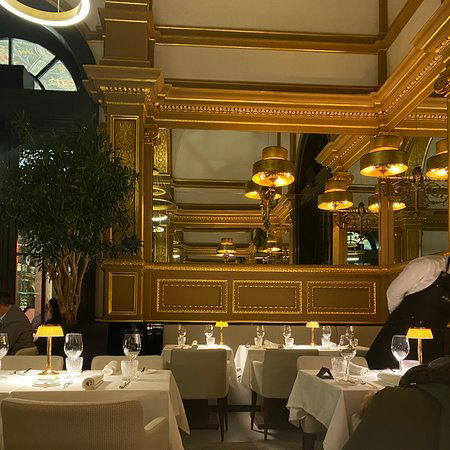
Bars in Budapest
All bars in Budapest →

IDA Bistro
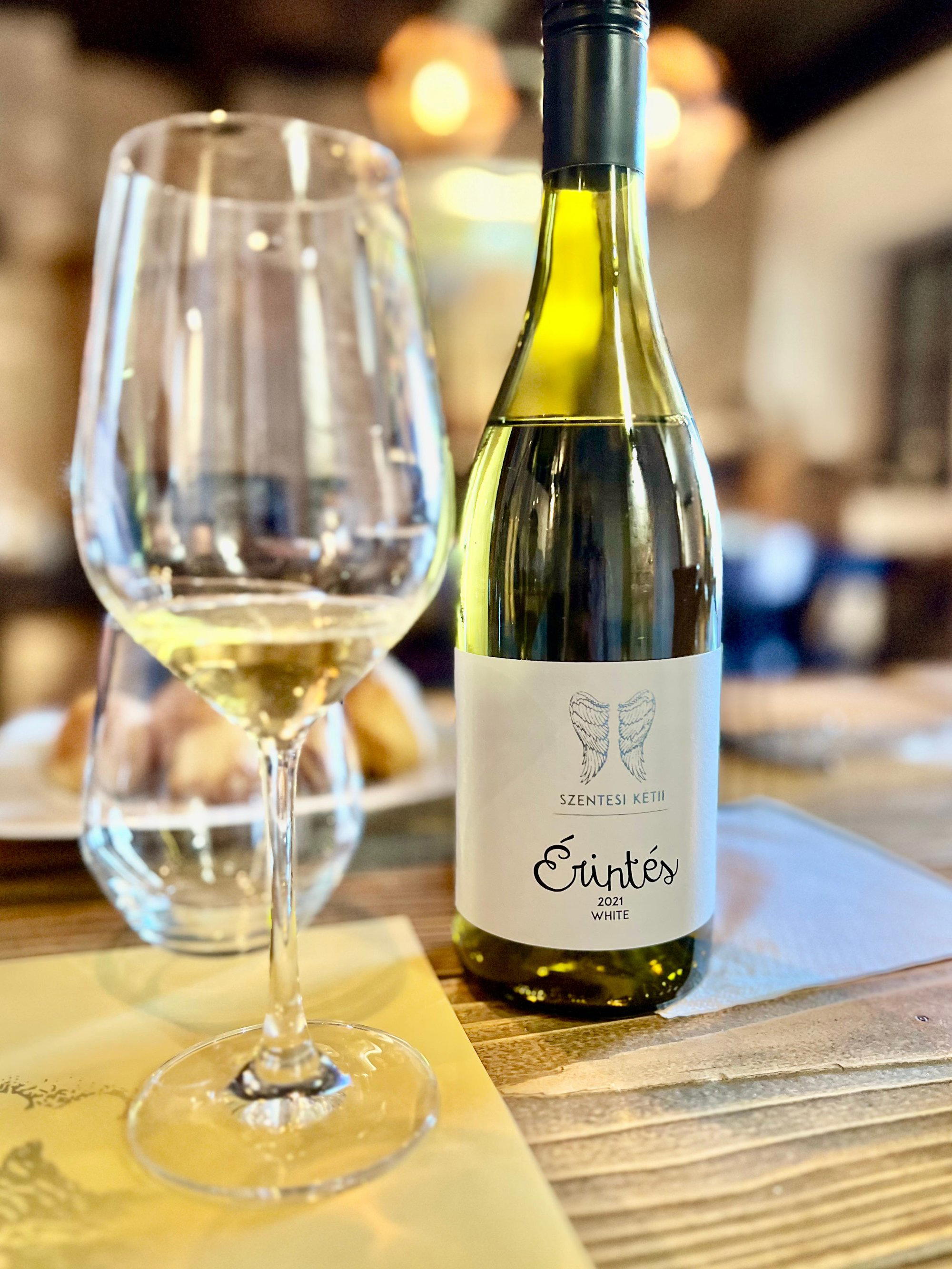
The wine
IDA Bistro holds the Wine Spectator Award of Excellence, which Wine Spectator gives to lists of usually 90 or more selections.
- Wine Spectator
- Wine Spectator Award of Excellence
- Extensive wine list
Details
- Elegant
- Cozy
- Sophisticated
- Classic
- Date Night
- Special Occasion
- Business Dinner
- Historic Building
- Open Kitchen
- Extensive Wine List
- Street Scene
- A La Carte
- Wine
Current opening hours
- Monday
- 11:30 AM–11 PM
- Tuesday
- 11:30 AM–11 PM
- Wednesday
- 11:30 AM–11 PM
- Thursday
- 11:30 AM–11 PM
- Friday
- 11:30 AM–11 PM
- Saturday
- 11:30 AM–11 PM
- Sunday
- 11:30 AM–11 PM
Hours can change for holidays and private events. Hours as of .
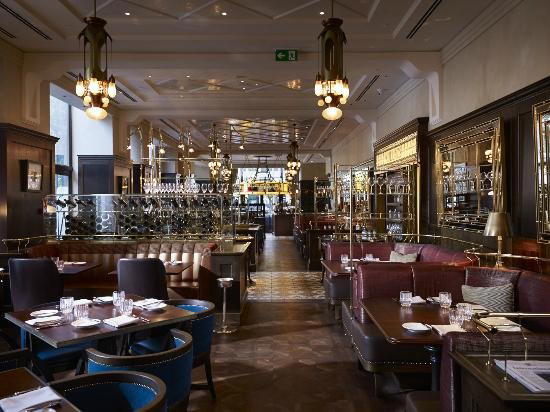
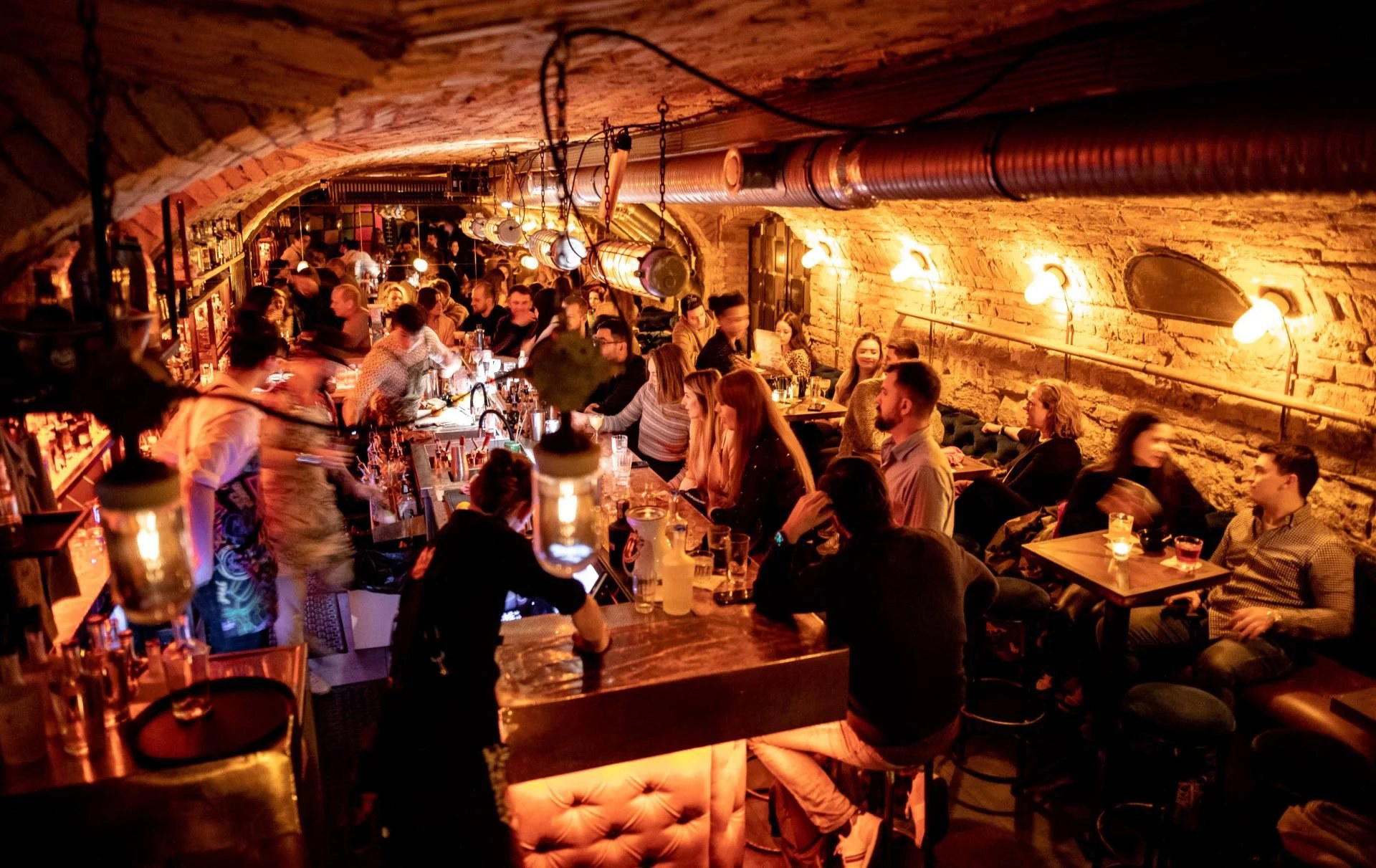
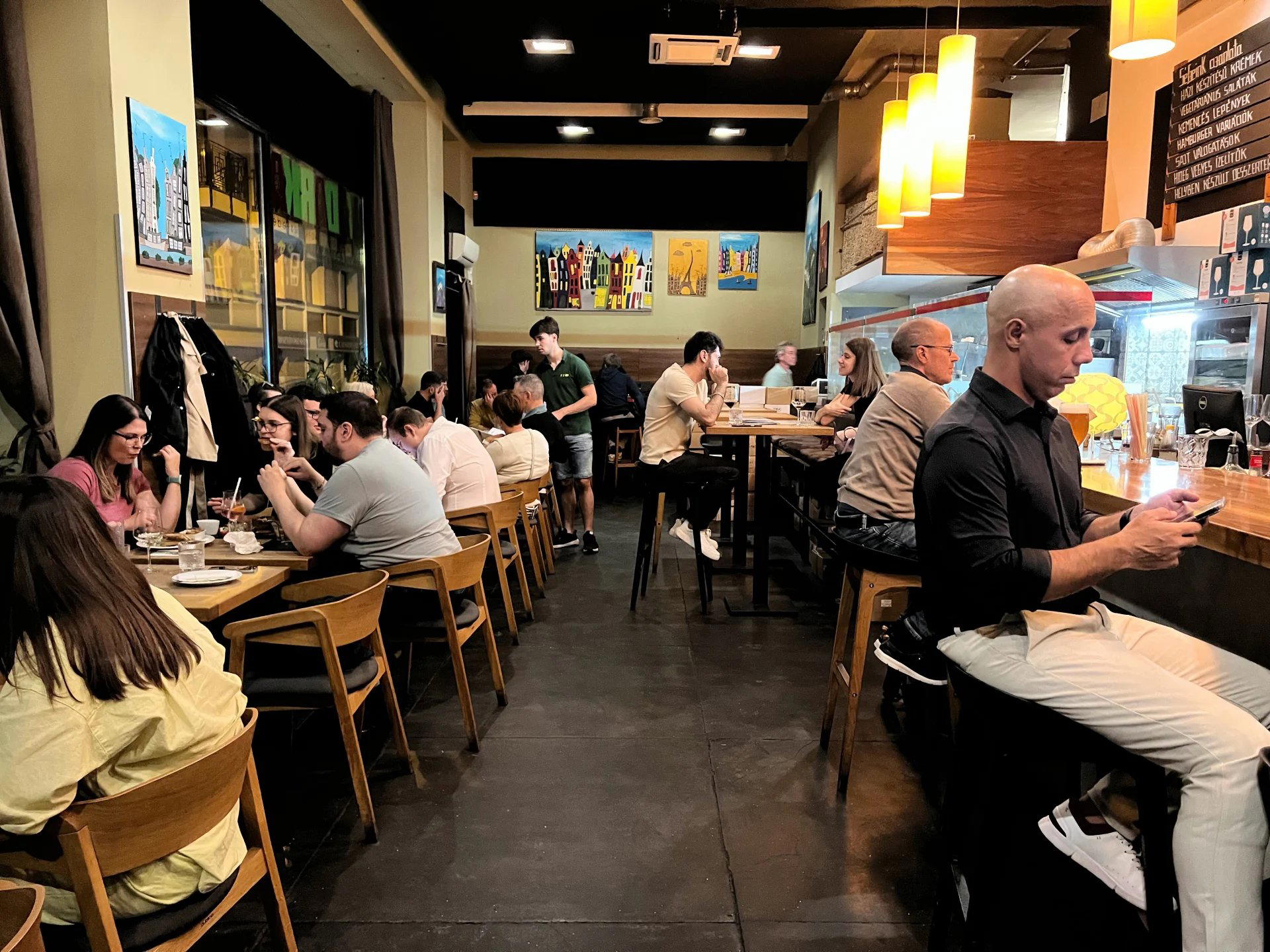
Elegant with high ceilings, mirrored walls, and warm inviting atmosphere.