
Michelin Plate
Our verdict
A Michelin Plate-recognised kaiseki-style fish restaurant in Osaka's Tennoji Ward, Hozan is built around an owner-chef who trained in seafood preparation and has designed every element of the menu around fish: from iimushi and dashi-based soups to earthenware rice pots finished with fish takikomi-gohan.

Pearl is the En Primeur Club membership app, where members save venues, book tables and use the concierge.
The menu
What to order
- Cured amberjack
- Tempura with white shrimp
- Takikomi gohan with whitebait
- Hand-rolled soba
A Tennoji Table Built Around the Sea
Tennoji Ward sits a few kilometres south of Osaka's central Namba axis, and the dining rooms along its quieter blocks tend to attract a local crowd rather than the tourist circuits that concentrate around Dotonbori. It is in this context that Hozan operates: a ground-floor room in the Amakawa Building on Higashikozucho, where the signage is understated and the clientele largely composed of Osaka residents who have made a habit of returning. There is no grand gesture at the threshold. The restraint of the entrance mirrors the discipline at work inside.
Osaka has always maintained a different gravitational centre from Tokyo's dining culture. Where Tokyo's fish-forward fine dining increasingly concentrates in Ginza's omakase counters, Osaka's relationship with seafood runs through the market logic of Kuromon Ichiba and the kaiseki tradition rooted in the city's merchant-class appetite for abundance. Hozan operates somewhere between those poles: it is neither a counter omakase nor a kaiseki house in the formal Kyoto sense, but a restaurant where fish is treated as a craft subject across a full menu of distinct preparations.
The Architecture of a Fish-Centred Menu
Japanese cuisine has a long tradition of treating simple ingredients with the rigour usually associated with complex technique. The principle behind rice porridge, dashi, and steamed grain dishes is that the skill lies in extraction and control, not embellishment. What makes a bowl of well-drawn ichiban dashi compelling is not what has been added but what has been precisely coaxed from the kombu and katsuobushi. Hozan applies the same logic to fish across a full menu rather than a single signature dish.
The meal at Hozan opens with iimushi, a dish of mochi rice steamed with seafood toppings. The format is not flashy: it draws on the same principle as takikomi-gohan, where the grain absorbs the flavour of its accompaniments during cooking rather than being dressed afterward. The effect is cumulative rather than immediate, and it establishes the register for everything that follows. Soups are built on dashi drawn from the seafood itself, which means the stock and the protein share a continuous flavour thread rather than operating independently. This is the kind of technical discipline that rarely reads as theatre but produces a coherence that diners register even when they cannot name the cause.
The menu's approach to fish differentiates between fresh and aged preparations, which reflects a broader understanding in Japanese fish cuisine that the texture and flavour profile of a fish changes meaningfully over days of careful handling. Aged fish, when managed properly, develops depth and a clean, concentrated sweetness that fresh fish of the same species cannot replicate. Treating both within the same menu, as Hozan does, requires the kitchen to make daily decisions about each fish rather than applying a single template. This is exactly the kind of judgement that separates a kitchen with genuine seafood expertise from one that sources well but executes generically.
Meal closes with earthenware pot rice, offered as white rice or fish takikomi-gohan. The earthenware pot, or donabe, retains heat differently from metal, producing a crust at the base and a slightly different steam pressure that affects texture throughout. Offering the choice between the plain and the fish-infused version is an act of hospitality rather than an upsell: the kitchen is clear that both are legitimate conclusions to the meal, depending on what the guest wants from the final course.
Where Hozan Sits in Osaka's Dining Order
Michelin Plate recognition in both 2024 and 2025 places Hozan in the tier of restaurants that Michelin considers worth recommending but below the star threshold. At the ¥¥¥ price point, it shares a price band with some of Osaka's most formally distinguished tables: Kashiwaya Osaka Senriyama holds three Michelin stars at the same price level, as does Taian. The Plate designation at ¥¥¥ is therefore not a signal of compromise pricing; it reflects a restaurant competing in a serious tier where recognition varies by format and critical weighting rather than by the quality of underlying ingredients or technique.
Within its specific category, the comparison set is narrower. Osaka has no shortage of outstanding kaiseki houses and a long tradition of izakaya-level fish preparation, but restaurants that build an entire structured menu around fish across multiple cooking methods occupy a smaller niche. Miyamoto, Oimatsu Hisano, and Tenjimbashi Aoki each occupy distinct positions within Osaka's Japanese dining spectrum, and Yugen extends into more contemporary formats. Hozan's emphasis on fish as a singular organising principle gives it a specific identity within that landscape.
For context across the Kansai region, Gion Sasaki in Kyoto and akordu in Nara represent adjacent dining traditions worth considering on a multi-city itinerary. Further afield, Harutaka in Tokyo and Myojaku and Azabu Kadowaki in Tokyo show how fish-centred Japanese dining takes different shapes across the country's regional kitchens. In Kyushu, Goh in Fukuoka brings its own coastal sensibility, and 6 in Okinawa draws on entirely different southern seafood traditions. 1000 in Yokohama adds a further reference point in how Japan's port cities interpret seafood-focused dining.
Planning a Visit
Hozan is located at 3-13 Higashikozucho, Tennoji Ward, on the ground floor of the Amakawa Building. The ¥¥¥ pricing places it in the mid-to-upper tier for Osaka dining. Given the restaurant's size and the owner-chef format, securing a reservation ahead of time is advisable; tables at this type of single-chef Osaka restaurant fill on shorter timelines than their floor count might suggest. Tennoji Ward is served by Tennoji Station on multiple subway and JR lines, making it accessible from both the Namba area and from Shin-Osaka for those arriving from elsewhere in Japan.
For broader planning around this visit, the EP Club guides to Osaka restaurants, Osaka hotels, Osaka bars, Osaka wineries, and Osaka experiences cover the full picture of what the city offers across categories.
Frequently asked questions
What should I order at Hozan?
Do I need a reservation for Hozan?
What is Hozan leading at?
Comparable Spots
A quick peer reference to anchor this venue in its category.
| Venue | Cuisine | Price | Awards | Notes |
|---|---|---|---|---|
| HozanThis venue (the venue you are viewing) | Traditional Japanese Kaiseki | $150–200 | Michelin Plate | Not listed |
| HAJIME | Avant-Garde Japanese Fine Dining | $300–500 | 3 Michelin Stars · World's 50 Best #83 | French, Innovative |
| La Cime | Modern French with Japanese Ingredients | $150–200 | 2 Michelin Stars · World's 50 Best #13 | French |
| Kashiwaya Osaka Senriyama | Seasonal Kaiseki Omakase | $200–300 | 3 Michelin Stars · La Liste Top Restaurants | Japanese |
| Taian | Traditional Japanese Kaiseki Omakase | $150–200 | 3 Michelin Stars · La Liste Top Restaurants | Kaiseki, Japanese |
| Fujiya 1935 | Modern Japanese with European influences | $100–150 | 2 Michelin Stars · La Liste Top Restaurants | Innovative |
Recognition history
Dated appearances from independent guides and award organizations, with the underlying list record or original source where available.
Michelin Plate
Michelin
Full recognition history (3 entries)
Michelin Plate
Michelin
Michelin Plate
Michelin
Continue exploring
More in Osaka
Restaurants in Osaka
All restaurants in Osaka →


Bars in Osaka
All bars in Osaka →
Hotels in Osaka
All hotels in Osaka →



Wineries in Osaka
Browse all →
Details
- Elegant
- Intimate
- Classic
- Sophisticated
- Special Occasion
- Celebration
- Date Night
- Chefs Counter
- Private Dining
- Open Kitchen
- Sustainable Seafood
- Local Sourcing
- Omakase
- Counter Dining
- Tasting Menu
- Pescatarian Friendly
Current opening hours
- Monday
- 6–10 PM
- Tuesday
- 12–2 PM, 6–10 PM
- Wednesday
- 12–2 PM, 6–10 PM
- Thursday
- 12–2 PM, 6–10 PM
- Friday
- 12–2 PM, 6–10 PM
- Saturday
- 12–2 PM, 6–10 PM
- Sunday
- Closed
Hours can change for holidays and private events. Hours as of .
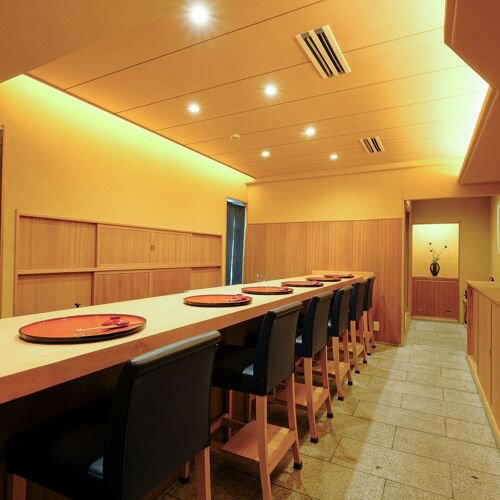
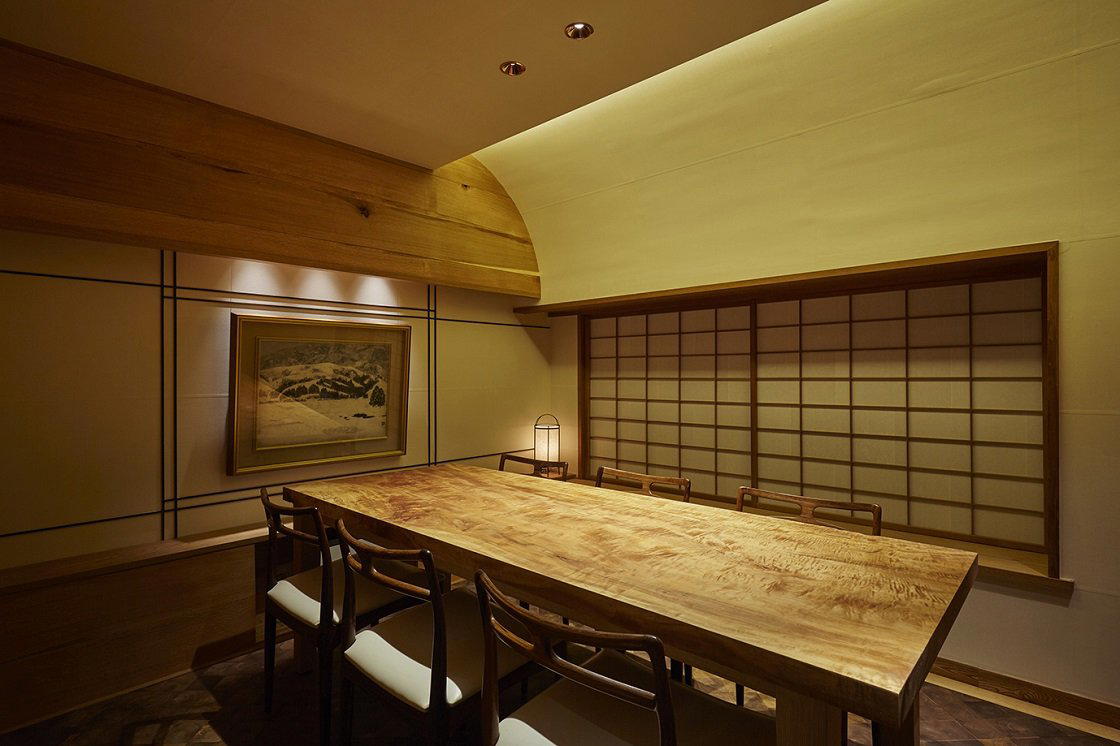
Moody and intimate ryotei atmosphere inspired by Kyoto townhouses, with ornate bamboo panel cabinets and refined traditional Japanese design creating a serene dining environment.