Our verdict
On the edge of Hungary's vast Hortobágy puszta, this historic csárda operates as both a working restaurant and a living document of Great Plain cooking traditions. The kitchen draws on ingredients sourced from the surrounding steppe and its livestock heritage, producing dishes that read as straightforward Hungarian but carry the weight of a specific, centuries-old pastoral landscape. For travellers passing through one of Central Europe's most singular UNESCO-listed territories, it is a logical and meaningful stop.

Pearl is the En Primeur Club membership app, where members save venues, book tables and use the concierge.
The menu
What to order
- Hortobágyi Palacsinta
- Goulash
- Hungarian grey veal
- Buffalo veal
- Racka ewe
- Guinea fowl
Where the Puszta Ends and the Kitchen Begins
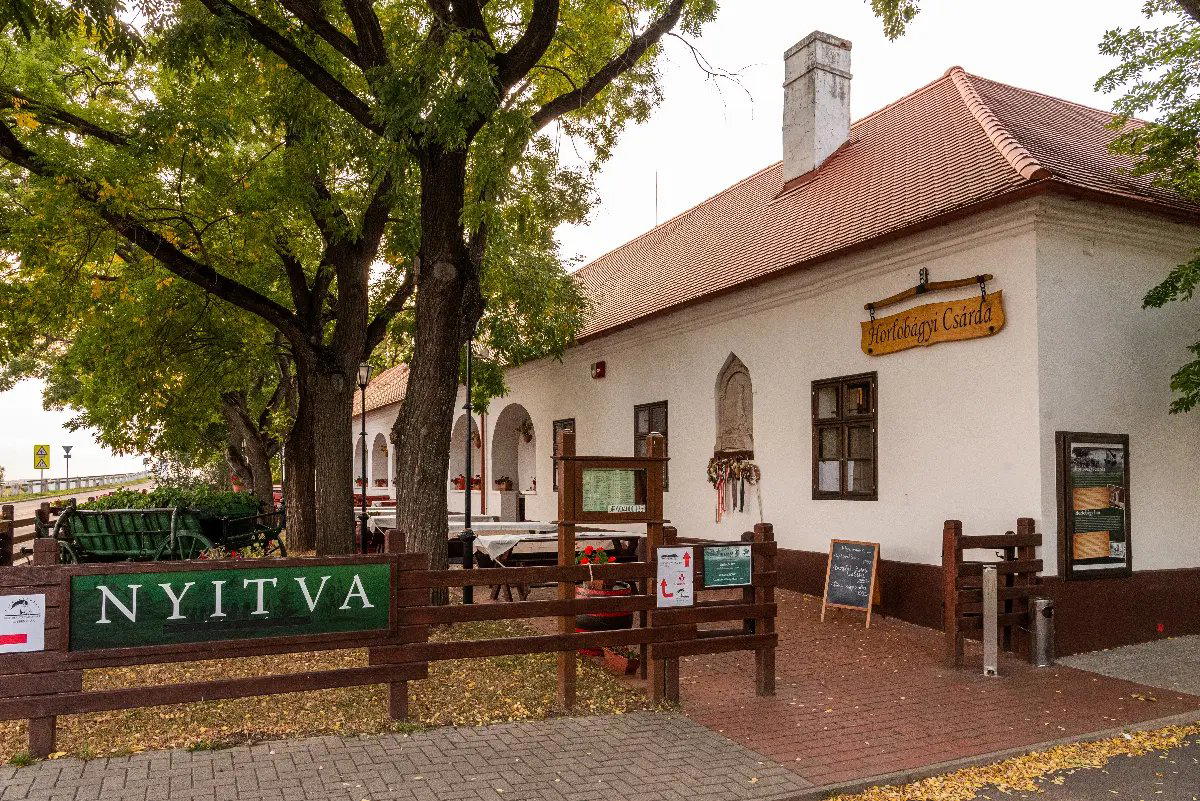
Arriving at Hortobágyi Csárda means arriving at Hortobágy itself, a village so small and so defined by the surrounding grassland that the two are almost indistinguishable. Petőfi tér, the square on which the csárda sits, is one of the few fixed points in a landscape that is otherwise famously flat and open. The building's whitewashed walls and low-slung silhouette fit the architectural vernacular of the Great Hungarian Plain: nothing tall, nothing ornamental, everything built against wind. Before you are inside, the setting has already told you something about what the kitchen will serve.
The puszta, designated a UNESCO World Heritage Site in 1999, is not merely scenic backdrop. It is an active pastoral zone with centuries of livestock farming, primarily Hungarian Grey cattle and Racka sheep, that defines the ingredient logic of the region's cooking. The csárda tradition in this part of Hungary grew up around feeding herdsmen and travellers crossing the plain, and the menus that evolved from that context were shaped almost entirely by what the land and its animals provided. That supply chain, shortened to a matter of kilometres, remains the editorial argument for why this food matters in a way that urban restaurant reinterpretations of puszta cooking cannot fully replicate.
The Source Material: Ingredients from the Steppe
Hungarian Great Plain cuisine is built on a narrow but deep ingredient base: paprika, lard, onion, and the meat of animals raised on open grassland. The Grey cattle breed, once the dominant bovine of Central Europe and nearly extinct by the twentieth century, has been substantially revived in the Hortobágy region, and its beef carries a flavour profile distinct from intensively farmed alternatives, leaner, with a mineral quality that comes from grazing unimproved grassland. The Racka sheep, identifiable by its long spiral horns, produces mutton that appears in traditional preparations across the region.
This is not farm-to-table in the contemporary marketing sense. It is something older: a kitchen that has always been geographically tethered to its source, because that source was what was available. The distinction matters for how you read the menu. Dishes that might appear conservative or unchanged in an urban dining context carry different weight when the animal on the plate was raised within sight of the restaurant. For travellers researching Hungarian regional cooking beyond the Budapest restaurant circuit, where venues like Stand in Budapest or Platán Gourmet in Tata work with similar traditions at a different price register, the Hortobágy csárda offers a version that is geographically rooted in a way city kitchens cannot be.
Paprika, the defining spice of Hungarian cooking, also has regional character worth noting. While Kalocsa and Szeged are the commercial centres of paprika production, the flavour preferences of Great Plain cooking tend toward depth and sweetness rather than aggressive heat. A gulyás prepared in this tradition is not a dish of fire but of long-cooked complexity, the paprika bloomed in fat and layered with time.
The Csárda Tradition and Where This Fits
The csárda as a format is one of Hungary's most durable hospitality institutions. Historically positioned along trade and drove roads to serve travellers, herders, and traders, the csárda occupied a social space somewhere between tavern and roadside inn. The food was filling and economical, built for people who had been moving through open country. Some of those formal characteristics, communal seating, portions calibrated for appetite rather than aesthetics, cooking techniques that prioritise depth over technique, persist in the form today.
Within Hungary's broader dining picture, the csárda sits in a different register from the country's growing fine-dining and gourmet bistro scene. Compared to the contemporary Hungarian cooking at venues like Pajta in Őriszentpéter or the wine-forward approach of BoriMami in Gyöngyös, the csárda format makes no argument for innovation. Its claim is continuity and specificity of place. That is a different value proposition, and one worth taking seriously when the place in question is a UNESCO-listed national park that shaped the food in the first place.
For context on how Hungarian regional restaurants differ from their urban peers, see our full Hortobagy restaurants guide. The gap between city-based Hungarian cooking, whether at the modern end represented by venues like Atomix in New York City or at the classical European level of Le Bernardin in New York City, and a working regional csárda is not a quality hierarchy. It is a difference of intent and reference frame.
What to Expect from the Kitchen
The standard repertoire of a Great Plain csárda runs through gulyás (beef soup rather than the thick stew most international visitors expect), pörkölt (the more intensively reduced stew that often gets mistranslated as goulash abroad), and hortobágyi palacsinta, the savoury crepe filled with minced meat and finished with a paprika-soured cream sauce that carries the restaurant's name into Hungarian culinary vocabulary. That last dish is not merely a local speciality; it is one of the few Hungarian preparations named after a specific place, which gives it a geographic claim that goes beyond menu positioning.
The wine and spirits picture at a traditional csárda typically includes Hungarian Pálinka, the fruit brandy that functions as aperitif and digestif across rural Hungarian hospitality culture, alongside wine from the Eger, Tokaj, or Great Plain appellations. The Great Plain wine region, Hungary's largest by volume, is underrepresented in international coverage despite producing accessible, food-friendly reds and whites well-suited to the region's cooking. For comparison with how other Hungarian regional restaurants approach the beverage programme, see Forst-Ház Étterem és Kávézó in Eger or Halasi Pince Panzió in Villány, both of which operate in strong regional wine contexts.
Planning Your Visit
Hortobágy sits roughly 40 kilometres west of Debrecen, Hungary's second largest city, which is the most practical base for a visit. The village is small enough that the csárda on Petőfi tér functions as a landmark rather than a destination requiring navigation. The puszta is most atmospherically visited in the shoulder seasons, spring and early autumn, when the light across the plain is at its most striking and tourist volumes remain manageable. Summer brings organised puszta tourism programmes and Hungarian equestrian displays to the area, which increases foot traffic considerably. The csárda is positioned on the main square beside the famous nine-arched stone bridge, one of Hungary's longest single-span stone structures, making it a natural stop for visitors already exploring the national park on foot or by horse-drawn carriage.
For travellers building a broader Hungarian regional itinerary, the Hortobágy stop pairs logically with destinations across the Great Plain. Other regional restaurants worth considering include Fiume Étterem in Békéscsaba District and Classic Grill Serbian Restaurant Underground in Szeged, which reflects the cross-border culinary influences of Hungary's southern plain. For those approaching from the north or west, Aranysárkány Vendéglő in Szentendre, Astro Tea & Kávéház in Gyor, Guri Serház Szombathely in Szombathely, Apicius Étterem és Kávéház in Herend, Kővirág in Köveskál, La Pizza Del Lupo in Onga, and Almalomb in Hosszúhetény each represent different facets of Hungarian regional dining worth mapping against the puszta tradition.
Frequently asked questions
Is Hortobágyi Csárda okay with children?
A village csárda at Petőfi tér 1 in Hortobágy, surrounded by open grassland and national park, is a practical setting for families. The traditional Hungarian repertoire, soups, meat stews, simple sides, is straightforward food rather than anything that would exclude younger diners. Arrive early; the village draws day-trippers from Debrecen and seating fills.
Is Hortobágyi Csárda formal or casual?
Csárdák by their historical function served drovers, travellers, and tradespeople moving across the Great Plain, dressed for the road, not a dining room. That tradition holds here in Hortobágy: come in walking clothes or whatever you wore to the national park. No dress code applies.
Is Hortobágyi Csárda worth visiting as a standalone destination, or is it better combined with the Hortobágy National Park?
The village of Hortobágy is the gateway settlement for the Hortobágy National Park, Hungary's largest, and the csárda sits on Petőfi tér, effectively the centre of a place defined almost entirely by the surrounding steppe. Most visitors arriving from Debrecen, roughly 40 kilometres east, combine both in a single day. Treating the csárda as the lunch anchor of a park visit makes geographic and practical sense.
What's the best thing to order at Hortobágyi Csárda?
The core of any Great Plain csárda kitchen runs through gulyás, a clear paprika-laced beef broth, not the thick stew most visitors expect from the name, and pörkölt, the slow-cooked meat ragout that underpins the whole tradition. Hortobágy sits at the geographic and cultural centre of this cuisine, so these dishes are as close to their source as you will find in Hungary.
Side-by-Side Snapshot
Comparable venues nearby, for context on price, style, and recognition.
| Venue | Cuisine | Price | Notes |
|---|---|---|---|
| Hortobágyi CsárdaThis venue (the venue you are viewing) | Traditional Hungarian Pastoral Cuisine | $20–30 | Not listed |
| Fiume Étterem | Hungarian and International | Not listed | Bekescsaba |
| Kéhli Vendéglő | Traditional Hungarian | $20–30 | Obuda |
| Vadrózsa | Traditional Hungarian & International | $20–30 | Pasaret |
| DiVino Wine Bar | Hungarian Wine Bar with Tapas | $20–30 | Belvaros |
| Franziska Buda | Healthy Cafe Breakfast & Brunch | $10–20 | Varhegy |
Continue exploring
More in Hortobagy
Restaurants in Hortobagy
All restaurants in Hortobagy →
Hotels in Hortobagy
Browse all →
Details
- Rustic
- Cozy
- Classic
- Lively
- Group Dining
- Casual Hangout
- Family
- Live Music
- Historic Building
- Standalone
- Beer Program
- Local Sourcing
- A La Carte
- Family Style
- Wine
- Beer
- Vegetarian Friendly
Current opening hours
- Monday
- 11 AM–6 PM
- Tuesday
- 11 AM–6 PM
- Wednesday
- 11 AM–6 PM
- Thursday
- 11 AM–6 PM
- Friday
- 11 AM–6 PM
- Saturday
- 11 AM–6 PM
- Sunday
- 11 AM–6 PM
Hours can change for holidays and private events. Hours as of .
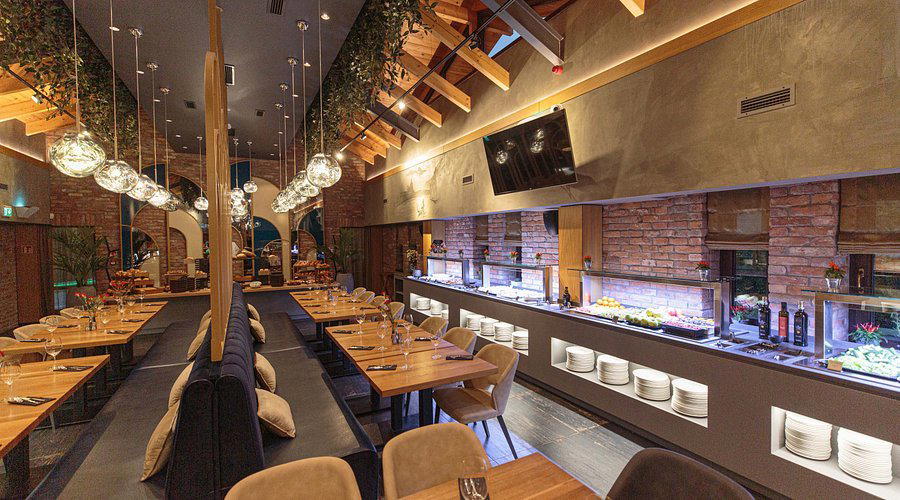
Warm and rustic atmosphere with traditional folk decor, heated by open fireplace, featuring live Hungarian traditional music performances that enhance the authentic pastoral dining experience.