Guri Serház Szombathely
Guri Serház occupies a central position on Szombathely's Szent Erzsébet tér, operating within a Hungarian dining tradition that prizes regional produce and direct sourcing over imported prestige. The address places it in the civic heart of one of western Hungary's most historically layered cities, where Roman ruins sit within walking distance of Baroque architecture. For visitors to Szombathely, it represents a grounded entry point into the local eating culture.
Pearl is the En Primeur Club membership app — saves, bookings, and concierge access live there. Same editors, same standards.
- Address
- Szombathely, Szent Erzsébet tér 1, 9700 Hungary
- Phone
- +3694367781
- Website
- guriszombathely.hu
- Directions
- Get directions
 Saves & bookings on Pearl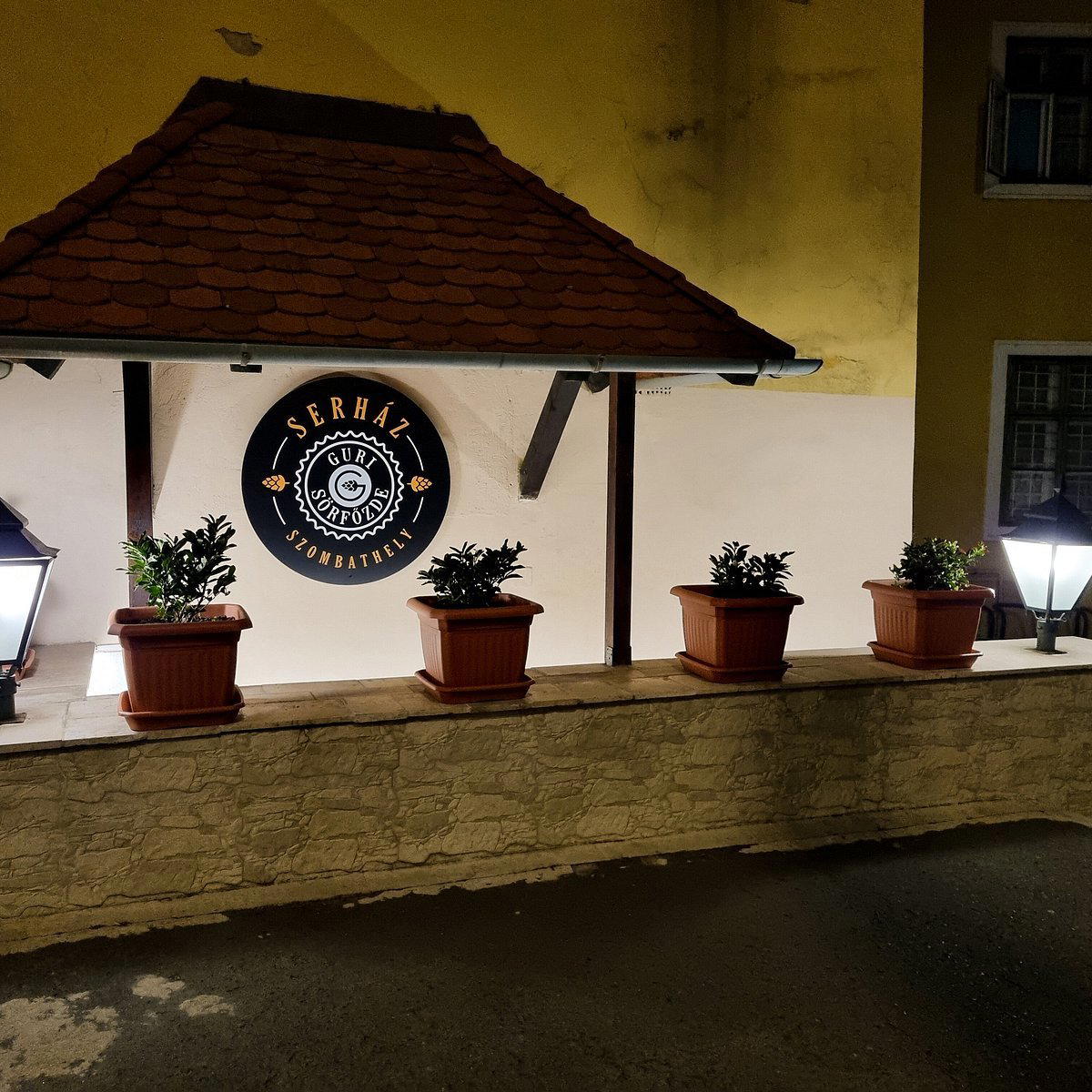
The Square, the City, and What Gets Served There
Szombathely sits closer to Vienna and Graz than to Budapest, a geographic fact that has shaped its food culture for centuries. Western Hungary's dining rooms have long drawn on an agricultural hinterland stretching across the Vas County hills, where smaller producers supply game, freshwater fish, and cold-cuts that rarely travel further than the nearest market town. Szent Erzsébet tér, where Guri Serház operates, is the kind of central square that still functions as a genuine civic gathering point rather than a tourist staging area. The buildings around it carry layers of Baroque and Secessionist detail, and the atmosphere at midday is closer to a provincial Hungarian market day than anything designed for visitors. That context matters when thinking about what a restaurant in this location is actually doing and for whom it is doing it.
Szombathely rarely appears in the same conversations as Budapest's more recognised dining addresses. Properties like Stand in Budapest operate within a capital-city ecosystem of awards, press attention, and international foot traffic. The dynamics governing a restaurant on a provincial square are different: the customer base is primarily local, repeat business drives the kitchen's decisions, and the measure of quality is whether the cooking holds up to daily scrutiny from people who have been eating regional Hungarian food their entire lives.
Ingredient Sourcing in Western Hungary's Dining Tradition
The editorial case for paying attention to provincial Hungarian restaurants is largely an ingredient case. Vas County and the broader western Transdanubian region produce some of Hungary's less-publicised agricultural goods: mangalica pork, freshwater carp and pike from regional waterways, foraged mushrooms from the Őrség forest zone, and stone fruits that drive both savoury preparations and the area's distilling culture. Restaurants operating at the ground level of this supply chain, in towns like Szombathely rather than in Budapest's more competitive dining corridors, often have more direct access to that material than their capital-city counterparts, simply because the supply lines are shorter and the relationships older.
This pattern shows up across Hungary's provincial dining scene. Pajta in Őriszentpéter, further into the Őrség, has built a reputation precisely on this proximity to forest and farm. Platán Gourmet in Tata works a similar angle in the Transdanubian heartland west of Budapest. The logic connecting these addresses is not nostalgia for traditional Hungarian cooking but something more practical: short supply chains produce fresher, more seasonally accurate ingredients, and the cooking that results tends to have a different register than menus built around imported protein and shelf-stable pantry goods.
Szombathely's position near the Austrian border also introduces a secondary ingredient culture. Styrian pumpkin oil, Austrian-influenced pastry technique, and the wine geography of Burgenland and the Sopron appellation all exert influence on what ends up on tables in western Hungarian dining rooms. It is a genuinely hybrid food territory, and restaurants operating here, including those on central squares like Guri Serház's address, sit within that cross-border culinary current whether or not they make it explicit on the menu.
Where Guri Serház Sits Within Szombathely's Options
Szombathely's restaurant scene is modest in scale but covers a reasonable range of formats. Pannónia Étterem és Vinotéka operates at a more formal register, pairing Hungarian cooking with a wine focus that leans into the region's growing viticultural identity. Wagner Vendégudvar covers the courtyard-dining tradition that remains popular across western Hungary through the warmer months. Guri Serház's address on the main square places it at the geographic centre of these options, making it a logical reference point for visitors building a broader picture of the city's eating culture.
Across Hungary's provincial cities, there is a recurring pattern worth noting. The venues that sustain over time tend to be those with a clear relationship to local supply, a consistent format that the surrounding community can rely on, and a kitchen that does not overextend its ambitions beyond what the local ingredient base can support. This describes successful long-term operations in similar-scale Hungarian cities, from BoriMami in Gyöngyös to Forst-Ház in Eger. The ambition is calibrated to the context, which is not a limitation but a different kind of discipline.
For visitors arriving in Szombathely from Budapest or from across the Austrian border, the city's dining culture rewards a slower approach. The Roman ruins of Savaria, the Episcopal Cathedral, and the Iseum Savariense archaeological site are within a short walk of the main square, and the natural rhythm of a day here involves lunch followed by the kind of extended afternoon that provincial Hungarian cities still allow. Restaurants on central squares serve that rhythm. For a broader frame of reference on Hungarian provincial dining, the experiences at Aranysárkány Vendéglő in Szentendre and Apicius Étterem és Kávéház in Herend offer useful comparison points, each operating within a similarly historically-grounded setting.
Planning a Visit
Halasi Pince Panzió in Villány to the south or Astro Tea and Kávéház in Győr to the north fits a broader western Hungarian food and wine itinerary. Guri Serház's position on the central square means it is within easy walking distance of the city's main cultural and archaeological sites, requiring no transport beyond arriving in the centre.
Side-by-Side Snapshot
Comparable venues nearby, for context on price, style, and recognition.
| Venue | Cuisine | Price | Notes |
|---|---|---|---|
| Guri Serház SzombathelyThis venue — the venue you are viewing | American Craft Beer Burgers | $$ | Not listed |
| Pannónia Étterem és Vinotéka | Hungarian Traditional | $$ | Fő tér (Main Square) |
| Wagner Vendégudvar | Hungarian and International | $$ | City Center |
| Megyeri Burgers | Premium Burgers and Neapolitan Pizza | $$ | Pecs |
| Perkovátz-Ház | Modern Hungarian with International Influences | $$ | Széchenyi tér, Downtown Sopron |
| Zuraburger By Vlad | American Burgers | $$ | Szeged |
Continue exploring
More in Szombathely
Restaurants in Szombathely
Browse all →
Hotels in Szombathely
Browse all →



At a Glance
- Lively
- Cozy
- Group Dining
- Casual Hangout
- Historic Building
- Beer Program
- Street Scene
Current opening hours
- Monday
- 3–11 PM
- Tuesday
- 3–11 PM
- Wednesday
- 3–11 PM
- Thursday
- 3–11 PM
- Friday
- 1 PM–1 AM
- Saturday
- 11:30 AM–1 AM
- Sunday
- 11:30 AM–10 PM
Hours can change for holidays and private events. Last verified .
Casual pub atmosphere well-suited for friends and groups enjoying burgers and beers.