
Boteyan Tanaka gives Toyama a serious okonomiyaki address in a city better known to travelers for seafood, sushi, and market-driven kappo cooking. Its repeated selection for Tabelog’s Okonomiyaki 100, compact counter-and-table format, and low price band make it a sharp read on how regional Japan treats everyday griddle food with the same scrutiny usually reserved for higher-ticket dining.
Pearl is the En Primeur Club membership app — saves, bookings, and concierge access live there. Same editors, same standards.
- Address
- Japan, 〒930-0002 Toyama, Shintomicho, 1 Chome−2−3 CiC B1F
- Phone
- +81 76-442-2152
- Website
- instagram.com
- Directions
- Get directions
 Saves & bookings on Pearl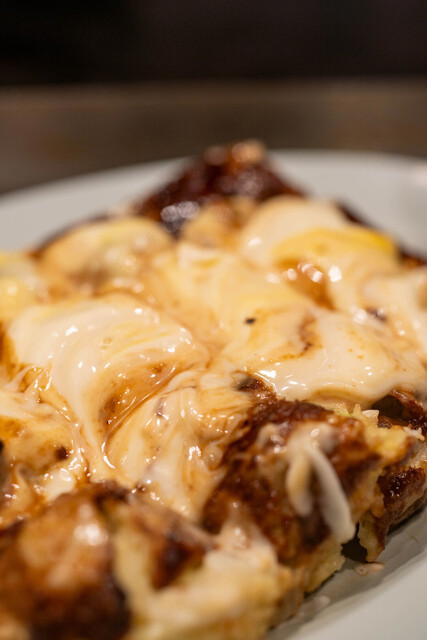
The first read is basement pragmatism, not grand dining theatre: a CiC B1F address by Toyama Station, counter seating, two-person tables, and the close rhythm of a griddle-led room. That matters. Okonomiyaki is often framed as Osaka or Hiroshima territory, yet strong regional examples show how far the form travels when flour, cabbage, noodles, heat, and timing are treated as craft rather than casual fuel.
Toyama’s dining identity usually starts with the bay: white shrimp, firefly squid, winter buri, and sushi counters drawing from one of Japan’s most dramatic coastal larders. Boteyan Tanaka shifts the lens inland and urban. Its okonomiyaki and stir-fried noodle cooking sits in a cheaper, more democratic register than the city’s seafood-led counters, but repeated Tabelog Okonomiyaki 100 selections in 2018, 2019, 2022, 2023, 2024, and 2025 place it in a national conversation, not just a local one.
Okonomiyaki in a seafood city, and why the griddle matters
In Toyama, value is often measured by proximity to the sea. The more interesting question is what happens when a city with strong sourcing habits applies that seriousness to comfort food. Okonomiyaki depends on ordinary ingredients behaving precisely: batter structure, cabbage cut, noodle texture, sauce restraint, and steam managed against surface heat. Its appeal is not luxury produce; it is whether the cooking balances density, sweetness, char, and softness.
That is why category-specific recognition carries weight. Tabelog’s Okonomiyaki 100 is not a generic restaurant ranking; it isolates one Japanese griddle tradition and compares specialists nationwide. For a Toyama address to appear repeatedly says something about the city’s range. The same trip can move from seafood kappo to soba, tempura, Italian tasting menus, and a basement okonomiyaki counter without treating any as secondary.
The comparison inside Toyama is instructive. Gin Gyo operates in a much higher dinner band, around JPY 8,000 to JPY 9,999, while Tempura Koizumi Takano sits higher again at JPY 10,000 to JPY 14,999. Himawari Shokudo 2, listed as Italian, reaches JPY 20,000 to JPY 29,999. Against those formats, Boteyan Tanaka offers another kind of seriousness: low-ticket, high-frequency cooking tested by repetition, not rarity. That is often where Japanese regional dining is most revealing.
A compact room built for solo diners, small groups, and repetition
The room’s scale shapes the experience. Twenty seats, including eight at the counter and six two-person tables, make this compact rather than a broad tourist canteen. Counter seating turns griddle technique into part of the meal without the ceremony of sushi or tempura. Solo dining is explicitly part of the format, children are welcome, and take-out is offered, placing the restaurant closer to daily urban life than destination tasting-menu culture.
Absence of private rooms and parking clarifies the meal being offered. This is station-area, casual-specialist dining for rail arrivals, office workers, families, and travelers wanting a regional meal without a long evening. The non-smoking policy and electronic payment options ease modern planning, but format discipline matters more. Small, hot, fast-cycling rooms expose weak execution. Recognition over multiple years suggests the standard has held under that pressure.
Boteyan Tanaka also corrects a common Hokuriku travel mistake: treating every meaningful meal as seafood. Toyama Bay deserves its reputation, but the city’s restaurant culture is broader than fish. For a fuller read, Our full Toyama restaurants guide is the natural companion, with nearby dining references such as Boteyan, Cave Yunoki, Daimon, Daruma, and Ebitei Bekkan showing how varied the city’s table culture can be.
How to place it in a Toyama itinerary
The strongest use case is not a celebratory dinner. It is a strategic casual meal in a city where higher-priced options can eclipse everyday specialists. The price band is low by Japan dining standards, with lunch listed below JPY 999 and dinner around JPY 1,000 to JPY 1,999. Reservations are unavailable, fitting the genre but changing the planning logic: treat it as a flexible meal around station movements, not a fixed evening anchor.
Opening in 2015 gives the restaurant enough tenure to be more than a passing queue, while repeated Tabelog category selections supply the trust signal. The address near Dentetsu Toyamaeki/Esta Mae places it in Toyama Station’s practical orbit, useful for arrivals, departures, or a mid-city reset between museum time, market browsing, and rail connections across the prefecture. Avoid over-scheduling around it. Let the griddle meal do what the category does well: deliver regional character at modest spend, with technique doing the work often assigned to expensive ingredients.
For planning beyond the table, Toyama rewards a stitched itinerary rather than a single-venue approach. Pair the restaurant map with Our full Toyama hotels guide, Our full Toyama bars guide, Our full Toyama wineries guide, and Our full Toyama experiences guide. Readers mapping broader Japan food routes may also compare how casual-specialist formats change by region, from -Grilled beef Sukiyaki- KAMAKURA TANUKIAN 鎌倉 たぬき庵 in Kamakura to. 鮪と炭火焼き うお炭 秋葉原店 in Tokyo.cafe in Osaka.know in Kumamoto, (Shoku) Vietnam in Kawasaki, [Curry Senmon Ten] Maruyama Kyoju. in Sapporo, Jōdo Saké Bar in Los Angeles, and Onigiri Time in Pasadena.
Critically, the restaurant matters because it refuses the hierarchy many travelers bring to Japan: sushi and kaiseki at the serious end, flour-based comfort food at the casual end. In Toyama, that hierarchy is too simple. A low-priced okonomiyaki specialist with national category recognition can teach as much about local dining habits as a higher-spend counter, especially when the meal shows how everyday ingredients become a benchmark through repetition, heat control, and a room designed around the griddle.
Comparison Snapshot
Comparable venues by cuisine and price in the same metro.
| Venue | Cuisine | Price | Notes |
|---|---|---|---|
| Boteyan (ぼてやん多奈加)This venue — the venue you are viewing | Square Okonomiyaki Specialist | $$ | Not listed |
| Boteyan Tanaka | Okonomiyaki & Yakisoba | $$ | Shintomicho |
| å¨ä¹ å± | japanese | Not listed | Toyama |
| Ogiichi Masuzushi Honpo | Traditional Toyama Masuzushi Specialty Shop | $$ | Koizumicho |
| Boteyan | Okonomiyaki (Japanese Savory Pancake) | $$ | Toyama Station area |
| Kuchi Iwa | Soba and sake multi-course Japanese | $$$ | Higashi-Iwase |
Recognition history
Dated appearances from independent guides and award organizations, with the underlying list record or original source where available.
Tabelog 100 #94 · No. 94
Tabelog · Tabelog 100 - Okonomiyaki - 2025
Continue exploring
More in Toyama
Restaurants in Toyama
Browse all →
Hotels in Toyama
Browse all →
Wineries in Toyama
Browse all →
At a Glance
- Lively
- Cozy
- Trendy
- Casual Hangout
- Family
- Group Dining
- Solo
- Late Night
- Chefs Counter
- Open Kitchen
- Standalone
Current opening hours
- Monday
- 11 AM–2 PM, 5–8 PM
- Tuesday
- 11 AM–2 PM, 5–8 PM
- Wednesday
- 11 AM–2 PM, 5–8 PM
- Thursday
- 11 AM–2 PM, 5–8 PM
- Friday
- 11 AM–2 PM, 5–8 PM
- Saturday
- 11 AM–8 PM
- Sunday
- 11 AM–8 PM
Hours can change for holidays and private events. Last verified .