Google: 4.4 · 115 reviews


A 14-seat reservation-only Chinese restaurant in Osaka's Kitahama district, Hinotori has held Tabelog Bronze or Silver recognition every year since 2017 and carries a 4.31 score. The counter seats eight and a private room accommodates six, with dinner averaging JPY 20,000–29,999. Ranked #352 among Japan's top restaurants by Opinionated About Dining in 2025, it occupies a narrow, serious tier within Osaka's premium Chinese dining scene.
 Discover on Pearl
Pearl is the En Primeur Club membership app — saves, bookings, and concierge access live there. Same editors, same standards.
Osaka's Premium Chinese Counter: Context and Competition
Osaka has long operated a different register of Chinese dining from Tokyo. Where the capital concentrates its top-tier Chinese restaurants in Ginza and Azabu hotel dining rooms, Osaka's equivalent addresses tend to sit in older commercial districts, in compact rooms designed for extended, course-driven evenings rather than spectacle. The Kitahama and Fushimimachi corridor, a cluster of Meiji-era merchant buildings and early-twentieth-century banking offices in Chuo Ward, has become the natural home for this format: small, serious, reservation-only restaurants that pitch themselves against kaiseki and French fine dining on price and intention rather than on category. Hinotori occupies a specific position in that field. With 14 seats total, a Tabelog score of 4.31, and consecutive Tabelog Award recognition from 2017 through 2026, it sits in the tier just below Osaka's Michelin three-star French and kaiseki addresses, competing on the same dinner spend (JPY 20,000–29,999) as venues like Taian and La Cime without carrying Michelin classification itself. For international visitors already familiar with Osaka's kaiseki circuit, it represents a lateral move rather than a step down, and one that rewards curiosity about how Chinese technique translates through a Japanese fine-dining sensibility.
For wider context on the Osaka dining scene, see our full Osaka restaurants guide. Visitors exploring the region can also consult Gion Sasaki in Kyoto and akordu in Nara for comparable premium experiences within reach of the city.
The Room: Counter, Private Room, and the Logic of 14 Seats
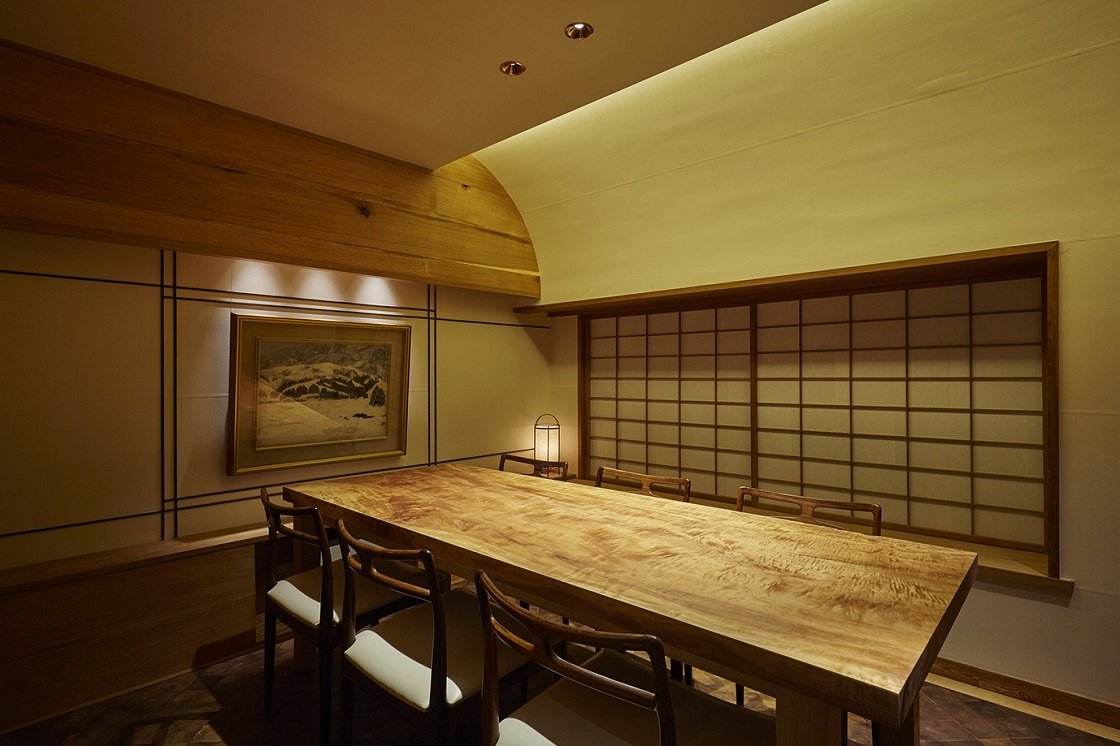
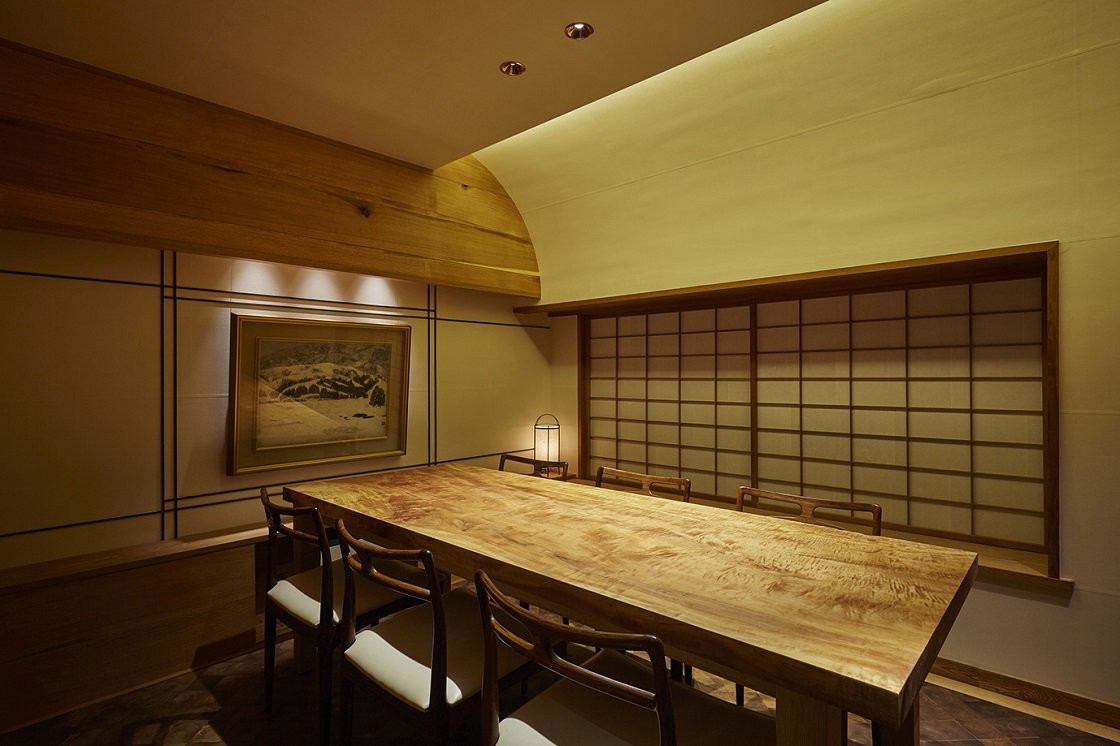
In Japan's most demanding restaurant culture, seat count is a deliberate signal. Fourteen seats — eight at the counter, six in a private room that can be split into configurations for two or four — is small enough to require genuine advance planning but large enough to sustain the economics of a multi-course Chinese menu built around fish-focused sourcing and a wine program that the venue treats as a serious component rather than an afterthought. The counter format, in particular, positions Hinotori closer to the omakase tradition than to the banquet hall model that characterises much premium Chinese dining elsewhere in Japan. Guests at the eight counter seats watch preparation directly, which changes the rhythm of a shared Chinese meal: dishes arrive sequentially, pacing is controlled by the kitchen, and the lazy-Susan communal dynamic gives way to something more individual and observed.
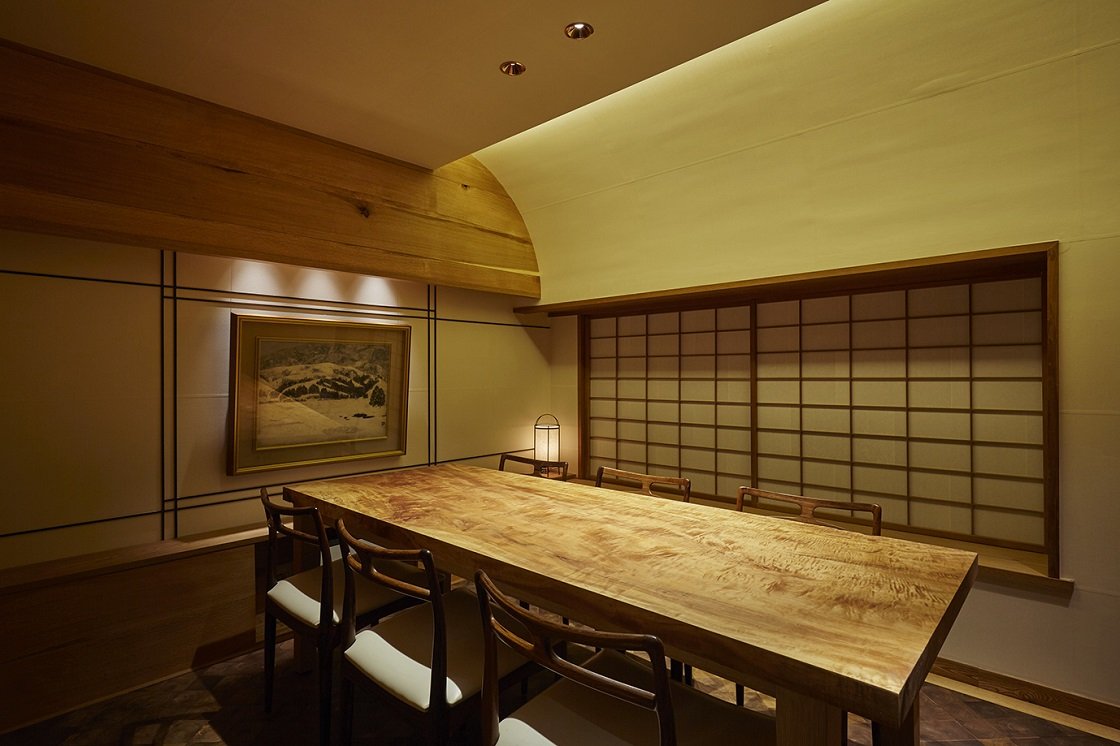
The private room changes that calculus entirely. For a group of four or six, the room restores the choreography of a proper Chinese banquet , dishes placed at the centre, portions turned and shared, the meal building in layers across two-and-a-half hours or more. The venue's service notes explicitly accommodate parties running beyond that mark, which is unusual for a room of this size and price in Japan, where kaiseki counters tend to hold tighter to the clock. That flexibility matters for business dinners, which Tabelog reviewers consistently cite as the occasion that draws them here.
The Awards Record and What It Signals
Hinotori's Tabelog award history is worth reading carefully. The venue received Tabelog Bronze from 2017 through 2019, was refined to Silver in 2020 and 2021, then returned to Bronze from 2022 through 2026. That Silver period aligns with a phase in which Tabelog's reviewer base was heavily engaging with Japanese-operated Chinese restaurants, and the subsequent return to Bronze reflects recalibration of a competitive category rather than any decline in the restaurant's standing. A score of 4.31 remains significantly above the Bronze threshold and places Hinotori among the most consistently reviewed Chinese addresses in western Japan. Its inclusion in the Tabelog Chinese WEST "Tabelog 100" in 2021, 2023, and 2024 confirms a sustained regional standing across the full Kansai Chinese dining set, not just within Osaka proper.
Opinionated About Dining's rankings provide a cross-reference: Hinotori appeared as a recommendation in their Japan list in 2023, ranked 420th in 2024, and moved to 352nd in 2025, a trajectory that reflects growing recognition from the international critic and traveller community. Chef Kiyohiko Inoue has helmed the kitchen since the restaurant opened in June 2015, giving the operation a decade of consistent direction , a material credential in a category where kitchen transitions often reset critical momentum.
For a sense of how Hinotori sits within Osaka's award-recognised Chinese tier, Chi-Fu, Kamigatachuka SHINTANI, and Chugokusai S.Sawada occupy adjacent positions in the same category and price band and are worth considering as comparisons when planning a focused Chinese dining itinerary in the city.
Fish, Wine, and the Shape of the Menu
The Tabelog record flags two specific culinary commitments: a fish-focused sourcing approach and a wine program treated with particular seriousness. In the context of high-end Chinese dining in Japan, both are markers of a certain interpretive stance. Chinese cuisine's canonical protein hierarchy leans toward pork, duck, and shellfish at the premium end, with fish appearing more often in Cantonese or Shanghainese registers. A Japanese chef operating in that tradition and choosing to signal fish as a distinct sourcing priority suggests a menu that absorbs Japanese ingredient seasonality into Chinese technique, which is a recognisable category in Osaka's premium Chinese scene and one that has attracted consistent critical attention.
The wine emphasis is a further differentiator. Most premium Chinese restaurants in Japan, even at this price point, lead with Shaoxing wine pairings, premium sake, or tea. A venue that specifically notes wine as a priority has made a clear positioning choice, and one that aligns the experience with the international fine-dining audience rather than with traditional Chinese banquet conventions. Dinner pricing of JPY 20,000–29,999 per person is consistent with a tasting menu format that would accommodate a four- to six-glass wine pairing at comparable Osaka addresses. Credit cards (VISA, Mastercard, JCB, Amex, Diners) are accepted; electronic money and QR code payments are not.
Banquet Format vs. Counter Logic: Reading the Room
Question of which seat to request matters here. The counter and the private room produce genuinely different experiences of the same kitchen. The eight counter seats deliver the stripped-back, sequenced, watchful format that has become the dominant idiom in Japan's top-tier dining , closer in spirit to an omakase progression than to a traditional Chinese meal. The private room, by contrast, allows the meal to behave like a proper Chinese table: dishes shared simultaneously, the pacing set by conversation rather than the kitchen's sequence, and the full choreography of a multi-course banquet restored. Both are valid interpretations of what Chinese fine dining can be. The counter suits solo diners and pairs who want proximity to the kitchen; the private room suits groups of four to six who want the communal logic of the Chinese table to govern the evening. For bookings involving clients or colleagues, the private room's capacity for full venue hire (up to 20 people) makes Hinotori a practical choice among Osaka's premium event options.
Comparable approaches to Chinese fine dining in other Japanese cities include Harutaka in Tokyo and, further afield, Goh in Fukuoka for a sense of how this counter-driven format is playing out across the country's premium dining tier. Internationally, Restaurant Tim Raue in Berlin and Mister Jiu's in San Francisco offer reference points for how Chinese culinary traditions are being reinterpreted at the fine-dining level in different markets.
Other EP Club-reviewed Osaka addresses worth pairing with a visit here include atelier HANADA by Morimoto and Az. For planning beyond the table, our full Osaka hotels guide, our full Osaka bars guide, our full Osaka wineries guide, and our full Osaka experiences guide provide broader itinerary context. Further afield, 1000 in Yokohama and 6 in Okinawa round out a Japan dining itinerary at the premium end.
Planning a Visit
Hinotori is located at 2 Chome-4-9 Fushimimachi, Chuo Ward , a two-minute walk from Kitahama Station on the Osaka Municipal Subway Sakaisuji Line and approximately 288 metres from the Keihan Electric Railway Kitahama stop, making it easily reachable from central Osaka without a taxi. The venue is reservation-only with no walk-in policy; given consistent award recognition and a 14-seat capacity, booking lead time should be assumed to be substantial, particularly for the private room. Service runs Monday through Saturday from 5:00 pm (4:00 pm on Saturday), with the kitchen closing at 11:00 pm on weekdays and 11:30 pm on Fridays and Saturdays. The venue is closed on Sundays and public holidays. No parking is available on site. The non-smoking policy applies throughout.
Price and Positioning
A quick comparison pulled from similar venues we track in the same category.
| Venue | Price | Awards | Notes |
|---|---|---|---|
| Hinotori | {"Year":"2026","Award Source":"Tabelog",… | This venue | |
| HAJIME | ¥¥¥¥ | Michelin 3 Star | French, Innovative, ¥¥¥¥ |
| La Cime | ¥¥¥¥ | Michelin 2 Star | French, ¥¥¥¥ |
| Kashiwaya Osaka Senriyama | ¥¥¥ | Michelin 3 Star | Japanese, ¥¥¥ |
| Taian | ¥¥¥ | Michelin 3 Star | Kaiseki, Japanese, ¥¥¥ |
| Fujiya 1935 | ¥¥¥¥ | Michelin 2 Star | Innovative, ¥¥¥¥ |
Continue exploring
More in Osaka
Restaurants in Osaka
Browse all →
Bars in Osaka
Browse all →
Hotels in Osaka
Browse all →
Wineries in Osaka
Browse all →
At a Glance
- Lively
- Energetic
- Intimate
- Special Occasion
- Group Dining
- Celebration
- Open Kitchen
- Private Dining
- Extensive Wine List
- Sommelier Led
- Local Sourcing
- Sustainable Seafood
Intimate and sophisticated dining atmosphere with warm, welcoming service; small plates and creative presentations create an engaging, conversational environment.