Our verdict
On Dotonbori's most saturated dining strip, Harijyu Dotombori Grill Western Food occupies a specific niche in Osaka's long conversation between Japanese cooking traditions and Western culinary influence. The address places it at the centre of one of Japan's most visited food corridors, where the category of 'yoshoku' — Japanese-adapted Western cooking — has deep local roots and a devoted following among Osaka regulars.

Pearl is the En Primeur Club membership app — saves, bookings, and concierge access live there. Same editors, same standards.
- Address
- 1 Chome-9-17 Dotonbori, Chuo Ward, Osaka, 542-0071, Japan
- Phone
- +81 6 6211 5357
- Hours
- Mon 11:30 AM–8 PMTue ClosedWed–Sun 11:30 AM–8 PM
- Website
- harijyu.co.jp
- Directions
- Get directions
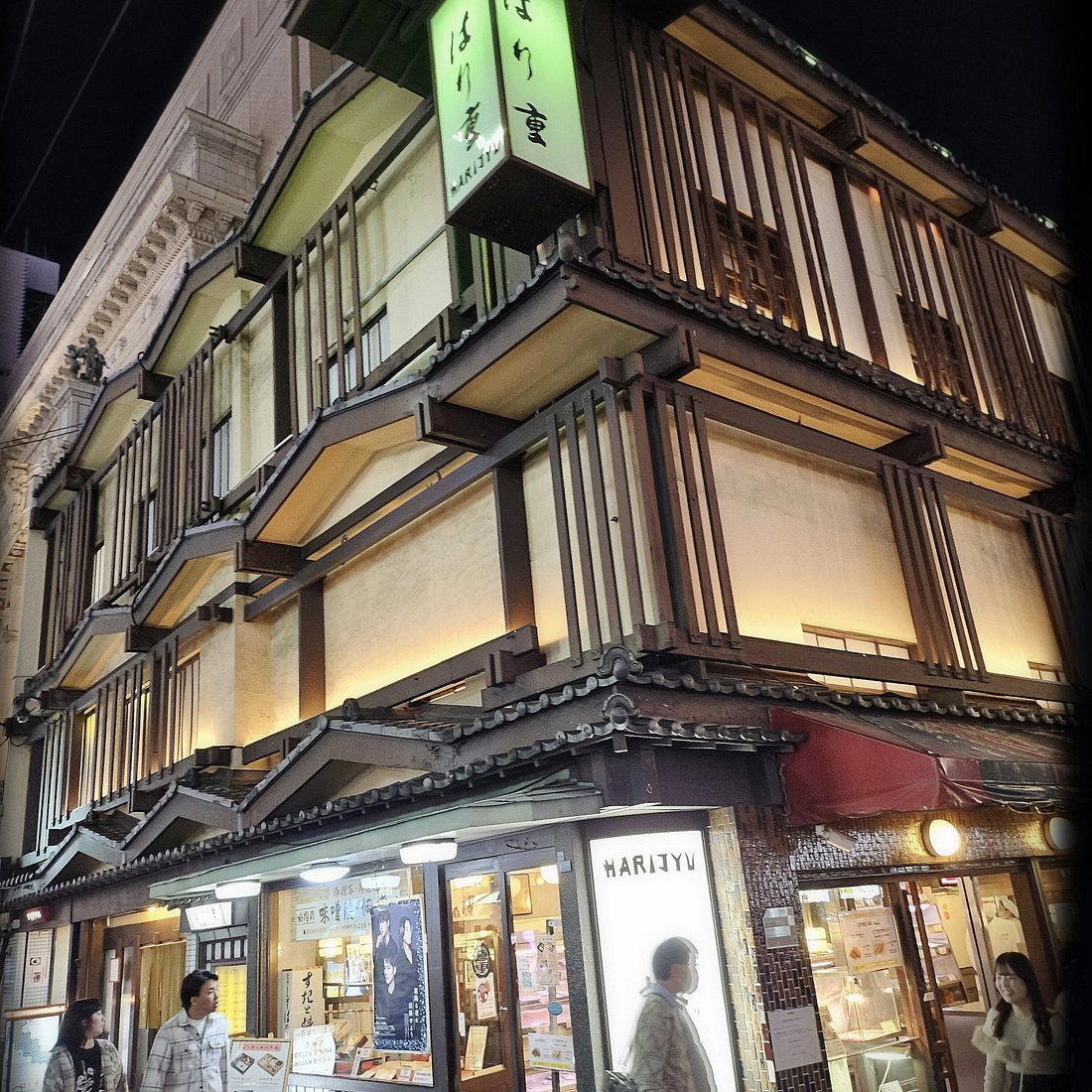
The menu
What to order
- Hamburger Steak
- Beef Cutlet (Fillet)
- Beef Stew
Where Dotonbori's Noise Meets a Quieter Culinary Argument
Approaching Dotonbori from the canal side, the sensory register is immediate: neon signage at eye level, the mechanical motion of the Glico running man overhead, and the compacted sound of a street that processes millions of visitors each year. The area around 1 Chome-9-17 Dotonbori sits within that compression, a block where takoyaki counters and ramen shops operate at full volume and where the sheer density of dining options makes any individual kitchen easy to overlook. Harijyu Dotombori Grill Western Food holds its address here, in one of the most contested restaurant corridors in Japan.
That address is, in itself, a piece of context. Dotonbori is not a neighbourhood where venues coast on location. The foot traffic is high but the competition is relentless, and kitchens that survive across years do so because they have a clear identity and a repeatable reason for return visits. The category Harijyu occupies — grill-focused Western food in an Osaka setting — places it within a tradition that has more depth than most visitors expect.
Yoshoku: The Culinary Category That Dotonbori Helped Define
To understand what a venue like Harijyu Dotombori Grill Western Food is doing, it helps to understand yoshoku, the Japanese adaptation of Western cooking that took root in the Meiji era and became one of Osaka's most durable dining categories. Yoshoku is not fusion in the contemporary sense, it is not a chef's calculated hybrid. It is a century-old domestication of European techniques and ingredients, absorbed so thoroughly into Japanese everyday cooking that dishes like omu-rice, hayashi rice, and the grilled cutlets that define the category now read as entirely Japanese to the people who grew up eating them.
Osaka has a particular claim on yoshoku's development. The city's merchant-class culture, its appetite for practical, satisfying food, and its geographic position as a commercial hub during the period of Western influence all shaped how these borrowed dishes were absorbed and refined. The Kansai region developed its own register within yoshoku, a tendency toward richness, toward deeply reduced sauces, toward the kind of food that rewards eating without demanding scholarship. Grill-format Western restaurants in Osaka sit within that specific inheritance. They are not trying to replicate European cooking; they are doing something that is now distinctly their own.
For travellers arriving in Osaka from restaurant scenes like those found at Le Bernardin in New York City or Lazy Bear in San Francisco, the category can require a reorientation. The reference points are different. The ambition is different. Yoshoku at its finest is not trying to compete with kaiseki or French haute cuisine; it is making a case for comfort, repetition, and mastery within a deliberately bounded form.
Dotonbori's Dining Spectrum and Where the Grill Format Sits
Dotonbori's dining offer runs from street-level snack formats, the takoyaki of Dotonbori Kukuru, the layered okonomiyaki associated with counters like Okonomiyaki Kiji, up through more formal sit-down kitchens. The grill-and-Western category occupies a middle register: more structured than street food, less ceremonially demanding than the kappo tradition represented by venues like Ajikitcho Bunbuan or the contemporary kaiseki approach of Aka to Shiro.
That middle register is where a significant portion of Osaka's everyday restaurant culture actually lives. The city's reputation for food democratisation, the concept of kuidaore, eating yourself broke, is not primarily built on its high-end establishments. It is built on the density and quality of its mid-tier, the kitchens that operate without awards infrastructure but with deep neighbourhood loyalty. Harijyu's Dotonbori position places it in dialogue with that tradition, even if the tourist-heavy surroundings mean its clientele is more mixed than a neighbourhood grill operation further from the canal.
Elsewhere in the Osaka dining spectrum, the city's French-influenced kitchens, Calendrier and Az, operate in a different register entirely, as does HAJIME in Osaka, which holds three Michelin stars and represents the city's highest formal expression of Western culinary technique applied through a Japanese lens. The grill-format yoshoku tradition that Harijyu represents is not competing in that tier. It is answering a different question: what does satisfying, grounded, accessible Western-influenced cooking look like in a city that has been refining it for over a century.
Osaka in Context: A City That Takes the Everyday Seriously
Visitors planning time in Osaka's broader restaurant geography will find that the city rewards lateral movement away from Dotonbori's central strip. Ajihei Sonezaki and the quieter rooms around the Sonezaki area offer a different pace. For travellers extending into the Kansai region, Gion Sasaki in Kyoto and akordu in Nara represent the formal end of regional dining, while Abon in Ashiya offers a counterpoint closer to Kobe. Japan's wider dining geography, from Harutaka in Tokyo to Goh in Fukuoka, reflects how differently each city has processed the same external culinary influences. Osaka's version, grounded in merchant pragmatism, remains one of the most consistent.
For the complete picture of what Osaka's dining offer spans, from street-level formats to formal kaiseki, the full Osaka Shi restaurants guide maps the city's dining categories against neighbourhoods and price tiers.
Planning a Visit
Harijyu Dotombori Grill Western Food is located at 1 Chome-9-17 Dotonbori in Chuo Ward, walkable from Namba Station and within the main Dotonbori pedestrian circuit. The address sits in one of Osaka's highest-footfall zones, which means evening queues are a realistic variable on weekends and during peak tourist periods. Dress code information is not listed; Dotonbori's general register runs casual, and a grill format in this location is unlikely to require anything more formal.
Frequently asked questions
How do I find Harijyu Dotombori Grill Western Food?
Harijyu Dotombori Grill Western Food is located at 1 Chome-9-17 Dotonbori, Chuo Ward, Osaka, 542-0071, Japan, Osaka Shi.
How does Harijyu Dotombori Grill Western Food fit into Osaka's yoshoku dining scene?
Yoshoku — the Japanese reinterpretation of Western cooking that took shape during the Meiji era — has a particularly strong presence in Osaka, where everyday food culture has historically rewarded precision in working-class formats. Harijyu Dotombori Grill Western Food, located at 1 Chome-9-17 Dotonbori in Chuo Ward, sits within a tradition of Osaka grill establishments that treat demi-glace preparations and breaded proteins with the same seriousness the city applies to its street-food canon. For visitors tracing the city's culinary categories beyond the obvious, it represents a coherent alternative argument.
What do regulars order at Harijyu Dotombori Grill Western Food?
Harijyu positions itself within the yoshoku tradition, meaning the menu centres on Japanese adaptations of Western cooking — formats like grilled meats, demi-glace sauces, and breaded cutlets that define the category. Given its Dotonbori address at 1 Chome-9-17, it draws both neighbourhood regulars and visitors working through the district's dining options. Specific dishes are best confirmed directly with the venue before visiting.
Do they take walk-ins at Harijyu Dotombori Grill Western Food?
Dotonbori restaurants at this address in Chuo Ward see high foot traffic, particularly in the evening hours when the canal strip fills.
What makes Harijyu Dotombori Grill Western Food worth seeking out?
Harijyu represents a specific strand of Osaka dining that gets less attention than the city's takoyaki and ramen circuits: the yoshoku grill, where Western culinary formats were absorbed into Japanese kitchen practice over more than a century. The Dotonbori location at 1 Chome-9-17 places it inside one of Japan's most concentrated dining corridors, making it accessible without requiring a detour from the main visitor route. That combination of culinary category and location is the case for visiting.
Can Harijyu Dotombori Grill Western Food adjust for dietary needs?
Yoshoku kitchens typically work with wheat-heavy preparations — breading, roux-based sauces, and marinated proteins — which means gluten-free and some allergy-specific requests may be difficult to accommodate across the full menu.
Is Harijyu Dotombori Grill Western Food worth the price?
The format, a grill-led Western menu rooted in Japanese culinary history, offers a different register from the street-food spending that defines most Dotonbori visits. Whether the value proposition holds depends on what you're comparing it against.
Cost Snapshot
Comparable venues nearby, for context on price, style, and recognition.
| Venue | Cuisine | Price | Awards | Notes |
|---|---|---|---|---|
| Harijyu Dotombori Grill Western FoodThis venue — the venue you are viewing | Traditional Yoshoku (Japanese Western) Grill | $30–50 | Not listed | Not listed |
| Kushiage 010 | Creative Kushiage | $50–100 | Michelin Bib Gourmand | Kita, Creative Kushiage with Global Influences |
| Masaru | Traditional Sushi | $300–500 | Not listed | Naniwa, Traditional Sushi |
| 鮓 きずな | Edomae-style Omakase Sushi | $150–200 | Not listed | Miyakojima, Edomae-style Omakase Sushi |
| 旬膳季らく | 浪速割烹 Japanese Kaiseki | $100–150 | Michelin Plate | Chūō, 浪速割烹 Japanese Kaiseki |
| Wayōshusai Hide | Japanese Izakaya | $500+ | Tabelog Bronze #105 | Chūō, Japanese Izakaya |
Continue exploring
More in Osaka
Restaurants in Osaka
Browse all →




Bars in Osaka
Browse all →


Hotels in Osaka
Browse all →




Wineries in Osaka
Browse all →
Details
- Retro
- Classic
- Cozy
- Casual Hangout
- Family
- Historic Building
- Beer Program
- A La Carte
Current opening hours
- Monday
- 11:30 AM–8 PM
- Tuesday
- Closed
- Wednesday
- 11:30 AM–8 PM
- Thursday
- 11:30 AM–8 PM
- Friday
- 11:30 AM–8 PM
- Saturday
- 11:30 AM–8 PM
- Sunday
- 11:30 AM–8 PM
Hours can change for holidays and private events. Last verified .
Showa retro with traditional Japanese interiors, low ceilings, linoleum floors, and courteous staff in kimono providing a nostalgic, time-travel-like dining experience.