Our verdict
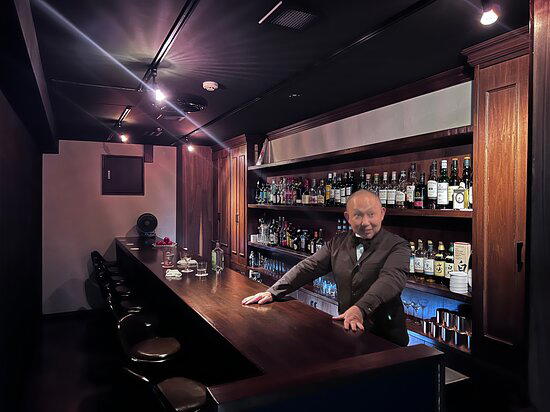
Hainan Jeefan Shokudo 2 (海南鶏飯食堂2) serves Authentic Singaporean Hainanese Chicken Rice in Ebisu, with a casual, conversational room, open kitchen, terrace, and sake program.

Pearl is the En Primeur Club membership app, where members save venues, book tables and use the concierge.
The menu
What to order
- Hainanese Chicken Rice
- Laksa
- Bak Kut Teh
- Fried Hokkien Mee
Singapore's National Dish, Transplanted to Ebisu
Ebisu sits in that particular band of Tokyo neighbourhoods, south of Shibuya and north of Nakameguro, where the dining offer tilts toward the cosmopolitan without becoming self-consciously international. Izakayas and ramen counters share blocks with French bistros and wine bars that could pass for Paris arrondissement side streets. It is precisely this kind of neighbourhood where a specialist restaurant devoted to Hainanese chicken rice finds its footing, not as a novelty, but as a serious practitioner of a dish that carries enormous cultural weight across Singapore, Malaysia, and Thailand.
Hainan Jeefan Shokudo 2 occupies the ground floor of Costa De Verano at 1-21-14 Ebisu, a building address that reads more residential than commercial, which is part of the experience of finding it. The name itself signals intent: jeefan is a romanisation of the Hokkien for chicken rice, and shokudo is Japanese for a simple, casual eating hall. The combination is deliberate. This is a venue that takes its source material seriously while operating in the register of an accessible, neighbourhood lunch spot.
The Cultural Architecture of Hainanese Chicken Rice
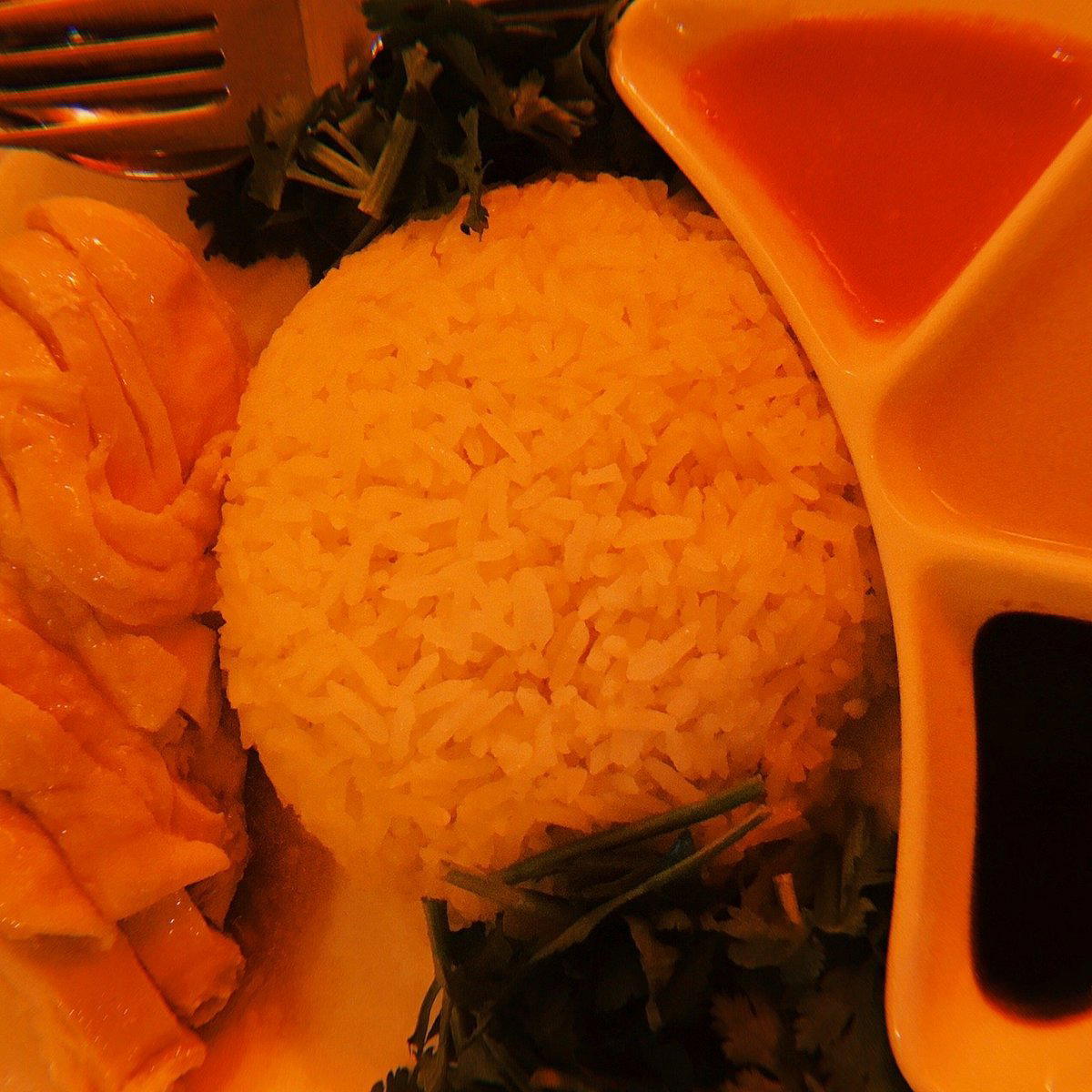
To understand why a restaurant like this earns attention in Tokyo, it helps to understand what Hainanese chicken rice actually is and why it resists easy replication. The dish traces back to Hainan province in southern China, arriving in Singapore and Malaya in the early twentieth century via migration. What emerged over subsequent decades was a Singaporean national identity wrapped in a bowl of rice cooked in chicken stock, accompanied by poached or roasted bird and a set of dipping sauces, typically a ginger-scallion paste, a chilli sauce, and a dark sweet soy.
The simplicity is deceptive. The rice must be cooked in the rendered fat and stock from the chicken itself. The bird, classically poached at sub-boiling temperature to preserve a barely-set texture at the bone, requires both specific breed selection and precise time-temperature control. The sauces are not garnishes; in Singapore hawker culture, a cook's chilli sauce is the primary marker of quality, the detail that hawker-stall regulars use to distinguish one plate from another. This is a dish where the margin between competent and authoritative is narrow and almost entirely technical.
Tokyo has a genuine appetite for this format. The city's broader relationship with Southeast Asian food has matured considerably over the past two decades, moving from Thai and Vietnamese restaurants aimed at expatriate communities toward operators who treat the source cuisine with the same ingredient-level seriousness that defines Tokyo's approach to ramen or soba. Hainanese chicken rice fits that arc: a dish with enough technical depth to reward specialist treatment, presented in a format that aligns with Japanese dining sensibilities around precision and restraint.
Where This Sits in Tokyo's Wider Dining Picture
Tokyo's restaurant spectrum runs from multi-Michelin kaiseki counters to standing soba bars that charge less than a subway ride. Venues like Harutaka, L'Effervescence, RyuGin, Sézanne, and Crony represent the formal, high-investment end of that range, each operating with Michelin recognition and multi-course tasting formats. Hainan Jeefan Shokudo 2 operates at a different register entirely, closer in spirit to the specialist single-dish restaurants, the tonkatsu-ya or the tempura counter, where the entire operation is organised around doing one thing with complete conviction.
That specialist model is well understood in Japan. The logic is: master one technique, repeat it daily, let the discipline accumulate over years. Applied to Hainanese chicken rice, it produces a restaurant where the menu is narrow by design and the quality ceiling is correspondingly high. For diners accustomed to the full-service omakase format or French tasting menus, this is a useful counterpoint: the discipline is the same, the performance format is just more compressed.
For coverage of Japan's broader dining geography, EP Club tracks restaurants across multiple cities, including HAJIME in Osaka, Gion Sasaki in Kyoto, akordu in Nara, Goh in Fukuoka, Jizakana Kawashima in Nanao, Furuya Sankyu in Sapporo, Kohanso in Takashima, Shobaya in Nishikawa Machi, Birdland in Sakai, and Bistro Ange in Toyohashi. Our full Tokyo restaurants guide covers the city's dining tiers in detail. For international comparison at the specialist-technique end of the spectrum, Le Bernardin in New York City and Atomix in New York City show how single-discipline excellence translates across very different formats and price points.
Planning a Visit
The restaurant is located in Ebisu, Shibuya-ku, accessible from Ebisu Station on the JR Yamanote Line or the Tokyo Metro Hibiya Line. The Ebisu address, on the ground floor of Costa De Verano, places it within walking distance of the station's west exit. Lunch service tends to be the primary format for chicken rice specialists in Japan, as the dish is traditionally a daytime meal in its home context, but this should be verified for this specific location.
Frequently asked questions
What's Hainan Jeefan Shokudo 2 (海南鶏飯食堂2)'s location?
Hainan Jeefan Shokudo 2 (海南鶏飯食堂2) is located at 恵比寿1-21-14 (Costa De Verano 1F), 渋谷区, 東京都, 150-0013, Tokyo.
What's the must-try dish at Hainan Jeefan Shokudo 2?
The restaurant's entire premise is Hainanese chicken rice, so that is where to focus. The dish centres on poached or roasted chicken served over rice cooked in chicken stock, accompanied by ginger paste, chilli sauce, and dark soy, a combination that Singapore hawker culture has refined over generations. Ordering anything other than the chicken rice here misses the point of the venue.
Can I walk in to Hainan Jeefan Shokudo 2 (海南鶏飯食堂2)?
Reservations are recommended for Hainan Jeefan Shokudo 2 (海南鶏飯食堂2) in Tokyo. Confirm current policy via the venue's official channels.
What is Hainan Jeefan Shokudo 2 (海南鶏飯食堂2) known for?
Hainan Jeefan Shokudo 2 (海南鶏飯食堂2) is best approached by focusing on the core concept and signature offerings.
At a Glance
A compact comparison to help you place this venue among nearby peers.
| Venue | Cuisine | Price | Awards | Notes |
|---|---|---|---|---|
| Hainan Jeefan Shokudo 2 (海南鶏飯食堂2)This venue (the venue you are viewing) | Authentic Singaporean Hainanese Chicken Rice | $10–20 | Not listed | Not listed |
| Harutaka | Edo-Style Omakase Sushi | $200–300 | 3 Michelin Stars · World's 50 Best #76 | Sushi |
| L'Effervescence | Modern French with Japanese Influences | $200–300 | 3 Michelin Stars · World's 50 Best #69 | French |
| RyuGin | Modern Kaiseki | $500+ | 3 Michelin Stars · World's 50 Best #41 | Kaiseki, Japanese |
| Crony | Modern French with Japanese Influences | $150–200 | 2 Michelin Stars · World's 50 Best #34 | Innovative, French |
| Florilège | Modern French-Japanese Plant-Based Fine Dining | $50–100 | 2 Michelin Stars · World's 50 Best #31 | French |