At the southern gateway to Fushimi Inari, GYUKATSU Kyoto Katsugyu delivers one of Japan's most specific dining rituals: beef cutlet cooked tableside on a personal stone grill, finished to the diner's preferred doneness. The format sits at the intersection of fast-casual efficiency and interactive dining ceremony, drawing steady queues from both domestic travellers and international visitors making the shrine approach a culinary stop as well as a pilgrimage route.
Pearl is the En Primeur Club membership app — saves, bookings, and concierge access live there. Same editors, same standards.
- Address
- Japan, 〒612-0012 Kyoto, Fushimi Ward, Fukakusa Ichinotsubocho, 38−13 リバーサイドハイツ 1F
- Phone
- +81757488422
- Website
- gyukatsu-kyotokatsugyu.com
- Directions
- Get directions
 Saves & bookings on Pearl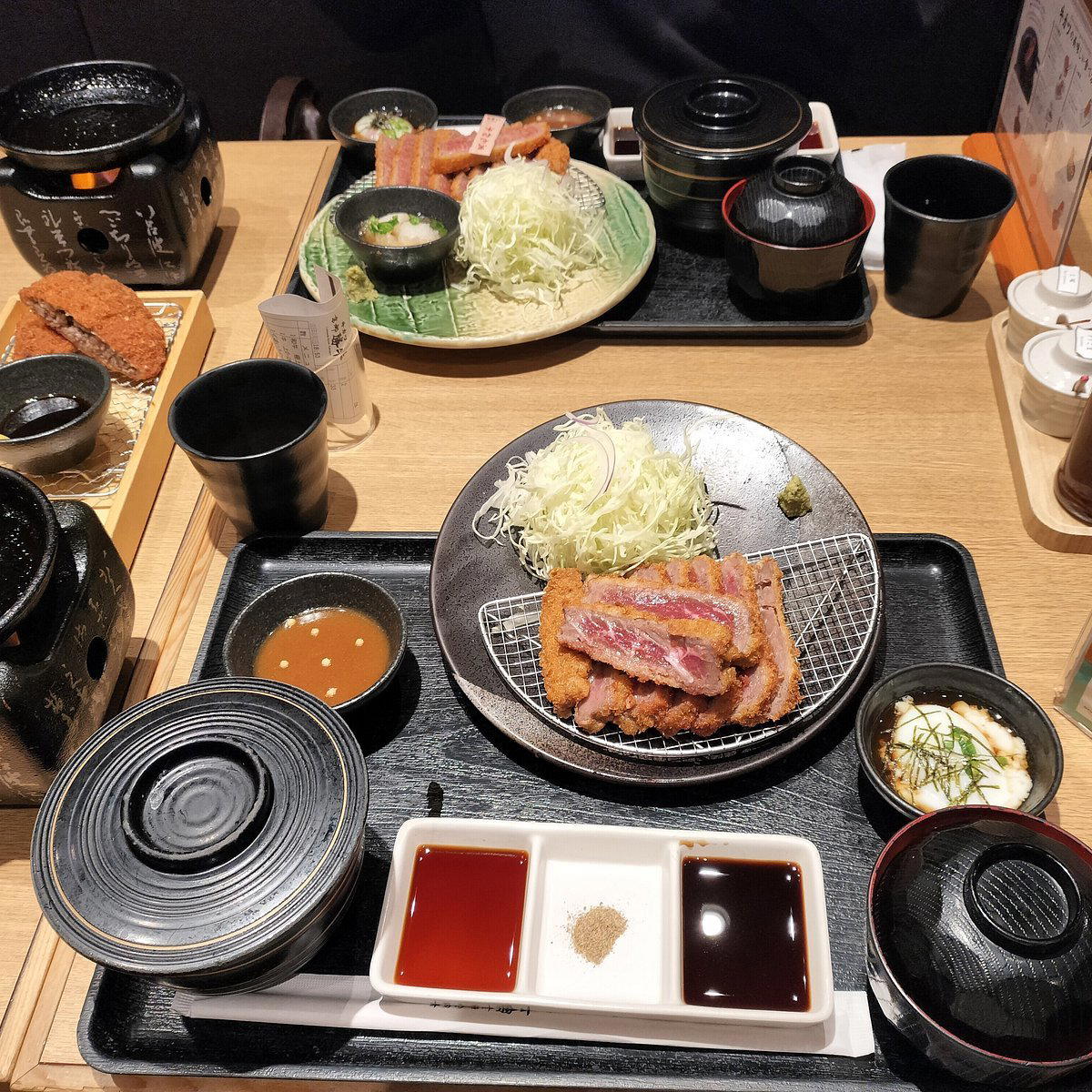
Where the Shrine Path Meets the Stone Grill
The approach to Fushimi Inari Taisha is one of the most trafficked temple corridors in Japan, a path that funnels millions of visitors annually through a neighbourhood defined by torii gates, fox shrines, and the particular energy of a sacred site that doubles as a major tourist destination. In that context, the dining options clustered near the main gate tend toward the transactional: quick skewers, matcha soft-serve, souvenir bento. GYUKATSU Kyoto Katsugyu Fushimi Inari occupies a different register within that streetscape. It is part of a small but well-established chain built around gyukatsu, a format that has carved genuine cultural traction in Japan over the past decade, distinct from the older and more familiar tonkatsu (pork cutlet) tradition.
Gyukatsu, for those encountering it for the first time, is breaded and deep-fried beef cutlet, typically served rare at the centre and finished by the diner on a small stone grill set directly into the table. The ritual is the point. Unlike tonkatsu, which arrives fully cooked and plated, gyukatsu transfers the final decision to the person eating it: how much sear, how much residual pink, how long each slice sits on the heated surface. That interactivity has made the format a recurring subject in Japan's food media and a reliable draw for visitors who want something participatory without the complexity or cost of a full kaiseki progression at venues like Gion Sasaki or Kikunoi Honten.
The Ritual of the Stone Grill
In Japan's broader dining culture, the idea of cooking at the table carries significant weight. Shabu-shabu, sukiyaki, yakiniku: each of these formats positions the diner as a participant rather than a passive recipient, and each comes with its own unspoken code of conduct. Gyukatsu sits inside that tradition, but it compresses the ritual into a single, focused act. The stone surface retains heat consistently enough to allow for genuine control, and most versions of the format include dipping sauces, wasabi, and condiments that let diners adjust flavour as they go.
At the Fushimi Inari branch, the context amplifies the experience. Many diners arrive after walking at least part of the Inari mountain trail, which adds a physical dimension to the appetite that a purely urban location cannot replicate. Timing matters here: arriving before the main post-shrine lunch rush, typically before 11:30 or after 14:00 on weekdays, reduces wait times at a venue that does not take reservations in the standard sense. Kyoto's spring and autumn seasons, when Fushimi Inari draws its largest crowds for cherry blossom and foliage viewing, push queues noticeably longer than the summer or winter shoulder months.
Where This Sits in Kyoto's Dining Range
Kyoto's restaurant identity is dominated internationally by its kaiseki tradition, and the city's Michelin-starred tier is dense with multi-course Japanese dining at venues such as Hyotei, Mizai, and Isshisoden Nakamura. That tier requires advance booking, formal dress awareness, and a budget measured in tens of thousands of yen. GYUKATSU Kyoto Katsugyu operates at a different price point and with a different set of expectations, making it accessible to visitors who want a genuinely Japanese dining format without the planning overhead of the city's top-end reservation circuit.
That positioning is not a compromise. The gyukatsu format has its own internal logic and craft, and the Katsugyu brand has built its reputation specifically on beef quality and consistency across its locations. The Fushimi Inari branch draws from the same sourcing and format standards that established the brand in Kyoto's competitive lunch market. Compared to the grilled skewer vendors on the shrine approach itself, it offers a seated, structured experience. Compared to the kaiseki rooms of Gion Sasaki or the contemporary Japanese precision at HAJIME in Osaka, it is an entirely different category, and should be assessed as such.
For a broader view of where this sits within the city's full dining range, the EP Club Kyoto restaurants guide maps the scene from street-level formats up through the starred kaiseki tier.
Etiquette and Practical Expectations
The stone grill format rewards attentiveness. The surface is hot enough to sear in seconds, and the common beginner mistake is leaving a slice too long, producing a result closer to tonkatsu than the lightly blushed centre that makes gyukatsu worth ordering. Most diners settle into a rhythm quickly: small portions on the grill, brief contact, then off to rest on the plate while the next piece goes on. The accompanying dipping sauces, typically a dark sauce alongside wasabi and salt options, are designed to complement rather than mask the beef's flavour at varying doneness levels.
Service at chain-format gyukatsu restaurants in Japan tends to be efficient and procedural rather than hospitality-forward in the European sense. Staff explain the grill process to first-time visitors, but the expectation is that diners will self-direct once the mechanics are clear. This is consistent with how Japan's casual dining culture generally positions the guest: given enough information to operate independently, then left to their own pace. It is a different register from the guided progression you would experience at Harutaka in Tokyo or the contemporary narrative dining at Atomix in New York City, but it suits the format and the location.
Groups with dietary restrictions should note that gyukatsu as a format is inherently beef-focused, and the core proposition does not adapt easily to non-beef alternatives. Visitors with specific dietary requirements are advised to verify the current menu directly, as information changes by location and season.
Know Before You Go
Location: Fukakusa Ichinotsubocho, Fushimi Ward, Kyoto — a short walk from Fushimi Inari Station (Kintetsu Kinomoto Line) and Inari Station (JR Nara Line).
Timing: Arrive before 11:30 or after 14:00 on weekdays to avoid the primary lunch queue. Spring (late March to early May) and autumn (mid-October to late November) see the heaviest visitor volumes at Fushimi Inari, which directly affects wait times.
Booking: Walk-in format. No advance reservations in the standard sense for this location. Queue management is handled on arrival.
Dietary: Gyukatsu is a beef-centric format. Visitors with non-beef dietary requirements should confirm current menu options directly with the venue before visiting.
Price range: Consistent with accessible casual dining in Kyoto. Significantly below the kaiseki tier.
Dress code: None. Casual dress appropriate for shrine-area sightseeing is standard.
How GYUKATSU Kyoto Katsugyu Fushimi Inari compares with similar nearby venues.
| Venue | Price |
|---|---|
| Inari Futaba | JPY 999 - JPY 999 View spending breakdown |
| Teuchi Soba Sushi Imafuku | JPY 20,000 - JPY 29,999 JPY 2,000 - JPY 2,999 |
| Honkaku Teuchi-Udon Taiga | JPY 1,000 - JPY 1,999 JPY 1,000 - JPY 1,999 |
Continue exploring
More in Kyoto
Restaurants in Kyoto
Browse all →
Bars in Kyoto
Browse all →
Hotels in Kyoto
Browse all →
Wineries in Kyoto
Browse all →
At a Glance
- Cozy
- Casual
- Casual Hangout
- Sake Program
Current opening hours
- Monday
- 10:30 AM–9 PM
- Tuesday
- 10:30 AM–9 PM
- Wednesday
- 10:30 AM–9 PM
- Thursday
- 10:30 AM–9 PM
- Friday
- 10:30 AM–9 PM
- Saturday
- 10:30 AM–9 PM
- Sunday
- 10:30 AM–9 PM
Hours can change for holidays and private events. Last verified .
Cozy and inviting atmosphere with friendly service, well-suited for a casual meal after visiting Fushimi Inari.
Know Before You Go
- Getting there
- Japan, 〒612-0012 Kyoto, Fushimi Ward, Fukakusa Ichinotsubocho, 38−13 リバーサイドハイツ 1F