
Imagawayaki Kashiwaya belongs to Tokyo’s compact, craft-led wagashi snack culture rather than the city’s reservation-driven dining circuit. The draw is tightly defined: taiyaki and obanyaki territory, Tabelog 100 recognition for Tokyo Japanese sweets in 2023, and a format that rewards timing more than ceremony.
Pearl is the En Primeur Club membership app — saves, bookings, and concierge access live there. Same editors, same standards.
- Address
- 4 Chome-1-1 Taishido, Setagaya City, Tokyo 154-0004, Japan
- Phone
- +81 3-3421-5410
- Website
- tabelog.com
 Saves & bookings on Pearl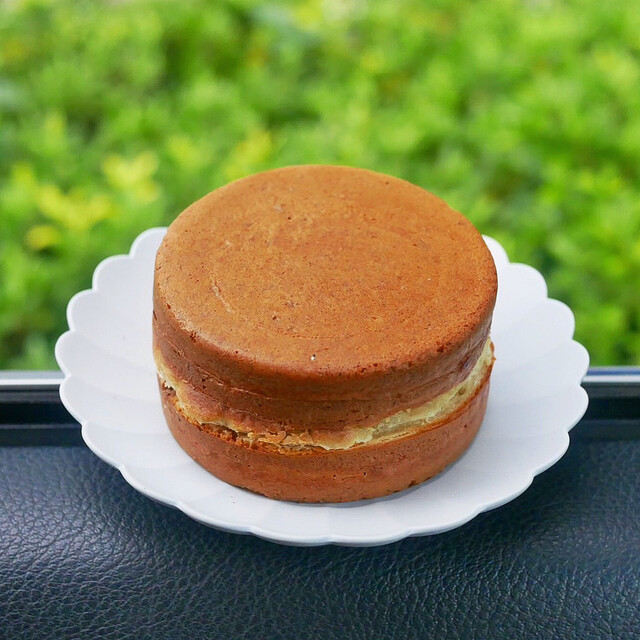
At Sangenjaya, the rhythm changes from central Tokyo’s polished dining rooms to station-adjacent counters, commuter paths, and small sweets shops built for repeat local use. Imagawayaki Kashiwaya sits in that everyday register: not a long meal, not a plated dessert course, but a focused stop in the older Tokyo grammar of hot griddled sweets, where the sequence is measured in batter, filling, handover, and the first minutes after purchase.
A short-form wagashi progression, not a dessert course
Tokyo’s serious sweets culture is often misunderstood by visitors who look only for tea salons, parfait rooms, or department-store counters. The city also has a lower-priced, higher-frequency tradition of taiyaki, obanyaki, dorayaki, dango, and seasonal wagashi bought on the move. That category depends less on table service and more on specialization. A shop can earn attention for doing one narrow thing with discipline, then letting the surrounding city supply the occasion.
Imagawayaki Kashiwaya belongs to the taiyaki and obanyaki category, and its Tabelog 100 selection for Tokyo Japanese traditional sweets and Japanese sweets cafés in 2023 places it inside a vetted group rather than the anonymous snack tier. The point is not luxury. It is compression: a small purchase, a short wait, a direct expression of a Tokyo sweets form that does not need a dining room to carry weight.
The tasting progression is therefore deliberately brief. First comes the choice to treat wagashi as a stop rather than a sit-down plan. Then the format narrows further around imagawayaki-style griddled sweets rather than a broad confectionery case. Finally, the experience depends on timing: these foods lose part of their logic when treated as souvenirs for much later. Tokyo has restaurants where a meal develops over hours; this tradition develops over minutes.
Why Sangenjaya changes the read
Sangenjaya gives the shop a different meaning from a Ginza counter or an Asakusa sightseeing route. The neighbourhood mixes residential density, late-night drinking, cafés, curry shops, gyoza rooms, and small specialists that operate at everyday scale. In that context, a wagashi stop is not a detour from dining culture. It is part of it, often sitting before coffee, after errands, or between train connections.
Comparison matters here because Sangenjaya’s food scene is broad rather than monastic. CAFE Mame-Hico Sangenjaya honten and Mikazuki Do sit in a more café-led bracket, Tokyo Gyoza Ro Sangenjaya ten pulls the area toward casual savoury eating, shiva curry wara moves into a more meal-shaped price band, and Akaoni represents the neighbourhood’s drinking side. Against that spread, Imagawayaki Kashiwaya occupies the smallest unit of commitment: a sweets stop with award recognition and little interest in stretching itself into a full restaurant experience.
That is useful for travellers who already have omakase, kaiseki, or yakitori planned elsewhere. Tokyo can punish over-scheduling, and a short-form sweets address offers a cleaner way to read a neighbourhood than adding another heavy reservation. For broader city planning, Our full Tokyo restaurants guide gives the meal map, while Our full Tokyo hotels guide, Our full Tokyo bars guide, Our full Tokyo wineries guide, and Our full Tokyo experiences guide help separate lodging, drinking, wine, and cultural time from the snack itinerary.
How it fits a Tokyo food day
The useful move is to treat this as a punctuation mark. A Tokyo day can hold a tight sequence: a light sweets stop in Sangenjaya, then a proper lunch or dinner elsewhere, rather than forcing every address to perform as a destination meal. Nearby and cross-city contrasts sharpen the point. 2D Cafe operates in a more visual café register, 3 Chome no Curry Ya San frames comfort through curry, 124. KAGURAZAKA (Yakitori) belongs to a skewered-fire tradition, and 12/10 Shinjuku ten points toward Shinjuku’s denser eating circuits.. 鮪と炭火焼き うお炭 秋葉原店 shows another side of Tokyo’s casual-specialist range.
The wider Japan and overseas links are useful only as contrast, not as substitutes. -Grilled beef Sukiyaki- KAMAKURA TANUKIAN 鎌倉 たぬき庵 in Kamakura belongs to a fuller meal tradition;.cafe in Osaka and.know in Kumamoto speak to regional café culture; (Shoku) Vietnam in Kawasaki, [Curry Senmon Ten] Maruyama Kyoju. in Sapporo, and [ki:] in Kyoto show how tightly focused formats travel across cities. Even Jōdo Saké Bar in Los Angeles and Onigiri Time in Pasadena underline the same lesson from abroad: Japanese food culture often reads clearly through small, disciplined formats.
Editorial value of the restaurant is its refusal to inflate the moment. It belongs in an itinerary when the goal is to understand Tokyo through the city’s compact food rituals: station access, narrow specialization, low ceremony, and a sweet format with enough recognition to justify attention without demanding an evening. In a city where high-end dining often dominates visitor planning, this is the quieter counterweight.
Cuisine and Recognition
Side-by-side context: comparable cuisine and price.
| Venue | Cuisine | Price | Notes |
|---|---|---|---|
| Imagawayaki KashiwayaThis venue — the venue you are viewing | Traditional imagawayaki & Japanese sweets stand | $ | Not listed |
| Arry 8Bites | Japanese Small Bites | $ | Tokyo |
| Kitchen Pan Chi | Japanese yoshoku (Western-style comfort food) | $ | Meguro |
| Gekko Sabou | Japanese jazz kissaten & coffee shop | $ | Shibuya |
| Raamen Yama to Ki | Classic Tokyo Ramen Counter | $ | Suginami |
| Butaya | Tokyo-style hand-made udon | $ | Suginami |
Recognition history
Dated appearances from independent guides and award organizations, with the underlying list record or original source where available.
Tabelog 100 #96 · No. 96
Tabelog · Tabelog 100 - Japanese traditional sweets / Japanese sweets cafe - TOKYO - 2023











At a Glance
- Classic
- Lively
- Cozy
- Solo
- Casual Hangout
- After Work
- Late Night
- Family
- Standalone
- Street Scene
Current opening hours
- Monday
- 7 AM–7:30 PM
- Tuesday
- 7 AM–7:30 PM
- Wednesday
- 7 AM–7:30 PM
- Thursday
- 7 AM–7:30 PM
- Friday
- 7 AM–7:30 PM
- Saturday
- 7 AM–7 PM
- Sunday
- 8 AM–6 PM
Hours can change for holidays and private events. Last verified .
A nostalgic, Showa-style Japanese sweets stand integrated into the station building, with a grab-and-go counter, constant foot traffic from commuters, and the aroma of freshly baked imagawayaki creating a lively yet cozy street-snack atmosphere.