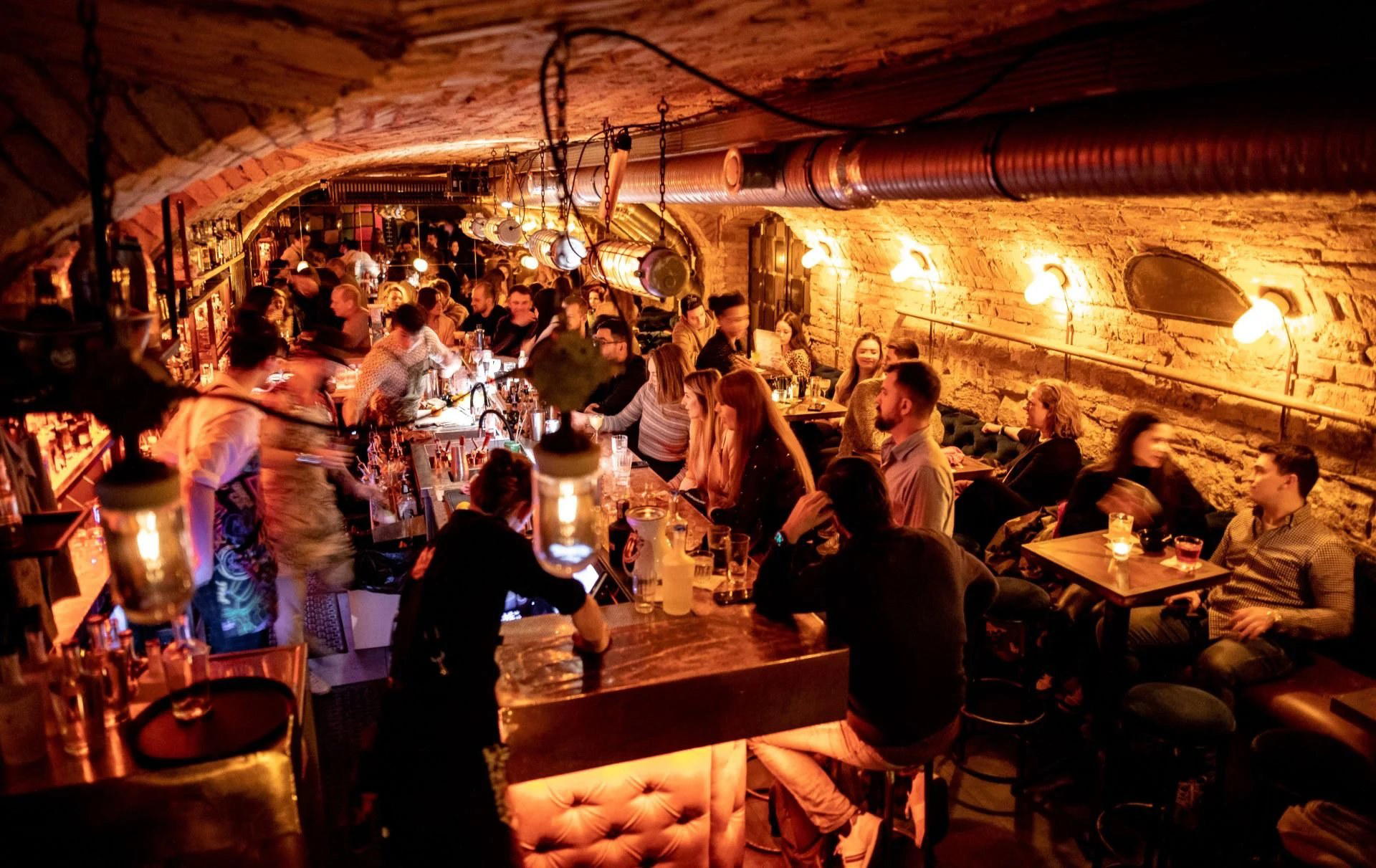
For Sale Pub is one of Budapest's most enduring ruin bar institutions, occupying a cavernous space layered with salvaged furniture, mismatched décor, and the particular energy that comes from decades of neighbourhood use. It operates at a price point well below the city's fine-dining tier, making it a reference point for understanding Budapest's casual drinking and eating culture rather than its Michelin-starred restaurant scene.
Pearl is the En Primeur Club membership app — saves, bookings, and concierge access live there. Same editors, same standards.
- Address
- Budapest, Hungary
- Directions
- Get directions
 Saves & bookings on Pearl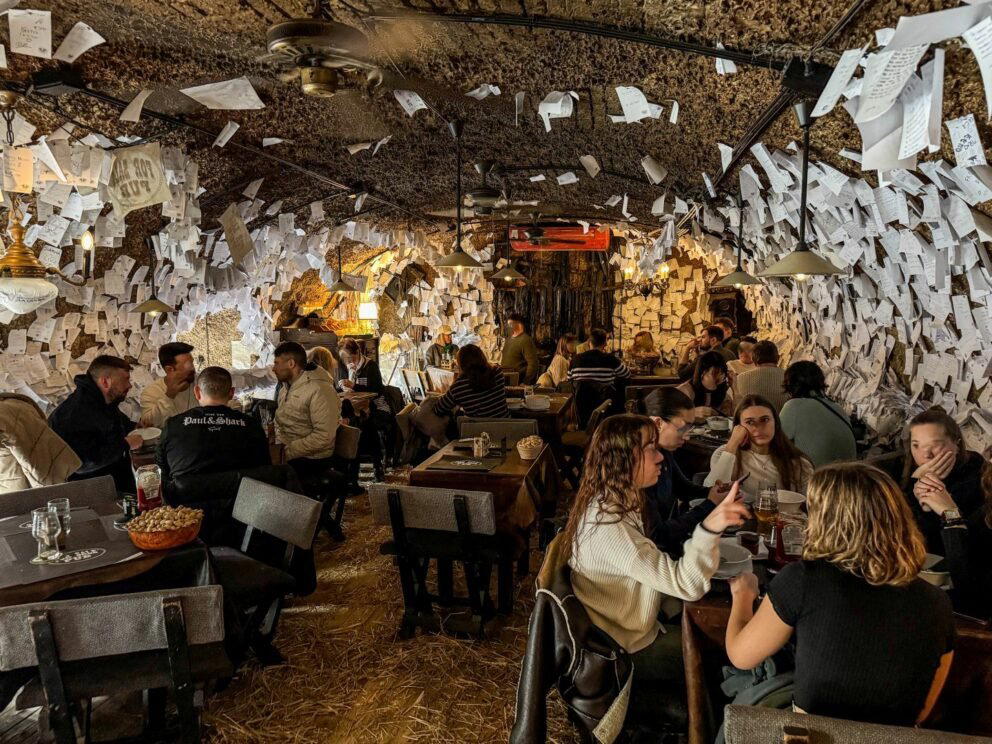
Budapest's Ruin Bar Tradition and Where For Sale Pub Sits Within It
Budapest's ruin bar scene emerged in the early 2000s as a distinctly local response to a surplus of derelict inner-city buildings in the VII district and surrounding areas. The concept was direct: take a crumbling courtyard or abandoned factory floor, fill it with salvaged furniture and art, open a bar, and let the atmosphere accumulate organically. Two decades on, that experiment has produced a recognisable category of venue that now defines how much of the world understands Hungarian nightlife. For Sale Pub is a traditional Hungarian gastropub in Budapest, operating as one of the city's established casual drinking venues where the décor functions as a kind of visual archive of Budapest's post-communist urban character.
Within the Budapest bar spectrum, venues like this occupy a tier defined by informality, low price points, and a social mix that skews local and student-adjacent rather than tourist-premium. Stand and Babel operate at the upper end of Budapest's restaurant scene with tasting menus and formal pacing. Costes and essência represent Michelin-starred ambitions. It belongs to an older, looser Budapest, one where the ritual is a beer and a conversation, not a progression of courses.
The Ritual of Drinking in Budapest: Pacing, Format, and Expectation
Understanding how to use a venue like For Sale Pub requires understanding the rhythm of Budapest pub culture. Unlike the structured progression of a tasting menu at Borkonyha Winekitchen, or the choreographed service of a high-end bistro, the ritual here is self-directed. You arrive, you find a seat among the accumulated clutter of the space, you order at your own pace, and you stay as long as the conversation holds. The format is open-ended by design.
This is not a failure of structure; it is a different structure entirely. The ruin bar format assumes that the guest arrives knowing what they want, sets their own tempo, and participates in a social environment rather than a curated dining experience. In that sense, the etiquette is closer to a neighbourhood pub in London or a traditional brasserie in Paris than to anything in Budapest's fine-dining sector. The difference is the setting: the layered visual noise of salvaged objects, hand-painted walls, and mismatched seating creates an atmosphere that feels like the city's interior monologue given physical form.
Visitors accustomed to the service conventions of higher-end addresses in the city, or those arriving from a meal at a venue like Platán Gourmet in Tata or Pajta in Őriszentpéter, should recalibrate their expectations accordingly. The value here is atmospheric and social, not gastronomic.
What the Space Communicates
Ruin bars in Budapest communicate something specific about how the city processes its own history. The aesthetic of deliberate imperfection, of walls left unplastered and furniture left unmatched, reads as both pragmatic and philosophical. These spaces use dilapidation as décor not because renovation was impossible but because the unrenovated state carries meaning: it acknowledges the city's layered, complicated recent past without resolving it into something polished. The restaurant, like its category peers, operates inside that logic.
The atmosphere in venues of this type tends toward the informal and communal. Tables are shared without ceremony. Conversations spill between groups. The soundtrack is crowd-generated as much as curated. This is a format where the guest becomes part of the scene rather than an audience for it, which is precisely why it has proven durable across two decades of Budapest nightlife.
Budapest's Broader Dining and Drinking Context
Budapest's food and drink offer has expanded considerably in the past decade. The city now sustains a credible fine-dining tier, a growing natural wine scene, and a mid-market bistro culture that draws both local professionals and international visitors with serious culinary interests. Regional addresses like BoriMami in Gyöngyös, Forst-Ház Étterem és Kávézó in Eger, and Aranysárkány Vendéglő in Szentendre demonstrate that serious hospitality has spread well beyond the capital. Further afield, Classic Grill Serbian Restaurant Underground in Szeged, Astro Tea & Kávéház in Gyor, Almalomb in Hosszúhetény, Fiume Étterem in Bekescsaba District, and Apicius Étterem és Kávéház in Herend round out a picture of Hungarian hospitality that extends far beyond the capital's ruin bar circuit.
Against that backdrop, the ruin bar format occupies a specific niche: accessible price points, no booking required in most cases, and a format that rewards spontaneity over planning. It is the entry point to Budapest for many first-time visitors and the default late-evening destination for locals who have exhausted the city's more structured options.
For those whose frame of reference extends to international fine dining, the contrast with venues like Le Bernardin in New York City or Atomix in New York City is instructive. Both ends of the spectrum serve a purpose; neither makes the other redundant. Budapest, like any city with a mature hospitality culture, needs both its tasting-menu counters and its beer-and-salvaged-furniture institutions.
Planning Your Visit
Venues in this category operate on walk-in logic. No advance booking, a casual dress code, no tasting menu to pre-select. The practical advice for the restaurant mirrors what applies to ruin bars generally: arrive without a fixed schedule, expect to share space with a cross-section of the city, and treat the evening as open-ended. Price points in this tier sit at about $15 per person, which makes it a low-commitment option for an opening or closing drink around a more structured dining evening elsewhere in the city.
Cuisine Lens
Comparable venues nearby, for context on price, style, and recognition.
| Venue | Cuisine | Price | Notes |
|---|---|---|---|
| For Sale PubThis venue — the venue you are viewing | Traditional Hungarian Gastropub | $$ | Not listed |
| New York Café | Hungarian Café | $$$ | Terézváros |
| Két Szerecsen | Modern Hungarian Bistro | $$ | Terézváros |
| Callas | Traditional Hungarian | $$ | Terézváros |
| The Gangnam | Authentic Korean BBQ | $$ | Varhegy |
| Mazi Greek Kitchen | Authentic Greek Bistro | $$ | Terézváros |
Continue exploring
More in Budapest
Restaurants in Budapest
Browse all →
Bars in Budapest
Browse all →
Hotels in Budapest
Browse all →

At a Glance
- Cozy
- Well Known
- Rustic
- Whimsical
- Casual Hangout
- Late Night
- After Work
- Live Music
- Historic Building
- Beer Program
Cozy atmosphere with warm wood paneling, relaxed and free vibe, enhanced by live music and eclectic decorations.