Our verdict
On Andrássy út, Budapest's grand 19th-century boulevard, Callas occupies a setting that frames the dining experience before a plate arrives. The restaurant sits within the broader wave of Budapest's modern cuisine movement, where classical Central European produce meets technique absorbed from kitchens far beyond the Carpathian Basin. For visitors tracking where Hungarian fine dining is heading, Andrássy út 20 is a reference point worth understanding.

Pearl is the En Primeur Club membership app, where members save venues, book tables and use the concierge.

The menu
What to order
- Callas goulash soup
- Somlói sponge cake
- Callas signature cake
Andrássy út and the Architecture of Appetite
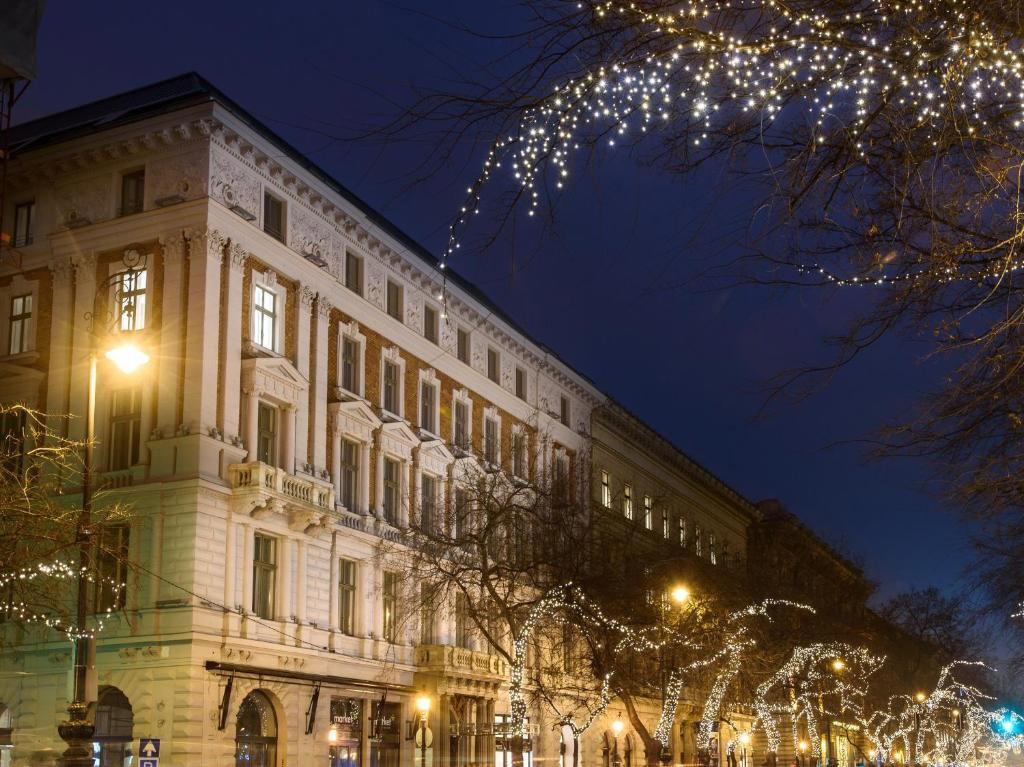
Budapest's Andrássy út is not merely a postal address. The boulevard, a UNESCO World Heritage corridor lined with 19th-century Historicist mansions, sets an ambient pressure that few dining streets in Europe can match. Walking from Deák Ferenc tér toward Heroes' Square, the architecture does something to your expectations before you have ordered anything. Callas, at number 20, sits within this theatrical frame, adjacent to the Hungarian State Opera House, and that adjacency is not incidental. The address places the restaurant inside a neighbourhood that has always trafficked in formal pleasure, in performance, in the idea that an evening out carries social weight.
That context matters when reading Budapest's current fine dining moment. The city's upper tier has developed quickly over the past decade, with Michelin inspectors arriving and a generation of chefs returning from stints in Western European kitchens. The result is a dining culture that is neither purely Central European tradition nor direct import of French or Nordic templates, but something working in the space between those poles. Callas occupies Andrássy út 20, and that location places it at the intersection of old-city formality and contemporary culinary ambition.
Where Local Product Meets Global Method
The broader argument animating Budapest's serious kitchens right now concerns what Hungarian ingredients can do when processed through techniques that were developed elsewhere. This is not fusion in the blunt sense. It is closer to what happens in any mature food culture when a generation of cooks decides that provincial produce deserves the same precision that Parisian or Copenhagen kitchens apply to their own larders.
Hungary's agricultural geography is a genuine asset in this project. The Great Plain yields distinctive pork and poultry. Lake Balaton and the Tisza basin supply freshwater fish that rarely appear on menus outside the region. Tokaj and other Hungarian wine regions produce varieties, particularly Furmint and Hárslevelű, that have no direct analogue in Western European wine lists. When these products pass through kitchens that have absorbed classical French saucing, Scandinavian fermentation logic, or Japanese attention to temperature and texture, the results can be genuinely singular. This is the technical ambition that the better addresses on and around Andrássy út are reaching toward, and it is the lens through which Callas is worth considering.
Peer restaurants operating in this same register include Babel (€€€€ · Modern Cuisine), which has earned Michelin recognition for its approach to Hungarian ingredients, and Costes (€€€€ · Modern Cuisine), which holds Budapest's first Michelin star and remains a calibration point for the tier. Stand (€€€€ · Modern Cuisine) and essência (€€€€ · Modern Cuisine) operate in the same upper bracket. For those interested in the wine-forward end of modern Hungarian cuisine, Borkonyha Winekitchen (€€€ · Modern Cuisine) functions as a Michelin-starred reference for how domestic wine lists can anchor a full dining programme.
The Opera House Effect
Proximity to the Hungarian State Opera House shapes the rhythm of an evening at this address in ways that purely residential or commercial neighbourhoods do not. Pre-theatre dinner, post-performance supper, the particular energy of an audience that has dressed deliberately and is prepared to spend an evening at sustained attention: these are the social conditions that Andrássy út's dining addresses have always serviced. Restaurants in this zone tend toward formats that respect a schedule, that can move through courses without feeling rushed, and that understand the value of a room that holds its atmosphere even when the pace of service changes between covers.
This is worth noting for anyone planning around a performance at the Opera House. The spatial relationship between Callas and the opera building is close enough that the timing logistics of combining both in a single evening are manageable, though exact coordination should be confirmed directly with the restaurant, as service formats and reservation windows are subject to change.
Budapest Beyond the Boulevard
Andrássy út is the obvious axis for formal dining in Budapest, but the city's serious food culture extends well beyond it. For those planning a broader Hungary itinerary, the pattern of local-ingredient, applied-technique cooking appears at addresses far outside the capital. Platán Gourmet in Tata and Pajta in Őriszentpéter demonstrate how the same local-produce ambition operates in smaller towns with access to different regional ingredients. Near Lake Balaton, Petrányi Csopak in Csopak and Kővirág in Köveskál track the wine-and-food pairing tradition that has developed around Balaton's volcanic soils. In the south, Sauska 48 in Villány sits within one of Hungary's most serious red wine appellations. Old Kőrössy Fish Restaurant in Szegedin handles the freshwater fish tradition that Budapest's smarter kitchens often reference but rarely match for immediacy. Day-trip range from Budapest includes Teyföl in Szentendre and Botanica in Dánszentmiklós, while Hosszú Tányér in Hosszúhetény and Öreg Prés in Mór extend the map further into wine country. For a full picture of where Budapest's dining sits within these regional patterns, the EP Club Budapest restaurants guide maps the upper tier across neighbourhoods and price points. For international comparison on how local-ingredient, applied-technique formats operate at different scales and latitudes, Le Bernardin in New York City and Lazy Bear in San Francisco offer useful reference points on how a commitment to product specificity anchors a tasting format.
Planning a Visit
Callas is located at Andrássy út 20, 1061 Budapest, directly adjacent to the Opera House on one of the city's most walkable thoroughfares. The address is accessible on foot from the Bajcsy-Zsilinszky út metro station on Line M1, or a short walk from the Opera metro stop on the same line, which is the oldest underground railway in continental Europe. Given the concentration of cultural institutions in the immediate area, and the density of competing dining options on and off Andrássy út, planning ahead is advisable. Specific booking availability, current hours, and reservation method should be confirmed directly with the venue, as these details are subject to change and were not available at time of publication.
Frequently asked questions
What part of town is Callas in?
Callas is located at Budapest, Andrássy út 20, 1061 Hungary, Budapest.
Is Callas Budapest a good choice for dinner before or after an Opera House performance?
The venue sits at Andrássy út 20, directly adjacent to the Hungarian State Opera House, making it one of the most geographically logical dining choices for Opera-goers in the city. Budapest's serious restaurant culture has increasingly aligned service pacing with theatre schedules along this corridor, though confirming timing flexibility with the venue in advance is the practical step. The UNESCO-listed boulevard itself is walkable from the Opera entrance in under two minutes.
What's the best thing to order at Callas?
Callas sits within Budapest's most competitive dining corridor, where the current editorial focus is on Hungarian produce processed through modern European technique. The address at number 20 places it directly beside the Hungarian State Opera House, so a pre-theatre tasting format, if offered, is worth prioritising.
Can I walk in to Callas?
Andrássy út 20 is one of Budapest's most trafficked dining addresses, particularly on Opera House performance evenings when the neighbourhood fills quickly. Walk-in availability is not confirmed in public documentation, so contacting the venue directly before arrival is advisable. The address is easily reached on foot from the M1 metro line, which runs beneath the boulevard.
Accolades, Compared
Comparable venues nearby, for context on price, style, and recognition.
| Venue | Cuisine | Price | Notes |
|---|---|---|---|
| CallasThis venue (the venue you are viewing) | Traditional Hungarian | $30–50 | Not listed |
| Dunapark | Hungarian Cafe with International Influences | $20–30 | Újlipótváros |
| Két Szerecsen | Modern Hungarian Bistro | $20–30 | Terézváros |
| Café Vian Liszt Ferenc tér | Traditional Hungarian Bistro | $20–30 | Terézváros |
| KIOSK Budapest | Modern Hungarian | $30–50 | Belvaros |
| Symbol | Traditional Hungarian with Swabian & Jewish Influences | Not listed | Pasaret |