Few rooms in Central Europe carry the visual weight of New York Café on Budapest's Erzsébet körút. The gilded, fresco-ceilinged hall opened in 1894 and became a gathering point for Hungarian writers and journalists before the century turned. Today it operates within the Boscolo Budapest hotel and draws a steady stream of visitors who come as much for the architecture as for what arrives at the table.
Pearl is the En Primeur Club membership app — saves, bookings, and concierge access live there. Same editors, same standards.
- Address
- Budapest, Erzsébet krt. 9-11, 1073 Hungary
- Phone
- +36 1 886 6167
- Website
- newyorkcafebudapest.com
- Directions
- Get directions
 Saves & bookings on Pearl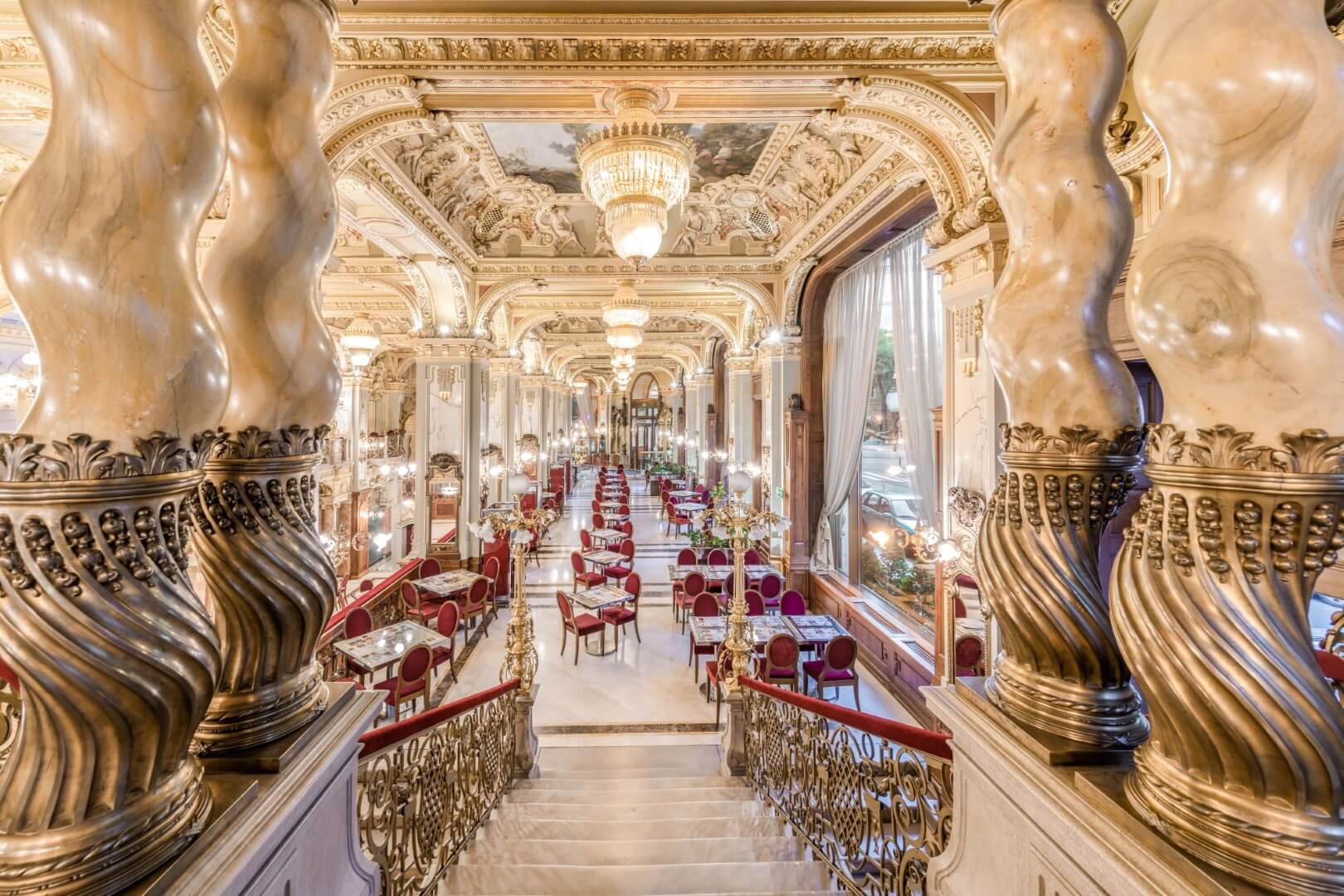
A Room That Precedes Its Menu
There is a category of café in European cities where the interior is itself the attraction, and the coffee or pastry arrives almost incidentally. Vienna has its Kaffeehäuser, Paris has its grand brasseries, and Budapest has the New York Café on Erzsébet körút 9-11. The building dates to 1894, when the New York Life Insurance Company commissioned a palazzo-style block on what was then one of the city's most active commercial boulevards. The ground-floor café that opened inside it became, within a few years, a fixed address for Hungarian writers, journalists, and editors working in the surrounding Seventh District press offices. The literary associations were not incidental: early in the twentieth century, the story goes, a group of writers threw the café's keys into the Danube to ensure it could never close. Whether or not that is apocryphal, the symbolism holds. This was a room people felt proprietorial about.
The café was shuttered during various periods of the twentieth century, most significantly under Communist administration, when the space served different functions entirely. Its 2006 restoration, undertaken as part of the Boscolo Budapest hotel project, returned the frescoes, the gilded columns, the red velvet banquettes, and the mezzanine balconies to something close to their original configuration. The visual effect on entry is immediate: a double-height hall with painted ceilings, ornate ironwork, and the particular warm gold light that comes from surfaces that are genuinely gilded rather than approximated. For visitors arriving from the cooler, quieter streets of the Seventh District, the transition is abrupt in the leading architectural sense.
Who Keeps Coming Back, and Why
The regulars at New York Café are a more layered group than the tourist queues outside might suggest. Alongside first-time visitors ticking off the famous interior, there is a consistent local clientele that treats the café as a working address: the kind of place to conduct a mid-morning meeting over coffee and a pastry, or to occupy a window table with a notebook for an hour before the lunch rush arrives. This pattern of use maps directly onto the room's original function. The café was designed to be inhabited for long stretches, with enough ambient noise to feel alive and enough architectural grandeur to feel like the surroundings are doing some of the work for you.
That returning clientele tends to arrive early or late: before 10am when the hall is quieter and the light through the windows is cleaner, or after 3pm when the lunch crowd has thinned. The peak tourist window runs roughly from 11am to 2pm, when tables near the main floor fill quickly and the ambient noise climbs. Visitors with more flexibility in their schedule consistently report that the off-peak hours offer a substantially different experience of the same room. Budapest's café culture has always had this quality: the city's historic coffee houses were designed to reward habitual use rather than a single, decisive visit.
New York Café in Budapest's Dining Context
Positioning the restaurant against Budapest's current fine dining circuit requires some adjustment of category. The city's contemporary restaurant scene has grown considerably in Michelin presence over the past decade: Costes and Stand operate in the €€€€ bracket with serious tasting menu programmes, while Borkonyha Winekitchen has held Michelin recognition for several years as a wine-forward modern kitchen. Babel and essência sit in a similar €€€€ tier with modern European programmes. The restaurant does not compete in this category. It occupies a different position: a heritage café and all-day dining destination within a five-star hotel, where the architectural experience is the primary draw and the food and drink are the secondary structure around it. Comparing it to Le Bernardin in New York City or Lazy Bear in San Francisco would miss the point: the restaurant belongs to a European tradition of the grand café as civic institution, not to the contemporary tasting-menu format.
For visitors building a broader itinerary through Hungary, the café sits naturally alongside the kind of travel that balances urban architecture with regional food exploration. The country's wine regions and destination restaurants have developed significantly: Sauska 48 in Villány and Petrányi Csopak in Csopak represent the kind of terroir-anchored dining that merits a detour from the capital, while Platán Gourmet in Tata and Pajta in Őriszentpéter offer a sense of how Hungary's regional cooking is finding contemporary form. Closer to the city, Teyföl in Szentendre and Botanica in Dánszentmiklós extend the Budapest day-trip circuit. For a fuller map of where the city's dining currently sits, Budapest's restaurant guide covers the range from heritage institutions to current openings. Further afield, Hosszú Tányér in Hosszúhetény, Old Kőrössy Fish Restaurant in Szegedin, Öreg Prés in Mór, and Kővirág in Köveskál each represent distinct threads in Hungarian regional dining worth following.
What the Architecture Actually Means for Your Visit
The restored interior at the restaurant represents a specific moment in Budapest's architectural history: the Austro-Hungarian commercial confidence of the 1890s, when the city was building itself as a European capital in real time and commissioning spaces meant to signal permanence. The frescoed ceilings and gilded ironwork were not decorative excess but competitive statement. Walking the main floor today, that ambition is still legible in the proportions of the room, the height of the mezzanine, and the attention to surface detail. Visitors with an interest in fin-de-siècle Central European design will find more to read in the architecture than a single visit allows.
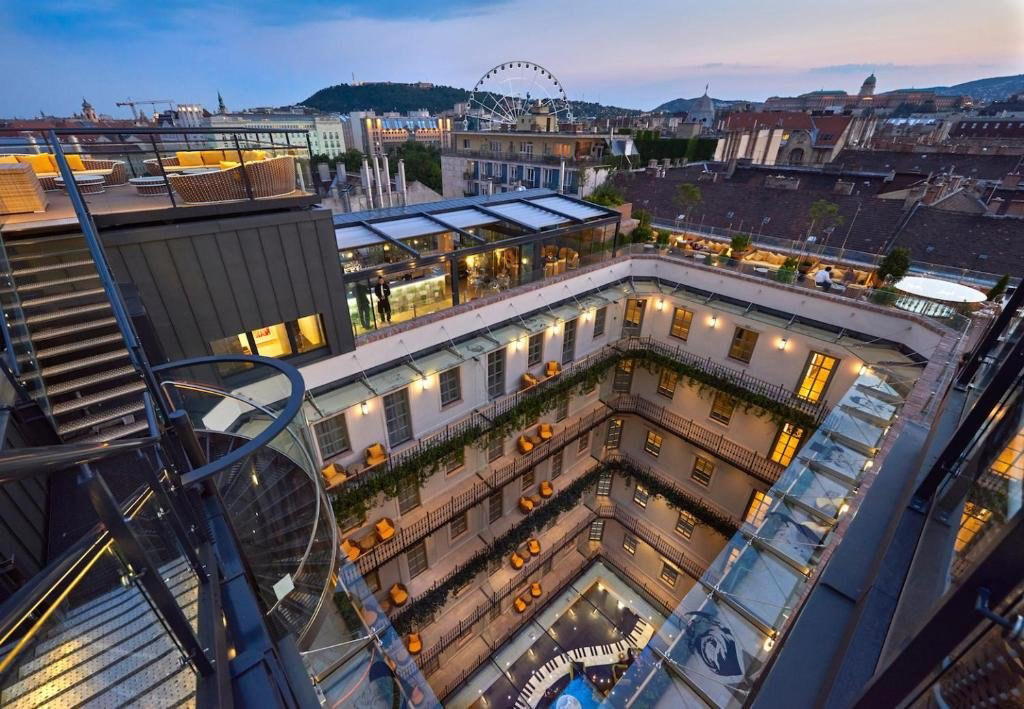
The Erzsébet körút address is on Pest's inner ring road, walkable from the central metro lines and within easy reach of the Jewish Quarter and the Seventh District's bar and restaurant concentration. The café sits within the Boscolo Budapest hotel, which means the lobby and related spaces share the same building footprint. Morning visits, before the main tourist window, offer the clearest view of the room with the least competition for table space. Booking ahead for weekend visits or holiday periods is recommended; walk-in tables are more reliably available on weekday mornings.
Cuisine and Credentials
Comparable venues nearby, for context on price, style, and recognition.
| Venue | Cuisine | Price | Notes |
|---|---|---|---|
| New York CaféThis venue — the venue you are viewing | Hungarian Café | $$$ | Not listed |
| The Great Hall | Modern Hungarian Fine Dining | $$$ | Terézváros |
| St. George | Classic Hungarian | $$$ | Varhegy |
| Baltazár Budapest | Modern Hungarian Grill | $$$ | Varhegy |
| Symbol | Traditional Hungarian with Swabian & Jewish Influences | $$$ | Pasaret |
| Százéves Étterem | Traditional Hungarian | $$$ | Belvaros |
Continue exploring
More in Budapest
Restaurants in Budapest
Browse all →
Bars in Budapest
Browse all →
Hotels in Budapest
Browse all →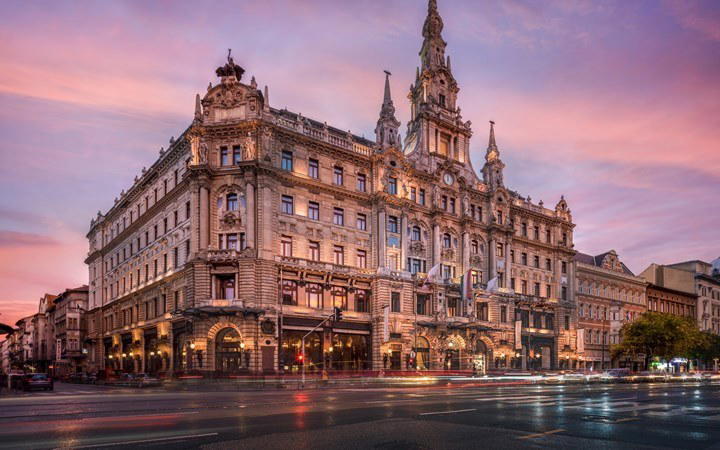

At a Glance
- Ornate
- Elegant
- Well Known
- Classic
- Special Occasion
- Brunch
- Late Night
- Historic Building
- Live Music
- Private Dining
- Craft Cocktails
Current opening hours
- Monday
- 7 AM–12 AM
- Tuesday
- 7 AM–12 AM
- Wednesday
- 7 AM–12 AM
- Thursday
- 7 AM–1 AM
- Friday
- 7 AM–1 AM
- Saturday
- 7 AM–1 AM
- Sunday
- 7 AM–1 AM
Hours can change for holidays and private events. Last verified .
Sparkling chandeliers, gilded details, and grand ornate atmosphere evoking early 20th-century grandeur.