

Operating from a 1925 Art Nouveau building on Via della Penna, Hotel Locarno is one of Rome's most atmospheric small hotels, with 49 rooms, a Michelin Key, and a 91-point La Liste ranking. Its layered history, celebrated bar, and proximity to Piazza del Popolo place it in a distinct tier among the city's design-led independents.
Pearl is the En Primeur Club membership app — saves, bookings, and concierge access live there. Same editors, same standards.
- Address
- Via della Penna, 22, 00186 Roma RM
- Phone
- +39 06 361 0841
- Website
- hotellocarno.com
- Directions
- Get directions
 Saves & bookings on Pearl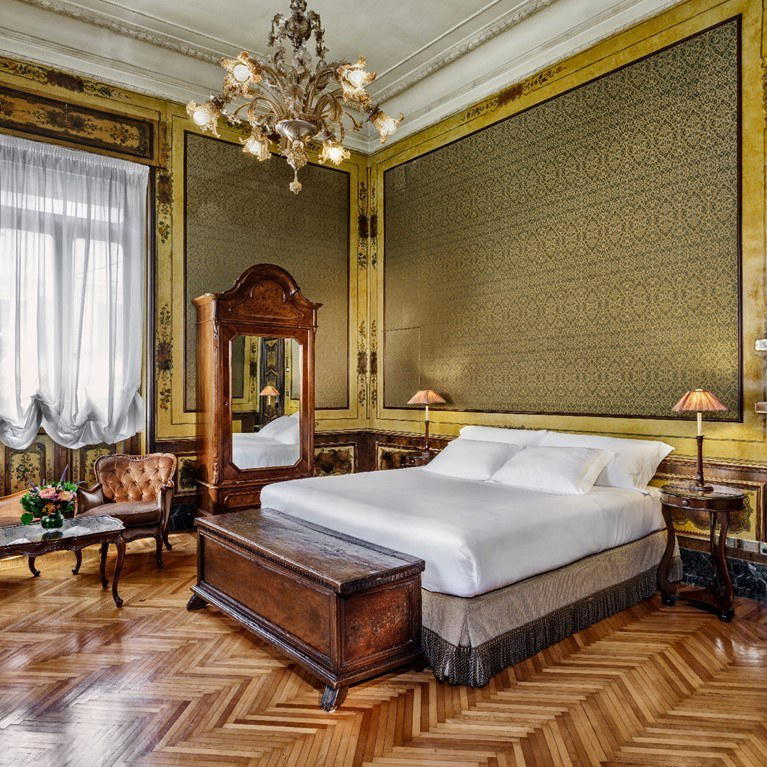
A Century of Eccentric Hospitality on Via della Penna
Rome's boutique hotel market has expanded considerably over the past two decades, with newer entrants like Hotel Vilòn and Maalot Roma arriving with polished interiors and considerable financial backing. Against that field, Hotel Locarno occupies an unusual position: it has been doing this since 1925. The main building's Art Nouveau bones, wrought-iron detailing, tiled floors, a considered sense of ornament, were the architectural vocabulary of their era, and the hotel has preserved them with enough care that they read today as character rather than disrepair. The adjacent villa, dating to 1905, adds another layer to a property that newer competitors simply cannot replicate through renovation alone.
The address is well-chosen. Via della Penna runs close to Piazza del Popolo in the Flaminio district, placing guests within walking distance of the Borghese Gallery and a short taxi or tram ride from the Campo Marzio and the centro storico. It is not the Ludovisi triangle occupied by Bulgari Hotel Roma or the Spanish Steps perch of Hassler Roma, but Flaminio has its own logic: quieter, genuinely residential at its edges, and free of the more concentrated tourist traffic that surrounds the city's central monuments.
The Bar as Social Architecture
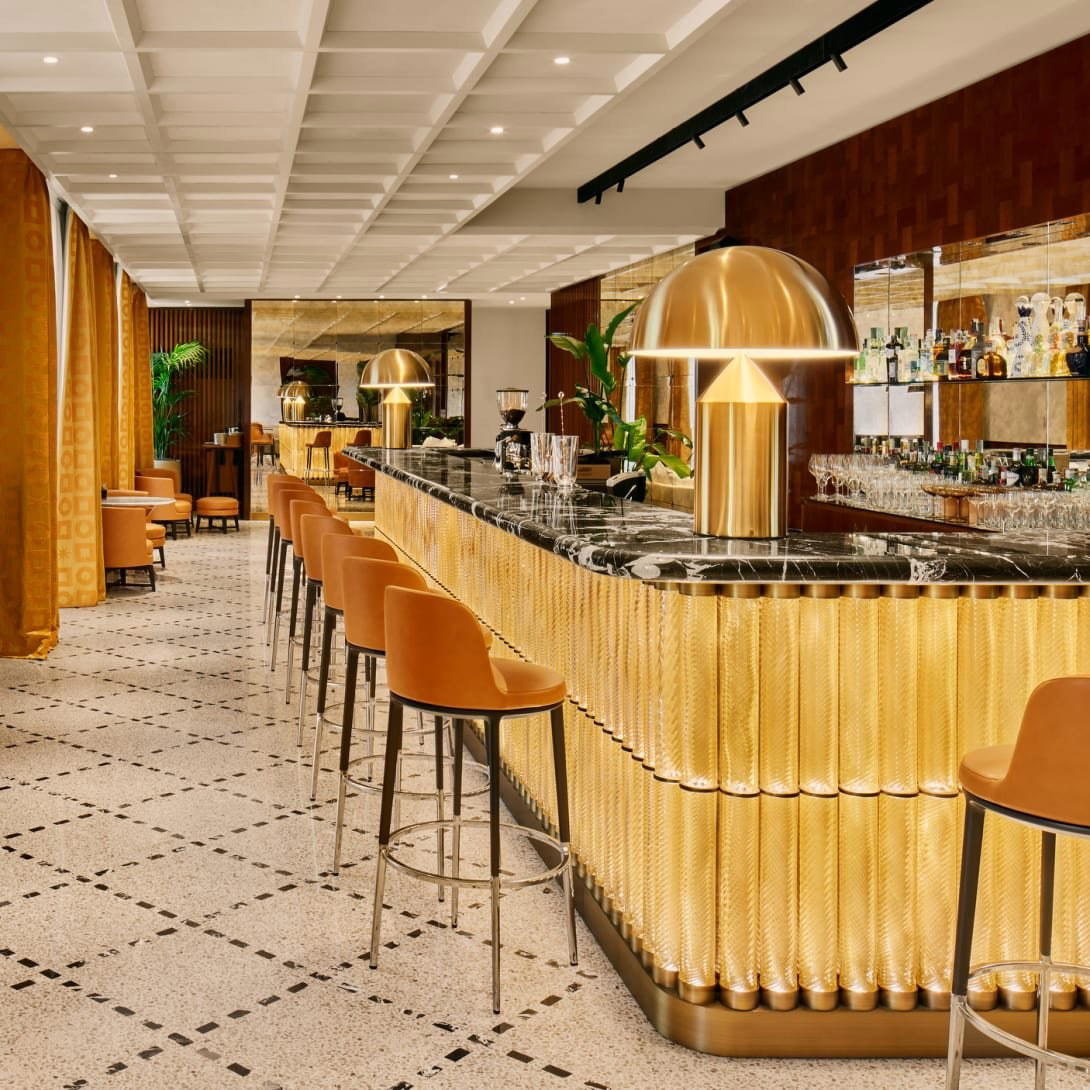
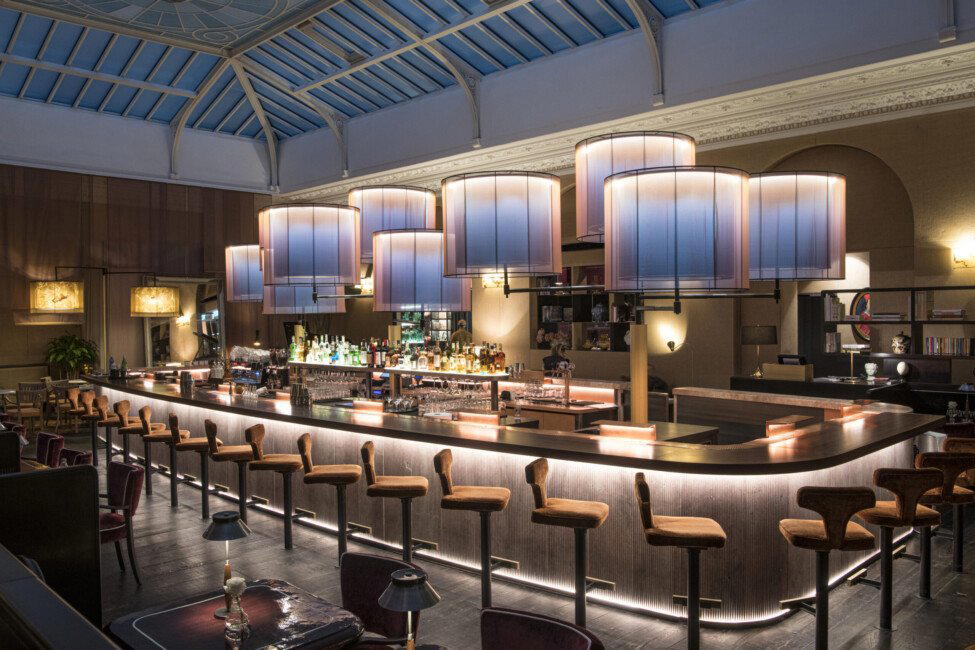
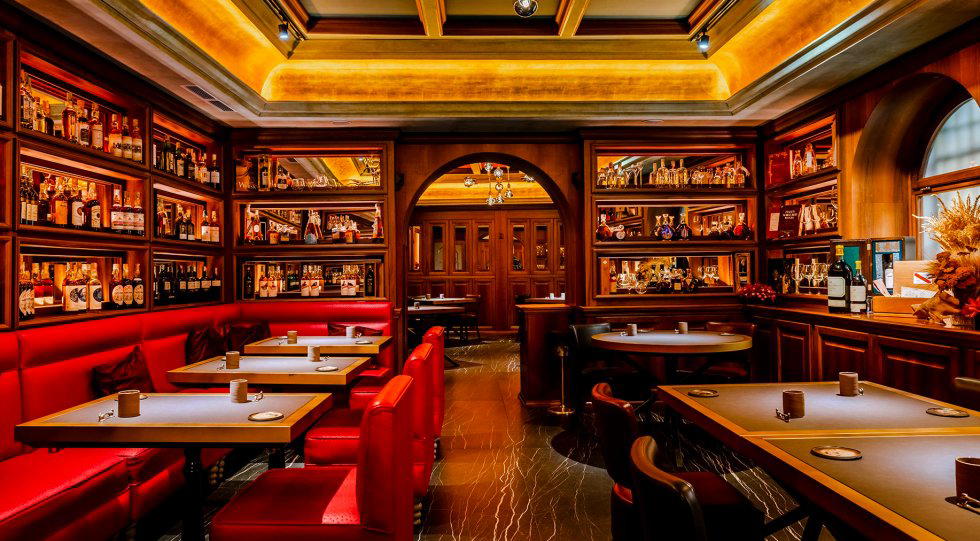
In Rome's hotel bar conversation, certain rooms carry decades of accumulated social weight. Hotel Locarno's bar belongs in that discussion. The clientele over the years has leaned toward the city's creative community, writers, architects, film people, and that orientation shapes the atmosphere in ways that a newly opened concept bar cannot manufacture. The cocktail program has tracked that inventive sensibility, and the room itself functions as a genuine gathering point rather than a hotel amenity incidentally open to the public. For guests arriving after a late flight or looking for a place to decompress after an afternoon across the city, the bar's history and crowd give it a weight that most comparably sized properties cannot offer.
This matters in the context of Rome's broader hotel bar scene, where several larger properties, including Rocco Forte Hotel De La Ville and Hotel Eden, operate well-resourced bar programs. Locarno's version competes on a different axis: accumulated atmosphere and a sense of place built over decades, rather than investment or brand recognition.
Inside the Rooms: Atmosphere Over Square Footage
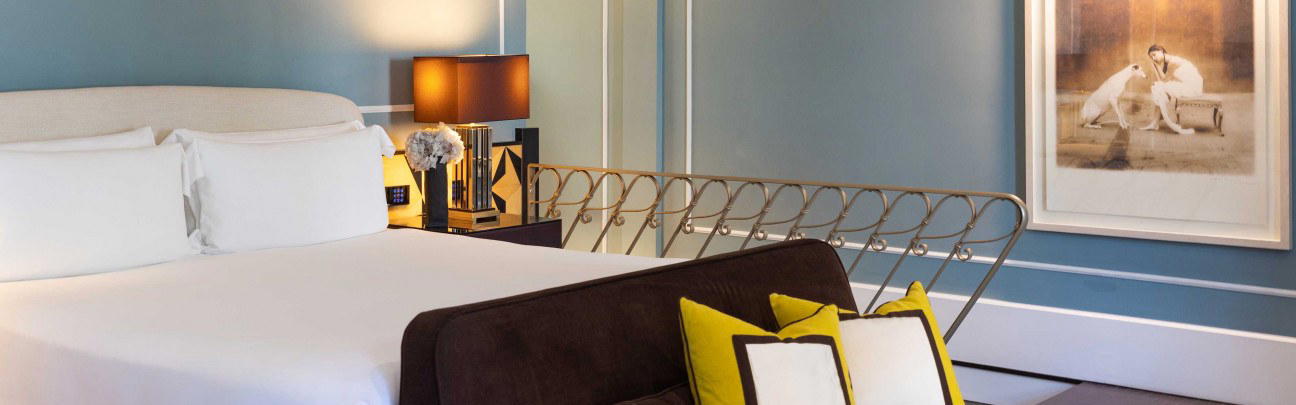
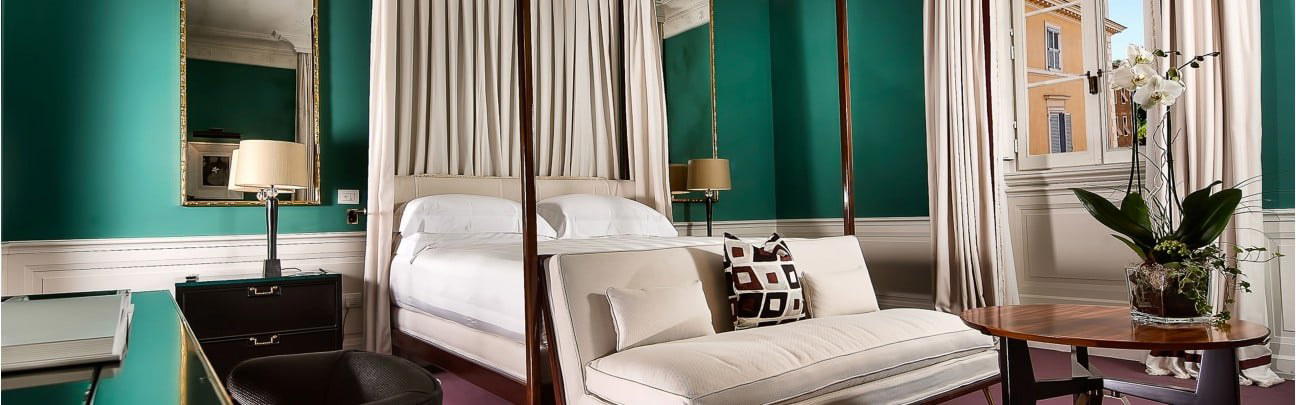
The editorial angle on Hotel Locarno's rooms requires some candour. The entry-level options are not large. This is not a design failure; it is a structural consequence of building in 1925, when residential proportions were simply different. Guests who arrive expecting the lateral spread of a contemporary luxury hotel will need to recalibrate. What the rooms offer instead is density of character: the kind of atmospheric detail, period furniture, considered textiles, a sense of genuine age, that purpose-built modern hotels approximate but rarely achieve. The overnight experience at Locarno is fundamentally about inhabiting a specific moment in Roman architectural history, not about the room as a technical performance.
The suites operate in a different register entirely. With more space comes the full expression of the Art Nouveau sensibility: rooms where the proportions and ornamentation work together in a way that the smaller categories can only gesture toward. For guests whose priority is the overnight experience rather than the rate, the suite tier is where the property's distinctive character becomes fully legible. At a base rate of around $530 per night, the positioning sits comfortably inside Rome's premium independent tier, below the major luxury flagships but above the mid-market segment, a competitive position the property holds with confidence given its Michelin Key recognition in 2024.
This places Locarno in a specific competitive cohort: design-led independents with genuine architectural heritage and critical recognition, but without the corporate infrastructure of a Rocco Forte or a global brand affiliation. Portrait Roma and JK Place Roma operate in an adjacent zone, though with newer builds and a more overtly designed-from-scratch aesthetic. Locarno's particular distinction is that it arrived at its current form through accumulation rather than concept.
What the Awards Confirm
The 2024 Michelin Key is a useful credential here because it operates independently of the star system that applies to restaurants. Michelin awards Keys to hotels where the overnight experience itself meets a defined quality threshold, covering the room, the atmosphere, the service approach, and the overall coherence of the property. A single Key positions Hotel Locarno in the tier of hotels that merit serious attention without claiming the leading bracket occupied by multi-Key properties. Combined with the La Liste 91-point score, the recognition pattern is consistent: a property that performs at a high level within its independent, heritage-led category, verified by two separate external assessors.
For context on how that positions Locarno within Italy's broader hotel landscape, it is worth noting that the country supports several properties in the La Liste top tier, from Aman Venice to Four Seasons Hotel Firenze, most of which command considerably higher room rates and operate at greater scale. Locarno's score at 49 rooms and $612 per night represents strong value efficiency within that comparable set.
The Surrounding City
The Flaminio-Prati corridor gives guests immediate access to a part of Rome that operates at a different pace from the centro storico. The Piazza del Popolo end of the district has its own café culture and market rhythm, and the proximity to the Tiber makes the neighbourhood feel more open and navigable than the denser medieval grid further south. Guests drawn to the Borghese Gallery, the MAXXI museum, or the galleries along Via Margutta will find the location efficient. Those whose priorities run toward the Forum, Trastevere, or Testaccio will be adding transit time, manageable, but worth factoring into the decision.
Elsewhere in Italy, the independent design-led segment is well represented by properties including Borgo Santandrea on the Amalfi Coast, Il Pellicano in Porto Ercole, Passalacqua on Lake Como, and Castello di Reschio in Umbria. The Amalfi and Positano corridor also includes Il San Pietro di Positano. For Tuscany, Rosewood Castiglion Del Bosco and Borgo Egnazia in Puglia round out the independent luxury picture at different scales. Emilia-Romagna travellers should note Casa Maria Luigia in Modena. The Umbrian hill town circuit extends to Corte della Maestà in Civita di Bagnoregio. International comparisons for guests who value accumulated heritage over purpose-built design include The Fifth Avenue Hotel in New York and Aman New York, and for a different scale of heritage property, Amangiri in Canyon Point. The Capri independent scene is covered by JK Place Capri. Portrait Milano serves as a useful northern Italy reference in the same design-led independent tier.
Planning Your Stay
The hotel operates 49 rooms across its main 1925 building and the older villa, meaning inventory is genuinely limited. Rome's high season runs from April through October, with Easter and the June-to-August peak commanding the tightest availability. At $612 per night for a base room, the rate competes in the upper-middle tier of the Roman market, below full-scale luxury flagships but above the comfortable mid-range. Guests prioritising space should book into the suite category directly; guests comfortable with the atmospheric tradeoff of smaller rooms in exchange for period character will find the standard categories deliver considerable return on that rate. The bar is open to non-guests, which means the ground floor of the property functions as a neighbourhood asset as much as a hotel amenity, a factor worth considering when choosing arrival and departure times.
What It’s Closest To
Comparable venues nearby, for context on price, style, and recognition.
| Venue | Cuisine | Price | Awards | Notes |
|---|---|---|---|---|
| Hotel LocarnoThis venue — the venue you are viewing | Historic Art Deco boutique hotel with retro-classic style. | $$$$ | Michelin 1 Key | Not listed |
| The Inn at the Roman Forum | Intimate five-storey terraced townhouse converted into a luxury boutique residence with personalized service and historic character. | $$$$ | Michelin 1 Key | Monti |
| Palazzo Roma | Historic aristocratic palace with modern luxury renovations | $$$$ | Michelin 1 Key | Colonna |
| The First Arte, Rome | Contemporary luxury boutique hotel blending 19th-century palazzo architecture with modern design and curated contemporary Italian art. | $$$$ | Michelin 1 Key | Campo Marzio |
| Maalot Roma | Boutique luxury hotel with personalized service and glamorous dining. | $$$$ | Michelin 1 Key | Trevi |
| Hotel Eden | Luxury historic boutique in the heart of Rome near Spanish Steps. | $$$$ | Michelin 1 Key | Ludovisi |
Recognition history
Dated appearances from independent guides and award organizations, with the underlying list record or original source where available.
La Liste Top Hotels
La Liste
Michelin 1 Key
Michelin
Michelin 1 Key
Michelin

At a Glance
- Romantic
- Elegant
- Classic
- Sophisticated
- Intimate
- Romantic Getaway
- Anniversary
- Honeymoon
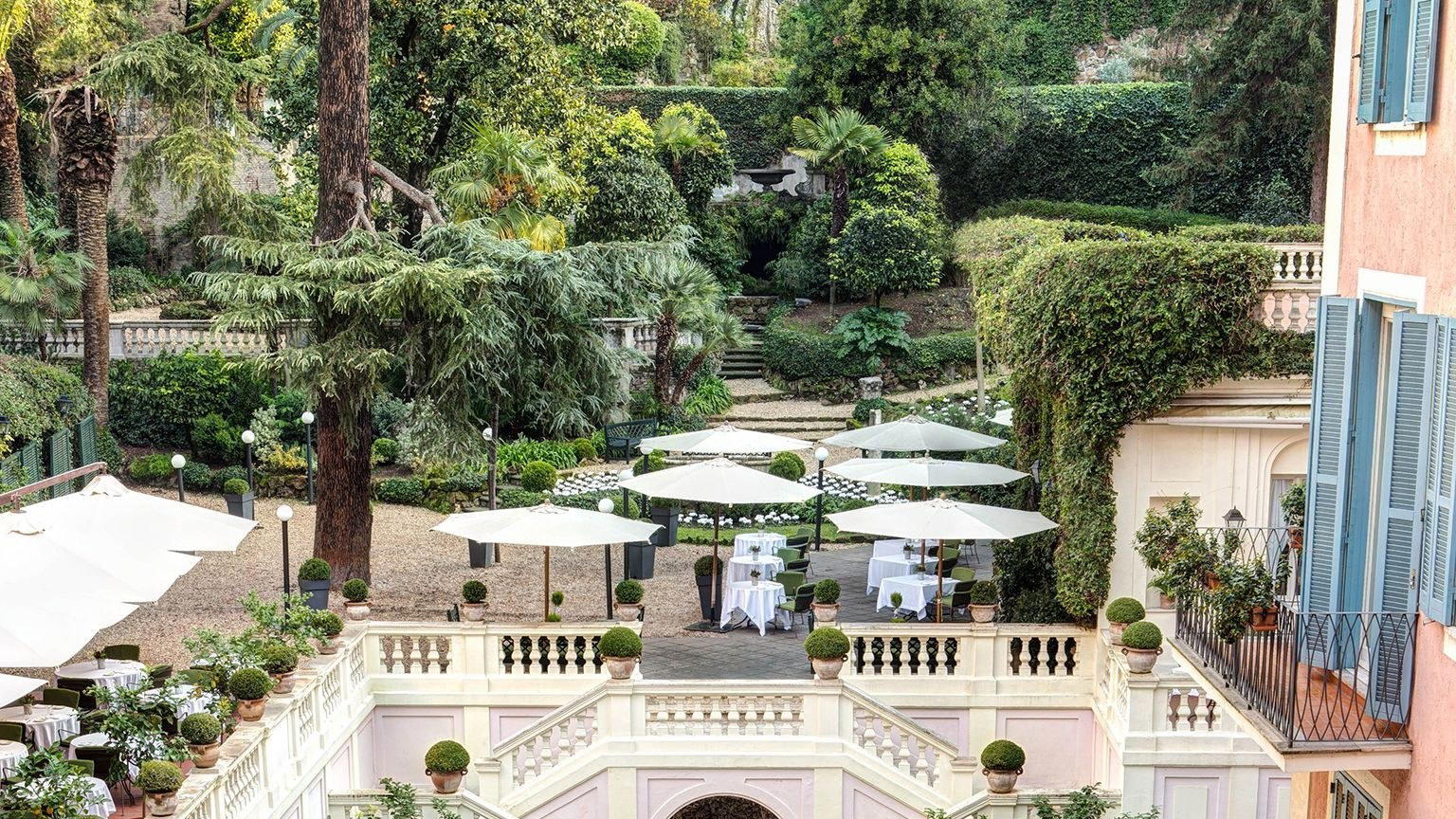
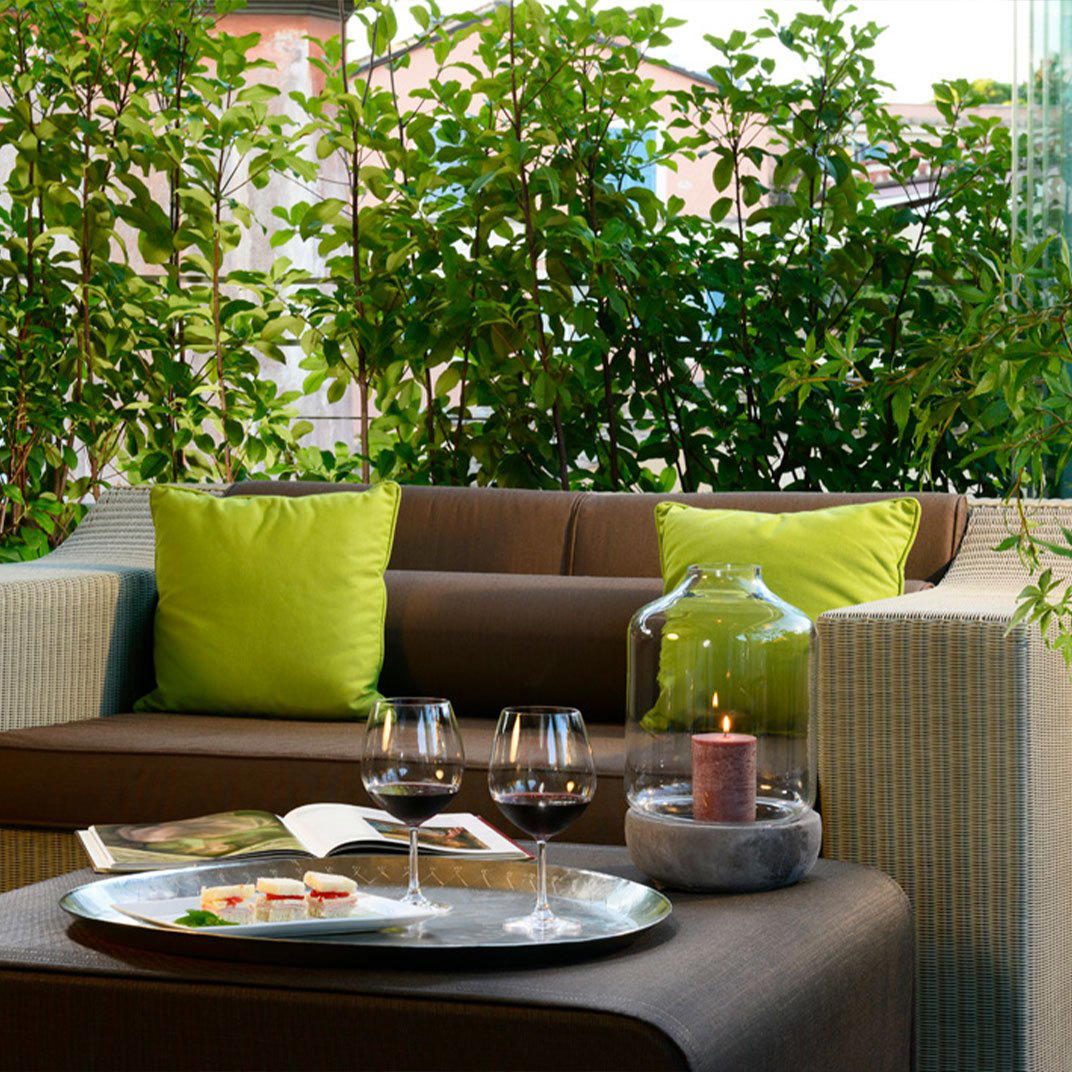
- Garden
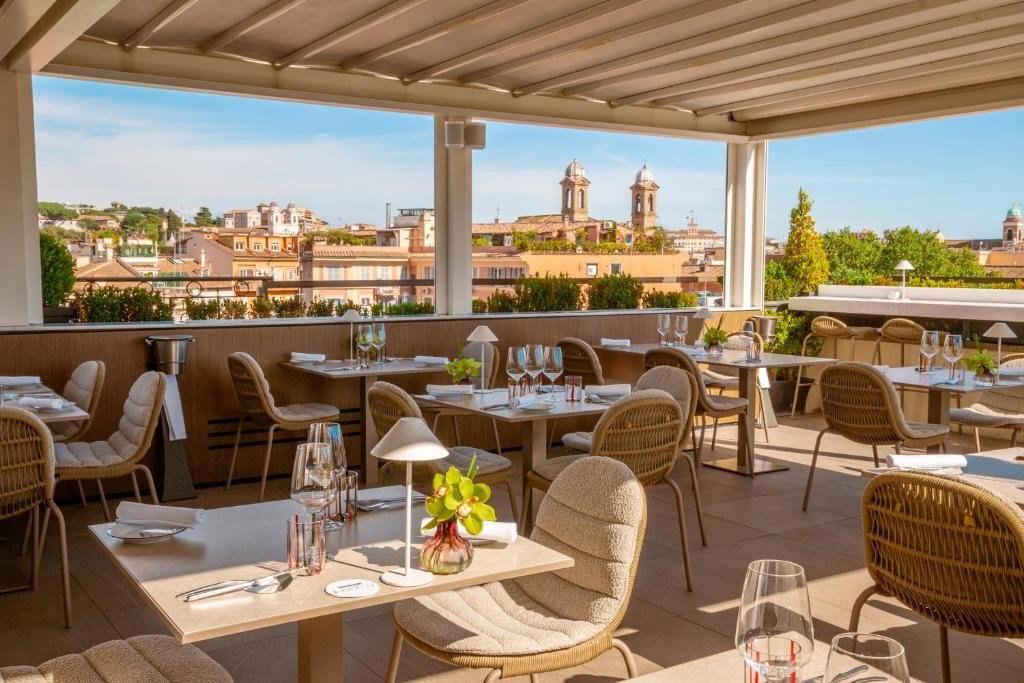
- Terrace
- Historic Building
- Wi Fi
- Fitness Center
- Room Service
- Concierge
- Restaurant
- Bar
- Garden
- Bicycle Rental
- Airport Transfer
- Garden
- Street Scene
- Wi Fi
- Fitness Center
- Room Service
- Concierge
- Restaurant
- Bar
- Garden
- Bicycle Rental
- Airport Transfer
Dimly lit bar with crackling fire, nostalgic old-world charm, elegant and relaxed atmosphere praised in guest reviews.