Eloomm sits at the Almazar commercial centre on Route d'Ourika, positioning itself within Marrakesh's southern retail corridor rather than the Medina's heritage dining circuit. The venue's placement tells its own story about how the city's dining scene has expanded beyond the old walls, drawing a mixed local and visitor crowd into a format that reads differently from the riad-and-courtyard template most international visitors expect.
Pearl is the En Primeur Club membership app — saves, bookings, and concierge access live there. Same editors, same standards.
- Address
- almazar centre commercial, Rte d'Ourika, Marrakesh 40000, Morocco
- Phone
- +212665173278
- Website
- eloomm.ma
- Directions
- Get directions
 Saves & bookings on Pearl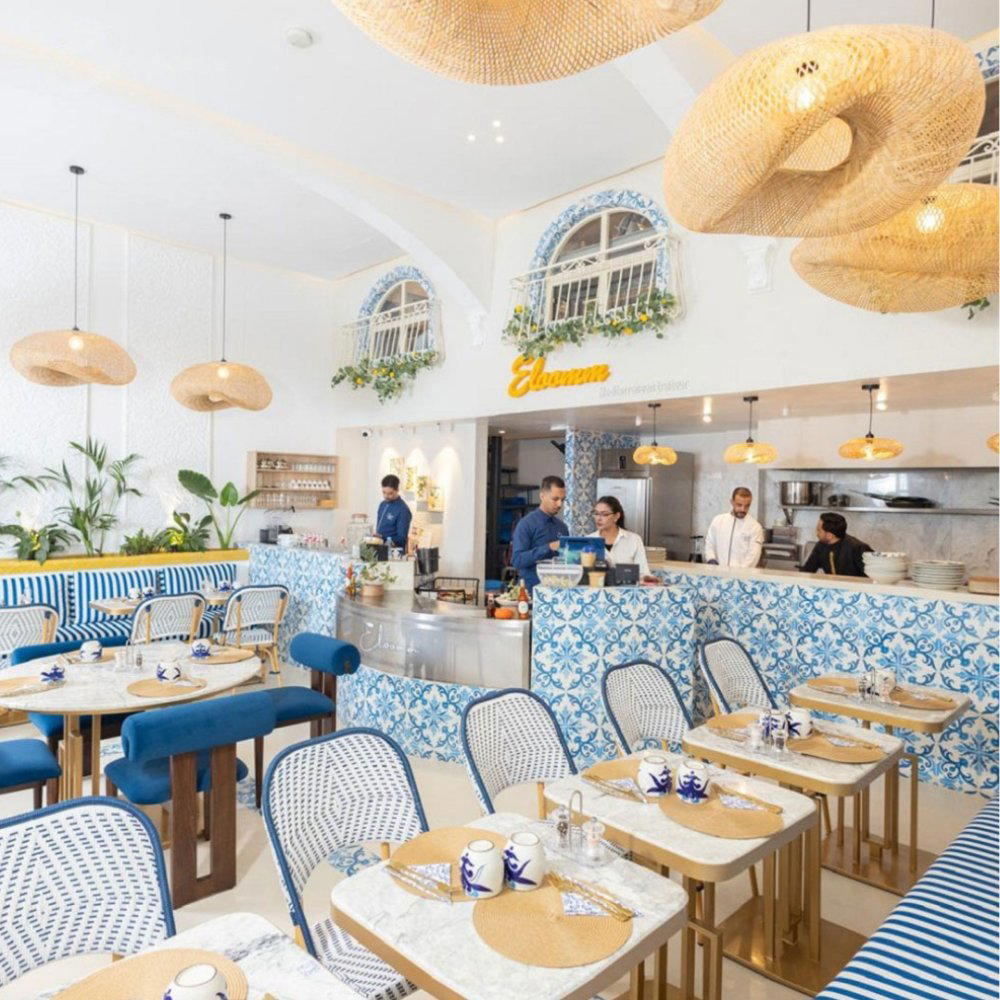
Route d'Ourika and the Dining Life Beyond the Medina Walls
Marrakesh's dining conversation tends to collapse into two familiar categories: the heritage-heavy riads of the Medina and the polished hotel restaurants of the Nouvelle Ville. What gets less attention is the city's commercial periphery, where locals eat regularly and where venues operate without the scaffolding of tourist infrastructure. The Almazar shopping complex on Route d'Ourika belongs to that second geography. It serves a Marrakshi population that works, shops, and eats along the southern corridor leading toward the Atlas foothills, and the restaurants inside it are calibrated to that audience rather than to the expectations of the international dining circuit. Eloomm occupies this position, which makes it a different kind of reference point from the riad-courtyard establishments that dominate most coverage of the city.
This geographic distinction matters more than it might initially appear. In cities like Marrakesh, where tourism pressure has shaped so much of what gets built and promoted in central districts, venues that operate away from that pressure tend to develop differently. Their menus are not engineered around the first-timer's idea of Moroccan food. Their formats respond to repeat local customers rather than to one-visit arrivals. Its address alone places it in a competitive set that has more in common with everyday Marrakshi eating than with the white-tablecloth Moroccan showcases found at addresses like La Grande Table Marocaine at Royal Mansour or the Franco-Moroccan register of La Grande Brasserie by Hélène Darroze.
Menu Architecture as a Signal of Audience
In the absence of a published menu, the structure of what a venue chooses to serve, and how it organises those choices, communicates its position clearly. Commercial-centre restaurants in Moroccan cities typically operate across a broader register than their Medina counterparts. They are less likely to present a single curated tasting format and more likely to span multiple meal occasions: a working lunch crowd, a family dinner in the early evening, and a younger social gathering later in the night. This produces menus that read as collections rather than arguments, offering range as their primary virtue rather than editorial restraint.
That structural approach contrasts sharply with the tightly edited formats at venues like Sesamo or the deliberately focused Moroccan proposition at Al Fassia, where the menu communicates a specific point of view. Broader menus are not inherently weaker; they serve a different function. They allow a venue to hold a larger share of a local community's eating occasions rather than staking a claim to a single experience. The question for a venue in Eloomm's position is whether that breadth is organised with enough internal logic to give a first-time visitor a clear entry point, or whether it requires the familiarity of a regular to extract the leading from it.
Across Morocco, useful commercial-centre dining rooms tend to have a smaller core of dishes that they execute consistently well, surrounded by a wider menu that exists to accommodate the full table. At Cafe Clock in Fes, a comparable community-facing format has worked by anchoring the experience around a few signature preparations while offering flexibility elsewhere.
The Almazar Context and What It Implies About Atmosphere
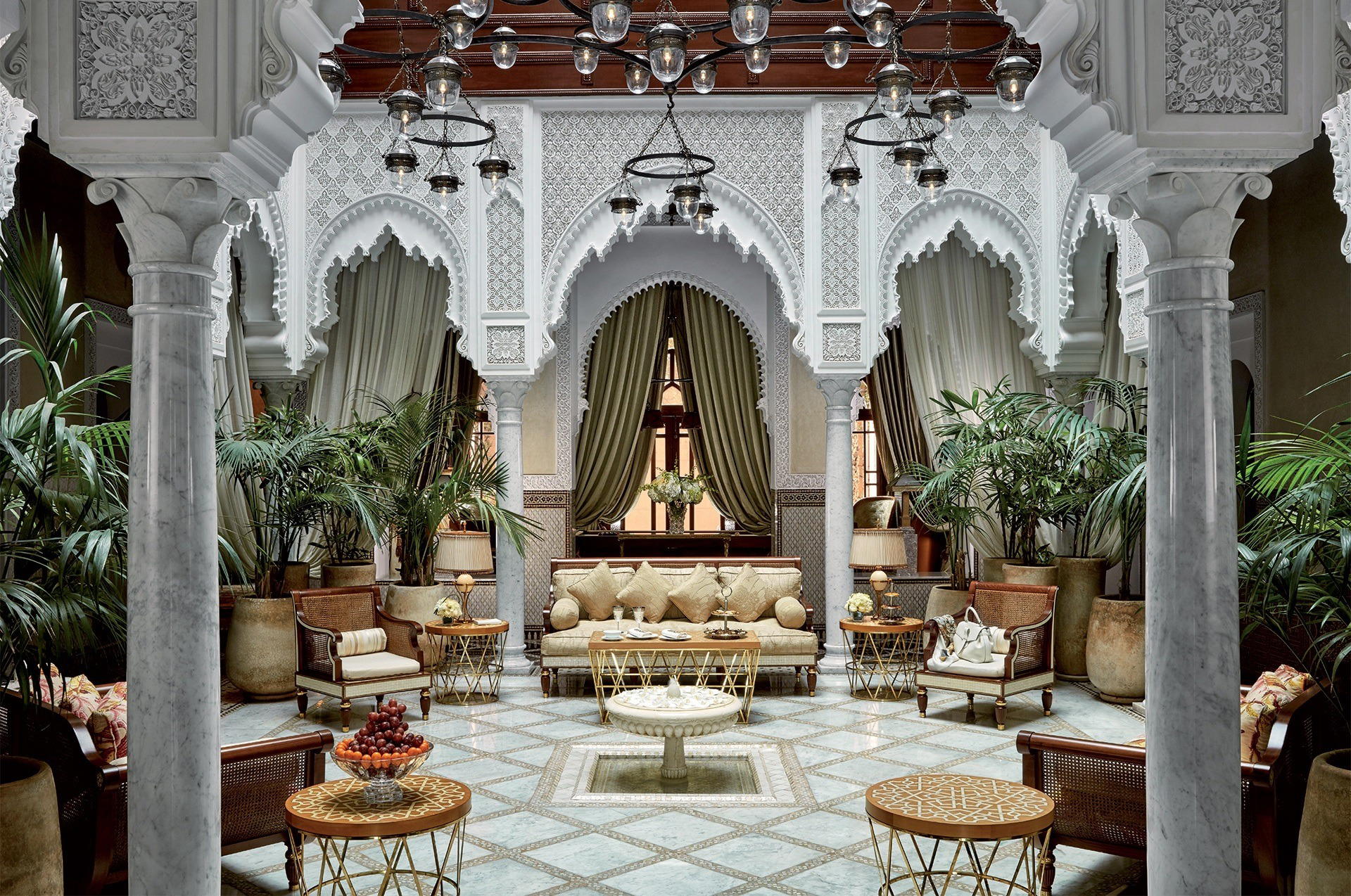
Commercial centres in Moroccan cities carry a particular social register. They are air-conditioned, well-lit, and designed for convenience rather than ceremony. The physical environment at Almazar differs substantially from the dim-lit courtyard intimacy of a Medina riad or the designed calm of a luxury hotel dining room. This is not a criticism; it is a description of what a different kind of dining occasion feels like. The crowd at a commercial-centre restaurant on a Thursday evening in Marrakesh skews younger, louder, and more interested in ease than in occasion. The service model typically reflects that, moving at a pace that suits a table turning over for the next sitting rather than lingering over a long meal.
This kind of atmosphere is exactly what a significant portion of Marrakesh's own population prefers. The international dining press focuses heavily on experiential dining, but the majority of the city eats in environments that resemble Almazar far more than they resemble the Royal Mansour. For a visitor who wants a read on how Marrakesh actually feeds itself, that context is more instructive than another evening in a curated riad setting.
Placing Eloomm Within Morocco's Wider Dining Geography
Route d'Ourika connects Marrakesh to the Atlas and represents a southward expansion of the city's commercial belt. The dining options along this corridor occupy a distinct tier from the destination restaurants of the historic centre, and they belong to a pattern visible in other Moroccan cities. In Fes, venues that serve the city's professional class tend to cluster around commercial infrastructure rather than tourist routes. In Tangier, Andalus operates within a comparable register of everyday reliability for local diners. In Essaouira, Le Salon Oriental serves a mixed local and visitor crowd in a format that balances accessibility with quality. Eloomm sits within that national pattern of restaurants that exist primarily for the cities they are in, not for visitors passing through.
For those who want to compare the premium end of Moroccan dining, La Grande Table Marocaine in Casablanca and BÔ ZIN near Tassoultante represent the poles of the formal dining spectrum. At a different price point entirely, Amal in Gueliz operates a community-forward model with a strong emphasis on traditional Moroccan cooking at accessible prices. Eloomm's address puts it physically between those registers, in a zone that functions most naturally as a neighbourhood resource.
Practical planning for a visit to Almazar is direct from most of Marrakesh's main hotel districts. The Route d'Ourika runs south from the city centre and is easily reached by taxi; journey times from Gueliz typically run under twenty minutes depending on traffic, and from the Medina, slightly longer. The venue's commercial-centre location means parking is available for those arriving by car, which is relevant for the local clientele the area primarily serves. As with many venues in this category, phoning ahead or arriving outside peak meal hours gives the clearest picture of current capacity and service style. Château Roslane and Hyatt Place Taghazout Bay provide anchors in other parts of the country worth considering alongside a Marrakesh itinerary. Internationally, venues like Le Bernardin in New York and Lazy Bear in San Francisco represent contrasting extremes of the menu-architecture question, where tightly edited formats have become the entire editorial argument of the restaurant.
- Greek salad
- Eloomakos
- Cheese cigars
- Aubergine dish
- Hummus
- Mezze platters
Awards and Standing
Comparable venues nearby, for context on price, style, and recognition.
| Venue | Cuisine | Price | Notes |
|---|---|---|---|
| EloommThis venue — the venue you are viewing | Mediterranean with Moroccan Influences | $$ | Not listed |
| Al Fassia | Traditional Fez Moroccan | $$ | Gueliz |
| Le Salama | Moroccan Fine Dining with Modern Flair | $$$ | Marrakech-Médina |
| Pool House | Casual Poolside Mediterranean & International | $$ | Not listed |
| Le Jardin Restaurant Marrakech Medina | Moroccan with European Fusion | $$$ | Marrakech-Médina |
| Nomad Marrakech | Modern Moroccan | $$$$ | Marrakech-Médina |
Continue exploring
More in Marrakech
Restaurants in Marrakech
Browse all →
Bars in Marrakech
Browse all →
At a Glance
- Elegant
- Warm
- Modern
- Cozy
- Family
- Group Dining
- Date Night
- Casual Hangout
- Standalone
- Open Kitchen
- Zero Proof
- Local Sourcing
- Farm To Table
Current opening hours
- Monday
- 11 AM–1 AM
- Tuesday
- 11 AM–1 AM
- Wednesday
- 11 AM–1 AM
- Thursday
- 11 AM–1 AM
- Friday
- 11 AM–1 AM
- Saturday
- 11 AM–1 AM
- Sunday
- 11 AM–1 AM
Hours can change for holidays and private events. Last verified .
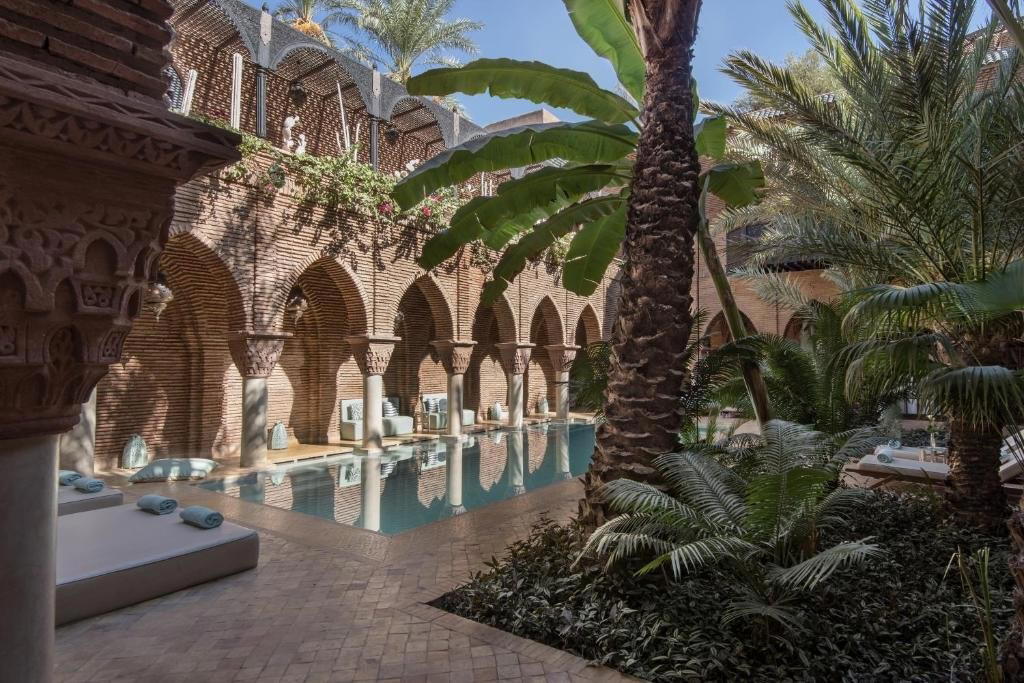
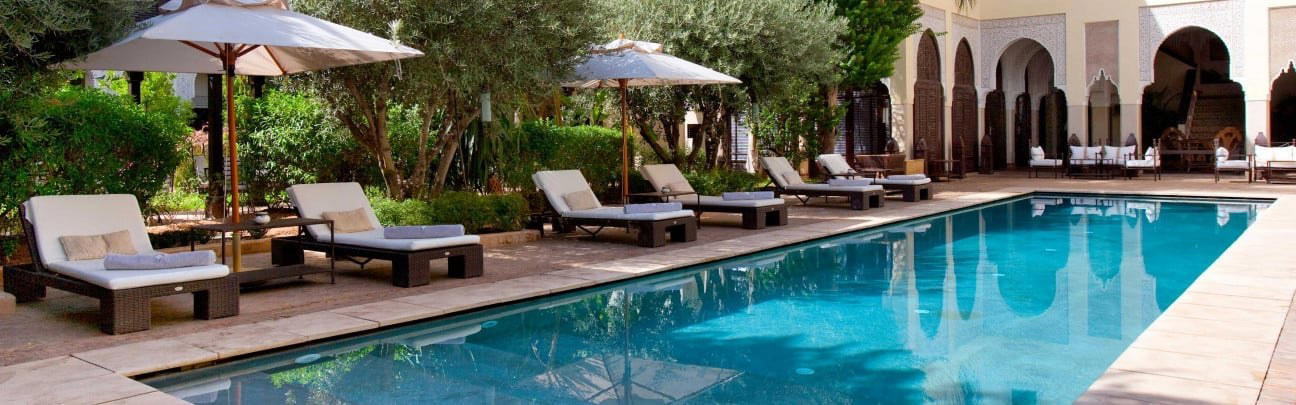
Tastefully decorated with elegant, exotic atmosphere that transports guests to Mediterranean traditions; spotlessly clean with beautiful, well-thought-out decor.