
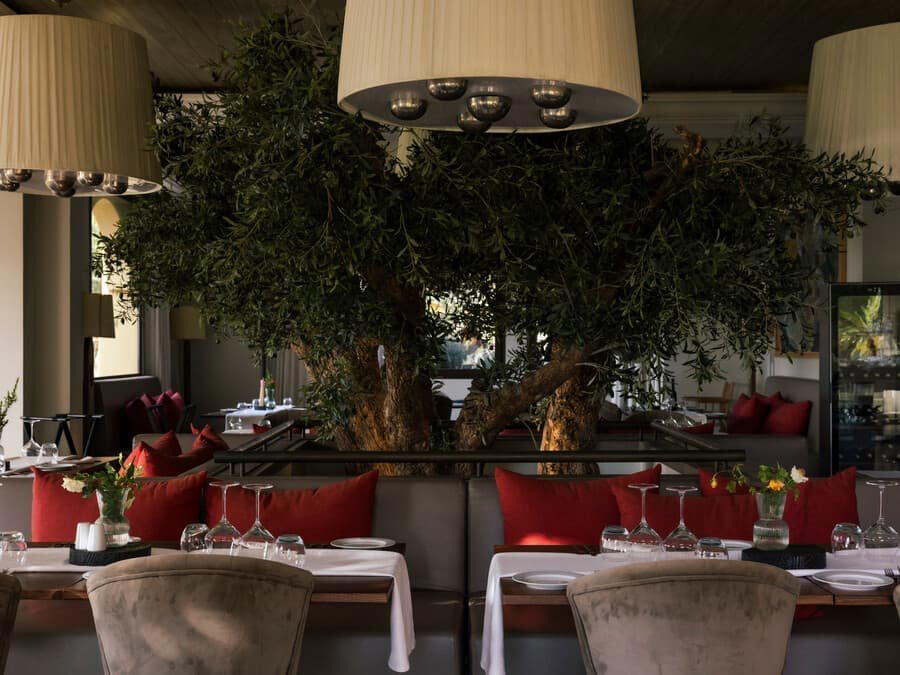
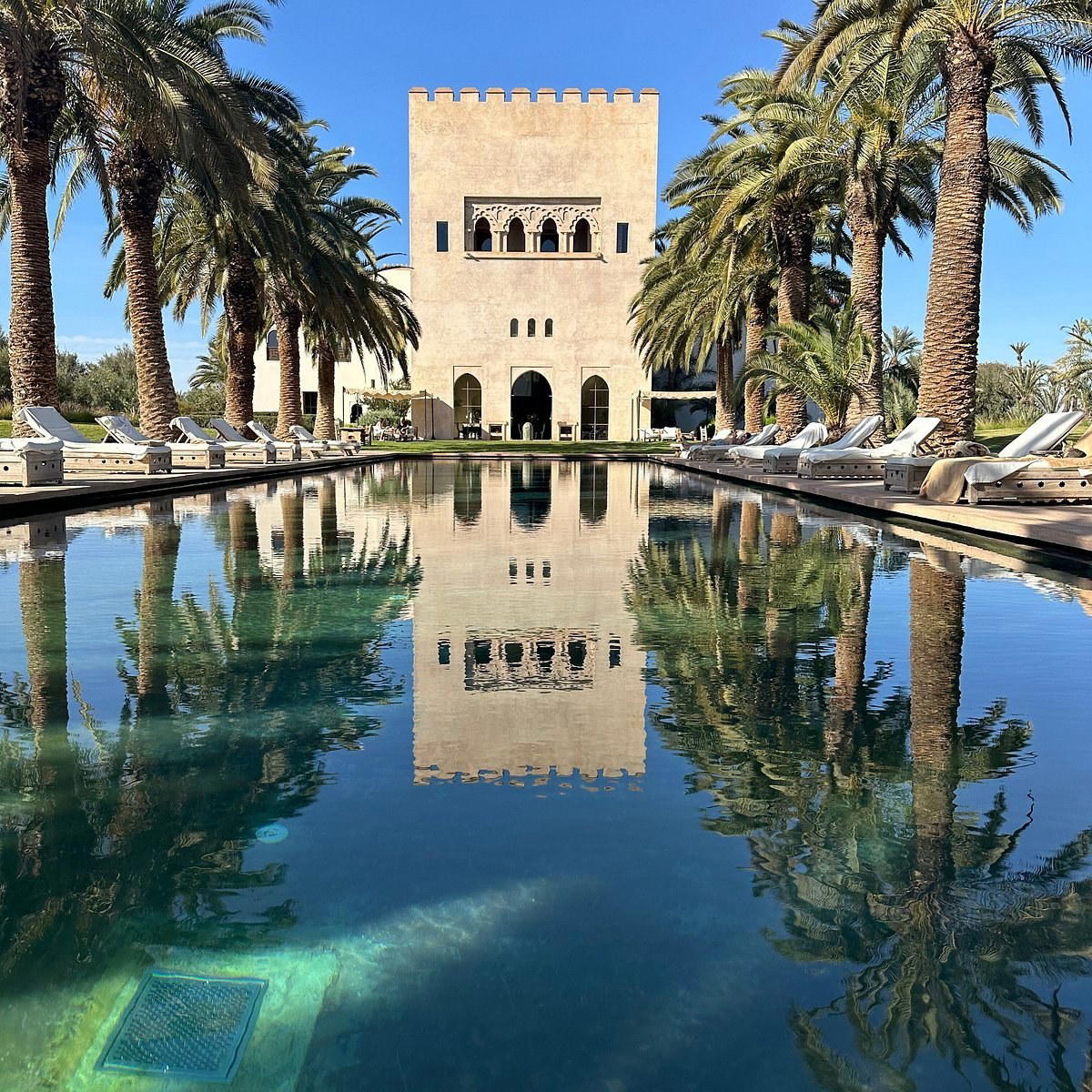
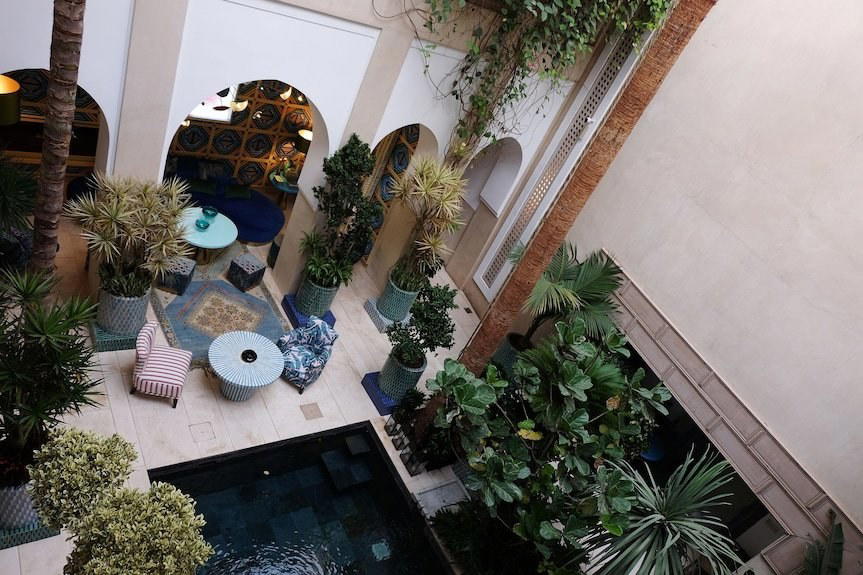
Pool House belongs to Marrakech’s garden-dining register: palm shade, olive trees and a kitchen shaped by produce rather than spectacle. Chef Alexandre Thomas works from an organic orchard, pulling Moroccan and Mediterranean references into a slower, ingredient-led format that suits travellers looking beyond the medina’s high-theatre dining rooms.
Pearl is the En Primeur Club membership app — saves, bookings, and concierge access live there. Same editors, same standards.
- Address
- Propriété Salah 7 Lieu dit Abyad Municipalité Ennakhil
- Phone
- +212 524 298 600
- Website
- menumodo.com
- Directions
- Get directions
 Saves & bookings on Pearl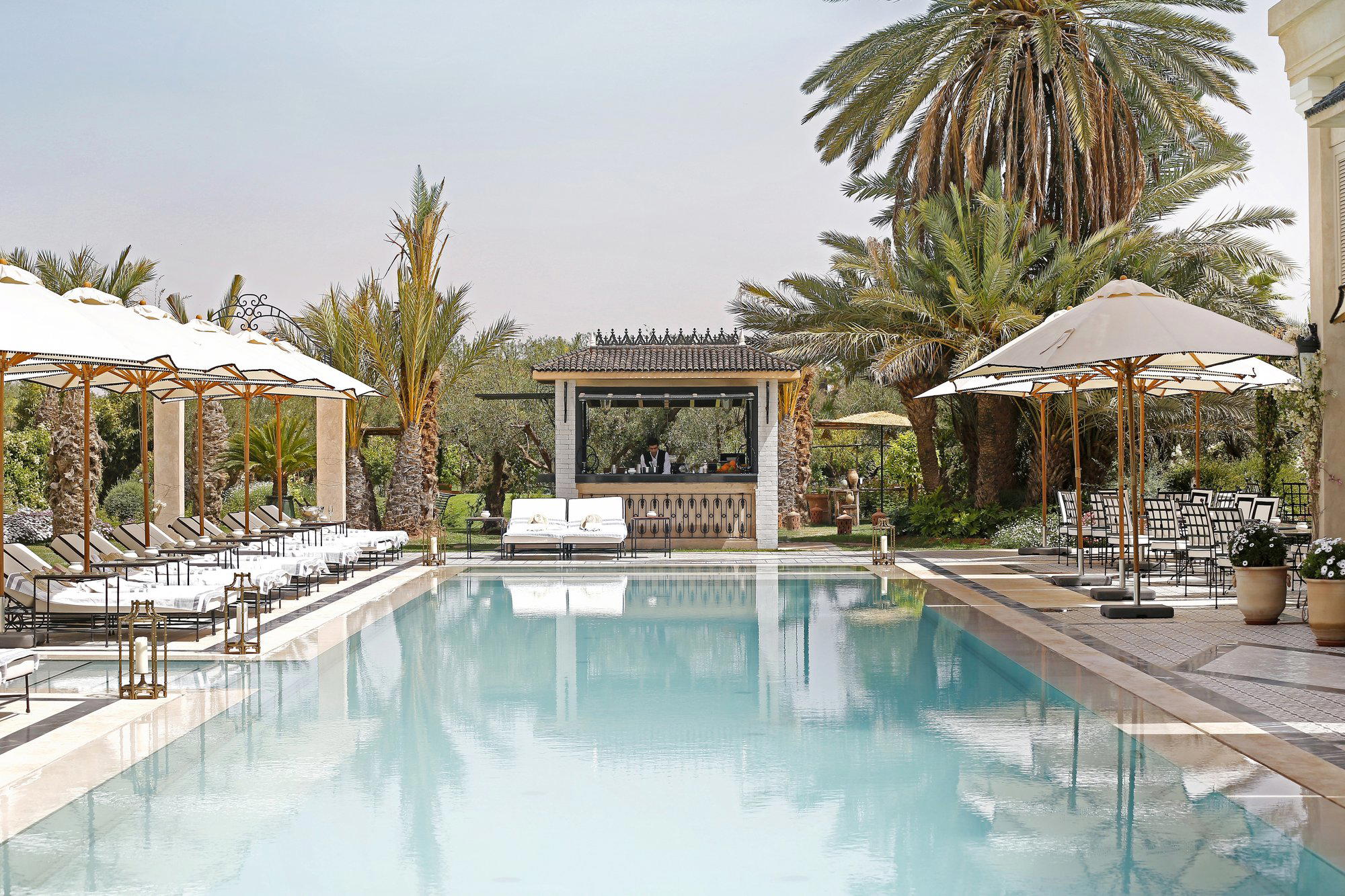
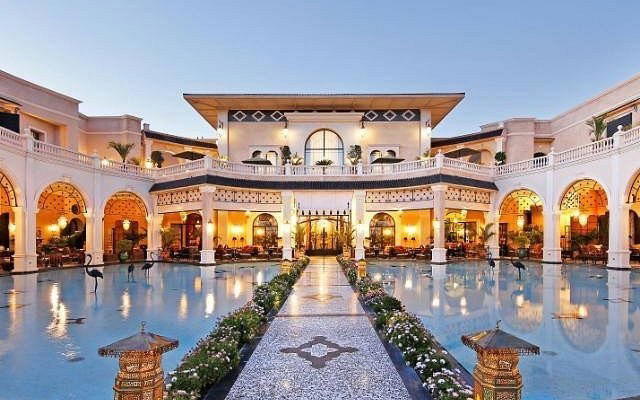
Approach Marrakech from the palm-grove side and the city changes register. The medina’s density gives way to walls, irrigation channels, palms and olive trees, and the meal begins to feel less like an appointment than a pause in the day’s heat. Pool House fits that rhythm: garden first, kitchen second, with the orchard doing much of the editorial work before a plate reaches the table.
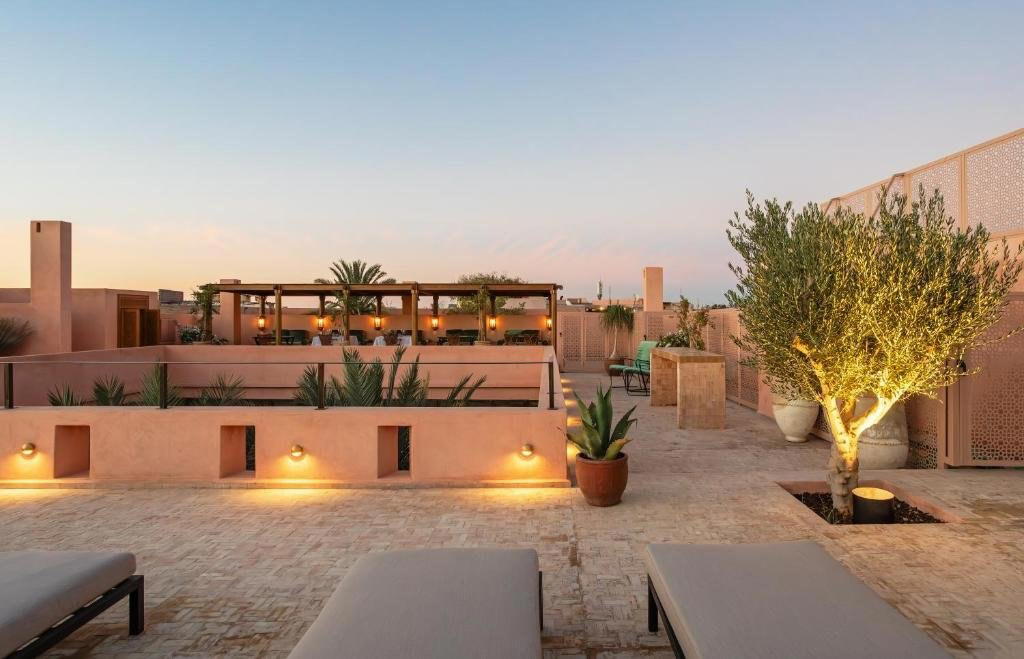
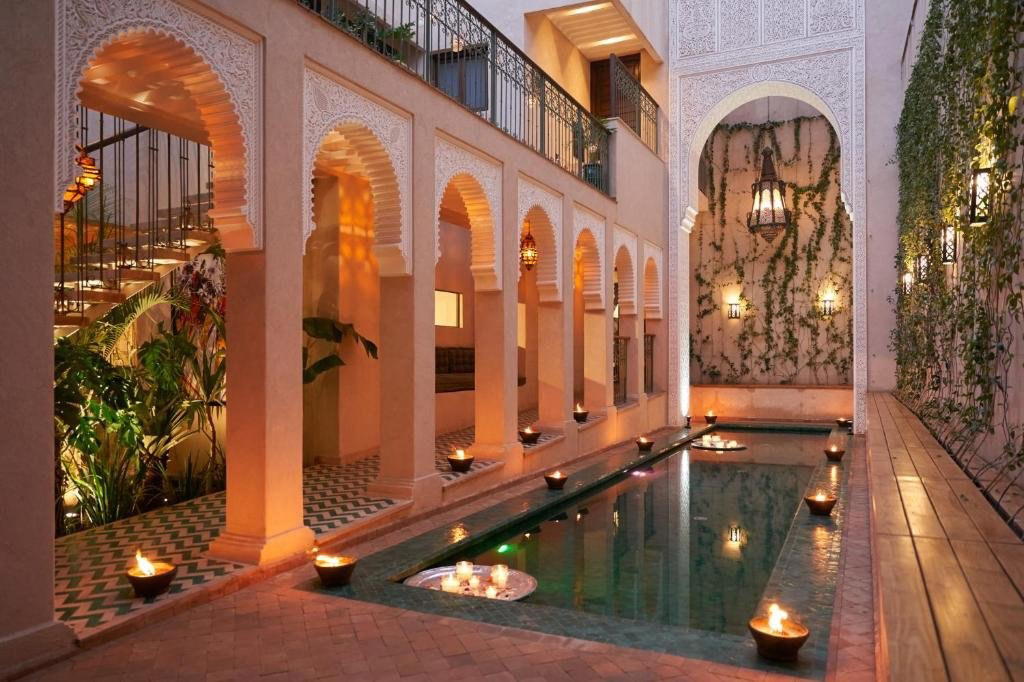
Marrakech has long understood outdoor dining as a form of climate intelligence. Courtyards, shaded terraces and planted riads are not decorative extras; they are how the city manages light, heat and time. In that context, Pool House reads as part of a broader move toward produce-led restaurants on the city’s edge, where the appeal lies in what grows nearby and how little needs to be forced onto it. The setting matters because the food is framed by it: palms and olive trees are not scenery alone, they establish the pace of the meal.
Orchard cooking, not hotel-dining theatre
The strongest argument for Pool House is its ingredient logic. Chef Alexandre Thomas works with harvests from an organic orchard, shaping a cuisine that draws on Moroccan and Mediterranean tastes without turning either tradition into costume. That distinction matters in Marrakech, where restaurants often split between riad romance, palace-style service and international resort cooking. Here, the point is simpler: garden produce, slow cooking, and dishes built around fragrance and ripeness rather than heavy ornament.
Moroccan cooking is already deeply seasonal in practice. Citrus, olives, herbs, preserved elements, grains and slow-cooked vegetables carry as much weight as meat in many home and market traditions. Mediterranean references widen the frame without breaking it, especially in a city whose dining culture has always absorbed outside influence through trade, travel and hospitality. The restaurant sits in that overlap. The kitchen’s described focus on orchard harvests gives the meal a clear centre of gravity, and that is more useful than a long list of imported luxury markers.
This is not the Marrakech table for diners chasing a formal tasting-menu script or a tightly choreographed counter format. It is better understood as a garden restaurant with a serious sourcing premise. The phrase “cooking classics” is telling: the category points toward familiarity, but the orchard context changes the value of that familiarity. A simple preparation can carry more authority when the produce has not travelled far and the kitchen is confident enough to let it stay legible.
Where Pool House fits in Marrakech's wider dining map
Marrakech dining is not one scene but several overlapping ones. Gueliz supplies modern neighbourhood restaurants and social-enterprise dining; the medina concentrates riad courtyards, traditional Moroccan menus and visitor-facing hospitality; the Palmeraie and outer estates favour space, gardens and a slower lunch-to-dusk tempo. The restaurant belongs to the last of these, which makes it a useful counterpoint to central addresses without needing to imitate them.
For a broader read on the city, Our full Marrakech restaurants guide sets the restaurant beside more urban formats, including Al Fassia, Amal Gueliz Center - Restaurant, Al Aïn, +61 and Amanjena. Those names underline how elastic Marrakech has become as a dining city: women-led Moroccan dining, contemporary Australian-inflected cooking, hotel restaurants and garden-led kitchens can all speak to the same destination without offering the same kind of evening.
The wider Moroccan map is equally instructive. Coastal, mountain and northern restaurants show how regional produce reshapes the national table: Anaw in Taghazout, Andalus in Tangier, Asayss Restaurant in Asni, Azura in Fnideq, Amaraz in Fès and Amaraz Restaurant in Fez all point to different local pressures. Against that national spread, the restaurant’s orchard-and-garden emphasis feels specifically Marrakchi: heat, shade, irrigation, fruit, olives and a meal paced around the outdoors.
Who should plan around it
The restaurant makes the clearest case for travellers who want Marrakech beyond the compressed theatre of the medina. The reward is not a checklist of famous dishes; it is a change in tempo and sourcing. That makes it especially useful for a long lunch, a softer dinner after a dense day of sightseeing, or a meal folded into a Palmeraie-focused itinerary.
Families should think about the setting first. A garden restaurant can be easier with children than a hushed dining room, but suitability depends on the day’s format, seating and service rhythm. In Marrakech, outdoor meals also depend on season and heat: midday in high summer asks for different planning than a spring or autumn meal under trees. The orchard setting is the draw, so the experience is strongest when the weather supports time outside rather than a rushed indoor fallback.
The restaurant also belongs in a fuller Marrakech itinerary rather than as a standalone trophy booking. Travellers pairing meals with design-led stays can cross-reference Our full Marrakech hotels guide; those building the evening around drinks should use Our full Marrakech bars guide. The city’s hospitality ecology extends well beyond restaurants, from cellar-minded detours in Our full Marrakech wineries guide to guided formats in Our full Marrakech experiences guide. For wider context on ingredient-led “cooking classics” outside Morocco, compare the category rather than the city through Awasi Mendoza Restaurant, Cooking classics in Luján de Cuyo and Bistro Enkel, Cooking classics in Brampton.
The editorial verdict is direct: choose the restaurant when the source of the food matters as much as the room. Marrakech has grander dining rituals and louder restaurant narratives, but this address is about orchard discipline, shade and the pleasure of a kitchen that lets Moroccan and Mediterranean references meet without overexplaining them.
Reputation & Price
Comparable venues nearby, for context on price, style, and recognition.
| Venue | Cuisine | Price | Notes |
|---|---|---|---|
| Pool HouseThis venue — the venue you are viewing | Cooking classics | $$ | Not listed |
| Le Jardin d'Hiver | Not listed | $$$$ | Palmeraie, Moroccan-Mediterranean Fusion Fine Dining |
| Table III (La Table) | Marrakech-Médina, Refined Moroccan | $$$ | Not listed |
| Pepe Nero | Not listed | $$$ | Marrakech-Médina, Italian-Moroccan Haute Cuisine |
| G-Bombay By Zahid | Gueliz, Authentic Indian | $$ | Not listed |
| La Villa des Orangers | Not listed | $$$$ | Marrakech-Médina, French-Moroccan Fine Dining |
Recognition history
Dated appearances from independent guides and award organizations, with the underlying list record or original source where available.
Relais Chateaux Award
Relais Chateaux
Continue exploring
More in Marrakech
Restaurants in Marrakech
Browse all →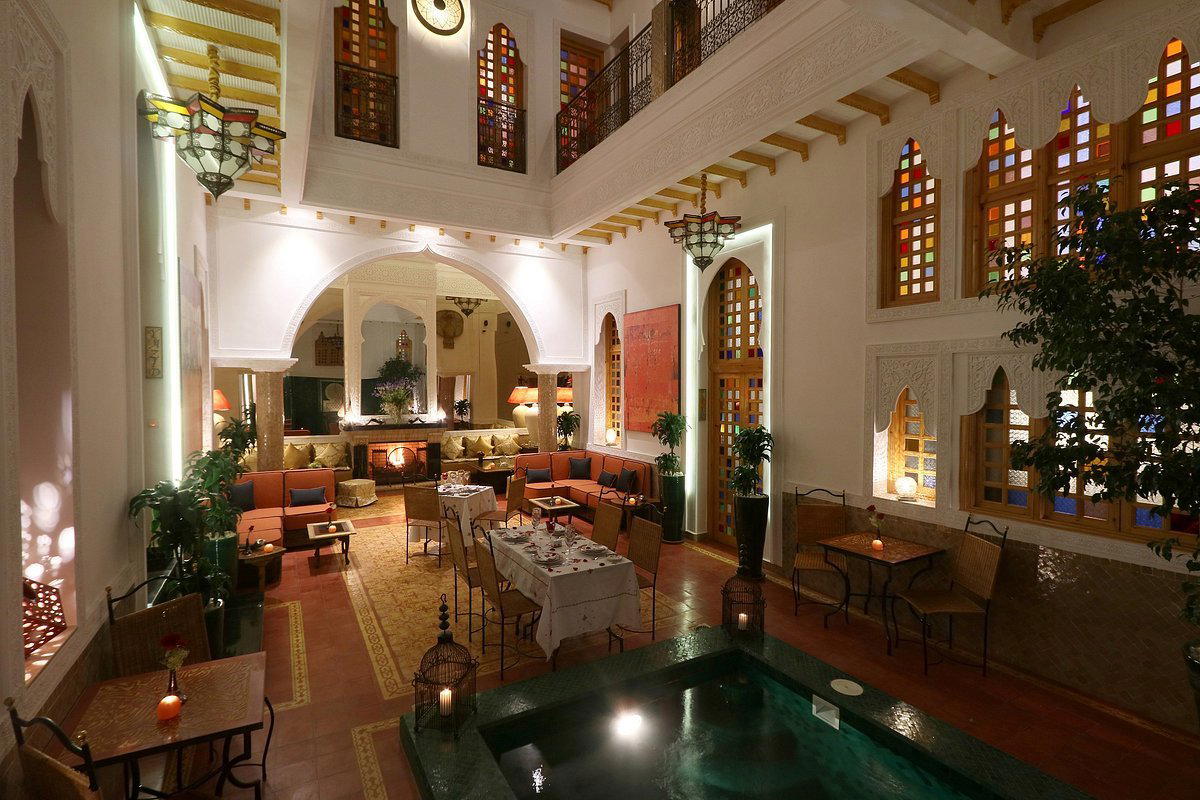
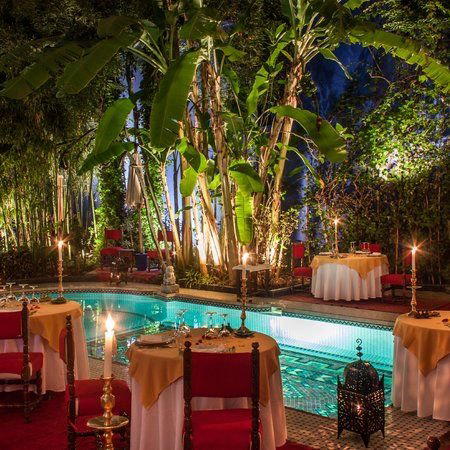
Bars in Marrakech
Browse all →
At a Glance
- Lively
- Casual
- Trendy
- Casual Hangout
- Group Dining
- After Work
- Family
- Hotel Restaurant
- Terrace
- Beer Program
Relaxed and informal poolside atmosphere with outdoor terrace seating around the hotel pool; more lively during the day with a social, resort-style feel rather than a quiet fine-dining setting.