El Dorado
Our verdict
El Dorado sits on Calle Marlín in Playita, the small fishing community that fringes the Salinas coastline in southern Puerto Rico. The area's working waterfront has long shaped what ends up on local tables, and El Dorado operates squarely within that tradition. For visitors tracking Puerto Rico's less-documented south coast dining scene, it represents the kind of address that rewards those who leave the highway.

Pearl is the En Primeur Club membership app, where members save venues, book tables and use the concierge.
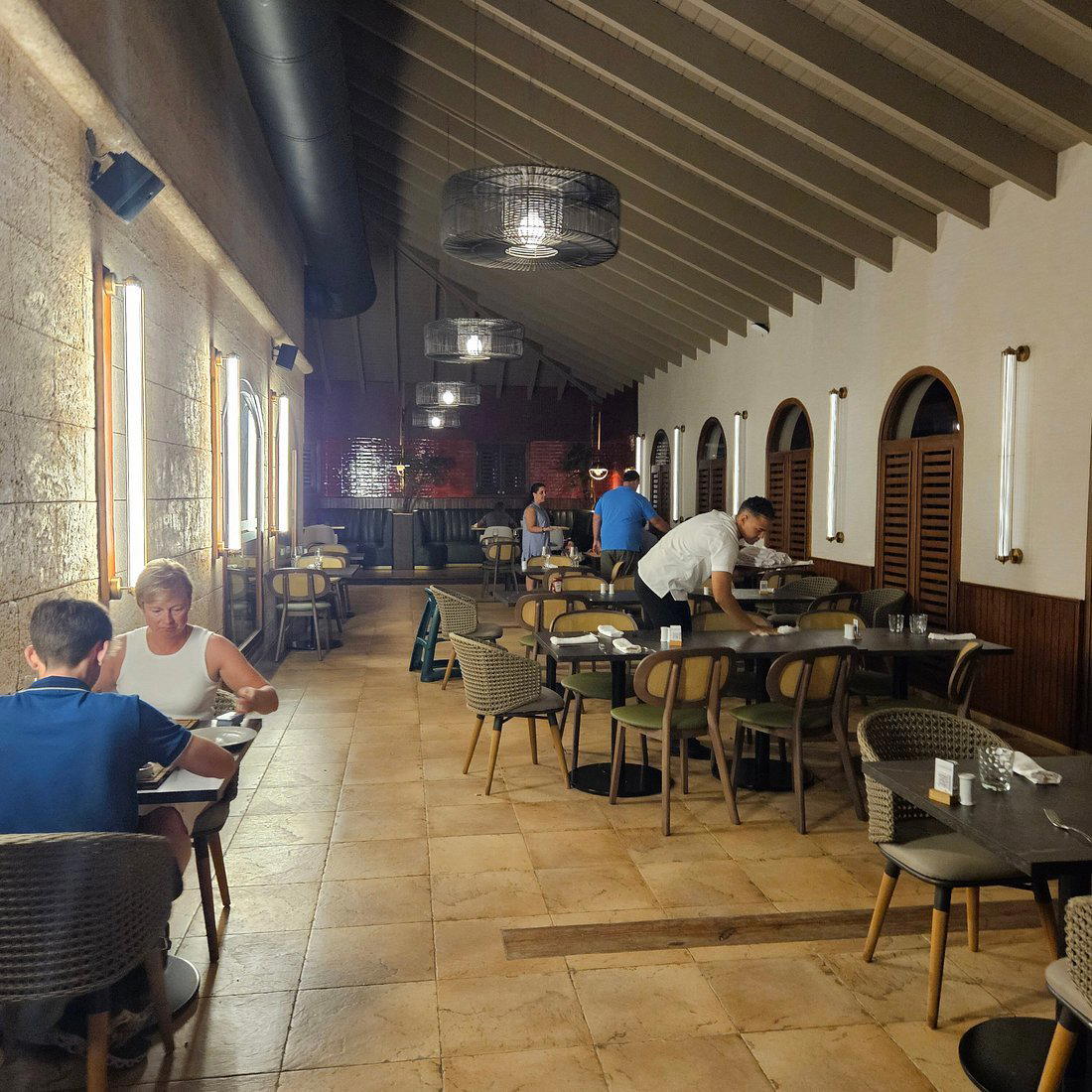
The menu
What to order
- Mofongo stuffed with conch
- Lobster salad with tostones de pana
- Grouper nuggets
- Cod fish croquettes
Where the Southern Coast Puts Fish on the Table
Southern Puerto Rico's relationship with the sea is utilitarian in the leading sense. The Salinas municipality sits along a stretch of coastline where fishing cooperatives and seaside comedores have coexisted for generations, and the town of Playita, a small fishing settlement rather than a resort destination, is the kind of place where the distance between the water and the kitchen is measured in minutes, not supply chains. El Dorado, addressed on Calle Marlín, is positioned directly inside that geography. The street name itself is not incidental: marlín is a deep-water game fish, and the naming conventions around Playita's waterfront reflect a community that organizes itself around what the sea provides.
This matters for how you read a menu anywhere in this part of the island. Puerto Rico's south coast does not operate on the same tourist infrastructure as San Juan or the northeast corridor, which means the sourcing logic at places like El Dorado is closer to necessity than to the farm-to-table branding that has become common at higher-profile urban restaurants. The fish that arrives here tends to arrive because it was caught nearby, not because a procurement team made a seasonal decision. That compression of supply chain is, in practical terms, what fresh means in a coastal context.
The Playita Setting and What It Signals
Approaching Playita from the PR-3 or via Salinas proper, the transition from main road to fishing village is abrupt. The neighborhood sits at the end of a short causeway-adjacent stretch, bordered by mangroves and the calm inner bay. El Dorado's address on Calle Marlín places it within a cluster of local seafood spots that serve the same community of fishermen, families, and visitors who have learned to seek out this corner of Salinas municipality. The physical environment here is not polished in the way coastal dining destinations are in Rincón or Dorado, there is no curated lighting or imported tile work, and that absence is part of the point. The setting communicates something about who the restaurant is actually for.
For context on how this southern coastal dining pattern differs from Puerto Rico's more widely covered restaurant scenes, the contrast with places like Aleli at The Royal Sonesta San Juan in Carolina or Jose Enrique in San Juan is instructive. Both of those operations exist within a metropolitan context where the dining audience is broader and the overhead structures are different. El Dorado operates within a much smaller, more local economy, which shapes everything from pricing logic to portion expectation to the pace of service.
Ingredient Sourcing and the South Coast Fishing Tradition
Puerto Rico's southern municipalities have historically been less dependent on imported protein than the island's north, partly because of active fishing fleets operating out of Salinas, Guánica, and the surrounding coast. The Caribbean waters off this stretch of shoreline produce a different catch profile than the Atlantic-facing north: red snapper, mahi-mahi, and various reef species appear with regularity, alongside the shellfish that thrive in the mangrove-adjacent waters. A restaurant on Calle Marlín in Playita sits at the receiving end of that supply chain in its most direct form.
This sourcing context is what separates the south coast comedores and seafood spots from the fish-forward restaurants you find elsewhere on the island. At places like La Parguera in La Parguera, another southern coastal address, the same fishing-community logic applies. The food at these spots is not conceived as an editorial statement about provenance; it is simply what proximity to active fishing looks like on a plate. Visitors coming from San Juan's more theatrical dining scene, or from internationally recognized seafood destinations like Le Bernardin in New York City, will find an entirely different register here: plainer presentation, direct flavors, and a cooking approach that does not obscure what the ingredient actually is.
That directness is also visible in how south coast Puerto Rican kitchens handle seasoning. Sofrito, adobo, and recao remain the baseline flavor architecture for much of the traditional cooking in this part of the island, techniques and ingredient combinations that have been in continuous use for generations and that are not subject to revision based on trend cycles. The result, when sourcing is reliable, is cooking that reads as confident rather than conservative.
Placing El Dorado in the Broader Puerto Rico Dining Map
Puerto Rico's restaurant coverage is heavily concentrated on San Juan, Rincón, and to a lesser extent the beach towns of the northeast. The south coast, including Salinas, Guánica, and the Ponce corridor, receives a fraction of the editorial attention despite supporting a food culture that in some respects is more intact than what you find in areas shaped by heavier tourism. Our full Playita restaurants guide covers this neighborhood in more detail, but the short version is that Playita specifically is not a destination that most travel platforms have mapped in depth.
For travelers already making circuits of the island's less-covered dining spots, the south coast fits naturally alongside stops like Lechonera Los Pinos in Cayey, Lago Dos Bocas in Arecibo, or Panaderia La Patria in Morovis, all addresses that operate outside the tourist-trail consensus and serve primarily local populations. Each of those spots is distinguished not by awards or chef credentials but by longevity and community specificity, which in Puerto Rico's regional food culture tends to be the more reliable signal. Elsewhere on the island, Charco Azul in Vega Baja and Estela Restaurant in Rincón represent different ends of the island's coastal dining spectrum.
Planning a Visit to Playita
Salinas municipality is accessible from San Juan via the Luis A. Ferré Highway (PR-52) south, with Playita a short drive from the Salinas exit. The drive from San Juan runs roughly ninety minutes depending on traffic, making this a plausible day trip from the capital rather than an overnight necessity. Because Playita functions as a working fishing community rather than a visitor destination, the practical infrastructure around dining here is minimal, there are no reservations platforms serving this area, no dress codes, and scheduling should be approached with the flexibility appropriate to a local, operationally informal spot. Visitors coming from the west coast of the island can connect via Kaplash in Añasco or Brazo Gitano Franco in Mayagüez before heading south and east along the coast. For those building a broader itinerary, Paros Restaurant, Tin Box in Vieques, COA in Dorado, Da Bowls in Aguadilla, and BODEGA in Caguas each anchor different corners of the island's dining map and pair well with a south coast loop that includes Playita.
Frequently asked questions
Does El Dorado work for a family meal?
Yes, and it fits the format well. Playita's dining culture runs along the comedor tradition, casual, communal, and oriented around shared plates of whatever came off the boats. The Calle Marlín address puts El Dorado squarely in that register: no dress code, no formal pacing, and a setting where kids and grandparents at the same table is the norm rather than the exception.
What kind of setting is El Dorado?
El Dorado is on Calle Marlín in Playita, a working fishing enclave at the edge of Salinas municipality, not a resort strip or a tourist corridor. Expect an open-air or semi-open format consistent with southern Puerto Rico's coastal spots, where proximity to the water is functional as much as atmospheric. This is a fishing community restaurant, not a polished dining room.
Is El Dorado worth the drive from San Juan for a day trip focused on southern Puerto Rico's fishing culture?
Playita sits roughly 60 miles south of San Juan via the Luis A. Ferré Highway (PR-52), making it a manageable half-day drive. Salinas municipality has one of the more active fishing cooperative networks in southern Puerto Rico, and Playita developed specifically as a fisherman's enclave, which means a meal at a Calle Marlín address like El Dorado connects directly to that production context rather than approximating it. For anyone tracing Puerto Rico's coastal food traditions beyond the capital, the south coast makes a substantive case.
What do people recommend at El Dorado?
What the Playita context does confirm is that southern Puerto Rico's active fishing cooperative network means locally caught fish and shellfish are the foundation of kitchens in this neighborhood, that's the category to focus on when you're there. Ask what came in that day.
Where do I go for El Dorado?
El Dorado is located at G4 Calle Marlín, Salinas, 00751, Puerto Rico, Playita.
What's the best way to book El Dorado?
Walk-in is the standard operating model for Playita's seafood spots, and given the village's size and informal pace, showing up is the practical approach. Arriving earlier in service, before the midday or early-evening rush, is the more reliable strategy than trying to call ahead.
What's the standout thing about El Dorado?
The address is the argument: Calle Marlín in a working fishing community means the supply chain between boat and plate is about as short as it gets in Puerto Rico. San Juan restaurants sourcing southern-caught fish deal with a logistics gap that simply doesn't exist at this end of the island. That geographical advantage is what separates Playita's better spots from comparable seafood restaurants further north.
Comparable Venues
Comparable venues nearby, for context on price, style, and recognition.
| Venue | Cuisine | Price | Notes |
|---|---|---|---|
| El DoradoThis venue (the venue you are viewing) | Fresh Puerto Rican Seafood | $20–30 | Not listed |
| Bartolo Restaurant | Authentic Puerto Rican Creole | $20–30 | Miramar |
| Roofyard | Modern Caribbean Tapas | Not listed | Ocean Park |
| Tin Box Vieques Restaurant and Bar | Caribbean BBQ & Sushi Fusion | $20–30 | central Vieques |
| Leña Eh Food Truck | Wood-Fired Puerto Rican Street Food | $10–20 | Miramar |
| KGB | Caribbean Fusion Bistro | $20–30 | Plaza Dorada |
Continue exploring
More in Playita
Restaurants in Playita
All restaurants in Playita →


Bars in Playita
Browse all →



Details
- Rustic
- Cozy
- Casual Hangout
- Family
- Waterfront
- Craft Cocktails
- Local Sourcing
- Waterfront
- A La Carte
- Piña Coladas
Current opening hours
- Monday
- 11 AM–8 PM
- Tuesday
- 11 AM–8 PM
- Wednesday
- 11 AM–8 PM
- Thursday
- 11 AM–8 PM
- Friday
- 11 AM–8 PM
- Saturday
- 11 AM–8 PM
- Sunday
- 11 AM–8 PM
Hours can change for holidays and private events. Last verified .
Casual coastal spot overlooking the marina with a focus on fresh seafood and lively local flavors.