Lechonera Los Pinos
Our verdict
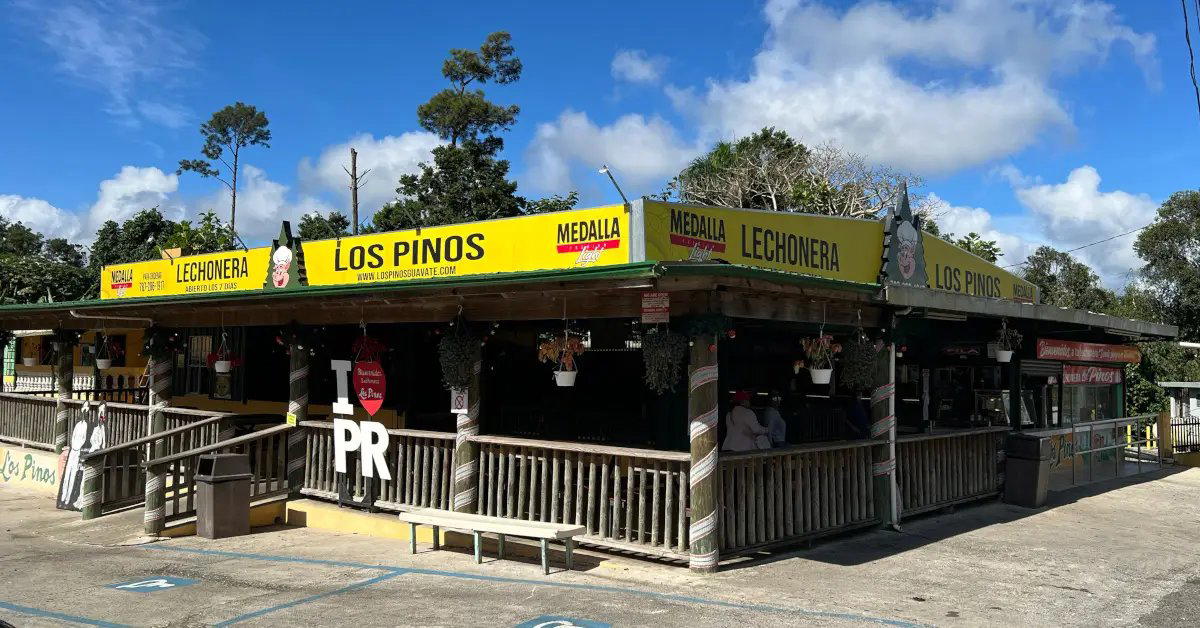
On a mountain road above Cayey, Lechonera Los Pinos sits at Km. 27.7 on Carr. 184, where the tradition of whole-roasted lechón has anchored weekend gatherings for generations. The setting is the central highlands at their most unhurried, and the cooking draws directly from that geography: locally raised pork, open-fire technique, and a format that prioritises the ritual of the meal over any formal dining experience.

Pearl is the En Primeur Club membership app, where members save venues, book tables and use the concierge.
The menu
What to order
- Lechon Asado
- Arroz con Gandules
- Morcilla
- Pavochón
The Mountain Road That Built a Tradition
The stretch of Carr. 184 that cuts through the central highlands above Cayey is one of the more consequential roads in Puerto Rican food culture. Locals call it La Ruta del Lechón, and on any given weekend the kilometre markers between roughly 27 and 32 anchor a cluster of open-air roasting houses where the smoke drifts across the road before you can even see the source. Lechonera Los Pinos sits at Km. 27.7, at the lower end of that stretch, and the approach sets the terms of the meal before you step out of the car: charcoal, woodsmoke, and the low sound of cinder-block structures doing serious work.
This is not a dining tradition that migrated to the mountains for atmosphere. The highlands produce the pigs, the wood, and the social occasion simultaneously. What the route's lechoneras have always sold is access to an unbroken production chain: animal raised nearby, slaughtered locally, seasoned with adobo, and turned on a spit over hardwood coals for the better part of a day. The sourcing is not a marketing concept here; it is simply how the thing has always worked. For context on how Puerto Rico's broader food scene has shifted toward more self-conscious farm-to-table framing, see Jose Enrique Puerto Rican restaurant in San Juan, where the same emphasis on local ingredient provenance operates inside a very different register.
Where the Pork Comes From and Why It Changes the Plate
The central highlands around Cayey sit at elevations that moderate the island's heat enough to support small-scale pig farming in a way that the coastal municipalities cannot. The animals are typically raised by local criadores whose operations have supplied the route's lechoneras across multiple generations of the same families on both sides of the transaction. That continuity matters because the product arriving at the spit is not a commodity sourced from a distribution network; it reflects the specific feed, breed characteristics, and slaughter timing that come with a short, accountable supply chain.
The result on the plate is a skin that carries real fat beneath it and a flesh that holds moisture through the long cook, which can run eight hours or more for a full animal. The mofongo served alongside draws on plantains from the island's agricultural interior, and the rice-and-beans combination that anchors most plates here reflects the same logic: proximity determines quality, and the highlands have the proximity. This sourcing pattern is what distinguishes La Ruta del Lechón from lechón operations in San Juan, where the product often travels further before reaching the spit. For readers interested in how Puerto Rico's coastal food traditions differ from the interior, Charco Azul in Vega Baja offers useful comparison, as does La Parguera in La Parguera on the southwest coast.
The Format and the Crowd It Draws
Lechoneras on this route operate on a format that has not changed substantially in decades. You arrive, you observe what is being carved at the counter, and you order by weight or by plate. There is no reservation system, no printed tasting menu, and no timed seating. The physical format tends toward open-sided roofed structures, often with communal picnic tables, where families, extended groups, and the occasional car full of San Juan day-trippers share the same benches. Weekend afternoons between roughly noon and 3pm represent peak volume; arriving outside those hours means shorter waits and more of the carve left to choose from early in the day.
The crowd itself is part of the experience's character. La Ruta del Lechón draws Cayeye families who have been stopping at the same spot for two or three generations alongside visitors who found the road through word of mouth or a food publication feature. That mix is common to the highland lechonera tradition more broadly; the format is democratic by design, because the price point and serving style do not sort customers by income bracket. This accessibility sits in deliberate contrast to the premium end of Puerto Rico's dining scene. Aleli at The Royal Sonesta San Juan in Carolina or COA in Dorado occupy the island's formal tier; a lechonera operates on entirely different coordinates.
Reading the Route as a Category
Lechonera Los Pinos is one of several competing operations along this short stretch, and understanding what differentiates them requires knowing the category. The primary variables across La Ruta del Lechón are sourcing relationships (which criadores supply which houses), skin texture relative to time on the spit, and the quality of the side preparations, particularly the mofongo and the blood sausage. Regulars who drive up from San Juan or Ponce on weekend mornings have strong opinions on which kilometre marker produces the leading crackling, and those opinions are held with the same seriousness that wine drinkers apply to producer comparisons. Los Pinos has maintained a consistent presence on the route long enough to accumulate that kind of loyal returning traffic.
For readers building a wider Puerto Rico food itinerary, the mountain interior represents a category that the island's coastal and urban dining scenes do not replicate. Lago Dos Bocas in Arecibo offers another window into interior Puerto Rico's relationship with local ingredients and informal outdoor dining formats. See also our full Cayey restaurants guide for broader context on what the municipality offers beyond the lechón route itself.
Planning the Visit
Lechonera Los Pinos is located at Km. 27.7, Carr. 184, Cayey, 00736. The address sits on a mountain road that requires a car; there is no practical public transport option for this stretch. From San Juan, the drive runs approximately 45 to 55 minutes depending on traffic through Caguas, making it a plausible half-day excursion. Weekend mornings before noon are the window that most regulars recommend: the pigs come off the spit in stages through the morning, the communal tables are busy but not at capacity, and the full range of side dishes is available. Late afternoon arrivals risk finding the leading cuts already sold through. Cash is the practical default for highland lechoneras generally.
Visitors interested in pairing the stop with other Puerto Rico experiences across the island can reference Paros Restaurant in Puerto Rico, Estela Restaurant in Rincon, Brazo Gitano Franco in Mayaguez, El Dorado in Playita, Kaplash in Anasco, Da Bowls in Aguadilla, Panaderia La Patria in Morovis, Tin Box Vieques Restaurant and Bar in Vieques, and BODEGA in Caguas for a fuller picture of what the island's food scene covers beyond the highland interior. For international reference points on what fire-driven, sourcing-focused cooking looks like at a different scale, Le Bernardin in New York City and Lazy Bear in San Francisco each show how ingredient provenance becomes a structural commitment rather than a footnote in serious kitchens.
Frequently asked questions
Can I bring kids to Lechonera Los Pinos?
Lechoneras on Carr. 184 in Cayey are family operations by tradition, and Lechonera Los Pinos fits that pattern. The format is open-air and informal, with food served by weight at a counter rather than through table service. There are no age restrictions, and the crowd on weekends typically spans multiple generations.
Is Lechonera Los Pinos formal or casual?
This is a mountain roadside lechonera at Km. 27.7, Carr. 184, not a restaurant with table service or a dress code. You order at the counter, pick up your plate, and find a seat. Dress accordingly for an outdoor hillside setting in Cayey's central highlands.
How does the Ruta del Lechón in Cayey work, and where does Lechonera Los Pinos fit within it?
The Ruta del Lechón is an informal corridor of lechoneras concentrated along Carr. 184 in the mountains above Cayey, operating on weekends when whole-roasted pigs are prepared on-site and sold by the pound at open counters. Lechonera Los Pinos sits at Km. 27.7 within this stretch, placing it among several competing operations that draw visitors from across the island. The route is navigated by car; there is no practical public transit access to this section of Cayey's highlands. Each lechonera on the corridor operates independently, so inventory, hours, and crowd volume vary week to week.
What's the must-try dish at Lechonera Los Pinos?
Lechón asado, whole-spit-roasted pork, is the reason Carr. 184 exists as a food destination, and it is the central item at every operation on the route including Los Pinos. Side dishes such as arroz con gandules and mofongo are standard accompaniments across Cayey's lechonera corridor, though the specific offerings on a given day depend on what has been prepared.
Where do I go for Lechonera Los Pinos?
Lechonera Los Pinos is located at Km. 27.7, Carr. 184, Cayey, 00736, Puerto Rico, Cayey.
Do they take walk-ins at Lechonera Los Pinos?
Walk-in is the only format on the Ruta del Lechón. Lechoneras on Carr. 184 do not take reservations; the model is counter service based on what is available at the time of arrival. Arriving early, particularly on weekends, gives you access to the full spread before popular cuts run out.
What's the standout thing about Lechonera Los Pinos?
Its position at Km. 27.7 on Carr. 184 places it within a concentrated corridor of lechoneras that together constitute Puerto Rico's most documented whole-roast pork tradition. What distinguishes operations on this route collectively is the elevation: Cayey's central highlands moderate temperatures enough to support small-scale pig farming that coastal areas cannot replicate. Los Pinos participates in that geography directly.
Comparison Snapshot
| Venue | Cuisine | Price | Awards | Notes |
|---|---|---|---|---|
| Lechonera Los PinosThis venue (the venue you are viewing) | Traditional Puerto Rican Lechonera | Not listed | Not listed | Not listed |
| Paros Restaurant | Greek Seafood | Not listed | Not listed | Not listed |
| Positivo Sand Bar | Asian Fusion Sushi with Omakase | $200–300 | Forbes 4-Star | Beach Bar |
| 1919 Restaurant | Modern Puerto Rican Fine Dining | $150–200 | Forbes 4-Star · Wine Spectator Best of Award of Excellence | Modern American |
| ORUJO | Modern Puerto Rican Experimental | $100–150 | James Beard Award Semi Finalist · The Best Chef One Knife | Not listed |
| COA | Modern Spanish & Puerto Rican Cuisine | $100–150 | Not listed | Not listed |
Continue exploring
More in Cayey
Restaurants in Cayey
All restaurants in Cayey →
Bars in Cayey
All bars in Cayey →





Details
- Lively
- Rustic
- Energetic
- Family
- Group Dining
- Casual Hangout
- Live Music
- Open Kitchen
- Historic Building
- Beer Program
- Mountain
- A La Carte
Current opening hours
- Monday
- 5 AM–7 PM
- Tuesday
- 5 AM–7 PM
- Wednesday
- 5 AM–7 PM
- Thursday
- Closed
- Friday
- Closed
- Saturday
- 5 AM–7 PM
- Sunday
- 5 AM–7 PM
Hours can change for holidays and private events. Last verified .
Spacious open-air dining area with park-like tables, lively atmosphere featuring live music and dancing amidst mountain scenery.