Dvorište serves traditional Serbian food with pizza and barbecue from a courtyard setting with garden views; the casual, conversational pace suits breakfast, lunch, or dinner.
Pearl is the En Primeur Club membership app — saves, bookings, and concierge access live there. Same editors, same standards.
- Address
- Miloša Obrenovića 8b, Pančevo 301602, Serbia
- Phone
- +38162770178
- Website
- dvoristepancevo.rs
- Directions
- Get directions
 Saves & bookings on Pearl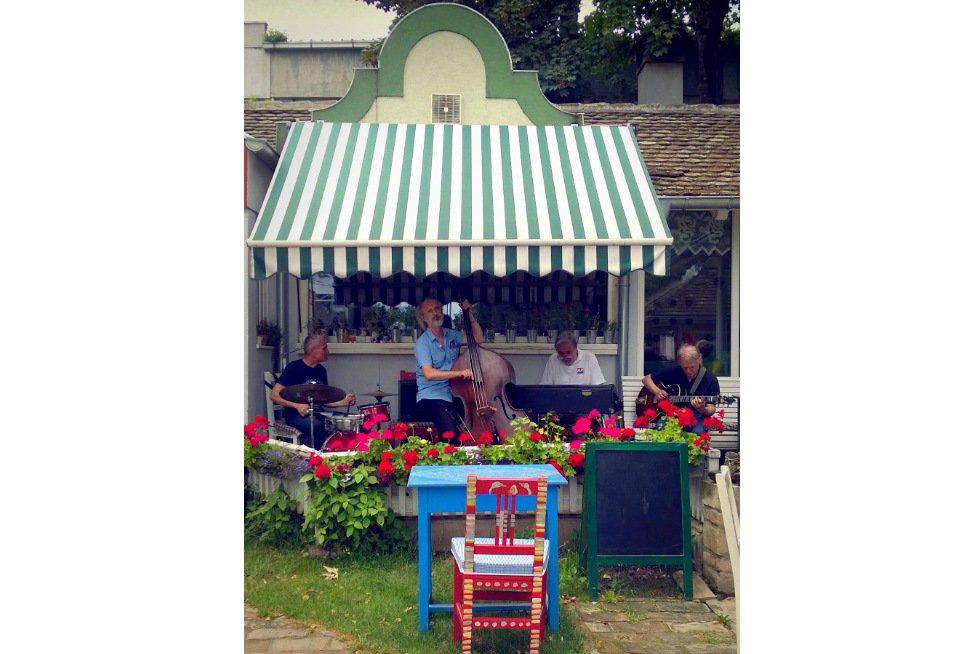
A Courtyard in the City of Courtyards
Pančevo sits roughly fifteen kilometres northeast of Belgrade, separated from the capital by the Tamis and Danube rivers, and connected to it by a daily rhythm of commuters, traders, and, increasingly, visitors who have worked out that the city rewards the short detour. Its old town retains a density of nineteenth-century Austrian and Serbian architecture, and within that fabric, the courtyard, or dvorište, functions as something more than a layout device: it is a social institution, a semi-private extension of domestic and commercial life that the Balkan city typology has used for centuries to create shade, gather neighbours, and demarcate the line between public street and private table. A restaurant named Dvorište, addressed at Miloša Obrenovića 8b, signals its intentions through that name alone.
In Serbian towns of this scale and character, the courtyard-format restaurant occupies a distinct category, sitting between the loud street-front kafana and the fully interior dining room. The format has its own logic: a sheltered outdoor space gives the kitchen a reason to serve through longer seasons, gives guests the ambient texture of an open sky without the exposure of a pavement table, and gives the whole operation a rhythm that indoor-only venues cannot replicate. Where the capital's dining scene has largely moved toward interior concepts optimized for Instagram formats and tasting menus, the courtyard tradition persists in cities like Pančevo, Sombor, and Vršac as an expression of a different set of priorities.
Pančevo's Dining Position and What Dvorište Represents Within It
Pančevo's restaurant scene is a smaller, more local-facing version of the kind of mixed offer you find across Vojvodina: Serbian grill and slow-cooked meat at one end, a scattering of international formats in the middle, and a handful of more character-driven places that depend on the physical qualities of their premises rather than on elaborate menus. The city's food culture draws from the Vojvodina tradition of hearty portions, pork-heavy preparations, paprika-inflected sauces, and a general preference for communal eating over tasting-counter formality. That tradition connects northward to the Hungarian influence that shaped the entire region's cooking after centuries of Ottoman, Habsburg, and Serbian overlap, and southward to the grilling culture that defines Serbian urban eating at almost every price point.
Within that local context, a venue distinguished by its courtyard address places itself in a comparable set that includes atmosphere-forward restaurants across the region. In Vojvodina specifically, the ethno-style dining format, which packages the courtyard aesthetic alongside traditional recipes and folk-inflected interiors, has become a recognizable category. You can find comparable approaches at Etno Kuća Dinar in Vršac and Etno Restoran Fijaker in Sombor, both of which anchor their identity in traditional Serbian hospitality formats. Dvorište occupies a related but distinct niche: the name foregrounds the physical space over an explicit ethno-heritage branding, suggesting a venue where the courtyard itself is the defining characteristic.
The Cultural Weight of the Serbian Courtyard Table
Eating in a courtyard in Serbia carries associations that precede the modern restaurant concept by several generations. The avlija or dvorište of an urban Serbian home was historically where families gathered for extended meals, where weddings spilled from the house into the open air, and where the pace of eating was measured in hours rather than courses. That cultural memory attaches to any contemporary venue that invokes the format, and it places an implicit expectation on the experience: meals should run long, portions should be generous, and the transition between food, drink, and conversation should feel unforced. The leading courtyard restaurants in Serbia understand that their architecture is already doing a significant portion of the hospitality work.
For comparison, the courtyard dining tradition visible elsewhere in the region, from the čarda riverside houses along the Danube to the garden restaurants of Niš, follows similar social logic. ČARDA ZLATNA KRUNA in Apatin and Cafe Boem in Pirot both demonstrate how Serbian provincial dining uses physical setting to deliver an experience that menu alone could not sustain. The format trades on collective memory and spatial atmosphere in a way that high-intervention urban cooking does not attempt. Dvorište draws from the same well.
Pancevo's Broader Restaurant Context
Visitors approaching Pančevo from Belgrade often arrive with a mental model shaped by the capital's more developed dining scene, where venues like Langouste operate at a technical level comparable to recognized regional restaurants. Pančevo is not Belgrade, and its restaurants are not trying to be. The city's more interesting places, including Kordun, Poco Loco, and Windmill, compete on character and locality rather than technique and prestige. Šajka and Burrito Madre Big Pančevo further illustrate the city's range, which runs from traditional Serbian formats to international casual concepts without the mid-market technical aspirations you'd find in Novi Sad or Niš.
Within that comparable set, Dvorište's courtyard identity positions it as a venue for longer, more occasion-oriented meals rather than quick-service or casual drop-in eating. That positioning is an advantage in a city where residents already understand the social grammar of the extended table, and it means the venue is likely to perform leading when visited with that expectation rather than against the pacing logic of a metropolitan restaurant.
Planning a Visit
Dvorište is located at Miloša Obrenovića 8b in central Pančevo, within central Pančevo. Dvorište is open daily from 8 AM to 11:30 PM, and its walk-in-friendly policy makes it easy to visit without planning far ahead. Ananda in Novi Sad, Borkovac in Ruma, and Fleur de Sel in Novi Slankamen offer useful regional reference points for calibrating expectations before visiting. For those with a broader appetite for understanding how Serbian provincial dining compares globally, the contrast with format-driven venues like Le Bernardin in New York City or Lazy Bear in San Francisco underlines precisely what makes the courtyard format a different, slower, and more socially embedded tradition. Aleksandar Gold in Užice and ETNO PODRUM BRKA in Niš show how cities outside Vojvodina approach the same question of atmosphere-led, tradition-rooted dining.
Pricing, Compared
Comparable venues nearby, for context on price, style, and recognition.
| Venue | Cuisine | Price | Notes |
|---|---|---|---|
| DvorišteThis venue — the venue you are viewing | Not listed | $$ | Not listed |
| Burrito Madre Big Pančevo | TC BIG, Mexican Burritos & Tacos | $$ | Not listed |
| Windmill | Pančevo, Traditional Serbian | $$$ | Not listed |
| Šajka | Not listed | $$$ | Tamis Rivier, Serbian Riverside Fish Restaurant |
| Poco Loco | Not listed | $$ | city center, International and Serbian Cuisine |
| Kordun | Pancevo, Traditional Serbian Cuisine | $$ | Not listed |
Continue exploring
More in Pancevo
Restaurants in Pancevo
Browse all →
Bars in Pancevo
Browse all →
Hotels in Pancevo
Browse all →

At a Glance
- Cozy
- Rustic
- Classic
- Family
- Casual Hangout
- Brunch
- Garden
- Courtyard
- Garden
Current opening hours
- Monday
- 8 AM–11:30 PM
- Tuesday
- 8 AM–11:30 PM
- Wednesday
- 8 AM–11:30 PM
- Thursday
- 8 AM–11:30 PM
- Friday
- 8 AM–11:30 PM
- Saturday
- 8 AM–11:30 PM
- Sunday
- 8 AM–11:30 PM
Hours can change for holidays and private events. Last verified .
Warm and comfortable with a fireplace in winter and a pleasant garden in summer.