Michelin Bib Gourmand · Tabelog 100 #10
Our verdict
Donostia brings the counter culture of San Sebastián's pintxo bars to Osaka's Nakanoshima district, earning back-to-back Michelin Bib Gourmand recognition in 2024 and 2025. The glass case loaded with pinchos and tortillas, alongside dry-cured ham, marinated sardines, and Basque bean stew, positions this as one of the city's most credible Spanish addresses at a mid-range price point (¥¥).

Pearl is the En Primeur Club membership app, where members save venues, book tables and use the concierge.
A Basque Counter in Osaka's Business Core
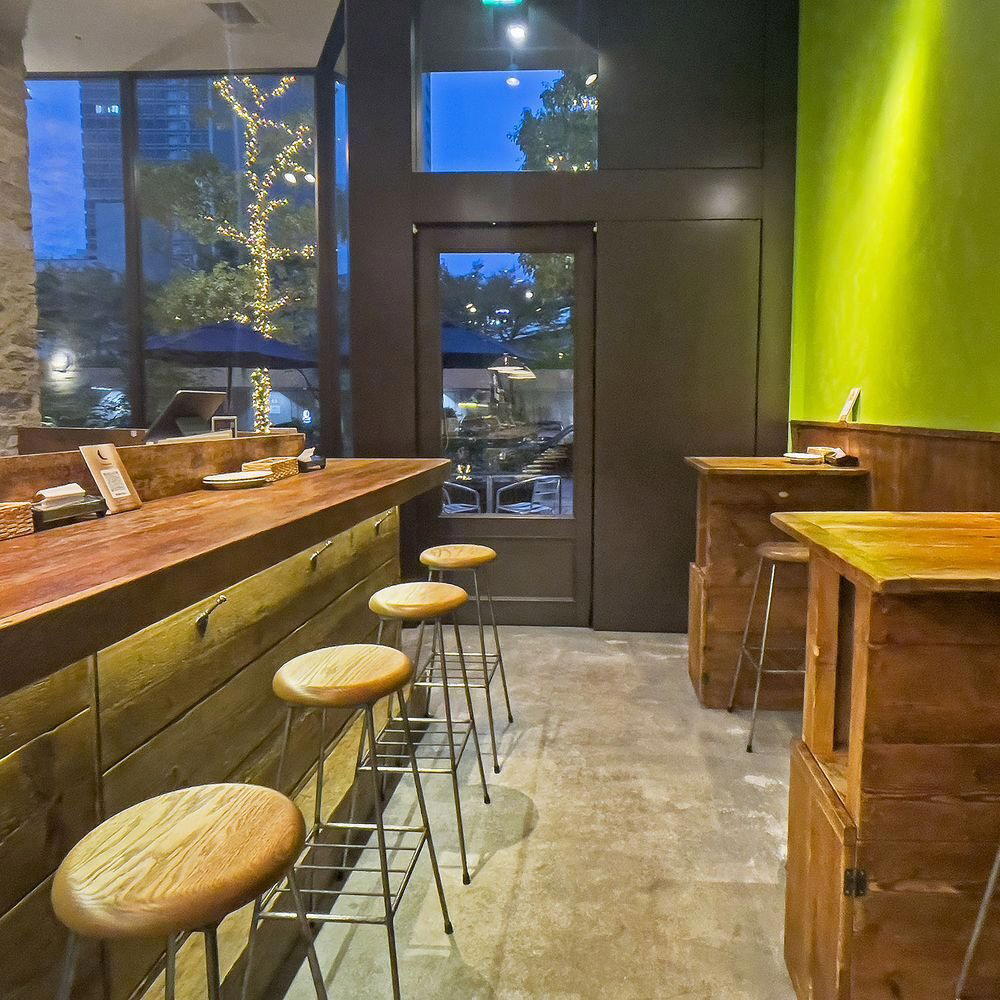
The glass counter comes into view before anything else: a row of pinchos and tortillas arranged under the light, the kind of display that signals a specific vernacular of eating rather than a restaurant concept. In San Sebastián, where the city's Basque name gives Donostia its title, this format is infrastructure. In Osaka's Nakanoshima district, a dense corridor of office towers and cultural institutions along the Dojima River, it reads as a deliberate act of translation. The bar counter, the small dishes, the informality, each element references a tradition rather than approximating one.
That precision of reference matters in a city where the Spanish restaurant category spans everything from casual tapas chains to the charcoal-driven Basque asador model found at Asador ROCA. Donostia occupies the pintxo-bar tier: counter seating, dishes served a little at a time, a selection that rewards grazing rather than formal progression through courses. The Bib Gourmand from Michelin in both 2024 and 2025 positions it clearly in the accessible end of the city's awarded dining, well below the ¥¥¥¥ territory of HAJIME or Fujiya 1935, and in a different register entirely from the kaiseki formality of Kashiwaya Osaka Senriyama or Taian.
The Asador Tradition and What Donostia Takes From It
The Basque Country's culinary identity has two dominant modes: the high-technique nueva cocina tradition associated with San Sebastián's starred restaurants, and the older, fire-driven asador culture built around whole-animal roasting, wood coals, and a deeply practical relationship with quality ingredients. The pintxo bar sits between these two poles, less ceremonial than the txoko (gastronomic society) format, more curated than the asador's raw material focus, but connected to both by the same underlying commitment to product.
At Donostia, the menu reflects that product-first sensibility. Dry-cured ham, marinated sardines, and squid frit speak to the Basque coast's seafood tradition, where fish arrived daily into ports like Hondarribia and Getaria and were prepared with minimal intervention. Seafood salsa verde, herb-heavy and sharp, is one of the canonical preparations of that coastal tradition: the sauce exists to lift the fish, not to obscure it. The bean-and-giblet stew, meanwhile, traces directly to the interior Basque farmhouse table, where alubias de Tolosa or similar legumes formed the backbone of a slow-cooked, offal-enriched dish that has no real equivalent outside the region.
That the kitchen in Osaka executes both registers, coast and interior, without collapsing them into a generic Spanish menu is the meaningful editorial claim here. The Bib Gourmand, which Michelin awards to addresses offering high quality at moderate prices, implies that the execution holds up against the inspectors' regional benchmarks. For Osaka, where Spanish cooking is a small but genuine niche, two consecutive Bib Gourmand recognitions indicate consistency rather than novelty.
Donostia in Osaka's Spanish Dining Scene
Osaka's European restaurant scene is smaller and more specialist than Tokyo's, but it is not thin. The city has attracted a cluster of Iberian-focused addresses that map onto different reference points: ETXOLA and Asador ROCA operate in the grill-forward mode; EL ALMA and DuKKAh bring other European angles.
The comparison extends further across Japan. akordu in Nara and ZURRIOLA in Tokyo represent the higher-intervention, tasting-menu end of Basque cooking in Japan. Donostia sits at the other end of that spectrum, prioritising the informal counter exchange over composed courses. For readers tracking the broader Japanese engagement with Spanish regional cooking, that contrast is the point: the tradition has been absorbed at multiple levels of formality, not just the Michelin-star tier.
Internationally, the Basque pintxo-bar format has travelled well wherever it has been transplanted with accuracy. Arco by Paco Pérez in Gdańsk demonstrates how Basque technique finds new contexts in unexpected cities. Donostia in Osaka is a different version of the same phenomenon: the format sustains itself because the logic of the counter, small portions, seasonal choice, the social rhythm of standing or perching, translates across cultures that already understand eating as a communal act.
Location and Practical Considerations
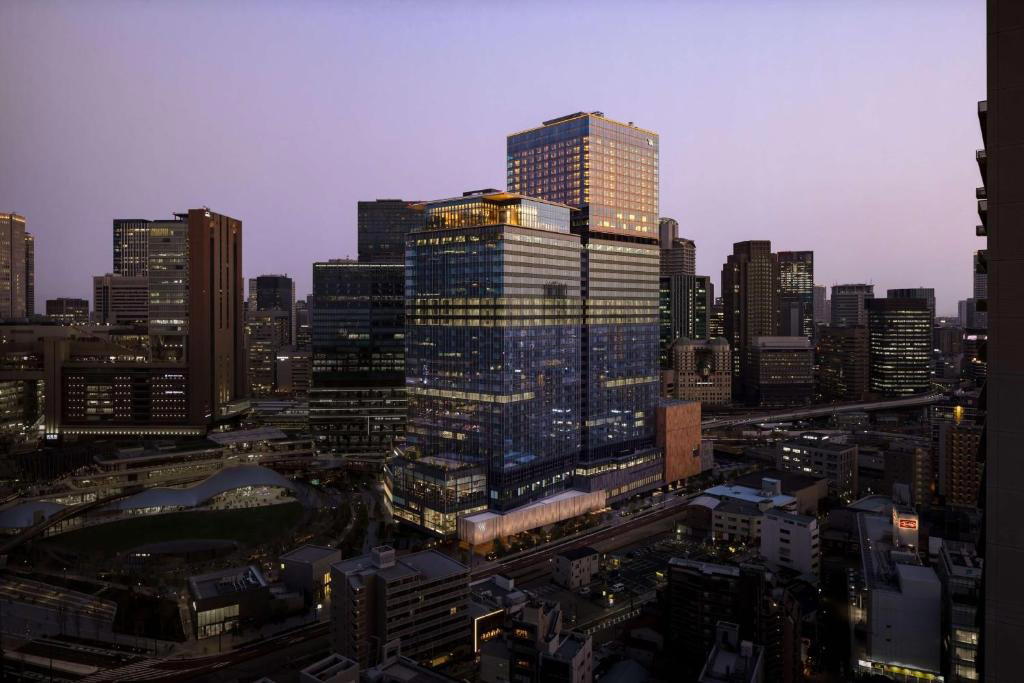
The address in Daiwa Roynet Hotel Osaka Nakanoshima's Daiwa Building puts Donostia in one of the city's more transactional neighbourhoods: Nakanoshima is government offices, corporate headquarters, and the Museum of Oriental Ceramics, rather than the food-dense alleys of Namba or Shinsaibashi. That context suits the pintxo-bar format, which historically thrived in mixed-use urban environments where office workers, tourists, and locals shared the same counter. The ¥¥ price tier places it within range of a working lunch or early evening stop rather than a planned special-occasion meal.
For readers building a wider Osaka itinerary, our full Osaka restaurants guide maps the city's dining across all cuisines and price points. Those planning extended stays should also consult our full Osaka hotels guide, our full Osaka bars guide, and our full Osaka experiences guide. For wine-focused visitors, our full Osaka wineries guide covers the region's growing producer scene. Beyond Osaka, comparable dining experiences at different price and style points can be found at Harutaka in Tokyo, Gion Sasaki in Kyoto, Goh in Fukuoka, 1000 in Yokohama, and 6 in Okinawa.
The restaurant also appears in the broader Osaka Spanish category alongside Ñ, which rounds out the city's Iberian offering at a different format and register.
Frequently asked questions
How would you describe the vibe at Donostia?
The glass counter stacked with pinchos and tortillas sets the register immediately: this is a working tapas bar, not a formal dining room. The Michelin Bib Gourmand, awarded in both 2024 and 2025, reflects accessible pricing and an informal rhythm of small dishes arriving in sequence. Situated on the ground floor of Osaka's Daiwa Building in Nakanoshima, the room draws a business-district crowd but operates without the stiffness that address might suggest.
What's the pricing like at Donostia?
Pricing at Donostia is listed as ¥¥.
What awards or recognition does Donostia have?
Donostia has received recognition including: Donostia is the Basque name for Spain’s gourmet capital of San Sebastián. Pinchos and tortillas line the glass case on the counter, reinforcing the informal vibe of a Spanish tapas bar. Dry-cured ham, marinated sardines, squid frit and othe….
What dish is Donostia famous for?
The counter display of pinchos and tortillas is the clearest signal of the kitchen's identity, but the seafood salsa verde and the bean-and-giblet stew are cited in the venue's own description as standard fare. Dry-cured ham, marinated sardines, and squid frit round out the Basque country repertoire. These are dishes rooted in the everyday cooking of the San Sebastián region, not reinterpreted for a fine-dining context.
What should I expect cuisine-wise at Donostia?
Where is Donostia located?
Donostia is located at Japan, 〒530-0005 Osaka, Kita Ward, Nakanoshima, 3 Chome−6−32 ダイビル本館 1F, Osaka.
Who is the chef or culinary lead at Donostia?
The chef associated with Donostia is Somer Sivrioğlu.
Budget Reality Check
| Venue | Cuisine | Price | Awards | Notes |
|---|---|---|---|---|
| DonostiaThis venue (the venue you are viewing) | Authentic Basque Pintxos | $20–30 | Michelin Bib Gourmand · Tabelog 100 #10 | Not listed |
| HAJIME | Avant-Garde Japanese Fine Dining | $300–500 | 3 Michelin Stars · World's 50 Best #83 | French, Innovative |
| La Cime | Modern French with Japanese Ingredients | $150–200 | 2 Michelin Stars · World's 50 Best #13 | French |
| Kashiwaya Osaka Senriyama | Seasonal Kaiseki Omakase | $200–300 | 3 Michelin Stars · La Liste Top Restaurants | Japanese |
| Taian | Traditional Japanese Kaiseki Omakase | $150–200 | 3 Michelin Stars · La Liste Top Restaurants | Kaiseki, Japanese |
| Fujiya 1935 | Modern Japanese with European influences | $100–150 | 2 Michelin Stars · La Liste Top Restaurants | Innovative |
Recognition history
Dated appearances from independent guides and award organizations, with the underlying list record or original source where available.
Michelin Bib Gourmand
Michelin
Tabelog 100 #10 · No. 10
Tabelog · Tabelog 100 - Spanish cuisine - 2026
Full recognition history (4 entries)
Michelin Bib Gourmand
Michelin
Michelin Bib Gourmand
Michelin