

Michelin Plate · Tabelog 100 #55
Our verdict
A prix fixe counter in Osaka's Hiranomachi district where Japanese seasonal produce meets the cooking traditions of Spain's diverse regional cuisines. Asador ROCA holds a Michelin Plate for 2024 and 2025, pairing asado techniques and seafood paella with wines selected to reflect Spain's climatic range.

Pearl is the En Primeur Club membership app, where members save venues, book tables and use the concierge.
The menu
What to order
- Hairy Crab Paella
- Kagoshima Kuroge Wagyu Beef
- Basque Cheesecake
Where Hiranomachi Meets the Iberian Table
Osaka's Chuo Ward dining scene has long been anchored by Japanese tradition at its upper registers: kaiseki counters, sushi omakase, and the kind of precision cooking that frames even the most direct ingredient as a considered statement. Hiranomachi, the business district running west from the Yodogawa tributaries, sits at a remove from that tourist-facing concentration. Restaurants here tend to serve a lunch-heavy professional crowd by day and a quieter, neighbourhood-oriented clientele in the evening. It is an area where a Spanish asador can operate without the pressure of novelty tourism, and where the dining ritual tends to be measured and unhurried.
That context matters for understanding what Asador ROCA is and is not. It is not a fusion exercise or a high-concept tasting menu built on the tension between two culinary systems. It is a restaurant that takes the structure of Spanish regional cooking, the asado, the paella, the logic of wine pairing as a throughline, and applies it to Japanese seasonal produce. The difference between those two approaches is the difference between a conceptual proposition and a working kitchen philosophy.
The Rhythm of a Spanish Prix Fixe in Osaka
The Spanish prix fixe format has a particular pacing that separates it from both kaiseki and the tasting menu traditions of French-influenced Osaka restaurants like Hajime or La Cime. Where kaiseki moves through a sequence of small, often austere courses calibrated to shift the diner's attention, the Spanish prix fixe builds toward a central protein or seafood dish, with wine doing much of the structural work. The pairing is not supplementary; it is load-bearing.
At Asador ROCA, the prix fixe is organised around exactly that logic. The menu draws on Spain's regional diversity, its coastal seafood cultures, its mountain grazing traditions, its climatic variation from the Atlantic north to the Mediterranean south, and maps those against the seasonal availability of Japanese ingredients. Seafood paella constructed around locally sourced fish, asado preparations of chub mackerel with mushrooms, and shrimp grilled with shiitake are the kinds of dishes that emerge from this approach. The flavours the kitchen describes as "simple yet striking" point toward a philosophy of restraint over elaboration: the mountain-and-ocean combination is a claim about ingredient quality rather than technical complexity.
This places Asador ROCA in a specific niche within Osaka's broader Spanish dining category. The city has accumulated a cluster of serious Iberian-focused restaurants over the past decade, including Donostia, EL ALMA, ETXOLA, and DuKKAh. Among these, the prix fixe-plus-wine-pairing format signals a different kind of evening than an à la carte tapas operation: it asks the diner to commit to a sequence and surrender some control over pacing, which is itself a ritual closer to the Spanish sobremesa tradition than to the Japanese omakase's chef-driven precision.
The Wine as Structure, Not Decoration
Spanish wine pairing in a Japanese context is a more considered editorial act than it might appear. Spanish wine production spans a range of climates and grape varieties that can seem bewildering even to European diners: the oceanic influence on Galician Albariño, the high-altitude Garnacha of Aragon, the structured Tempranillo-based wines of Rioja and Ribera del Duero, the oxidative traditions of Jerez. A pairing program that genuinely engages this range, rather than defaulting to a handful of internationally legible labels, teaches the diner something about why Spanish cuisine evolved the way it did. Food and wine in Spain are not independent variables; the wine is part of the flavour system.
Asador ROCA's pairing menu is positioned as a way into that relationship. For a diner arriving without deep familiarity with Spanish regional wines, the prix fixe format with integrated pairings is a more efficient and pleasurable means of building that knowledge than a standard wine list. It is also worth noting that Spanish wine remains considerably less expensive at equivalent quality tiers than Burgundy or Bordeaux, which affects the overall value calculus of a ¥¥¥ prix fixe in a city where comparable French pairing menus often carry a ¥¥¥¥ price tag.
Michelin Recognition and Peer Context
A Michelin Plate, awarded in both 2024 and 2025, marks Asador ROCA as a restaurant that Michelin inspectors consider worth a visit without yet placing it in the starred category. In Osaka's extraordinarily competitive dining environment, a city that holds more Michelin stars per capita than any other, the Plate is a meaningful signal rather than a consolation. It positions the restaurant alongside a broad middle tier of serious, technically grounded kitchens that have not yet crossed into the upper register occupied by three-starred kaiseki houses like Kashiwaya or Taian, or the two-starred French kitchens.
Among the Spanish restaurants specifically, comparisons extend beyond Osaka. ZURRIOLA in Tokyo and Arco by Paco Pérez in Gdańsk both operate in the territory where Iberian technique meets a local culinary identity, though in very different market contexts. Closer to home, akordu in Nara represents a Basque-influenced approach to Japanese ingredients that draws a parallel line to what Asador ROCA does with asador traditions.
Planning a Visit
Asador ROCA is located at 2 Chome-6-4 Hiranomachi, Chuo Ward, Osaka. The ¥¥¥ pricing tier puts it in the mid-to-upper range for Osaka dining, consistent with a prix fixe format that includes wine pairings. For first-time visitors to Osaka's Spanish dining cluster, this is a reasonable entry point into the pairing-led format before moving up the format to starred operators.
For a broader picture of what the city offers across cuisines and price tiers, see our full Osaka restaurants guide. Those planning a longer stay will find relevant coverage in our full Osaka hotels guide, our full Osaka bars guide, and our full Osaka experiences guide. Readers interested in Iberian-accented cooking across Japan will also find worth in Ñ in Osaka and, further afield, in Harutaka in Tokyo, Gion Sasaki in Kyoto, Goh in Fukuoka, 1000 in Yokohama, and 6 in Okinawa. Wine-focused visitors should also consult our full Osaka wineries guide for production-side context.
Frequently asked questions
What is the signature dish at Asador ROCA?
The menu is built around asador-style preparations rather than a single fixed signature: documented dishes include seafood paella, asado of chub mackerel with mushrooms, and shrimp with shiitake. The kitchen's stated approach, combining mountain and ocean produce to deliver direct, direct flavours, suggests the through-line is technique and seasonal sourcing rather than a single recurring centrepiece. The prix fixe structure with wine pairing is itself the consistent format across visits, and Michelin recognition in 2024 and 2025 confirms that the approach has met independent review standards.
Fast Comparison
A quick peer list to put this venue’s basics in context.
| Venue | Cuisine | Price | Awards | Notes |
|---|---|---|---|---|
| Asador ROCAThis venue (the venue you are viewing) | Spanish-Japanese Fusion Asador | $100–150 | Michelin Plate · Tabelog 100 #55 | Not listed |
| HAJIME | Avant-Garde Japanese Fine Dining | $300–500 | 3 Michelin Stars · World's 50 Best #83 | French, Innovative |
| La Cime | Modern French with Japanese Ingredients | $150–200 | 2 Michelin Stars · World's 50 Best #13 | French |
| Kashiwaya Osaka Senriyama | Seasonal Kaiseki Omakase | $200–300 | 3 Michelin Stars · La Liste Top Restaurants | Japanese |
| Taian | Traditional Japanese Kaiseki Omakase | $150–200 | 3 Michelin Stars · La Liste Top Restaurants | Kaiseki, Japanese |
| Fujiya 1935 | Modern Japanese with European influences | $100–150 | 2 Michelin Stars · La Liste Top Restaurants | Innovative |
Recognition history
Dated appearances from independent guides and award organizations, with the underlying list record or original source where available.
Michelin Plate
Michelin
Tabelog 100 #55 · No. 55
Tabelog · Tabelog 100 - Spanish cuisine - 2026
Full recognition history (4 entries)
Michelin Plate
Michelin
Michelin Plate
Michelin
Continue exploring
More in Osaka
Restaurants in Osaka
All restaurants in Osaka →


Bars in Osaka
All bars in Osaka →


Hotels in Osaka
All hotels in Osaka →




Wineries in Osaka
Browse all →
Details
- Elegant
- Cozy
- Modern
- Intimate
- Sophisticated
- Date Night
- Special Occasion
- Extensive Wine List
- Sake Program
- Local Sourcing
- Prix Fixe
- Set Menu
- A La Carte
- Wine
- Cocktails
Current opening hours
- Monday
- 5–10 PM
- Tuesday
- 5–10 PM
- Wednesday
- 5–10 PM
- Thursday
- 5–10 PM
- Friday
- 5–10 PM
- Saturday
- 5–10 PM
- Sunday
- Closed
Hours can change for holidays and private events. Hours as of .
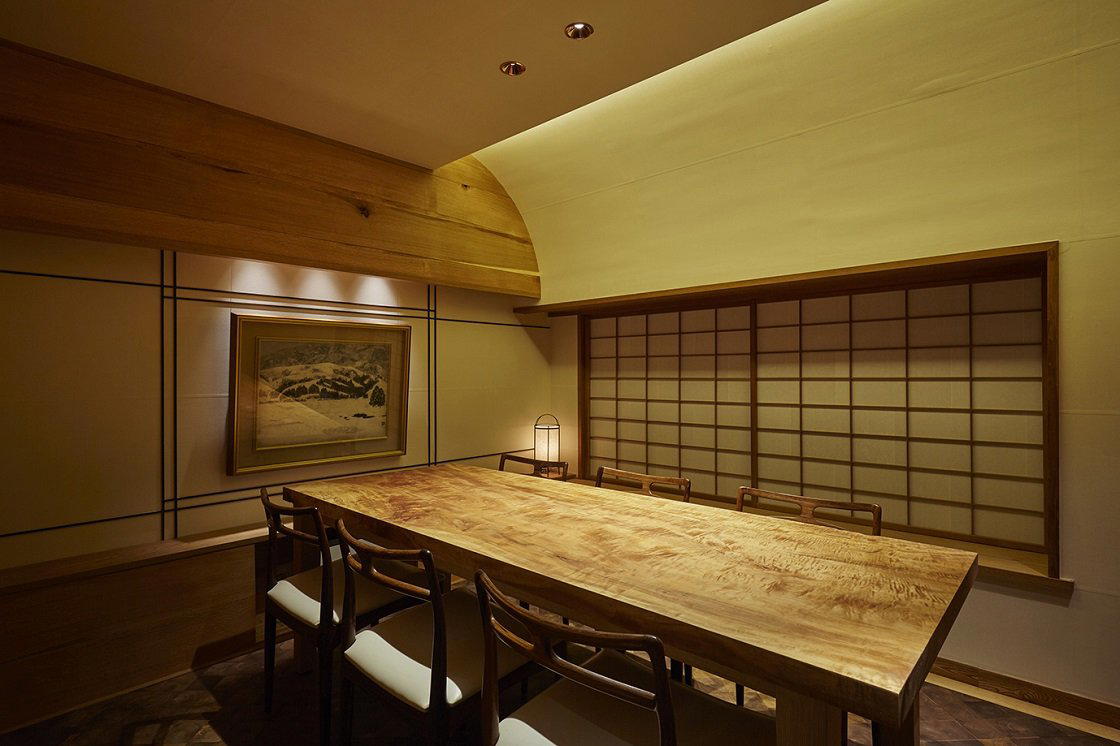
Cozy atmosphere blending modern and traditional elements with warm, inviting lighting.