Michelin Plate · Tabelog 100 #93
Our verdict
A counter restaurant in Osaka's Nishitenma district where northern Spanish cuisine meets Japanese ingredients, DuKKAh holds consecutive Michelin Plate recognition (2024, 2025) and sits in the ¥¥¥ tier. The kitchen draws on Galician and Basque traditions, then layers in native produce, kudzu, soba, green pepper flower, to produce something that neither cuisine could arrive at alone.

Pearl is the En Primeur Club membership app, where members save venues, book tables and use the concierge.
Where the Bay of Biscay Meets the Japanese Pantry
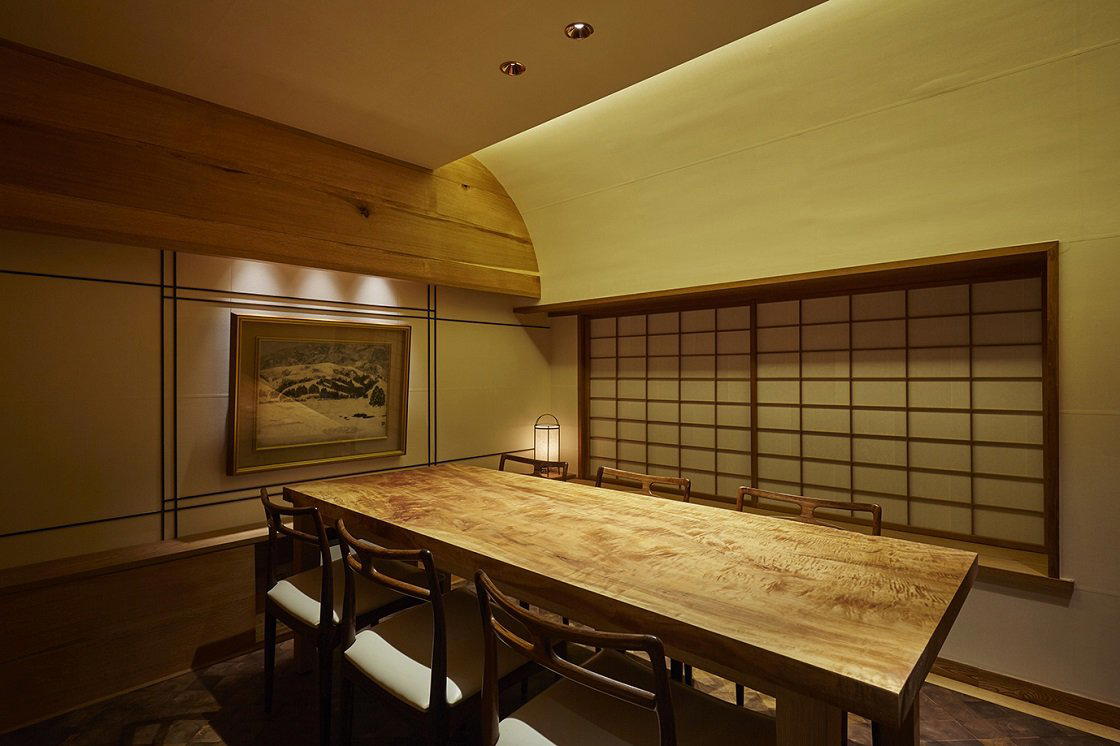
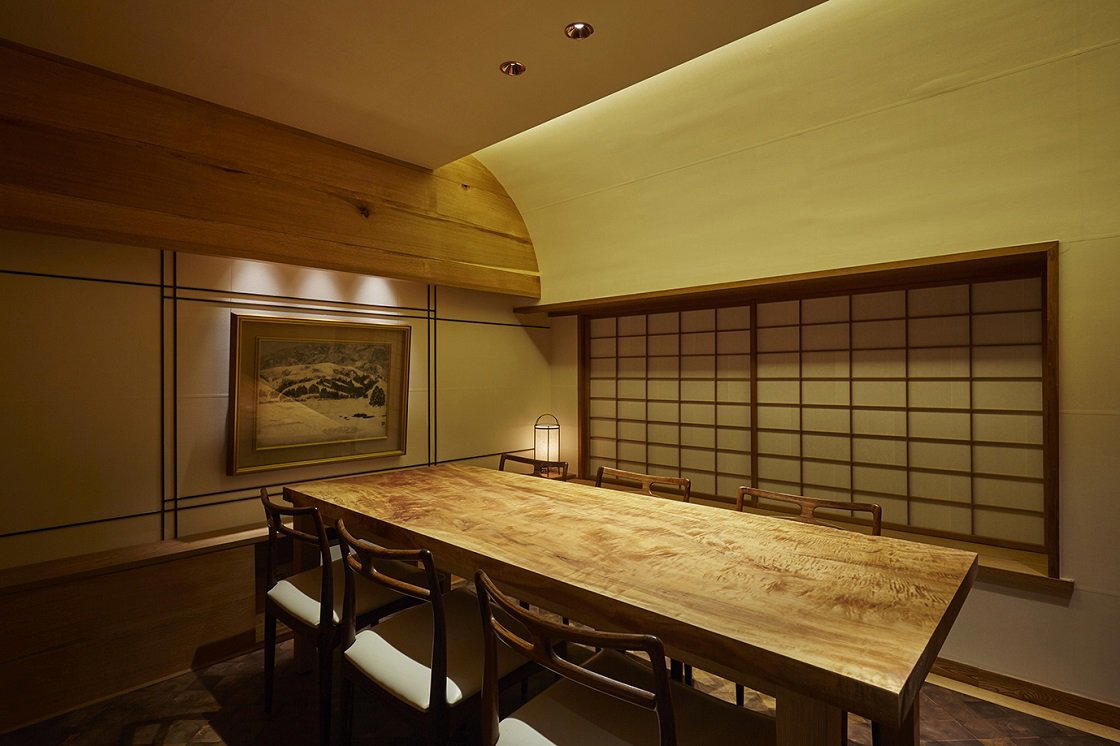
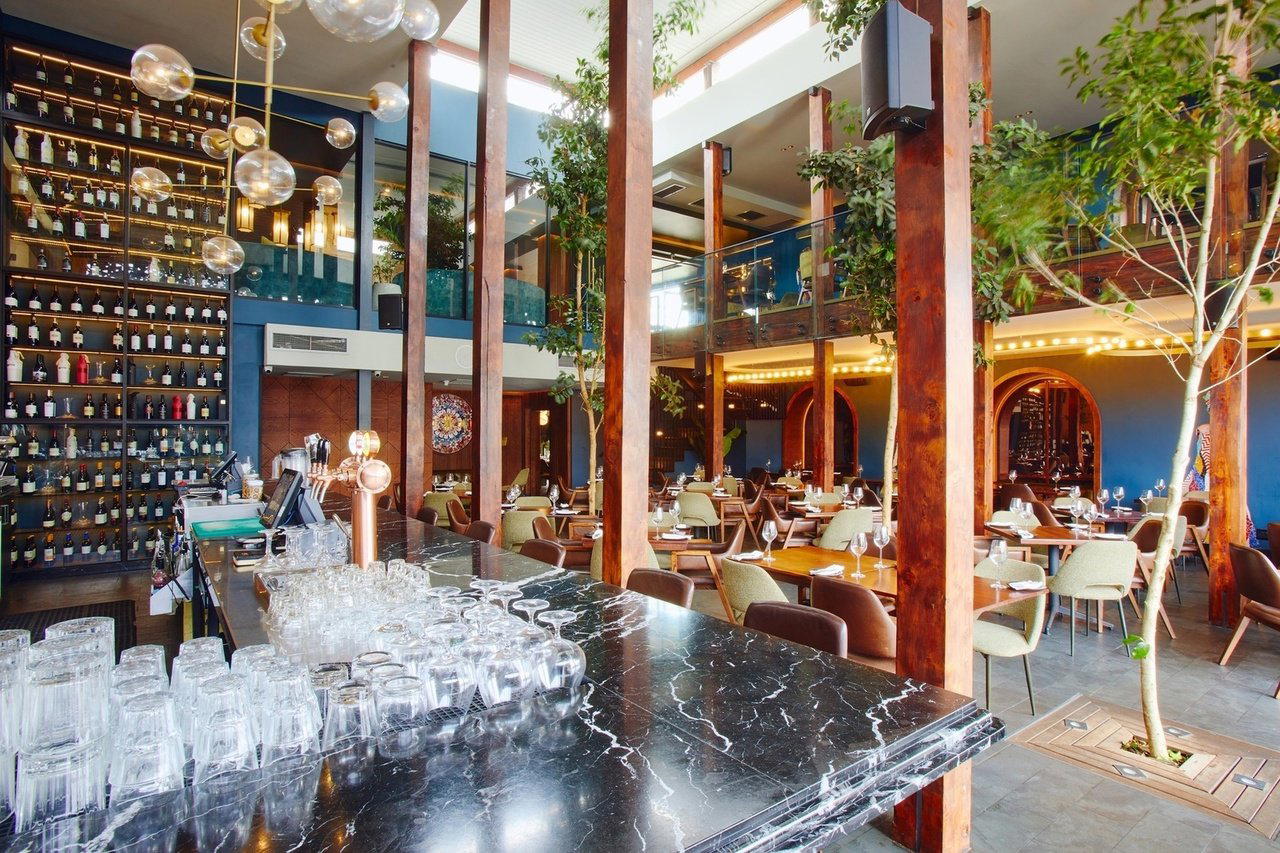
Nishitenma, the legal and financial quarter immediately north of Osaka's centre, runs a quieter register than Namba or Shinsaibashi. Its streets are lined with discreet restaurants and counter bars that draw local professionals rather than transit crowds, an environment that favours the kind of focused, single-counter format that serious cooking often demands. DuKKAh occupies that register: a counter restaurant on a mid-block address in Kita Ward where the dining room is built around proximity to the kitchen and the logic of a menu that requires explanation.
The geographic and ingredient framing matters here more than at most restaurants. Galicia and the Basque Country both face the Bay of Biscay, and their cuisines share a structural reliance on Atlantic seafood, mountain herbs, and cured proteins. But they diverge significantly in technique: Galician cooking tends toward simplicity and raw material quality, while Basque cooking, particularly in its post-nouvelle iteration, carries a longer tradition of technical experimentation. A kitchen that treats both as source material has a wide palette, and a genuine interpretive challenge.
The Ingredient Logic: Two Coastlines, One Pantry
The editorial angle most useful for understanding DuKKAh is not Spanish-Japanese fusion in the casual sense, but something more specific: an inquiry into what happens when the sourcing logic of northern Spain, sea, altitude, season, is applied to the Japanese ingredient calendar. Kudzu starch, used widely in Kansai cooking for its thickening and clarifying properties, behaves differently from anything in the Basque or Galician larder. Soba, a grain more associated with Japanese cold noodle traditions than with Spanish flour culture, introduces texture and earthiness that neither region's cuisine typically deploys. Green pepper flower, barely known outside specialist Japanese cooking, brings a delicate aromatics profile that no Spanish spice tradition replicates.
What these ingredients share is that they arrive with strong regional identity in Japan. Kudzu is associated with Yoshino in Nara prefecture; soba with mountainous prefectures like Nagano and Niigata. Using them inside a northern Spanish framework isn't decoration, it's an argument about sourcing, one that says the food logic of Galicia and the Basque Country (find what the land and sea nearest you produce leading, and cook around that) translates cleanly onto Japanese ingredient culture. The crossover works because the philosophy is compatible, not because the flavours are simply complementary.
For context, this kind of disciplined cross-referencing appears in a small cluster of Spanish-inflected restaurants across Japan. akordu in Nara operates in a similar conceptual space. ZURRIOLA in Tokyo brings a Basque lineage to the capital's dining scene. Osaka's own Spanish counter cluster includes Ñ, Asador ROCA, Donostia, EL ALMA, and ETXOLA, a concentration that reflects Osaka's broader appetite for European regional cooking presented in counter or omakase formats.
Michelin Recognition and What It Signals
DuKKAh has received consecutive Michelin Plate recognition in both the 2024 and 2025 Osaka guides. The Plate designation, introduced by Michelin to acknowledge cooking that uses quality ingredients prepared competently, sits below the Star tier but above unlisted restaurants in the guide's own hierarchy. In practical terms, it confirms that the kitchen is operating to a standard the guide's inspectors returned to verify. Two consecutive years is a signal of consistency rather than a single strong performance.
Within Osaka's broader Spanish counter scene, DuKKAh's Michelin Plate places it in defined company: restaurants that have attracted guide attention without crossing into Star territory. That gap is a real one in Osaka, where the Star tier for non-Japanese cuisine is occupied by kitchens with longer institutional histories and larger critical footprints. The Plate tier is where a counter concept proving an argument about cuisine tends to land before it either consolidates upward or stabilises as a neighbourhood reference point.
The Counter Format and What It Demands of the Diner
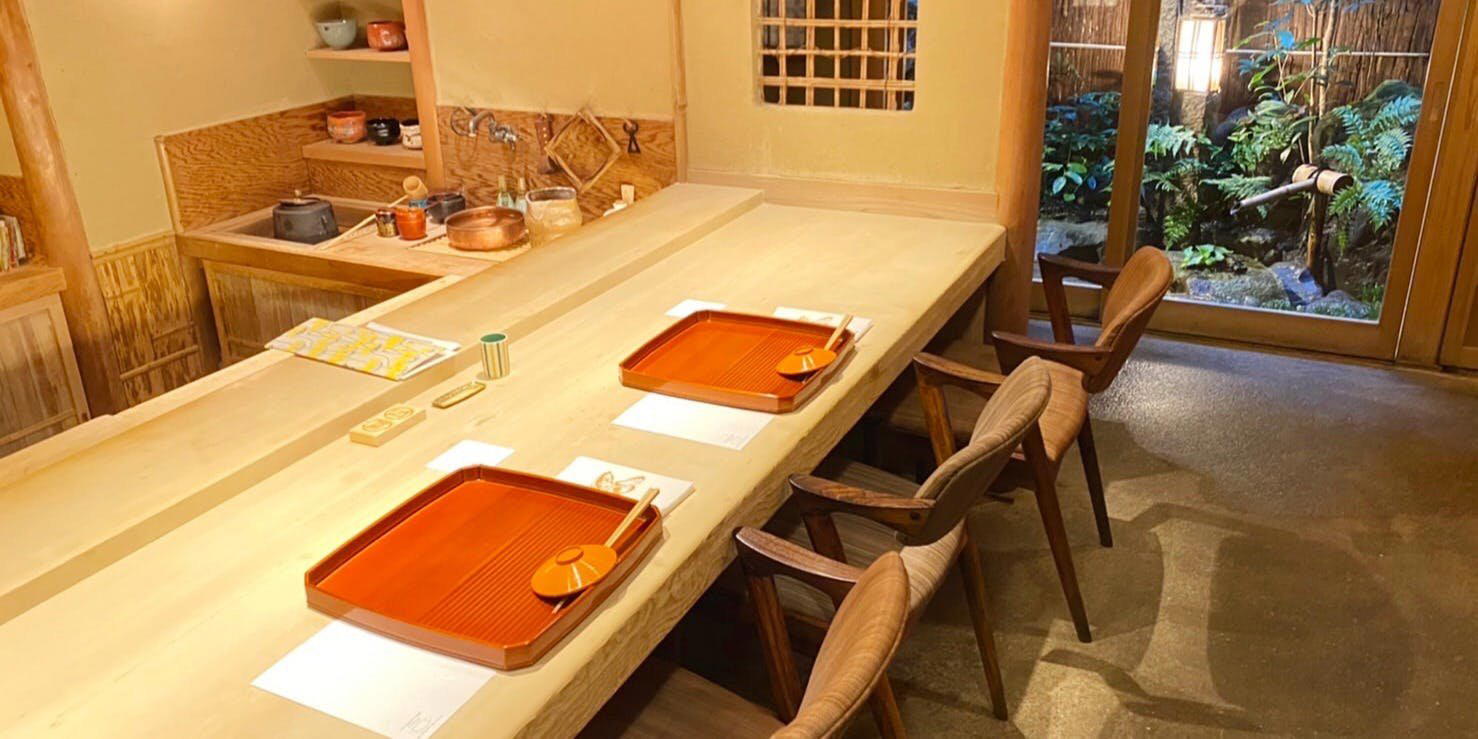
Counter dining in Osaka has expanded significantly over the past decade, partly driven by the format's efficiency in small urban floorplates and partly by the influence of the kaiseki and omakase traditions that make direct chef-to-diner communication central to the experience. DuKKAh's counter structure fits that pattern. The format places the diner in a position to observe the sourcing logic in practice: watching which Japanese ingredients enter which dishes alongside which northern Spanish techniques tells the story more efficiently than a menu description could.
The counter format also compresses the interpretive distance between kitchen and table. At a restaurant with separate kitchen and dining room, the diner receives a finished argument. At a counter, the argument is visible in construction. For a concept as specific as DuKKAh's, that visibility is an asset.
Planning a Visit
DuKKAh is located at 4 Chome-3-13 Nishitenma, Kita Ward, Osaka, within walking distance of the Nishitenma and Minamimorimachi subway stations. The ¥¥¥ price positioning places it within the mid-to-upper range for Osaka counter dining, comparable to other Michelin-recognised counter restaurants in the city rather than the top-tier omakase or French tasting-menu formats. Given the counter format and the kitchen's focus, reservation well in advance is advisable, particularly for weekend sittings. Booking directly via phone or through a hotel concierge is the most reliable approach for international visitors unfamiliar with Japanese restaurant reservation systems.
For broader planning across the city, our full Osaka restaurants guide covers the spectrum from kaiseki to European counter formats. For accommodation context, our Osaka hotels guide covers the main areas and property types. Osaka's bar scene is documented in our Osaka bars guide. Visitors extending their Japan itinerary can find comparable precision cooking at Harutaka in Tokyo, Gion Sasaki in Kyoto, Goh in Fukuoka, 1000 in Yokohama, and 6 in Okinawa. The Arco by Paco Pérez in Gdańsk offers an interesting reference point for how Spanish regional cooking translates into non-Spanish ingredient contexts across a very different European setting. Our Osaka wineries guide and our Osaka experiences guide round out the city planning picture.
FAQ
Frequently asked questions
What's DuKKAh known for in terms of accolades?
DuKKAh has received recognition including: A counter restaurant serving the cuisine of northern Spain. After spending considerable time in Galicia and the Basque Country, the chef drew inspiration from the guardians of those regions’ culture and food. Both regions face the Bay of Bi….
Where is DuKKAh located?
DuKKAh is located at 4 Chome-3-13 Nishitenma, Kita Ward, Osaka, 530-0047, Japan, Osaka.
What's the best thing to order at DuKKAh?
DuKKAh does not publish a fixed à la carte menu in the conventional sense, the counter format is built around the chef's interpretation of northern Spanish ingredients crossed with Japanese staples such as kudzu, soba, and green pepper flower. Given that framework, the most direct approach is to let the counter progression run in full rather than selecting selectively, as the Galician and Basque coastal traditions the kitchen draws from are expressed across the sequence rather than in any single dish. Michelin Plate recognition in both 2024 and 2025 confirms the kitchen is operating at a consistent level, so the full counter experience at ¥¥¥ pricing is where the concept lands most clearly.
The Essentials
A small set of peers for context, based on recorded venue fields.
| Venue | Cuisine | Price | Awards | Notes |
|---|---|---|---|---|
| DuKKAhThis venue (the venue you are viewing) | Northern Spanish Cuisine | $50–100 | Michelin Plate · Tabelog 100 #93 | Not listed |
| HAJIME | Avant-Garde Japanese Fine Dining | $300–500 | 3 Michelin Stars · World's 50 Best #83 | French, Innovative |
| La Cime | Modern French with Japanese Ingredients | $150–200 | 2 Michelin Stars · World's 50 Best #13 | French |
| Kashiwaya Osaka Senriyama | Seasonal Kaiseki Omakase | $200–300 | 3 Michelin Stars · La Liste Top Restaurants | Japanese |
| Taian | Traditional Japanese Kaiseki Omakase | $150–200 | 3 Michelin Stars · La Liste Top Restaurants | Kaiseki, Japanese |
| Fujiya 1935 | Modern Japanese with European influences | $100–150 | 2 Michelin Stars · La Liste Top Restaurants | Innovative |
Recognition history
Dated appearances from independent guides and award organizations, with the underlying list record or original source where available.
Michelin Plate
Michelin
Tabelog 100 #93 · No. 93
Tabelog · Tabelog 100 - Spanish cuisine - 2026
Full recognition history (4 entries)
Michelin Plate
Michelin
Michelin Plate
Michelin