Michelin Plate · Tabelog 100 #86
Our verdict
A Michelin Plate-recognised Basque restaurant in Osaka's Nishi Ward, ETXOLA brings char-grilled asado and Spanish wines to a room dressed with stout timber beams, white walls, and woven Basque tablecloths. Bread shipped from Spain arrives alongside seafood and meat from the grill. At the ¥¥¥ price point, it sits in a niche that few Osaka addresses occupy.

Pearl is the En Primeur Club membership app, where members save venues, book tables and use the concierge.
Basque Cooking in Osaka: What ETXOLA Represents
Osaka has built one of the most competitive restaurant cities in Asia on the back of Japanese cuisine, but a quieter strand of European cooking has taken root in its western wards over the past decade. Spanish restaurants in Japan tend to cluster around two poles: the white-tablecloth modernist end, influenced by Catalan and avant-garde tradition, and a more grounded, produce-first register rooted in northern Spain. ETXOLA occupies the second position, and in Osaka it occupies it almost alone. The name is Basque for 'mountain hut', which sets the register accurately: this is cooking tied to the hearth, the grill, and the coastline rather than to the laboratory.
For context on how narrow this niche is, consider Osaka's Michelin-recognised restaurant scene at the ¥¥¥ tier. Most of the addresses at this price level are kaiseki houses or Japanese-French hybrids. Kashiwaya Osaka Senriyama and Taian represent the kaiseki summit at three Michelin stars each, but both sit at a higher price bracket when full seasonal menus are factored in. At ¥¥¥, a Basque asado restaurant earning Michelin recognition is a structural rarity. The 2025 Michelin Plate signals that inspectors have taken notice of the cooking's consistency without placing it in the starred tier, which for a specialist format of this kind is a meaningful credential rather than a consolation.
The Room: Timber, Linen, and Deliberate Character
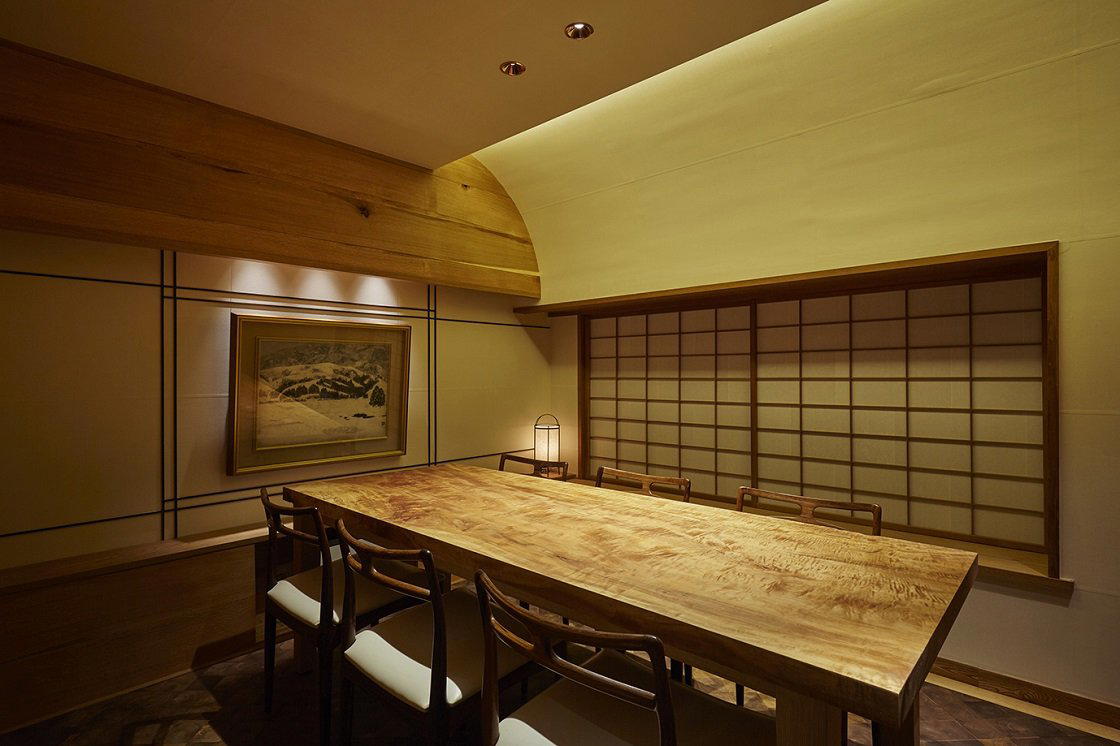
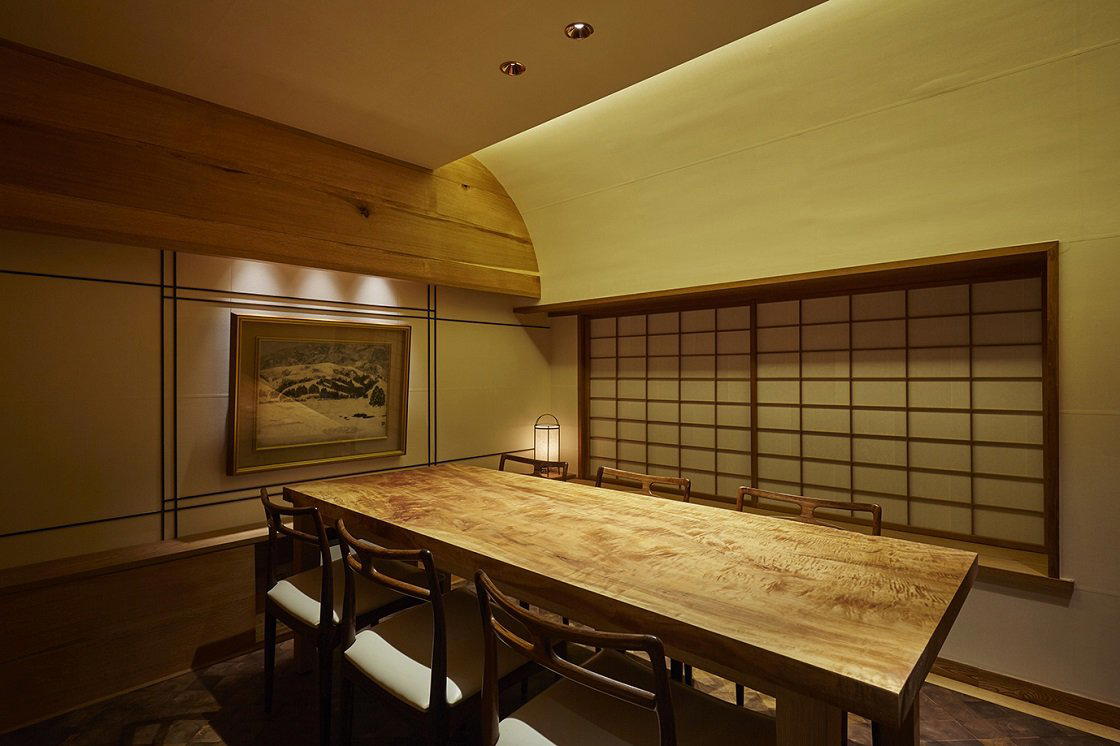
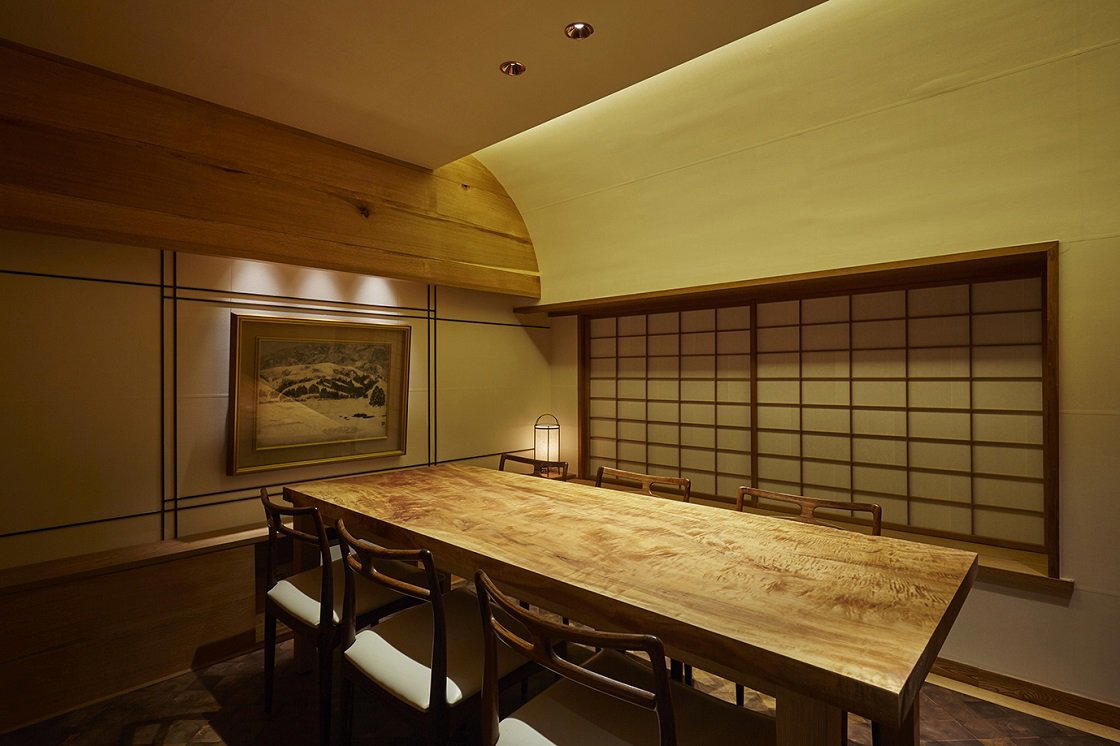
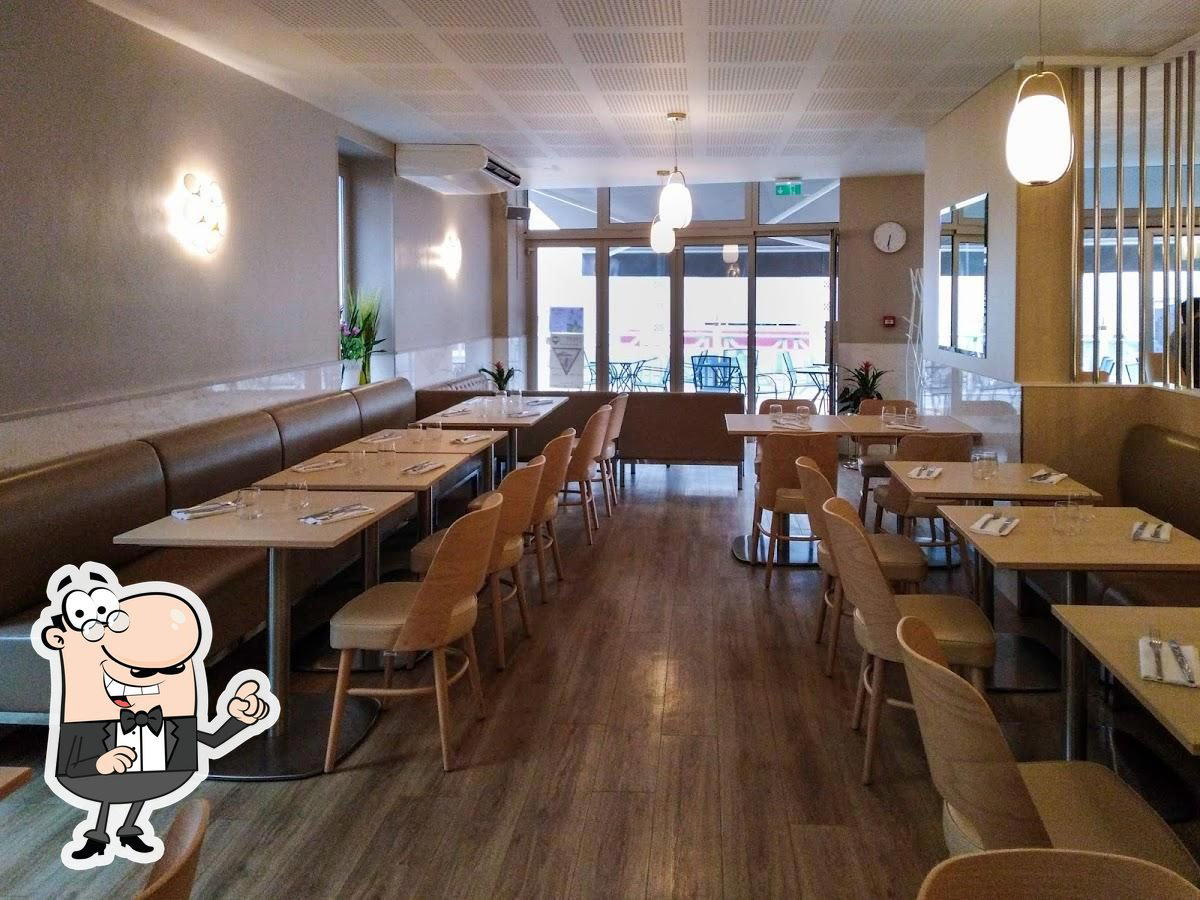
Walking into ETXOLA in Nishi Ward's Utsubohonmachi district, the interior reads as a deliberate act of cultural specificity. Stout wooden beams cross a white-walled room dressed with Basque-style woven tablecloths. In a city where restaurant interiors frequently default to either polished minimalism or izakaya informality, this space makes a clear statement about where its reference points lie. The mountain hut analogy holds: the room signals conviviality over ceremony, and that signals something about the price-to-experience equation on offer.
Nishi Ward itself sits west of central Osaka, a neighbourhood with a mix of residential streets and small specialist restaurants, away from the density of Namba or the institutional weight of Umeda's hotel dining. Reaching Utsubohonmachi requires a short walk from the nearest subway access, which contributes to a local-clientele feel that distinguishes it from the tourist-accessible restaurant corridors elsewhere in the city. For visitors, this is a restaurant you have to choose deliberately, and the clientele reflects that.
The Asado as Organising Principle
Basque cuisine across both the Spanish and French sides of the border has always centred on the grill. The asado tradition, applied to seafood as confidently as to meat, is what separates Basque cooking from the more oven-and-sauce-led registers of central Spain. At ETXOLA, the asado of char-grilled seafood or meat is the anchor of the menu, and it is the lens through which the ¥¥¥ pricing makes its case. Grill-forward cooking at this level demands high-quality primary ingredients, precise heat management, and restraint with accompaniment, and the bread shipped from Spain rather than sourced locally signals that the kitchen treats provenance as non-negotiable.
That bread detail matters editorially. At the ¥¥¥ price point in Osaka, sourcing staples from Spain is a cost that gets absorbed rather than passed on as a headline. It suggests the kitchen's priorities are calibrated toward authenticity over margin optimisation, which is the kind of operational decision that builds the reputation for consistency that Michelin recognition requires.
The pairing with Spanish wines, selected by the owner-sommelier working in concert with the kitchen, completes the Basque argument. Basque wines, particularly txakoli from the coast and reds from Rioja and Ribera del Duero, are a specific regional conversation that only makes sense in a room oriented this way. At comparable Spanish addresses in Osaka and Tokyo, the wine program is sometimes grafted on rather than integral. Here the structure of the operation, with chef and sommelier as equal collaborators, mirrors how serious Basque restaurants in Spain itself are typically organised.
How ETXOLA Sits in Osaka's Spanish Scene
The Spanish dining scene in Osaka is small enough that each address occupies a distinct register. Asador ROCA and Donostia occupy adjacent territory in the city's Spanish conversation, while EL ALMA and Ñ address different price points and formats. DuKKAh represents a different European strand entirely. ETXOLA's Basque specificity, anchored in the asado and a wine program built around Spanish regions, gives it a defined identity within this set rather than competing across it.
Nationally, the Basque-in-Japan conversation connects to a small group of addresses. akordu in Nara draws from similar Spanish culinary lineage in the Kansai region. In Tokyo, ZURRIOLA represents another serious Spanish address worth knowing. Further afield, Arco by Paco Pérez in Gdańsk shows how Basque culinary tradition travels internationally, and the comparison illustrates how much rarer the format is outside its home country. For context on Japanese fine dining more broadly, Harutaka in Tokyo, Gion Sasaki in Kyoto, and Goh in Fukuoka chart how the broader scene distributes across Japan's major cities.
Value at ¥¥¥: What the Price Point Actually Buys
The ¥¥¥ tier in Osaka carries a wide range of actual spend depending on format. At starred French and innovative houses like HAJIME or Fujiya 1935, the ¥¥¥¥ designation reflects long tasting menus with extensive mise en place. ETXOLA at ¥¥¥ offers a different proposition: a focused menu built around high-quality grilled proteins, regional bread, and a wine list selected by someone whose job it is to know Spanish viticulture. The Michelin Plate recognition signals consistency and kitchen seriousness at a price that sits below the starred tier. For a visitor whose priority is understanding Basque food culture rather than the broader Japanese kaiseki or French-influenced fine dining spectrum, the return on spend is concentrated and clear.
Reservations are the practical point requiring attention. A Michelin-recognised address with a compact format in Nishi Ward is not likely to have walk-in capacity on evenings or weekends. Booking ahead, particularly for dinner, is the practical expectation at this tier. See our full Osaka restaurants guide for broader planning across the city, and our full Osaka hotels guide, bars guide, wineries guide, and experiences guide to build an itinerary around your visit. For Japanese fine dining context elsewhere in the country, 1000 in Yokohama and 6 in Okinawa represent the geographic range of the scene.
What Should I Order at ETXOLA?
The asado is the kitchen's organising principle, covering both seafood and meat prepared over char. Given that the bread is sourced from Spain specifically to accompany the grill work, the combination of grilled protein and that bread represents the clearest expression of what the kitchen is doing. The owner-sommelier's wine selection, built around Spanish regions, is integral to the format rather than incidental, so pairing through the wine list rather than ordering by the glass is the approach most consistent with how the restaurant is structured. The Basque culinary tradition positions the grill, the wine, and the table as parts of the same argument, and ETXOLA is constructed with that logic in mind.
Frequently asked questions
What does dinner at ETXOLA typically cost?
Pricing at ETXOLA is listed as ¥¥¥.
Where is ETXOLA in Osaka?
ETXOLA is located at Japan, 〒550-0004 Osaka, Nishi Ward, Utsubohonmachi, 1 Chome−4−2 1F, Osaka.
What kind of recognition has ETXOLA received?
ETXOLA has received recognition including: A restaurant of Basque cuisine and Spanish wines. Etxola is Basque for ‘mountain hut’, and with its stout beams and white walls, the interior plays the part. Basque-style woven tablecloths drape the tables. Etxola is renowned for its asado ….
What should I order at ETXOLA?
The asado is the kitchen's central discipline, applied to both seafood and meat cooked over char, this is where the cooking is most distinctly Basque. Pair it with the Spanish-sourced bread, which arrives from Spain and is integral to the meal rather than incidental. The owner-sommelier curates the wine list specifically around the food traditions of the Basque region, so a pairing guided by the floor is worth following.
Price and Positioning
A compact comparison to help you place this venue among nearby peers.
| Venue | Cuisine | Price | Awards | Notes |
|---|---|---|---|---|
| ETXOLAThis venue (the venue you are viewing) | Authentic Basque Cuisine | $100–150 | Michelin Plate · Tabelog 100 #86 | Not listed |
| HAJIME | Avant-Garde Japanese Fine Dining | $300–500 | 3 Michelin Stars · World's 50 Best #83 | French, Innovative |
| La Cime | Modern French with Japanese Ingredients | $150–200 | 2 Michelin Stars · World's 50 Best #13 | French |
| Kashiwaya Osaka Senriyama | Seasonal Kaiseki Omakase | $200–300 | 3 Michelin Stars · La Liste Top Restaurants | Japanese |
| Taian | Traditional Japanese Kaiseki Omakase | $150–200 | 3 Michelin Stars · La Liste Top Restaurants | Kaiseki, Japanese |
| Fujiya 1935 | Modern Japanese with European influences | $100–150 | 2 Michelin Stars · La Liste Top Restaurants | Innovative |
Recognition history
Dated appearances from independent guides and award organizations, with the underlying list record or original source where available.
Michelin Plate
Michelin
Tabelog 100 #86 · No. 86
Tabelog · Tabelog 100 - Spanish cuisine - 2026
Full recognition history (3 entries)
Michelin Plate
Michelin