Our verdict
At Via Clisio 18 in Rome's northern Parioli district, Docks & Co. operates in a part of the city where neighbourhood restaurants shoulder most of the culinary weight rather than destination dining rooms. The address places it at a remove from the tourist-facing centre, which tends to attract a local clientele with different expectations around consistency, service rhythm, and wine.

Pearl is the En Primeur Club membership app — saves, bookings, and concierge access live there. Same editors, same standards.
- Address
- Via Clisio, 18, 00199 Roma RM, Italy
- Phone
- +39686206022
- Hours
- Mon–Thu 12:30–3:30 PM, 7:30 PM–12:30 AMFri–Sat 12:30–3:30 PM, 7:30 PM–1 AMSun 12:30–3:30 PM, 7:30 PM–12:30 AM
- Website
- docksroma.com
- Directions
- Get directions
- Booking
- Book on the venue's website
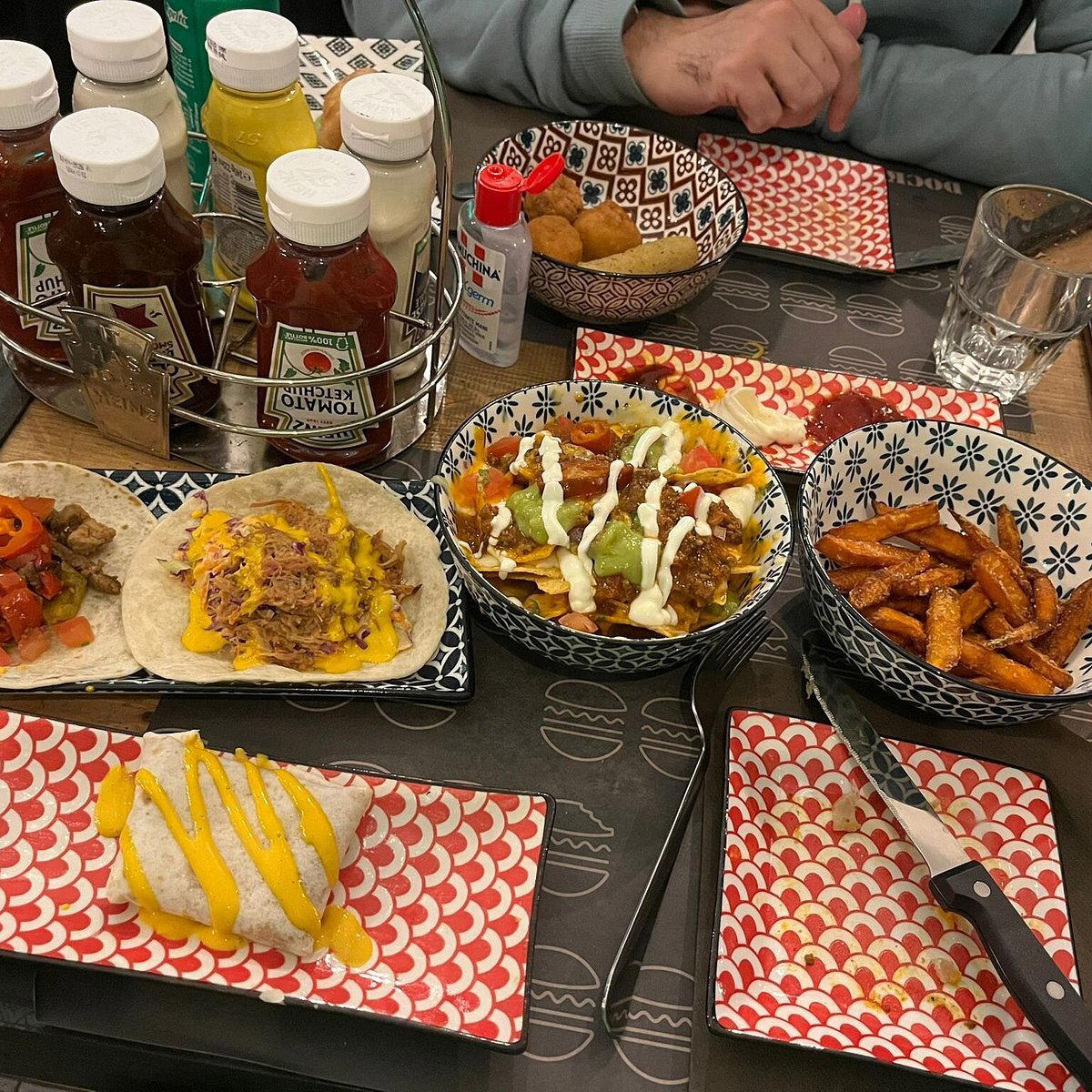
A Neighbourhood Frame, Not a Monument
Rome's dining map has two distinct registers. The first runs through the historic centre and Trastevere, where restaurants compete on visibility and foot traffic, and where the pressure to perform for international visitors shapes menus accordingly. The second operates in the residential quartieri that ring the centre: Prati, Flaminio, Testaccio, and further north, Parioli. In these neighbourhoods, the clientele is largely Roman, the rhythms are slower, and a restaurant survives on repeat business rather than a single viral moment. Docks & Co. at Via Clisio 18 in the 00199 postal district, belongs to that second register.
Parioli carries a particular social weight in Rome. It is one of the city's more affluent residential zones, traditionally associated with a certain bourgeois formality that has softened somewhat over the past decade without disappearing entirely. Restaurants here are judged against regulars' memories of previous visits, not against a first-timer's expectations calibrated by a travel editorial. That context matters when assessing what a venue in this part of the city is actually trying to do.
What the Room Communicates
Approaching Via Clisio from the broader Parioli grid, the street operates at the lower-traffic register typical of residential Rome: narrower, quieter, and less likely to be navigated by anyone without a reason to be there. That specificity tends to self-select the clientele. A restaurant drawing from a tight neighbourhood radius in this part of the city is, by definition, not optimising for passing trade.
The physical environment of Docks & Co. signals the kind of venue Rome has in reasonable supply but that international visitors rarely encounter: the neighbourhood room that earns its keep through service consistency and a front-of-house relationship with the room rather than through spectacle. In Rome's upper-tier dining segment, venues like Il Pagliaccio, Acquolina, and Enoteca La Torre operate at a formal-creative register where the collaboration between kitchen, sommelier, and dining room is an explicit part of the offer. At the neighbourhood level, that same collaboration is present but less theatricalised: the sommelier knows what the table ordered last time, the front-of-house reads the pace of the room rather than following a scripted sequence, and the kitchen responds to what regulars have shown they want rather than presenting a fixed ideological position.
The Team Dynamic at the Neighbourhood Level
In Rome's more visible fine dining rooms, the relationship between chef, sommelier, and front-of-house is increasingly understood as a collective creative output rather than a hierarchy with a kitchen at its apex. La Pergola and Achilli al Parlamento both demonstrate how a strong wine program and a coordinated floor team can carry as much of the dining experience as the food itself. That dynamic does not disappear at the neighbourhood level; it simply operates without the press infrastructure that makes it legible to outsiders.
A restaurant on a residential Parioli street that has maintained a local following depends on exactly this kind of integrated team performance. The kitchen can produce coherent food, but if the front-of-house cannot read a table or the wine offer feels disconnected from what is being cooked, regulars notice quickly and redirect their loyalty. The neighbourhood format is, in some ways, a more demanding test of team cohesion than the destination format, because there is no novelty value to absorb a bad night.
Italy's broader restaurant culture has produced a number of reference points for this kind of cohesion at the highest level: Dal Pescatore in Runate and Uliassi in Senigallia are both family-anchored operations where front-of-house and kitchen share a long institutional memory. Osteria Francescana in Modena and Le Calandre in Rubano have built their reputations partly on the visible orchestration between the creative kitchen and a floor team capable of translating that creativity to a mixed room. At the neighbourhood level, the same principle applies with less ceremony.
How Docks & Co.
Rome's mid-to-upper neighbourhood restaurant tier occupies a competitive space that is not well documented by international awards infrastructure. Michelin's Rome coverage concentrates its starred entries in the historic centre and a handful of hotel dining rooms; the residential quartieri restaurants that Romans actually use on a weekly basis tend to operate below that radar. This is not a criticism of the awards system so much as a structural feature of how recognition works in a city with Rome's tourist footprint.
Venues that operate in this space compete on a different axis: consistency over time, wine list depth relative to price point, and the quality of the front-of-house relationship with the room. The comparison set for Docks & Co. is not Enoteca Pinchiorri in Florence or Enrico Bartolini in Milan; it is the cluster of neighbourhood rooms in Parioli and the adjacent zones that serve a similar clientele with similar expectations.
For readers who want to benchmark Rome's creative and fine dining offer more broadly, our full Rome restaurants guide maps the city across price tiers and neighbourhoods, and includes venues like Reale in Castel di Sangro, Piazza Duomo in Alba, and Quattro Passi in Marina del Cantone for context on what Italy's wider creative dining tier looks like relative to a Roman neighbourhood room. International reference points for team-led dining culture, including Le Bernardin in New York City, Lazy Bear in San Francisco, and Atelier Moessmer Norbert Niederkofler in Brunico, illustrate how the chef-sommelier-floor dynamic operates at its most deliberate.
Know Before You Go
- Address: Via Clisio 18, 00199 Rome, Italy
- Neighbourhood: Parioli, northern Rome — residential, low tourist traffic
- Phone: Not publicly listed
- Website: Not currently available
- Booking: Specific booking method not confirmed; direct contact via in-person or local directory recommended
- Price range: Not published; Parioli neighbourhood positioning suggests a mid-to-upper local bracket
- Awards:
- Getting there: Parioli is accessible from central Rome by taxi or the Flaminio-area transport connections; the street itself is residential and leading approached with a confirmed address
Frequently asked questions
Does Docks & Co. work for a family meal?
The Parioli address on Via Clisio places Docks & Co. in one of Rome's quieter residential neighbourhoods, which generally suits a relaxed family setting better than the louder, high-turnover rooms in Trastevere or the historic centre. The lower-traffic street register of the area suggests an unhurried pace.
What kind of setting is Docks & Co.?
Docks & Co. operates from Via Clisio, 18 in Parioli, a residential grid in northern Rome where foot traffic runs well below the tourist-facing neighbourhoods. That address positions the room in the category of local, regulars-driven dining rather than destination spectacle. Expect a neighbourhood frame: quieter streets, lower ambient noise, and a clientele that is largely Roman.
Is Docks & Co. a good option for dinner in Rome's Parioli district without a tourist-area crowd?
Yes. The Via Clisio, 18 address puts Docks & Co. inside the Parioli residential grid, which sits well north of the Colosseum-to-Pantheon corridor that concentrates tourist traffic. Parioli is one of Rome's more settled upper-residential neighbourhoods, and its restaurant scene is built primarily around a local clientele. For visitors wanting a Rome meal that operates at that register, this postcode is a practical starting point.
What do regulars order at Docks & Co.?
Specific menu details for Docks & Co. are not on public record, so confirming signature dishes requires contacting the venue directly. What the Parioli context does suggest is a kitchen oriented toward a local Roman clientele with consistent, repeat-visit expectations rather than a seasonal showpiece format. Asking staff at the counter what moves most on a given night is the more reliable route than any fixed recommendation.
Where exactly is Docks & Co.?
Docks & Co. is located at Via Clisio, 18, 00199 Roma RM, Italy, Rome.
How hard is it to get a table at Docks & Co.?
Booking lead times at Docks & Co. are not formally documented, but neighbourhood restaurants in Parioli with a strong local following tend to fill on weekends with shorter windows mid-week. Without a published online reservation system on record, the most direct route is a phone call or walk-in during off-peak hours. The Via Clisio location, away from the tourist circuit, generally keeps demand more manageable than comparable rooms in Trastevere.
What do critics highlight about Docks & Co.?
Docks & Co. does not appear in current international awards documentation, which is consistent with Rome's mid-to-upper neighbourhood tier: Michelin and the 50 Best lists have historically concentrated coverage on the historic centre and a handful of fine dining addresses. That absence does not reflect quality so much as the structural gap in how Rome's residential dining scene is covered by international infrastructure. Local Roman press and word of mouth remain the more active signals here.
Standing Among Peers
Comparable venues nearby, for context on price, style, and recognition.
| Venue | Cuisine | Price | Notes |
|---|---|---|---|
| Docks & Co.This venue — the venue you are viewing | All-You-Can-Eat Burgers & Tex-Mex | $20–30 | Not listed |
| Tullio Pizza | Roman Pizza al Taglio | $10–20 | Monte Mario |
| Il Gelato di San Crispino | Artisanal Italian Gelato | $1–10 | Centro |
| Ai Marmi | Roman-Style Pizza | $10–20 | Trastevere |
| Trapizzino | Testaccio | Roman Trapizzino Street Food | $10–20 | Testaccio |
| Rifugio Romano | Vegan Roman Trattoria | $10–20 | Castro Pretorio |
Docks & Co.
Featured Guides

Details
- Lively
- Energetic
- Trendy
- Group Dining
- Casual Hangout
- Late Night
Current opening hours
- Monday
- 12:30–3:30 PM, 7:30 PM–12:30 AM
- Tuesday
- 12:30–3:30 PM, 7:30 PM–12:30 AM
- Wednesday
- 12:30–3:30 PM, 7:30 PM–12:30 AM
- Thursday
- 12:30–3:30 PM, 7:30 PM–12:30 AM
- Friday
- 12:30–3:30 PM, 7:30 PM–1 AM
- Saturday
- 12:30–3:30 PM, 7:30 PM–1 AM
- Sunday
- 12:30–3:30 PM, 7:30 PM–12:30 AM
Hours can change for holidays and private events. Last verified .