Our verdict
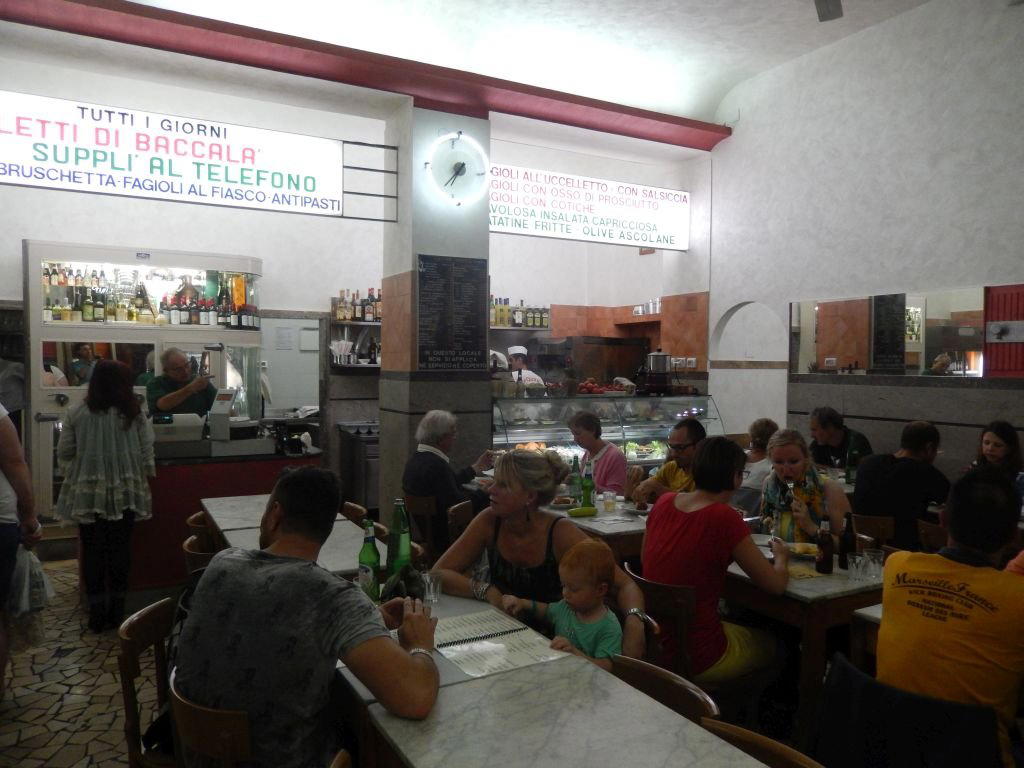
On Viale di Trastevere, Ai Marmi operates as one of Rome's most enduring neighbourhood trattorie, where long communal marble tables set the tempo for a meal rooted in Roman ritual rather than restaurant theatre. The kitchen holds to the city's meat-heavy, offal-forward canon, and the room fills nightly with a cross-section of the city that few dining rooms in central Rome can claim.

Pearl is the En Primeur Club membership app — saves, bookings, and concierge access live there. Same editors, same standards.
- Address
- Viale di Trastevere, 53-59, 00153 Roma RM, Italy
- Phone
- +39 06 580 0919
- Hours
- Mon–Tue 6:30 PM–2 AMWed ClosedThu–Sun 6:30 PM–2 AM
- Website
- m.facebook.com
- Directions
- Get directions
The menu
What to order
- Pizza alla diavola
- Supplì
- Fried zucchini flowers
- Tiramisù
Marble Tables and the Pace of Roman Eating
Viale di Trastevere is not a street that courts tourist attention. Wide, tram-tracked, and utilitarian, it cuts through one of Rome's oldest residential quarters without the photogenic alleyways that draw visitors deeper into Trastevere's interior. Ai Marmi sits along this boulevard in a format that has defined the Roman trattoria for generations: long communal marble-topped tables that give the place its local nickname, Il Marmo. The marble is not decorative. It is functional, easy to wipe, and honest about what kind of place this is. You are here to eat, and the room tells you so before you sit down.
The ritual of a Roman trattoria operates on different logic than a contemporary tasting menu. There is no progression designed by a chef to arc dramatically toward a conclusion. Instead, the meal moves the way Roman conversation moves: laterally, generously, with no particular urgency to close. Antipasti arrive when they arrive. A secondo may follow quickly or not. Wine is ordered by the carafe rather than the bottle, which keeps the table honest about how much it actually wants. Ai Marmi runs on this rhythm, and the room reflects it in noise level and density. On most evenings, the space fills completely, and the sound of the place becomes part of the experience in a way that a quieter, more formal room never achieves.
The Roman Canon in Practice
Roman cuisine has two registers that rarely overlap in the same kitchen: the cacio e pepe and carbonara territory that every osteria and tourist trap claims equally, and the offal-forward, fifth-quarter tradition that requires both a committed kitchen and a clientele willing to follow. Ai Marmi occupies the second register. The Roman fifth quarter, which includes coda alla vaccinara (oxtail braised with tomato and celery), trippa alla romana (tripe with tomato and pecorino), and rigatoni con pajata (pasta with milk-fed veal intestine), is the benchmark against which a serious Roman trattoria is measured. These dishes are not novelties. They are the product of a cucina povera tradition in which the workers of the Testaccio slaughterhouse were paid partly in the cuts the wealthy would not buy. The fact that these preparations now appear on menus across the city's price spectrum, from neighbourhood institutions to multi-course restaurant formats, says something about how Rome has metabolised its own food history.
Ai Marmi holds its place in this tradition by continuing to serve it without irony or reframing. The pasta formats follow Roman convention: rigatoni, tonnarelli, spaghetti. The sauces are primary. The execution is direct. This is not the territory of Acquolina or Il Pagliaccio, where contemporary technique reframes Italian ingredients through a fine-dining lens. Nor does it share an approach with Enoteca La Torre or Achilli al Parlamento, where creative tasting formats sit alongside serious wine programs. Ai Marmi is positioned entirely differently within the city's dining structure, operating in the category that Rome does better than almost any other European capital: the trattoria that has survived long enough to become a reference point.
Where Ai Marmi Sits in Rome's Dining Structure
Rome's restaurant scene has widened considerably in the last decade. At the leading, La Pergola remains the city's only three-Michelin-star address. The creative contemporary tier has deepened with venues like Acquolina and Il Pagliaccio drawing the kind of critical attention that was harder to find in Rome a generation ago. Across Italy, the same structural split between fine-dining ambition and tradition-anchored neighbourhood cooking appears in different forms: Osteria Francescana in Modena and Piazza Duomo in Alba represent one end; the trattorie that supply their cities' daily eating life represent the other. Le Calandre in Rubano, Enoteca Pinchiorri in Florence, and Enrico Bartolini in Milan all operate in the ambitious tier that Ai Marmi has never sought to join.
What the better Roman trattorie offer is something that multi-course formats cannot easily replicate: a meal that feels continuous with the neighbourhood rather than extracted from it. The customer mix at places like Ai Marmi has historically included local families, workers from the surrounding streets, and visitors who found it through someone who had been coming for years. That cross-section is increasingly rare in the central districts of European cities, where rising rents and tourist demand have driven traditional neighbourhood eating either upmarket or out of the quartiere entirely. Trastevere, despite its reputation as one of Rome's most visited areas, still maintains enough residential density to support this kind of place.
Planning Your Visit
Ai Marmi is located at Viale di Trastevere 53-59, reachable by tram along the main boulevard or on foot from the Trastevere train station in under ten minutes. The trattoria format means the meal moves at the kitchen's pace rather than to a fixed script, so allow more time than you might for a set-menu format. Arriving early in the service tends to give better seat selection at the marble tables; the room fills quickly on weekends and holds a loyal regular clientele on weekday evenings. No website or phone is listed in the current public record, which means walk-in remains the standard approach, consistent with the trattoria tradition across Rome's older neighbourhood institutions.
For visitors building a broader Roman dining itinerary, Ai Marmi functions as the traditional anchor in a programme that might also include the Enoteca La Torre or Achilli al Parlamento for more structured creative cooking. The full Rome restaurants guide covers the range of formats across the city's neighbourhoods. For those exploring Italy's wider restaurant canon beyond Rome, addresses like Dal Pescatore in Runate, Uliassi in Senigallia, Quattro Passi in Marina del Cantone, Reale in Castel di Sangro, and Atelier Moessmer Norbert Niederkofler in Brunico represent a range of approaches that map the country's current ambitions. Beyond Italy, Le Bernardin in New York City and Lazy Bear in San Francisco illustrate how different cities have developed their own high-commitment dining rituals.
Frequently asked questions
What is the must-try dish at Ai Marmi?
What is the ideal way to book Ai Marmi?
Is Ai Marmi suitable for a long, leisurely dinner, or does the format favour quicker meals?
A Quick Peer Check
Comparable venues nearby, for context on price, style, and recognition.
| Venue | Cuisine | Price | Notes |
|---|---|---|---|
| Ai MarmiThis venue — the venue you are viewing | Roman-Style Pizza | $10–20 | Not listed |
| Fradiavolo Roma Trastevere | Contemporary Multi-Dough Pizzeria | $20–30 | Trastevere |
| Osteria Bonelli | Traditional Roman Trattoria | $10–20 | Ex Aeroporto di Centocelle |
| Papa Giovanni | Traditional Roman Trattoria | Not listed | San Eustachio |
| Mastrociccia | Authentic Roman Osteria | $20–30 | Parione |
| Pastificio Guerra | Traditional Roman Pasta Takeout | $1–10 | Campo Marzio |
Continue exploring
More in Rome
Restaurants in Rome
Browse all →
Bars in Rome
Browse all →
Hotels in Rome
Browse all →

Details
- Lively
- Well Known
- Rustic
- Classic
- Casual Hangout
- Late Night
- Group Dining
- Open Kitchen
- Standalone
- Historic Building
- Street Scene
- A La Carte
- Family Style
- Vegetarian Friendly
Current opening hours
- Monday
- 6:30 PM–2 AM
- Tuesday
- 6:30 PM–2 AM
- Wednesday
- Closed
- Thursday
- 6:30 PM–2 AM
- Friday
- 6:30 PM–2 AM
- Saturday
- 6:30 PM–2 AM
- Sunday
- 6:30 PM–2 AM
Hours can change for holidays and private events. Last verified .
Lively, bustling street-level atmosphere with marble-topped family-style tables, open kitchen visible to diners, lively evening energy along Viale di Trastevere.