On Grindelallee in Hamburg's student-dense Eimsbüttel district, Diggi Smalls occupies a stretch where independent eating spots compete on character rather than ceremony. The address places it squarely inside a neighbourhood that rewards walking rather than planning, and where the reason to return is usually the one you discover on the night itself.
Pearl is the En Primeur Club membership app — saves, bookings, and concierge access live there. Same editors, same standards.
- Address
- Grindelallee 148, 20146 Hamburg, Germany
- Phone
- +4917660474543
- Website
- diggismalls.de
- Directions
- Get directions
 Saves & bookings on Pearl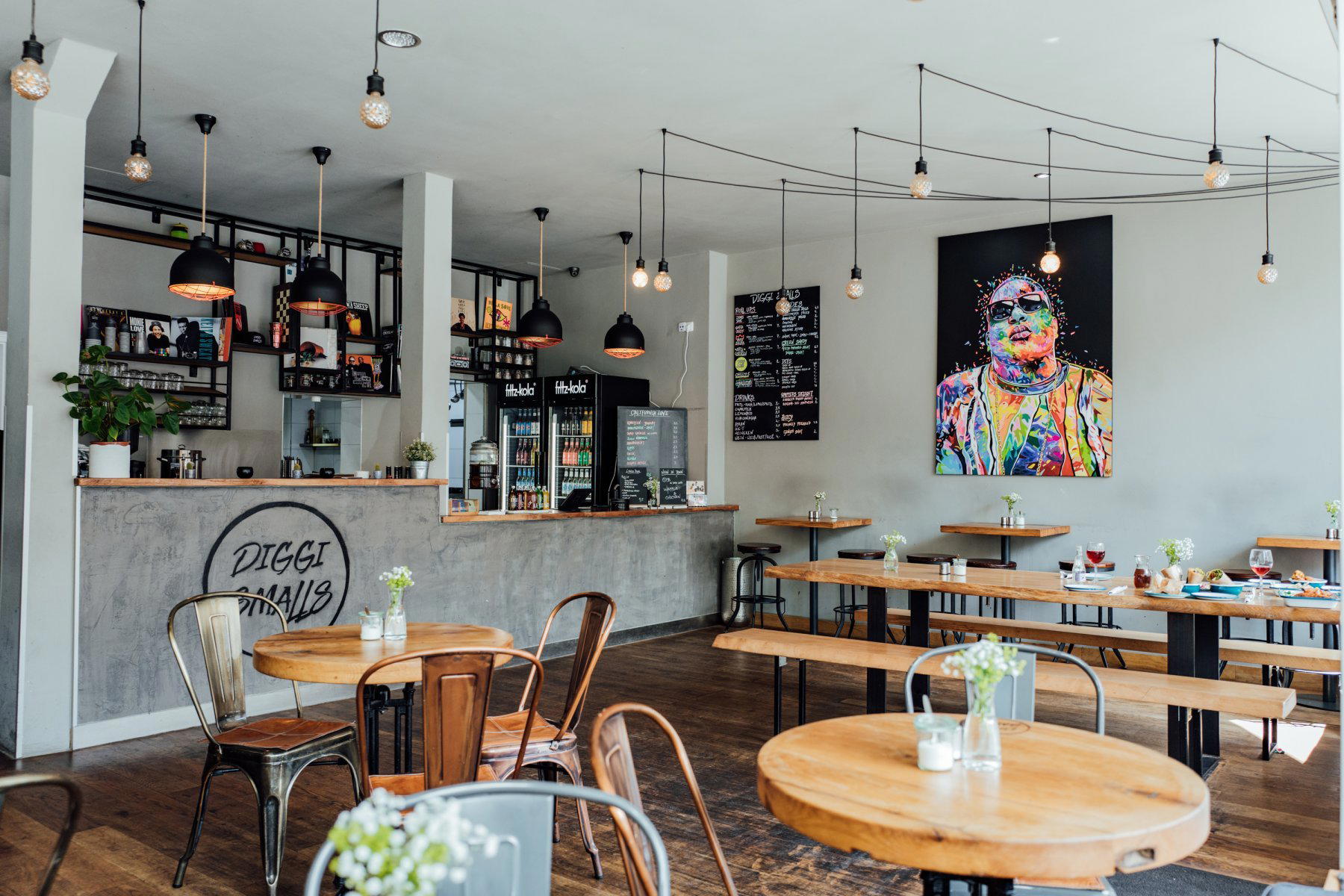
Grindelallee and the Dining Logic of Eimsbüttel
Hamburg's dining geography has a clear fault line. On one side sit the white-tablecloth rooms of the city centre and Alster waterfront, where Restaurant Haerlin and The Table Kevin Fehling operate at the formal, tasting-menu end of the spectrum. On the other sits Eimsbüttel, a residential district north-west of the Außenalster where the logic of eating out runs differently. Here, proximity to the University of Hamburg and the high density of long-term residents has produced a strip culture built around repeat visits and neighbourhood familiarity rather than occasion dining.
Grindelallee, the main artery running through the district, is that culture in concentrated form. The street runs through a zone where independent operators sit alongside late-night staples, and where a postcode alone carries social meaning for Hamburgers. Diggi Smalls at number 148 is positioned at the northern end of this stretch.
What the Address Tells You Before You Arrive
In cities where dining geography is legible, an address is already a statement of intent. Grindelallee 148 is not a destination address in the way that, say, the HafenCity waterfront functions for 100/200 Kitchen or the Alster-facing rooms of bianc. It sits inside a neighbourhood that Hamburg residents navigate on foot, and the venues that do well here tend to earn their standing through consistency and local word-of-mouth rather than through the reservation systems and international press coverage that govern fine dining rooms.
This is not a criticism. The two tiers serve different purposes in a city's eating ecosystem. Hamburg's higher-end addresses, including Lakeside, operate with a formality and a price architecture that makes them occasion-specific. A place like Diggi Smalls, positioned on a street where students, professionals, and long-term neighbourhood residents converge, serves a different kind of need: the reliable, characterful spot that earns a place in the weekly rotation.
The Eimsbüttel Format and Why It Works
Across European cities, the neighbourhoods adjacent to university districts have produced a recognisable category of eating place. These are not cheap by default, and they are not casual by accident. They occupy a middle register where the kitchen takes the food seriously without the overhead structure of a formal restaurant service. The clientele is varied enough to keep the room from becoming too self-conscious, and regular faces give the operation a social texture that no amount of interior design can manufacture.
Eimsbüttel fits this pattern closely. The Grindelallee corridor has enough foot traffic to sustain independent operations that would struggle in less-populated residential streets, and enough local loyalty to insulate those operations from purely trend-driven turnover. The venues that survive here tend to have a clear identity from early on, because the neighbourhood audience reads incoherence quickly and forgives it slowly.
Germany's broader dining scene has seen significant critical attention at the upper tiers, with rooms like Schwarzwaldstube in Baiersbronn, Aqua in Wolfsburg, and Vendôme in Bergisch Gladbach carrying sustained Michelin recognition. Hamburg itself contributes to that tier through its formal dining addresses. But the city's eating character is not reducible to its awarded rooms. The neighbourhood operators on streets like Grindelallee are where most Hamburgers actually eat, and they form a different but equally important part of what makes a city's food scene functional rather than merely prestigious.
Placing Diggi Smalls in the Hamburg comparable set
The restaurant sits outside the comparison set that includes JAN in Munich or CODA Dessert Dining in Berlin. It operates in the same city as Hamburg's high-end addresses but in a different register entirely, one where the metrics of success are occupancy, neighbourhood standing, and the kind of low-key reputation that spreads through local social networks rather than through food media cycles.
That positioning carries its own logic. Venues that operate without the overhead of formal fine dining rooms in high-rent city centre locations can sometimes offer a quality-to-experience ratio that their more decorated peers cannot. The trade-off is visibility: the city's Michelin-starred rooms attract international visitors who have researched their Hamburg itinerary in advance, while neighbourhood spots accumulate their audiences more slowly and more durably. For a traveller willing to spend an evening eating as a local Hamburger rather than as a visiting diner following a curated list, the Grindelallee end of Eimsbüttel offers a different option.
For broader context on Hamburg's dining range, from neighbourhood spots through to the city's leading formal rooms, the full Hamburg restaurants guide covers the full spectrum. Those interested in the sharp end of German fine dining beyond Hamburg can also explore ES:SENZ in Grassau, Schanz in Piesport, Waldhotel Sonnora in Dreis, Bagatelle in Trier, and Victor's Fine Dining by Christian Bau in Perl for the depth of what Germany's serious dining rooms can offer. Internationally, Le Bernardin in New York City and Lazy Bear in San Francisco represent the kind of format ambition that sits at the other end of the spectrum from a neighbourhood address like Grindelallee 148.
Know Before You Go
- Address: Grindelallee 148, 20146 Hamburg, Germany
- District: Eimsbüttel, adjacent to the University of Hamburg campus
- Booking: Walk-in visits are viable.
- Price range: About $12 per person.
Similar Picks
Comparable venues nearby, for context on price, style, and recognition.
| Venue | Cuisine | Price | Notes |
|---|---|---|---|
| Diggi SmallsThis venue — the venue you are viewing | Oriental Street Food & Halal Wraps | $ | Not listed |
| Falafelstern | Lebanese Falafel & Middle Eastern Street Food | $ | Eimsbuttel |
| Saliba | Authentic Syrian | $$ | Neustadt |
| Adam Café City | Syrian Vegetarian | $$ | Neu Lokstedt |
| Restaurant Békaa | Modern Lebanese | $$ | Rotherbaum |
| Bobby&Fritz – Currywurst | German Currywurst | $ | Anscharhoehe |
Continue exploring
More in Hamburg
Restaurants in Hamburg
Browse all →
At a Glance
- Trendy
- Lively
- Casual Hangout
- After Work
- Solo
- Standalone
- Open Kitchen
- Local Sourcing
Current opening hours
- Monday
- Closed
- Tuesday
- 12–9:30 PM
- Wednesday
- 12–9:30 PM
- Thursday
- 12–9:30 PM
- Friday
- 12–9:30 PM
- Saturday
- 12–10 PM
- Sunday
- 12–9:30 PM
Hours can change for holidays and private events. Last verified .
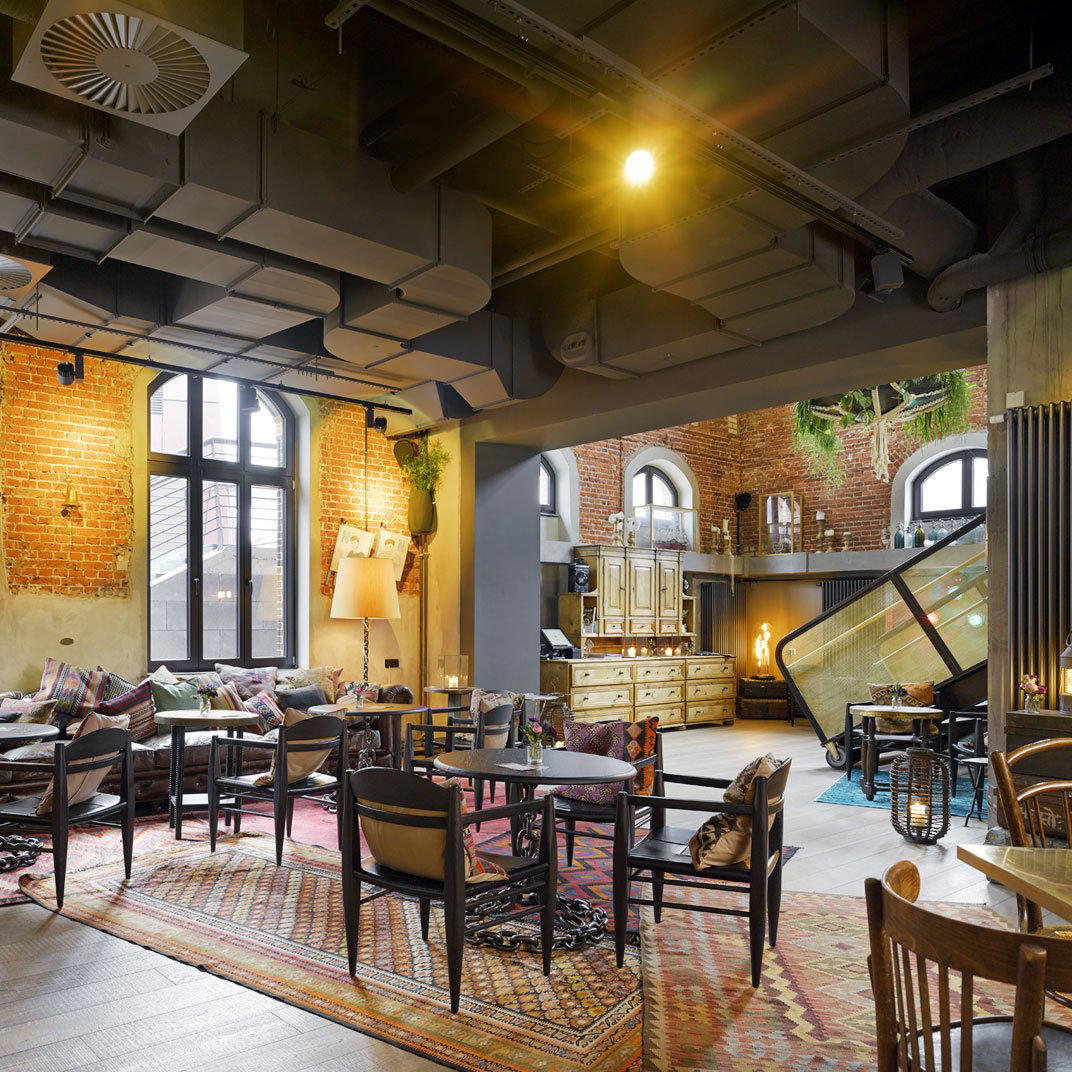
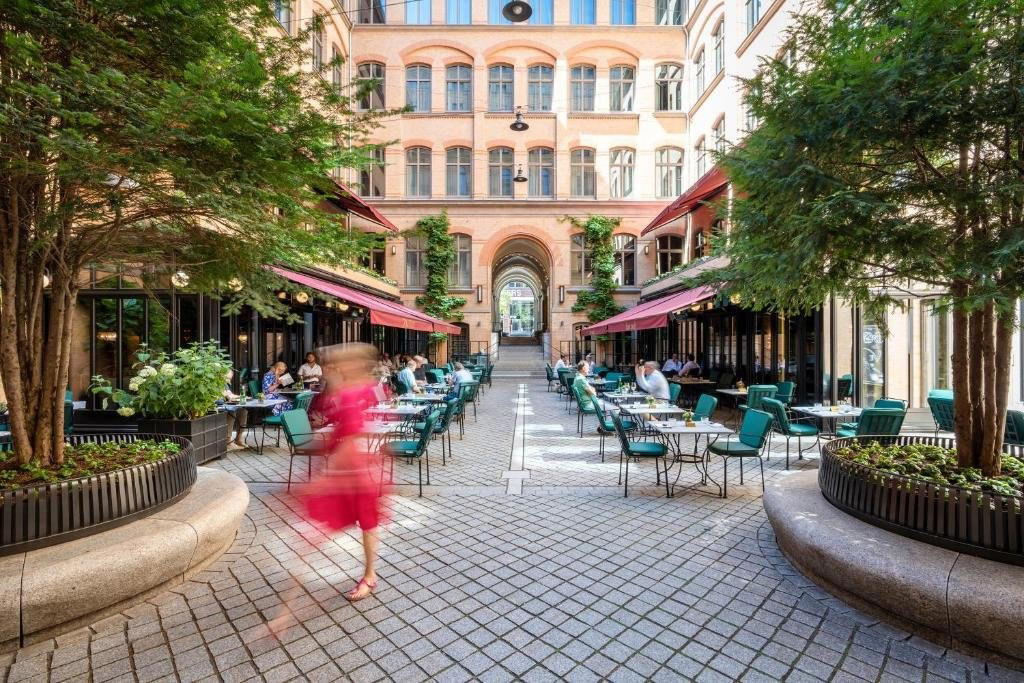
Fresh, urban street food vibe with a modern, energetic atmosphere near the University of Hamburg.