
Jellyfish holds a Michelin star in Hamburg's Schanzenviertel, operating a tight set-menu format across five, six, or seven courses with an emphasis on premium seafood and modern technique. The kitchen applies global methods to ingredients like Spessart trout, while the wine list leans into Champagne and German Riesling. A Saturday–Sunday bistro lunch makes the format more accessible without diluting the ambition.
Pearl is the En Primeur Club membership app — saves, bookings, and concierge access live there. Same editors, same standards.
- Address
- Weidenallee 12, 20357 Hamburg, Germany
- Phone
- +49 40 4105414
- Website
- jellyfish-restaurant.de
- Directions
- Get directions
 Saves & bookings on Pearl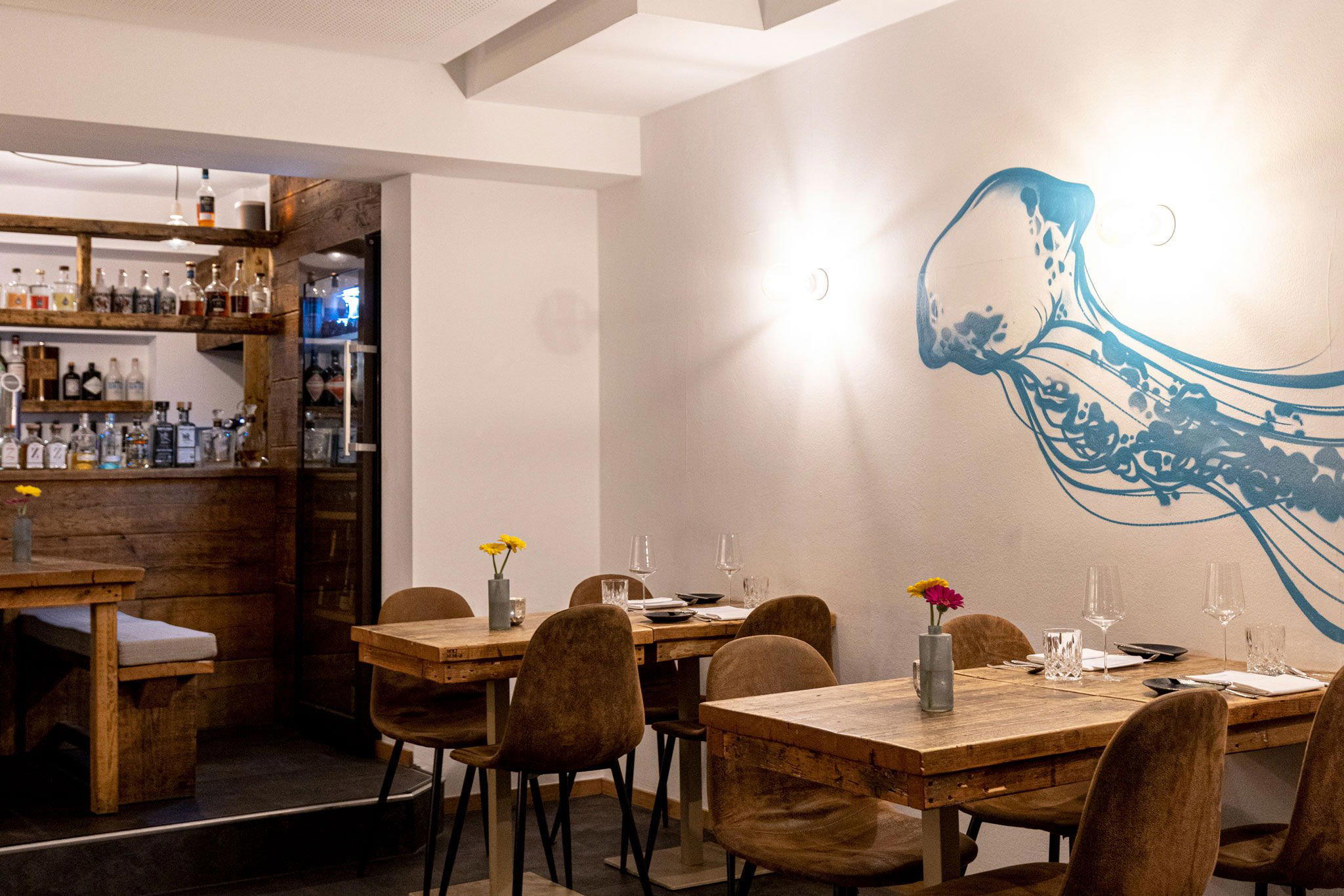
Schanzenviertel and the Case for Serious Seafood
Hamburg's relationship with seafood runs deep, shaped by centuries of North Sea trade and a harbour identity that still defines the city's food culture. But the distinction between traditional fish restaurants and the newer wave of technique-driven seafood cooking is now sharper than ever. At the accessible end, the waterfront classics around Altona and the Elbe, including Fischereihafen Restaurant and am kai, serve a style rooted in plainly prepared fish and maritime nostalgia. At the other end, a smaller group of restaurants has imported precision-cooking methods and applied them to premium northern European produce. Jellyfish, on Weidenallee in the Schanzenviertel, belongs to that second camp, and its Michelin star confirms where the guide has placed it.
The Schanzenviertel is not Hamburg's obvious address for fine dining. The neighbourhood skews young and independent, its streets filled with coffee shops, record stores, and mid-market restaurants. That tension between the setting and the ambition of the kitchen is part of what makes this address interesting. Michelin-starred kitchens in Germany increasingly appear in unexpected postcodes, a pattern visible at JAN in Munich and CODA Dessert Dining in Berlin, both of which built their reputations outside the conventional luxury hotel or old-town fine-dining corridor.
The Interior: Minimalism as a Position
Inside, the room takes a deliberate position. Soft lighting, a minimalist fit-out, and carefully modulated background music create an environment that keeps attention on the plate rather than the architecture. This approach has become a recognisable register among contemporary European fine-dining rooms: the idea that spatial restraint signals culinary confidence. The room does not announce itself. It lets the food do that work instead. For guests arriving from Hamburg's louder restaurant options, the open kitchens and high ceilings at places like UNDERDOCKS or the bar-forward atmosphere at XO Seafoodbar, the shift in register is immediate.
Local Ingredients, Global Technique: The Kitchen's Argument
The editorial case for Jellyfish rests on a specific intersection: the application of modern, internationally informed cooking methods to ingredients drawn from German-speaking central Europe. That combination is the defining logic of the menu. The kitchen works within a set format, five, six, or seven courses, with upgrade options, and the structure gives the team control over pacing and sequence in a way that à la carte formats do not allow.
The Spessart trout Steckerlfisch illustrates the approach directly. Steckerlfisch is a grilled-fish format with strong roots in Bavarian and Franconian outdoor cooking, a charcoal-grilled whole fish on a stick, traditionally associated with beer gardens and market festivals rather than fine-dining rooms. Here the kitchen takes that technique and its regional product (trout from the Spessart, a forested upland region straddling Bavaria and Hesse) and frames it within a more complex set of accompaniments: BBQ glaze, marinated red cabbage, pickled plum, and a marigold gel with citrus notes. The dish lands in a recognisable German flavour register while the surrounding elements reflect contemporary preservation, fermentation, and gel-setting techniques that belong to a different culinary tradition entirely. That is the point. The local product is not incidental, it is the anchor. The technique is the argument.
This kind of cross-referencing between regional produce and imported precision methods has become one of the more interesting currents in German restaurant cooking. Compare the approach at ES:SENZ in Grassau, which applies similar logic to Alpine ingredients, or the way Schwarzwaldstube in Baiersbronn has long used Black Forest produce within a French classical framework. At Jellyfish, the frame is seafood-first and the geographic range of ingredients appears to span beyond the immediate North Sea catchment, a choice that keeps the menu open to central European freshwater fish and inland produce alongside coastal material.
The menu's emphasis on premium-quality ingredients is consistent with the broader tier of Hamburg's leading tables. At Vendôme in Bergisch Gladbach and Aqua in Wolfsburg, both operating at multiple Michelin stars, ingredient sourcing is treated as a primary editorial statement of the kitchen. Jellyfish operates at one-star level within that same ingredient-led culture, and the set-menu format is the vehicle through which those sourcing decisions become coherent for the guest.
The Drink Programme: Champagne and Riesling as a Statement
The wine pairing option alongside the set menu extends to both conventional and alcohol-free alternatives, which reflects the current direction of serious European wine programmes. The specific emphasis on Champagne and German Riesling within the list is a considered position rather than a default. Riesling, particularly from the Mosel, Rhine, and Nahe, has a well-documented technical affinity with lean, acid-bright fish preparations: the grape's high acidity, low alcohol, and range from bone-dry to off-dry gives it flexibility across a seafood-focused menu that few other varieties can match. The Champagne selection sits alongside this as a pairing anchor for delicate or textured dishes. The service team is described as attentive and knowledgeable, with wine recommendations that extend beyond the written list. For guests less focused on wine, the alcohol-free alternatives mark a programme that takes non-drinking guests seriously rather than as an afterthought.
The Saturday–Sunday Lunch Format
One structural feature worth noting is the weekend bistro lunch. A Michelin-starred kitchen offering a separate, more accessible lunch menu on Saturday and Sunday creates a different entry point into the same kitchen's work. This format is common in France, brasserie-adjacent lunch menus at starred restaurants have long served as both commercial logic and a way to reach guests who cannot or will not commit to a full evening tasting menu. In Hamburg's fine-dining context, it represents a practical way to experience the kitchen's ingredient sourcing and technical approach at a lower commitment level. The distinction between the lunch bistro menu and the evening set format means guests planning their visit should consider which version of the experience they are booking.
Planning a Visit
Jellyfish sits at Weidenallee 12 in the Schanzenviertel, a neighbourhood well connected by Hamburg's U-Bahn and within easy reach of the city centre. The price range sits at the summit tier for Hamburg restaurants (€€€€), consistent with peer tables like Landhaus Scherrer and Heimatjuwel, and the set-menu format means costs are broadly predictable before arrival. Booking in advance is advisable given the starred status and set-menu structure, though the weekend lunch format offers more flexibility than a single evening service. The kitchen also offers a selection of food items for purchase to take home, a relatively uncommon feature at this level that rewards guests who want to extend the experience beyond the table. For nearby seafood alternatives worth considering alongside Jellyfish, Rive Fish & Faible occupies a different register in the city's seafood picture. If seafood-focused fine dining is the broader interest, international comparisons worth making include Gambero Rosso in Marina di Gioiosa Ionica and Alici Restaurant on the Amalfi Coast, both of which approach coastal seafood from a Mediterranean rather than northern European angle.
Side-by-Side Snapshot
Comparable venues nearby, for context on price, style, and recognition.
| Venue | Cuisine | Price | Awards | Notes |
|---|---|---|---|---|
| JellyfishThis venue — the venue you are viewing | Modern Seafood Fine Dining | $$$$ | Michelin 1 Star | Not listed |
| Piment | French with Moroccan Influences | $$$$ | Michelin 1 Star | Anscharhoehe |
| Zeik | Nordic | $$$$ | Michelin 1 Star | Anscharhoehe |
| THE LISBETH | Modern North German Fine Dining | $$$$ | Michelin 1 Star | Hamburg-Altstadt |
| Petit Amour | Modern French with Nordic Influences | $$$$ | Michelin 1 Star | Ottensen |
| Landhaus Scherrer | Michelin-Starred North German Fine Dining | $$$$ | Michelin 1 Star | Neumuehlen |
Recognition history
Dated appearances from independent guides and award organizations, with the underlying list record or original source where available.
Michelin 1 Star
Michelin
Michelin 1 Star
Michelin
Michelin 1 Star
Michelin
Continue exploring
More in Hamburg
Restaurants in Hamburg
Browse all →
Bars in Hamburg
Browse all →

Hotels in Hamburg
Browse all →
Wineries in Hamburg
Browse all →
At a Glance
- Elegant
- Modern
- Rustic
- Sophisticated
- Intimate
- Date Night
- Special Occasion
- Celebration
- Open Kitchen
- Standalone
- Sommelier Led
- Sustainable Seafood
- Local Sourcing
Current opening hours
- Monday
- 6–11 PM
- Tuesday
- Closed
- Wednesday
- Closed
- Thursday
- 6–11 PM
- Friday
- 6–11 PM
- Saturday
- 12–3 PM, 6–11 PM
- Sunday
- 12–3 PM, 6–11 PM
Hours can change for holidays and private events. Last verified .
Soft lighting with clean modern interior lines, rustic wooden tables and accents, open kitchen allowing diners to witness food preparation, warm and inviting yet understated luxury atmosphere.