





A two-Michelin-star creative restaurant in Hamburg's industrial Rothenburgsort district, 100/200 Kitchen places Thomas Imbusch's technique-driven cooking inside a setting that defies expectations. Ranked among Europe's top restaurants by both La Liste and Opinionated About Dining, it occupies a distinct tier in Hamburg's fine-dining hierarchy, far from the city's more expected addresses.
Pearl is the En Primeur Club membership app — saves, bookings, and concierge access live there. Same editors, same standards.
- Address
- Brandshofer Deich 68, 20539 Hamburg, Germany
- Phone
- +49 40 30925191
- Website
- 100200.kitchen
- Directions
- Get directions
 Saves & bookings on Pearl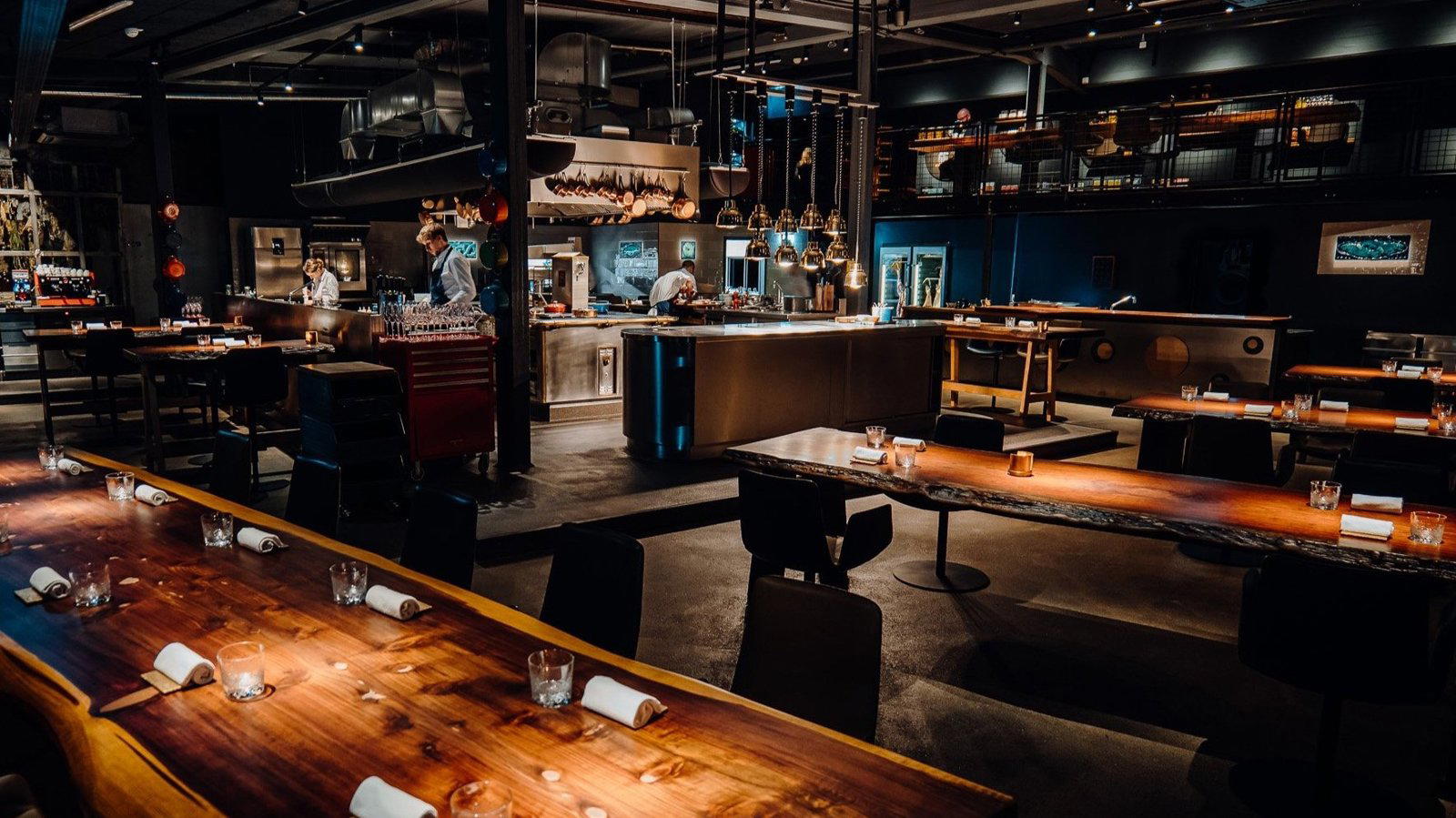
An Industrial Address That Changes the Terms
Rothenburgsort is not where Hamburg's restaurant establishment has historically gathered. The district sits east of the Elbe, defined by warehouses, the Elbbrücken bridges, and the kind of working infrastructure that most premium restaurants spend serious money to avoid. That 100/200 Kitchen has built a two-Michelin-star reputation from Brandshofer Deich 68 says something worth pausing on: in the current European fine-dining moment, particularly ambitious kitchens are increasingly indifferent to postcode prestige. Founded by chef Thomas Imbusch, it is a two-Michelin-star restaurant in Hamburg serving Modern Creative Seasonal Cuisine at about $200 per person. The restaurant's physical context is not incidental to its identity. It is the first signal that the terms here are set differently.
Arriving at the address, the surroundings ask you to recalibrate. This is not the waterfront glamour of Hamburg's inner city, nor the groomed residential streets where several of the city's other four-figure tasting-menu addresses operate. The Elbbrücken area carries weight and atmosphere of a different register, and the contrast between setting and ambition inside is part of what makes the experience coherent rather than contradictory.
Where 100/200 Sits in Hamburg's Fine-Dining Structure
Hamburg's Michelin-starred tier is relatively compact but internally differentiated. At the summit of the local hierarchy sits The Table Kevin Fehling, the city's only three-star house, operating with a format built around a single long counter and a cooking style that references global technique without fixed regional allegiance. Below that, a cluster of two-star properties occupies a middle tier where ambition is documented but the singular authority of three stars has not yet arrived.
100/200 Kitchen holds two Michelin stars (confirmed in both 2024 and 2025), placing it in that second band alongside bianc, which approaches the same price tier from a modern Mediterranean angle. Within that peer group, 100/200 differentiates through its creative classification: the cooking does not declare allegiance to a single national tradition but operates in the space where technical ambition and ingredient sourcing take priority over regional categorisation.
La Liste, which aggregates critical and reader data across global markets, scored 100/200 Kitchen at 79.5 points in 2025 and 82 points in the 2026 edition, placing it among the roughly 1,000 restaurants it tracks across Europe. Opinionated About Dining, which skews toward food-community expert opinion, ranked it 274th in Europe for 2025 and 235th in 2024. That pairing of scores signals consistent recognition rather than a single breakout year: the restaurant has held its position through the period when Michelin confirmed its two stars, rather than arriving on a wave of debut attention.
For Hamburg specifically, the OAD ranking places 100/200 Kitchen in a comparable set that extends well beyond Germany. German comparators in the same critical tier include Aqua in Wolfsburg, JAN in Munich, and Schwarzwaldstube in Baiersbronn, all of which hold comparable or adjacent Michelin status. The creative cooking category also connects it internationally to houses like Alléno Paris au Pavillon Ledoyen and Arpège in Paris, though the German context shapes execution differently.
Thomas Imbusch and What the Creative Category Signals
Chef Thomas Imbusch owns and heads the kitchen, which matters for understanding the restaurant's editorial angle. In German fine dining, the owner-chef model tends to produce more coherent long-term trajectories than the revolving-head-chef arrangements common at hotel properties. The kitchen's creative classification indicates that no single culinary tradition anchors the menu framework: technique, sourcing logic, and composition govern decisions rather than inherited regional convention.
That positioning places the restaurant in a broader European movement where particularly progressive kitchens have largely abandoned national-cuisine framing. The conversation at this level is about what an individual kitchen's craft and sourcing philosophy produces rather than which country's repertoire it extends. Imbusch's approach fits that pattern without being derivative of it: the Rothenburgsort address, the industrial setting, and the restaurant name itself (which refers to the 100-kilometre sourcing radius and the 200-day preparation cycles applied to certain ingredients) all suggest a kitchen with a defined working logic rather than a conventional prestige-signalling strategy.
Other Hamburg addresses working adjacent territory include Koer and Piment, both of which operate in the starred tier with distinct culinary frameworks. Restaurant Haerlin occupies the creative French end of the spectrum in a hotel context, offering a point of contrast in both format and setting. Across these addresses, the city demonstrates that its starred dining scene is genuinely pluralist rather than clustered around a single dominant style.
Format, Timing, and What to Expect Practically
The restaurant operates on a schedule that distinguishes between weekday and weekend access. Tuesday through Thursday, the kitchen runs dinner only, opening at 6:30 pm. Friday brings both a lunch service from noon to 3:30 pm and the standard dinner slot. Saturday extends the format further, with lunch running noon to 3:30 pm and dinner service continuing until midnight. Sunday operates a long lunch format from noon to 6 am, which may refer to an extended Saturday-night-into-Sunday format used for special occasions. The restaurant is closed on Mondays.
The address is Brandshofer Deich 68, 20539 Hamburg, in the Rothenburgsort district near the Elbbrücken. At the four-euro-sign price range, the kitchen prices at the summit of Hamburg's market, consistent with what a two-Michelin-star creative tasting menu commands in a German city context. Expect about $200 per person.5 from 409 responses.
Reservations are essential.
Hamburg's Broader Fine-Dining Context
Germany's starred restaurant scene sits differently in the European imagination than France or Spain, but the country's Michelin count is substantial and its upper-end houses are increasingly receiving the international critical attention they have historically been underrated for. Hamburg specifically has positioned itself as the northern anchor of German creative fine dining, with a concentration of starred addresses that extends from the obvious hotel-adjacent institutions to outliers like 100/200 Kitchen operating on entirely different premises.
The city's restaurant scene beyond the starred tier includes venues across every cuisine category. Visitors building a Hamburg trip around the restaurant can refer to our full Hamburg restaurants guide for a wider view of where the city's dining sits across price points and styles. For accommodation, our Hamburg hotels guide covers the relevant range of properties. The city's bar scene, which has developed a serious cocktail culture alongside its restaurant infrastructure, is covered in our Hamburg bars guide. Additional city context, including cultural programming and experiences, is available through our Hamburg experiences guide and our Hamburg wineries guide.
For those extending beyond Hamburg, the creative cooking tier at the two-star level connects usefully to CODA Dessert Dining in Berlin, Vendôme in Bergisch Gladbach, and ES:SENZ in Grassau, each of which operates with a distinct creative logic within Germany's Michelin framework.
A Quick Peer Check
Comparable venues nearby, for context on price, style, and recognition.
| Venue | Cuisine | Price | Awards | Notes |
|---|---|---|---|---|
| 100/200 KitchenThis venue — the venue you are viewing | Modern Creative Seasonal Cuisine | $$$$ | Michelin 2 Star | Not listed |
| Lakeside | Modern European Fine Dining | $$$$ | Michelin 2 Star | Rotherbaum |
| bianc | Modern Mediterranean Fine Dining | $$$$ | Michelin 2 Star | HafenCity |
| The Table Kevin Fehling | Avant-Garde Fusion Fine Dining | $$$$ | Michelin 3 Star | HafenCity |
| THE LISBETH | Modern North German Fine Dining | $$$$ | Michelin 1 Star | Hamburg-Altstadt |
| Landhaus Scherrer | Michelin-Starred North German Fine Dining | $$$$ | Michelin 1 Star | Neumuehlen |
Recognition history
Dated appearances from independent guides and award organizations, with the underlying list record or original source where available.
Falstaff Restaurant - 96 Falstaff Points
Falstaff
La Liste Top Restaurants
La Liste
Michelin 2 Stars
Michelin
Opinionated About Dining Top Restaurants in Europe Recommended
Opinionated About Dining
Star Wine List
Star Wine List
La Liste Top Restaurants
La Liste
Michelin 2 Stars
Michelin
Opinionated About Dining Top Restaurants in Europe Ranked #274
Opinionated About Dining
The Best Chef One Knife
The Best Chef
Michelin 2 Stars
Michelin
Opinionated About Dining Top Restaurants in Europe Ranked #235
Opinionated About Dining
Opinionated About Dining Top New Restaurants in Europe Recommended
Opinionated About Dining
Continue exploring
More in Hamburg
Restaurants in Hamburg
Browse all →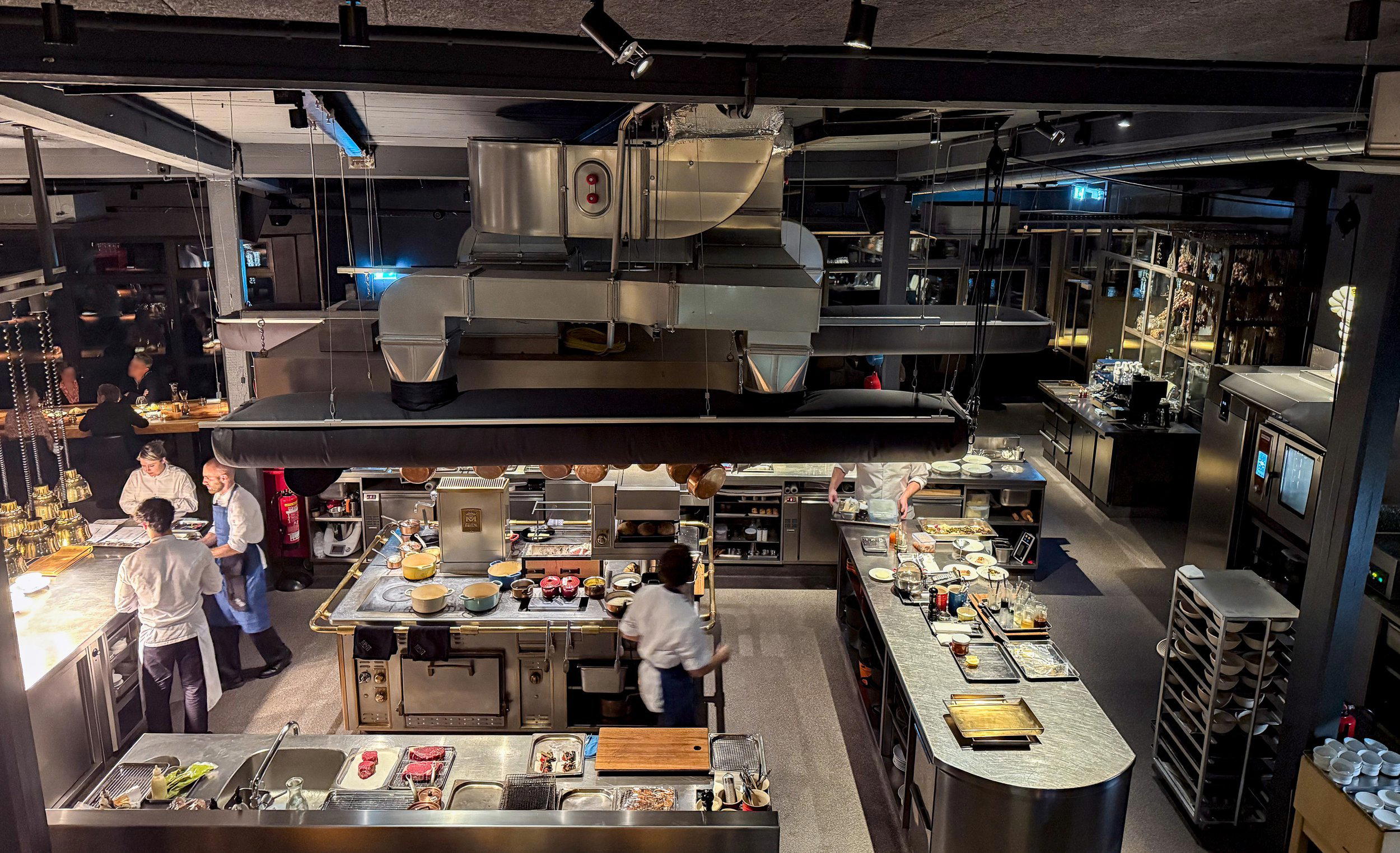
Bars in Hamburg
Browse all →
Hotels in Hamburg
Browse all →
Wineries in Hamburg
Browse all →
At a Glance
- Industrial
- Modern
- Intimate
- Sophisticated
- Special Occasion
- Date Night
- Business Dinner
- Open Kitchen
- Waterfront
- Extensive Wine List
- Local Sourcing
- Waterfront
Current opening hours
- Monday
- 6:30–11 PM
- Tuesday
- 6:30–11 PM
- Wednesday
- Closed
- Thursday
- 6:30–11 PM
- Friday
- 12–3:30 PM, 6:30–11 PM
- Saturday
- 12–3:30 PM, 6:30–11 PM
- Sunday
- 12–3:30 PM, 6:30–11 PM
Hours can change for holidays and private events. Last verified .
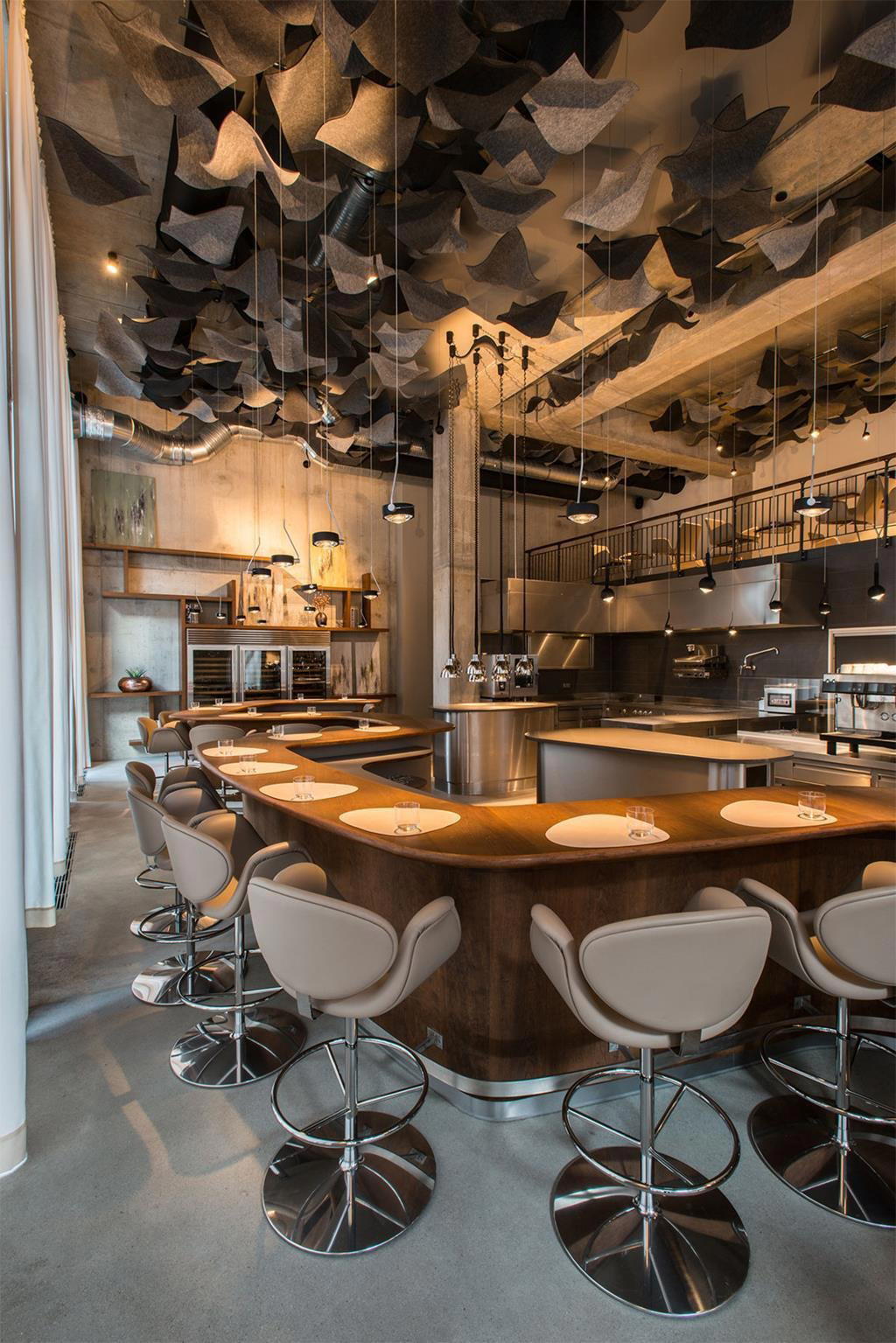
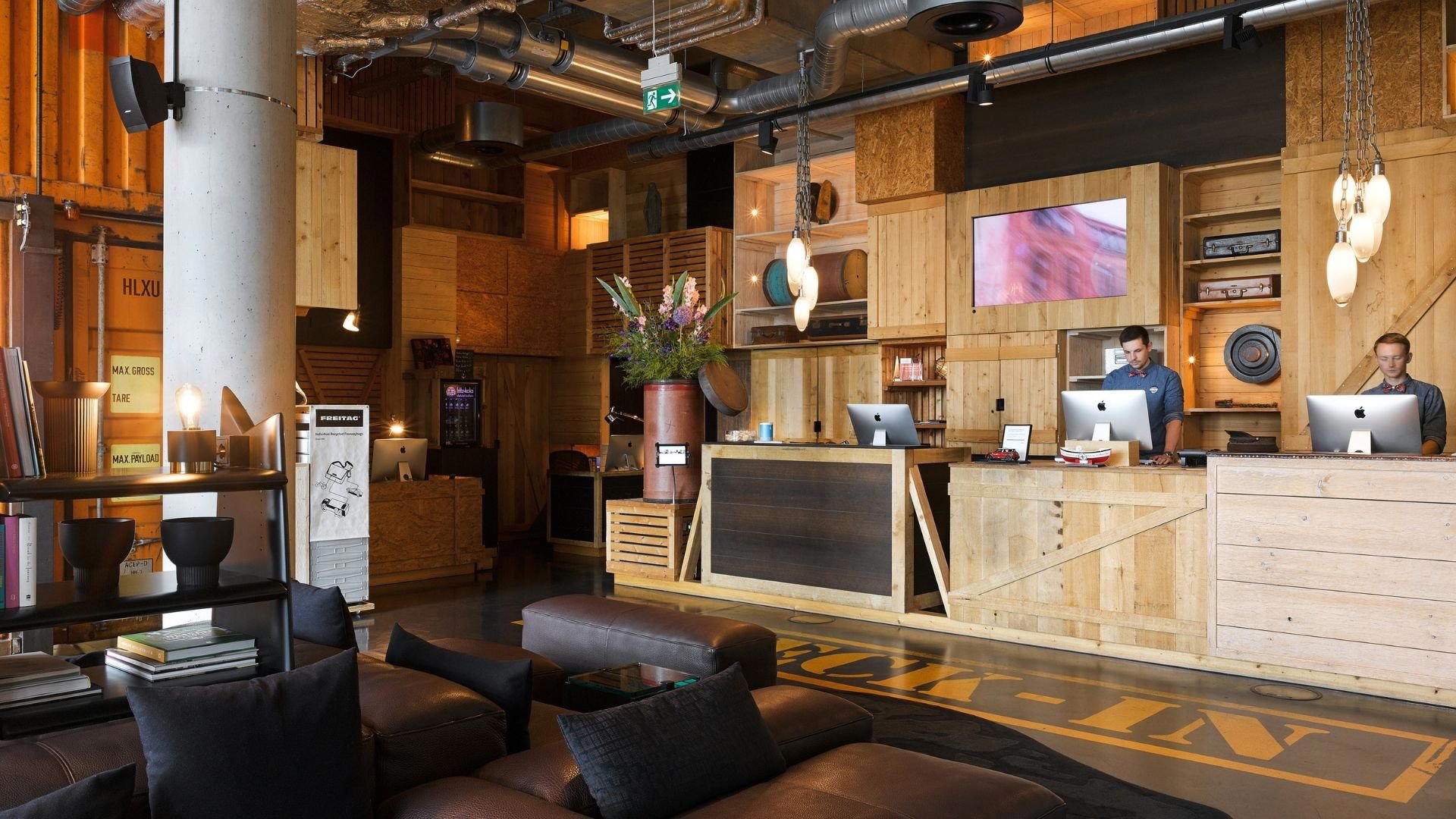
Dim lighting with spotlights on tables, industrial chic with exposed brick, soundproofed ceilings, and an open kitchen as the focal point.