Dekxels
On Denneweg, The Hague's most considered dining street, Dekxels occupies a position in the city's mid-to-upper restaurant tier where the conversation around Dutch ingredients and international technique is most active. The address alone signals intent: this is a neighbourhood where kitchens compete on craft rather than volume. Specific details on format, pricing, and booking are best confirmed directly with the venue.
Pearl is the En Primeur Club membership app — saves, bookings, and concierge access live there. Same editors, same standards.
- Address
- Denneweg 130, 2514 CL Den Haag, Netherlands
- Phone
- +31 70 365 9788
- Website
- dekxels.nl
- Directions
- Get directions
 Saves & bookings on Pearl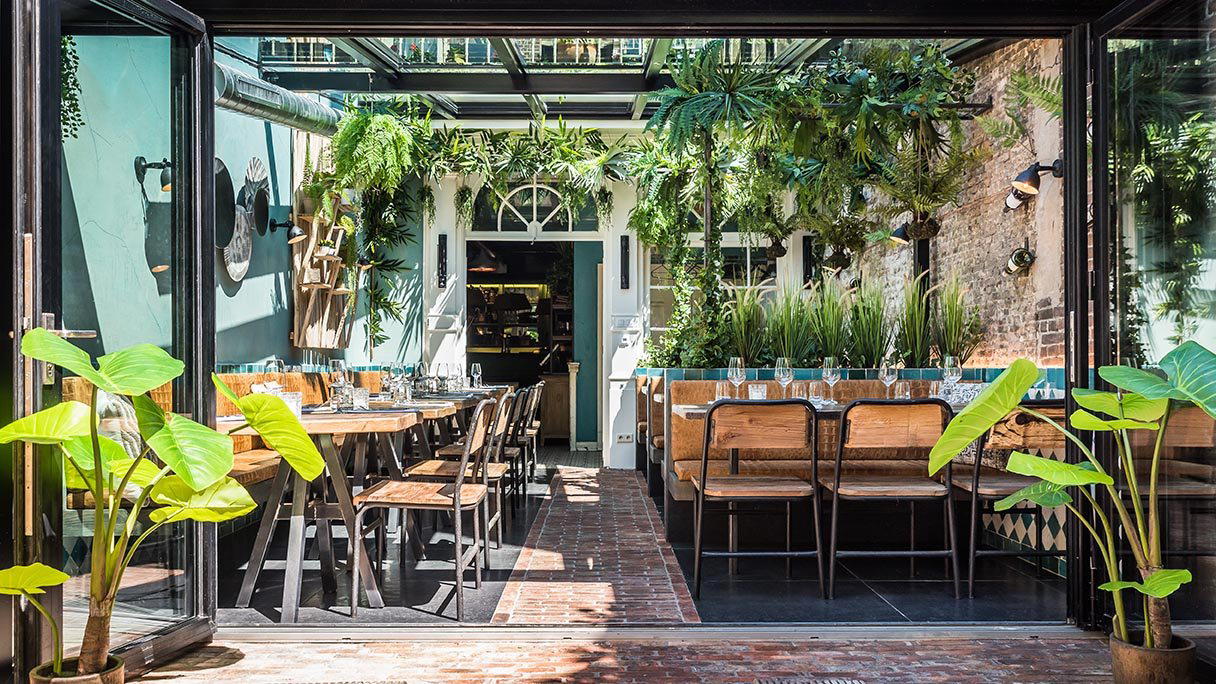
Denneweg and the Dining Logic of The Hague's Most Focused Street
Denneweg does not announce itself. There are no illuminated signs at the canal end, no restaurant-row theatrics to signal what lies ahead. The street runs quietly from the Lange Voorhout edge of the city toward the Frederikpark quarter, lined with independent shops and a dense sequence of restaurants that, taken together, represent The Hague's most coherent argument for neighbourhood dining over destination spectacle. Dekxels is a restaurant at Denneweg 130 in Den Haag, serving Asian-Mediterranean Fusion Small Plates at a price tier around $60 per person. Dekxels, at number 130, sits within that logic. The address places it in a comparable set defined less by price bracket than by the underlying assumption that guests arrive knowing what they want and expecting the kitchen to meet them there.
This matters because The Hague's restaurant scene has developed along different lines from Amsterdam. Without the tourist-volume economics that shape so much of the capital's mid-range dining, Hague kitchens on streets like Denneweg have had more room to settle into specific identities. The pressure to perform for broad audiences is lower; the pressure to hold a local clientele that returns and compares is higher. Dekxels has,208 reviews. That produces a particular kind of seriousness in the cooking, and Dekxels occupies a position in this environment where the question of what Dutch ingredients can do under international pressure is most openly examined.
The Intersection of Local Product and Imported Method
The editorial thread running through particularly interesting Dutch restaurant kitchens of the past decade is the same one playing out in comparable cities across northern Europe: how much can regional produce carry when the technique applied to it draws from Lyon, Tokyo, or New York rather than from Dutch culinary tradition? It is a question that De Nieuwe Winkel in Nijmegen answers through plant-forward naturalism, and that De Librije in Zwolle answers through years of accumulated creative authority. At the Hague level, within a neighbourhood restaurant rather than a destination pilgrimage, the answer tends to be more pragmatic and often more interesting for that reason.
Dutch larder depth is underappreciated from the outside. North Sea fish, Zeeland shellfish, spring lamb from the dunes, white asparagus from the sandy soils of Limburg and Brabant, aged Gouda with an actual provenance rather than a supermarket shelf: these are the materials that, when a kitchen applies French classical discipline or Japanese restraint or contemporary Scandinavian minimalism, produce plates that feel grounded rather than imitative. The leading kitchens in this tier use import technique as a lens rather than a destination, putting the product first and reaching for the method that takes full advantage of it. The venues that have drifted from this tend to feel derivative regardless of execution skill.
Dekxels sits in a Denneweg context where this approach is the standard expectation. The street's dining culture favours kitchens that know their sourcing well enough to talk about it, and guests who have likely eaten their way through a share of the city's comparable addresses before arriving. That positions it alongside Basaal, which has built a reputation around seasonal Dutch produce at an accessible price point, and at some remove from the creative French register of Calla's, which operates at the summit of the city's price tier and competes against a different national comparable set entirely.
Where Dekxels Sits in The Hague's Dining Tier
The Hague's restaurant category now runs from casual neighbourhood bistros through a competent mid-range to a small clutch of addresses with national-level recognition. 6&24 holds its position in the modern cuisine bracket; Bistro Veen and Botanica each occupy distinct corners of the city's dining identity. Dekxels, at Denneweg 130, addresses the part of the market where guests want craft and considered sourcing without committing to the full ceremony of a tasting-menu experience.
Nationally, Dutch fine dining has produced addresses with serious international standing. Inter Scaldes in Kruiningen, De Lindenhof in Giethoorn, Brut172 in Reijmerstok, and De Bokkedoorns in Overveen all operate at or near the level where Dutch produce and international technique converge at their most ambitious. Restaurants like De Groene Lantaarn in Staphorst, De Lindehof in Nuenen, Tribeca in Heeze, and De Treeswijkhoeve in Waalre demonstrate how broadly this culinary seriousness is distributed across the country rather than concentrated in one city. Within The Hague specifically, that national energy finds its Denneweg expression at a more accessible register, which is not a lesser one.
For comparison across broader dining traditions, the approach of grounding international technique in rigorously sourced local product mirrors what Le Bernardin in New York City has done with seafood for decades, or what Lazy Bear in San Francisco achieves through its communal format anchored in California produce. The ambition is comparable even when the scale and formality differ considerably.
Planning a Visit to Dekxels
Denneweg 130 is accessible from The Hague Centraal by tram, with the street sitting roughly fifteen minutes on foot through the Lange Voorhout. The neighbourhood is most animated at dinner, when the street fills with a mix of Hague professionals and visitors drawn by the concentration of independent kitchens rather than any single address. Dekxels recommends reservations and is open Monday through Thursday and Sunday from 5 to 10 PM, and Friday and Saturday from 5 to 11 PM. The dress code is smart casual. The spring white asparagus season, which runs from late April through June, and the autumn North Sea fish calendar represent the periods when Dutch ingredient kitchens of this type tend to be at their most focused. Those planning around those windows will find Denneweg at its most compelling.
Comparable Venues
Comparable venues nearby, for context on price, style, and recognition.
| Venue | Cuisine | Price | Notes |
|---|---|---|---|
| DekxelsThis venue — the venue you are viewing | Asian-Mediterranean Fusion Small Plates | $$$ | Not listed |
| de zoute kater | Seasonal Fusion Bistro | $$$ | Zoutmanstraat |
| Little V | Authentic Vietnamese | $$ | Chinatown |
| De Kwartel | Dutch Beach Pavilion with Seafood | $$ | Zuiderstrand |
| Onda | Nordic-Mediterranean Fusion | $$$ | Station |
| Christian | Dutch in Historic Windmill | $$$ | near center |
Continue exploring
More in The Hague
Restaurants in The Hague
Browse all →
Bars in The Hague
Browse all →
Hotels in The Hague
Browse all →
Wineries in The Hague
Browse all →
At a Glance
- Cozy
- Trendy
- Modern
- Date Night
- Group Dining
- Special Occasion
- Open Kitchen
Current opening hours
- Monday
- 5–10 PM
- Tuesday
- 5–10 PM
- Wednesday
- 5–10 PM
- Thursday
- 5–10 PM
- Friday
- 5–11 PM
- Saturday
- 5–11 PM
- Sunday
- 5–10 PM
Hours can change for holidays and private events. Last verified .
Cozy and welcoming atmosphere with natural elements and an enclosed patio.