De Sushimeisjes
De Sushimeisjes occupies a residential stretch of Valkenboskade in The Hague, operating in a city where Japanese dining has historically played second fiddle to the Dutch-French fine dining tradition. The restaurant's name, literally 'the sushi girls', signals a deliberate informality that sits at odds with the more ceremonial omakase formats elsewhere in the Netherlands. For The Hague diners seeking Japanese cooking outside the city centre circuit, it represents a neighbourhood-scale alternative worth tracking.
Pearl is the En Primeur Club membership app — saves, bookings, and concierge access live there. Same editors, same standards.
- Address
- Valkenboskade 622, 2563 JP Den Haag, Netherlands
- Phone
- +31 70 737 0403
- Website
- desushimeisjes.nl
- Directions
- Get directions
 Saves & bookings on Pearl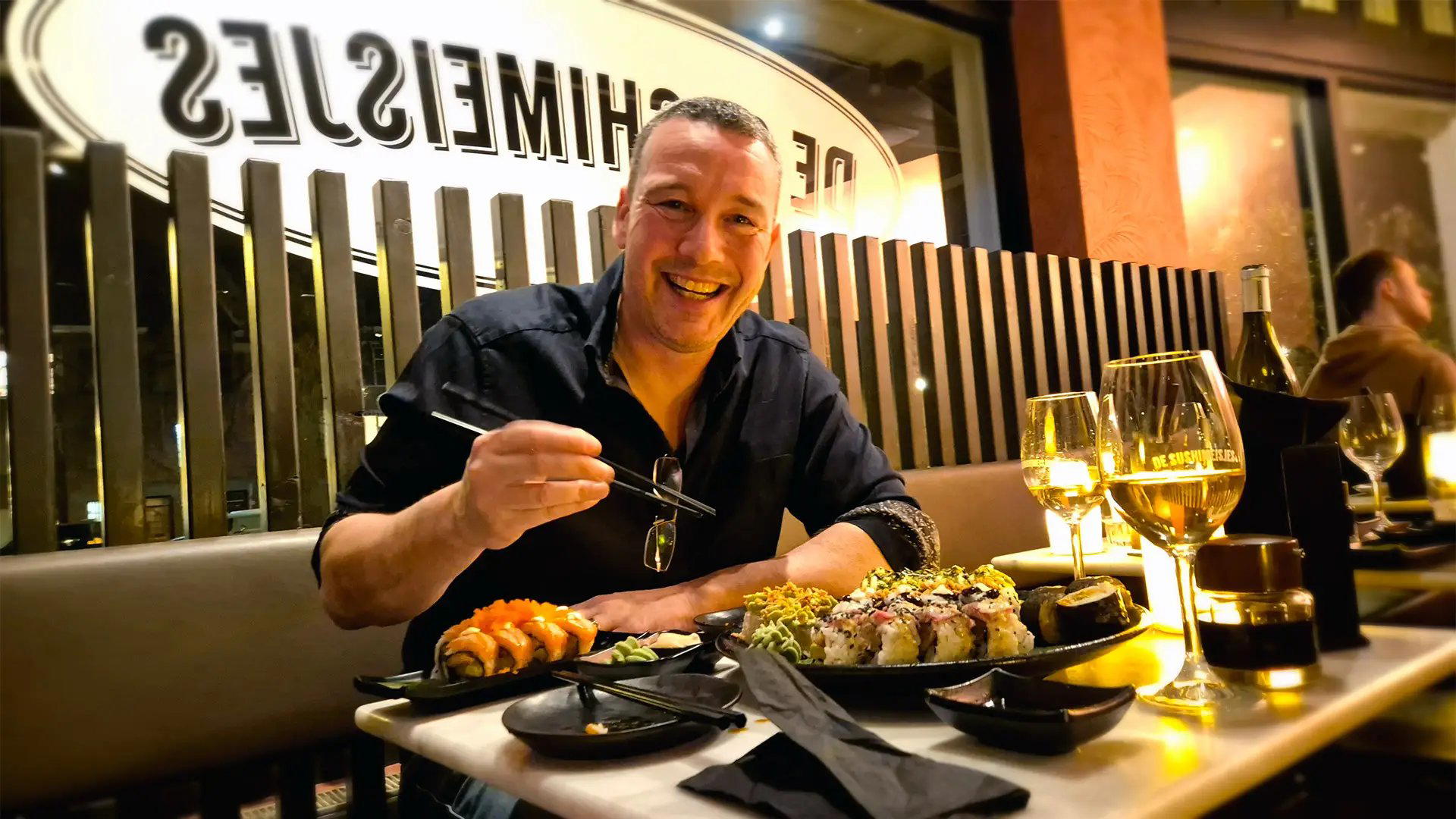
The Residential Address as Editorial Statement
Sushi in the Netherlands has long been divided between two formats: the high-ceremony omakase counter aimed at a business-entertainment crowd, and the conveyor-belt or delivery-first operation that treats Japanese cuisine as a convenience category. The Hague's dining scene, which skews toward Dutch-French fine dining (see Calla's at the upper end of that tradition) and seasonal modern cooking (as at Basaal), has not historically been the obvious home for Japanese restaurants operating between those poles. De Sushimeisjes is a creative Japanese sushi restaurant at Valkenboskade 622 in Den Haag, with a casual dress code, recommended reservations, and an average price of about $25 per person. De Sushimeisjes at Valkenboskade 622, a residential canal address in the 2563 JP postcode south of the city centre, sits in a more ambiguous, interesting middle position.
The address itself is a signal. Valkenboskade is not a dining street in any conventional sense. It is a neighbourhood canal road where residents cycle past terraced houses and where a restaurant's presence depends on word-of-mouth rather than footfall from tourism or office lunch traffic. That positioning shapes the likely format: somewhere intimate in scale, operating on a local-loyalist model rather than the destination-diner circuit that feeds venues in the city centre or the Statenkwartier.
What the Name Reveals About Menu Philosophy
The name 'De Sushimeisjes', the sushi girls, carries more editorial weight than it might first appear. In a category where Japanese restaurant naming conventions in Europe tend toward either Japanese-language formality (a bid for authenticity signals) or pan-Asian genericness, a Dutch-language name that foregrounds personality over ceremony suggests a particular relationship with the product. It implies that the cooking here is not structured around the reverence-and-ritual grammar of the omakase tradition, where the chef's lineage and the silence at the counter are part of the offering. The frame is closer to the neighborhood restaurant that happens to do sushi well, rather than a sushi restaurant that happens to be in a neighborhood.
This matters for understanding what the menu architecture is likely to reveal, even without access to the specific dishes. Japanese cooking in a neighborhood format typically privileges accessibility in construction: rolls and nigiri that reward the regular customer rather than pieces timed to a single sitting's progression. It is a different editorial statement from what you find at, say, Atomix in New York City, where the multi-course Korean fine dining format makes ceremony itself a component of the meal, or at Le Bernardin, where the menu architecture expresses a totalizing culinary vision. The Sushimeisjes format, by contrast, likely prioritizes the single visit that feels easy to repeat over the single visit that demands to be remembered as an occasion.
The Hague's Japanese Dining in Context
The Hague is not Amsterdam, and that distinction matters for anyone assessing the Japanese dining tier here. Amsterdam houses the Netherlands' most ambitious Japanese counters and the strongest concentration of omakase formats, the restaurants that compete in the same comparable set as multi-starred European destinations. The Hague's fine dining strengths are elsewhere: in modern European cooking at places like 6&24, in bistro formats like Bistro Veen, or in plant-forward cooking at Botanica. Japanese restaurants in The Hague therefore operate against a different competitive backdrop, one where the city's diplomatic population (The Hague houses a high density of embassies and international institutions) creates demand for quality but not necessarily for one formal or expensive tasting-menu tier.
For comparison, the Netherlands' most decorated kitchens operate at a different scale entirely: De Librije in Zwolle, Ciel Bleu in Amsterdam, and Aan de Poel in Amstelveen anchor the country's fine dining recognition at Michelin level. The restaurant is not in that competitive conversation, nor does its positioning suggest it is trying to be. Venues like De Nieuwe Winkel in Nijmegen, De Bokkedoorns in Overveen, and Brut172 in Reijmerstok represent the range of serious cooking operating at regional scale in the Netherlands; the restaurant occupies a more local, neighbourhood-anchored tier, and that positioning carries its own logic. Venues at De Groene Lantaarn in Staphorst, De Lindehof in Nuenen, and De Lindenhof in Giethoorn and 't Nonnetje in Harderwijk illustrate how the Netherlands sustains serious restaurants well outside its urban centres; the restaurant is a different proposition, closer in spirit to the neighbourhood specialist that earns loyalty through consistency rather than occasion dining.
Planning a Visit
Valkenboskade 622 sits in the southern residential belt of The Hague, accessible by tram and a short walk from several residential neighbourhoods. Because the address is off the usual dining circuit and the venue operates at what appears to be an intimate scale, booking ahead is advisable rather than optional, particularly on weekend evenings when neighbourhood restaurants of this type typically run at capacity on a small number of covers.
Reputation First
Comparable venues nearby, for context on price, style, and recognition.
| Venue | Cuisine | Price | Notes |
|---|---|---|---|
| De SushimeisjesThis venue — the venue you are viewing | Creative Japanese Sushi | $$ | Not listed |
| Houbolt | Dutch Bistro | $$ | Westduinen |
| The Gyros Club | Greek Gyros and Cocktails | $$ | City Center |
| L'Amour Toujours | French-Italian Mediterranean Bistro | $$ | Zeeheldenkwartier |
| Bistro Veen | French-Dutch Bistro | $$ | Veenkade |
| Oker | Asian-inspired Fusion Small Plates | $$ | Voorhout |
Continue exploring
More in The Hague
Restaurants in The Hague
Browse all →
Bars in The Hague
Browse all →
Hotels in The Hague
Browse all →
Wineries in The Hague
Browse all →
At a Glance
- Cozy
- Trendy
- Date Night
- Casual Hangout
- Terrace
- Sake Program
Current opening hours
- Monday
- 4:30–11 PM
- Tuesday
- 4:30–11 PM
- Wednesday
- 4:30–11 PM
- Thursday
- 4:30–11 PM
- Friday
- 4:30–11 PM
- Saturday
- 4:30–11 PM
- Sunday
- 4:30–11 PM
Hours can change for holidays and private events. Last verified .
Cozy and trendy atmosphere with a welcoming vibe, suitable for lunch or dinner inside or on the terrace.