De Plantage
De Plantage sits on Plantage Kerklaan in Amsterdam's green eastern quarter, a neighbourhood defined by the Artis zoo, the Hortus Botanicus, and a residential calm that stands apart from the canal-centre bustle. The address places it inside one of the city's most considered dining pockets, where the surroundings set the register before the meal begins.
Pearl is the En Primeur Club membership app — saves, bookings, and concierge access live there. Same editors, same standards.
- Address
- Plantage Kerklaan 36, 1018 CZ Amsterdam, Netherlands
- Phone
- +31207606800
- Website
- caferestaurantdeplantage.nl
- Directions
- Get directions
 Saves & bookings on Pearl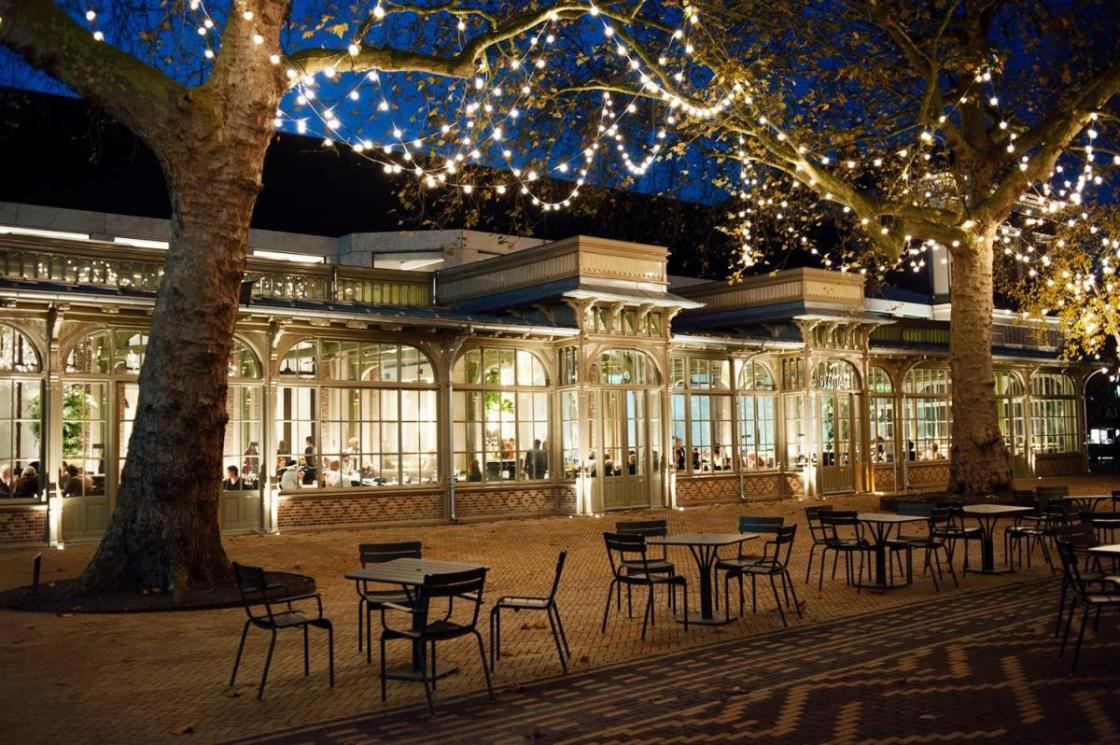
A Neighbourhood That Does the Work First
Amsterdam's dining geography tends to flatten in most coverage: the canal belt gets the headlines, the Jordaan gets the romanticism, and everything east of Waterlooplein gets underwritten. The Plantage district earns a different kind of attention from those who know the city well. Bordered by the Hortus Botanicus to the west and Artis Royal Zoo to the east, Plantage Kerklaan carries a particular quality of light and deliberate pace that most of central Amsterdam traded away a long time ago. When a restaurant takes its name from its neighbourhood rather than its chef or a concept, that is usually a signal worth reading.
De Plantage, at Plantage Kerklaan 36, sits inside this quietly considered part of the city. The Plantage district developed in the nineteenth century as a green leisure quarter for Amsterdam's middle classes, and the neighbourhood has retained a residential seriousness that filters who comes here and why. Visitors to Artis or the Hortus wander through, but they tend not to linger unless the area gives them reason. A restaurant here competes less on foot traffic and more on reputation among people who plan deliberately.
Where De Plantage Sits in Amsterdam's Dining Structure
Amsterdam's restaurant scene has grown considerably more sophisticated over the past decade. At the upper end, Michelin-starred addresses like Ciel Bleu, Flore, Spectrum, and Vinkeles define a tier that prices internationally and competes on tasting-menu ambition. Below that, a mid-range bracket has emerged around organic sourcing, contemporary Dutch cooking, and accessible formats. De Kas, Bolenius, BAK, and Wils each occupy a version of this space, drawing on local produce, seasonal discipline, and a lower-key approach to service than the Michelin tier demands.
De Plantage belongs to a related conversation without being a direct peer of either group. The neighbourhood itself argues for a certain register: something that fits the scale of the street, respects the proximity to the Hortus and its emphasis on cultivation and natural systems, and serves the local population of the Plantage quarter as readily as it serves visitors from elsewhere in the city. That positioning places it in a category where hospitality and neighbourhood fit matter as much as technical ambition.
For comparison, Bistro de la Mer offers a useful reference point in a different Amsterdam neighbourhood context: an address where the local character of the surrounding streets shapes the experience as much as what arrives at the table. The restaurant operates on similar logic, just with a greener, quieter set of surroundings shaping the frame.
The Dutch Fine Dining Circuit Beyond Amsterdam
Understanding what the restaurant represents within Amsterdam is sharper when placed against what the Netherlands produces elsewhere. The country punches well above its size in serious restaurant terms. De Librije in Zwolle and Inter Scaldes in Kruiningen operate at the three-Michelin-star level. Plant-forward fine dining has a genuinely strong Dutch representative in De Nieuwe Winkel in Nijmegen. Rural destinations like De Lindenhof in Giethoorn, Tribeca in Heeze, De Groene Lantaarn in Staphorst, Brut172 in Reijmerstok, De Lindehof in Nuenen, De Bokkedoorns in Overveen, and De Treeswijkhoeve in Waalre demonstrate how far Dutch serious dining has spread beyond the Randstad cities.
Within that national picture, Amsterdam-based restaurants carry the additional weight of serving an international dining public with expectations formed partly by cities like Paris, London, Copenhagen, and New York. Addresses like Le Bernardin in New York City or Lazy Bear in San Francisco represent the kind of internationally benchmarked fine dining that Amsterdam's top tier is increasingly measured against. The restaurant operates in a register that is less concerned with that international benchmark and more grounded in what the Plantage neighbourhood specifically asks of a restaurant.
What the Hortus Botanicus Signals About This Corner of the City
The Hortus Botanicus is one of the oldest botanical gardens in the world, established in the seventeenth century as a garden for medicinal herbs and later expanded into a serious scientific collection. It remains operational as both a research institution and a public garden, and its presence on Plantage Middenlaan shapes the character of the surrounding blocks in a way that few Amsterdam landmarks manage. The neighbourhood around it tends to attract people with a specific kind of patience: those who find value in things that grow slowly and present themselves without spectacle.
A restaurant on Plantage Kerklaan inherits something of that ambient quality. The street runs parallel to the zoo's perimeter and connects the Hortus end of the district to the broader residential quarter. It is not a dining street in the way that the Utrechtsestraat or the Nine Streets area function as organised circuits of restaurants and bars. It is a street where a restaurant exists on its own terms, drawing from the neighbourhood's particular density of museums, gardens, and long-established institutions rather than from a cluster effect of competing tables nearby.
That distinction matters for how a visitor should think about an evening at the restaurant. It suits an itinerary that treats the Plantage district as a destination rather than a detour from the canal belt. Combining a visit here with the Hortus, the Dutch Resistance Museum on Plantage Kerklaan itself, or an evening at Carré theatre on the Amstel makes the neighbourhood logic legible.
Planning a Visit: What to Know
Address: Plantage Kerklaan 36, 1018 CZ Amsterdam, Netherlands
Neighbourhood: Plantage, Amsterdam East
Nearby landmarks: Hortus Botanicus, Artis Royal Zoo, Dutch Resistance Museum
Booking: Recommended
Price range: About $25 per person
Hours: Mon: 10 AM-6 PM; Tue: 10 AM-12 AM; Wed: 10 AM-12 AM; Thu: 10 AM-1 AM; Fri: 10 AM-1 AM; Sat: 10 AM-1 AM; Sun: 10 AM-12 AM
Getting there: Plantage Kerklaan 36, 1018 CZ Amsterdam, Netherlands
Nearby-ish Comparables
Comparable venues nearby, for context on price, style, and recognition.
| Venue | Cuisine | Price | Notes |
|---|---|---|---|
| De PlantageThis venue — the venue you are viewing | Modern Mediterranean | $$ | Not listed |
| Ottolenghi Amsterdam | Modern Vegetable-Centric Mediterranean | $$$ | P.C. Hooftbuurt |
| Hearth | Plant-Based Fusion with Global Influences | $$ | Oosterparkbuurt Noordwest |
| Bord'eau | Dining | Not listed | BG-terrein e.o. |
| Dynasty | Chinese & Thai Fusion | $$ | Kalverdriehoek |
| Buurtcafe de Tros | Modern Mediterranean Neighborhood Café | $$ | Dapperbuurt Zuid |
Continue exploring
More in Amsterdam
Restaurants in Amsterdam
Browse all →
Bars in Amsterdam
Browse all →
Hotels in Amsterdam
Browse all →
Wineries in Amsterdam
Browse all →
At a Glance
- Romantic
- Elegant
- Cozy
- Scenic
- Date Night
- Brunch
- Casual Hangout
- Terrace
- Garden
- Open Kitchen
- Extensive Wine List
- Garden
Current opening hours
- Monday
- 10 AM–6 PM
- Tuesday
- 10 AM–12 AM
- Wednesday
- 10 AM–12 AM
- Thursday
- 10 AM–1 AM
- Friday
- 10 AM–1 AM
- Saturday
- 10 AM–1 AM
- Sunday
- 10 AM–12 AM
Hours can change for holidays and private events. Last verified .
Light-filled conservatory with large windows, high ceilings, fairy lights, and relaxing garden views.