De Nieuwe Polderkeuken
Our verdict
De Nieuwe Polderkeuken sits on the village square in Stolwijk, a polder village in the Dutch Groene Hart where agriculture and waterway define the surrounding terrain. The restaurant draws its identity from that landscape, anchoring its kitchen in locally sourced produce from the meadows and farms that press close to the Krimpenerwaard region. For visitors making the journey out of Rotterdam or Gouda, it represents the kind of destination dining that rural Dutch hospitality does quietly well.

Pearl is the En Primeur Club membership app — saves, bookings, and concierge access live there. Same editors, same standards.
- Address
- Dorpsplein 7, 2821 AR Stolwijk, Netherlands
- Phone
- +31182602016
- Hours
- Mon–Tue ClosedWed 6–9 PMThu 12–2:30 PM, 6–10:30 PMFri 12–2:30 PM, 6–11 PMSat 12–2:30 PM, 6–11:30 PMSun Closed
- Website
- polderkeuken.nl
- Directions
- Get directions
- Booking
- Book on the venue's website
Dining at the edge of the Groene Hart
The village square in Stolwijk is the kind of place that takes a moment to register as a dining destination. Dorpsplein 7 sits in a small polder community inside the Krimpenerwaard, a low-lying agricultural region between Rotterdam and Gouda where the land is defined by drainage channels, dairy farms, and stretches of reed meadow. Arriving by car from the A12 or the N210, the built environment shrinks steadily until the village appears: a church, a cluster of traditional Dutch facades, and De Nieuwe Polderkeuken on the square itself. The name translates literally as The New Polder Kitchen, and that framing is not incidental. It announces that the food here is tied to this specific terrain.
The Groene Hart, the protected green heart at the centre of the Randstad conurbation, has become an unlikely reference point for Dutch restaurants that want to move beyond generic regional sourcing claims and anchor their menus to a particular agricultural identity. Our full Stolwijk restaurants guide maps the area's dining options in more detail, but De Nieuwe Polderkeuken operates in a category where geography functions as both context and ingredient list.
The sourcing argument that the polder makes
Dutch fine dining has spent much of the past decade sorting itself into two broad camps. One gravitates toward technical ambition and international reference points, as seen in the programmes at Ciel Bleu in Amsterdam and FG in Rotterdam. The other roots itself in landscape and seasonal produce with an almost agrarian discipline, a tradition that runs through venues like De Nieuwe Winkel in Nijmegen, where organic sourcing is the structural principle rather than a marketing layer, and De Lindenhof in Giethoorn, which draws from the Overijssel waterland in a comparable way.
De Nieuwe Polderkeuken's position in Stolwijk places it squarely in that second tradition. The Krimpenerwaard is designated as a landscape protection area, which limits intensive agriculture and preserves the character of the dairy and vegetable production that has defined the region for centuries. Kitchens that operate here are, by proximity, working with ingredients shaped by that restriction: slower-grown produce, traditional cattle breeds, waterway fish, and the herbs and wild plants that thrive in the transition zones between polder meadow and drainage ditch. This is the kind of sourcing specificity that restaurants in denser urban settings spend considerable effort trying to simulate.
That pattern has a longer precedent in the Netherlands. Restaurants outside the major cities that build their identity around regional produce tend to operate with shorter supply chains and more direct relationships with growers, which matters both for ingredient quality and for the seasonal honesty of the menu. Venues like De Groene Lantaarn in Staphorst and De Lindehof in Nuenen demonstrate what that commitment looks like in practice in other Dutch rural settings. In each case, the surrounding geography is not backdrop but source material.
Where this fits in the Dutch rural dining circuit
The Netherlands has developed a coherent network of serious restaurants in small towns and villages, a pattern that distinguishes it from most other European countries where fine dining remains concentrated in capitals and regional cities. De Librije in Zwolle, Inter Scaldes in Kruiningen, and Brut172 in Reijmerstok each demonstrate that serious cooking and remote locations are not mutually exclusive in the Dutch context. The country's density and road infrastructure mean that a forty-five-minute drive from a major city can reach a village restaurant without the logistical friction that would make the same journey impractical in less connected countries.
Stolwijk sits roughly twenty kilometres from Rotterdam and fifteen from Gouda, which puts it within reach of a substantial dining public willing to travel for a specific experience. That geography positions De Nieuwe Polderkeuken inside a cluster of destination restaurants in South Holland and the surrounding provinces that draw city-based diners for weekend lunches and evening services. De Bokkedoorns in Overveen, Aan de Poel in Amstelveen, and Central Park in Voorburg occupy a similar role in the western Netherlands, each anchoring its programme to a specific local or natural setting. The pattern holds: Dutch diners have a demonstrated appetite for leaving the Randstad to eat well in smaller places.
Internationally, the model has direct parallels. Lazy Bear in San Francisco built its format around communal dining and local sourcing in an urban-adjacent setting. Le Bernardin in New York City shows how a singular sourcing philosophy, in that case seafood provenance, can define a restaurant's entire competitive identity for decades. The specific ingredient argument differs, but the underlying logic is the same: tell a clear story about where the food comes from and build everything else around it.
What to expect at the table
What the restaurant's name, address, and context do confirm is that the kitchen operates with a stated connection to polder-region sourcing, and that the surrounding area in the Krimpenerwaard provides a specific and well-defined ingredient palette: dairy from meadow-grazed cattle, freshwater and brackish fish from the region's channels, seasonal vegetables from smallholdings in the polder, and foraged material from the landscape's unmanaged margins. Restaurants working this framework in comparable Dutch settings run tasting menus that change with the agricultural calendar, with particular depth in autumn and early spring when the transitions between seasons produce the most interesting ingredient combinations. Guests travelling from outside the region should plan for that kind of format rather than an à la carte selection, though confirmation of the current menu structure should come directly from the restaurant before booking.
For visitors making a dedicated trip, the drive from Rotterdam or Gouda through the Krimpenerwaard is worth doing slowly. The landscape is flat in the specific Dutch way that reads as calm rather than featureless, with water visible at nearly every turn and the farmsteads spaced out across the meadows in patterns that have not changed substantially in two centuries. Arriving at Dorpsplein in that context makes the meal's sourcing argument feel less like a concept and more like an observable fact. Tribeca in Heeze and 't Nonnetje in Harderwijk offer comparable experiences of arriving at a serious restaurant through a distinctly non-urban Dutch setting, if you are building a broader touring itinerary around this kind of dining.
Planning your visit
Stolwijk is accessible by car from Rotterdam in under thirty minutes via the N210, and from Gouda in approximately fifteen minutes. Public transport connections to the village are limited, making the journey effectively car-dependent for most visitors. For visitors combining the trip with wider South Holland dining, the proximity to Gouda and the routes toward Rotterdam create natural pairing options with other restaurants in the regional circuit.
Frequently asked questions
Is De Nieuwe Polderkeuken suitable for children?
The restaurant sits on Dorpsplein 7 in Stolwijk, a quiet village square setting that is unlikely to suit very young children accustomed to casual family restaurants. The name and positioning suggest a considered dining room format rather than an informal eatery. Families with older children who can engage with a structured meal service will find the rural polder context more appropriate than those seeking a flexible, drop-in environment.
What should I expect atmosphere-wise at De Nieuwe Polderkeuken?
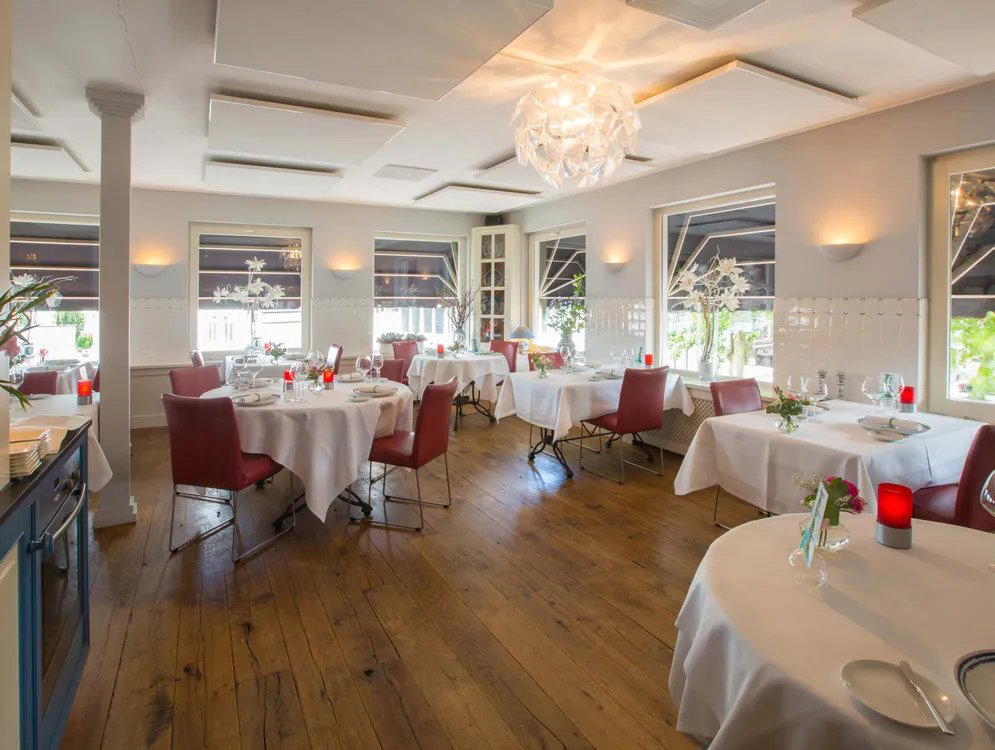
Stolwijk is a small polder community in the Krimpenerwaard, and Dorpsplein 7 places the restaurant directly on the village square — a setting that reads as local and grounded rather than destination-resort theatrical. Dutch rural dining rooms at this level tend toward spare, considered interiors that reflect the landscape outside rather than competing with it. Expect a quieter register than Rotterdam's city-centre restaurants, with a room that prioritises the food over spectacle.
How far is De Nieuwe Polderkeuken from major Dutch cities, and is it worth the drive from Rotterdam or Gouda?
Stolwijk sits roughly 30 minutes from Rotterdam via the N210 and approximately 15 minutes from Gouda by car, making De Nieuwe Polderkeuken a realistic dinner destination from either city without requiring an overnight stay. The Netherlands has developed a coherent circuit of serious village restaurants — a pattern that rewards drivers willing to leave urban centres — and Stolwijk's Dorpsplein address places this venue within that accessible rural tier. Public transport connections to Stolwijk are limited, so a car is the practical option for most visitors.
What should I eat at De Nieuwe Polderkeuken?
The name itself — Nieuwe Polderkeuken, or 'New Polder Kitchen' — signals a regional Dutch orientation, suggesting produce and traditions drawn from the Groene Hart area. For current menu specifics, contacting the restaurant directly via Dorpsplein 7, Stolwijk is the reliable route.
Where do I go for De Nieuwe Polderkeuken?
De Nieuwe Polderkeuken is located at Dorpsplein 7, 2821 AR Stolwijk, Netherlands, Stolwijk.
Comparable Venues
Comparable venues nearby, for context on price, style, and recognition.
| Venue | Cuisine | Price | Notes |
|---|---|---|---|
| De Nieuwe PolderkeukenThis venue — the venue you are viewing | New Dutch with French influences | Not listed | Not listed |
| de Willem | Modern French-Asian Fusion | $50–100 | Westergasfabriek |
| Le Mortier | Seasonal French Fine Dining | $50–100 | Centrum |
| Hemelse Modder | Contemporary Dutch-French Cuisine | $50–100 | Scheepvaarthuisbuurt |
| George W.P.A. | French-New York Brasserie | $30–50 | Vondelpark Oost |
| Johannes | Modern French Fine Dining | $50–100 | Leidsegracht Noord |
Continue exploring
More in Stolwijk
Restaurants in Stolwijk
Browse all →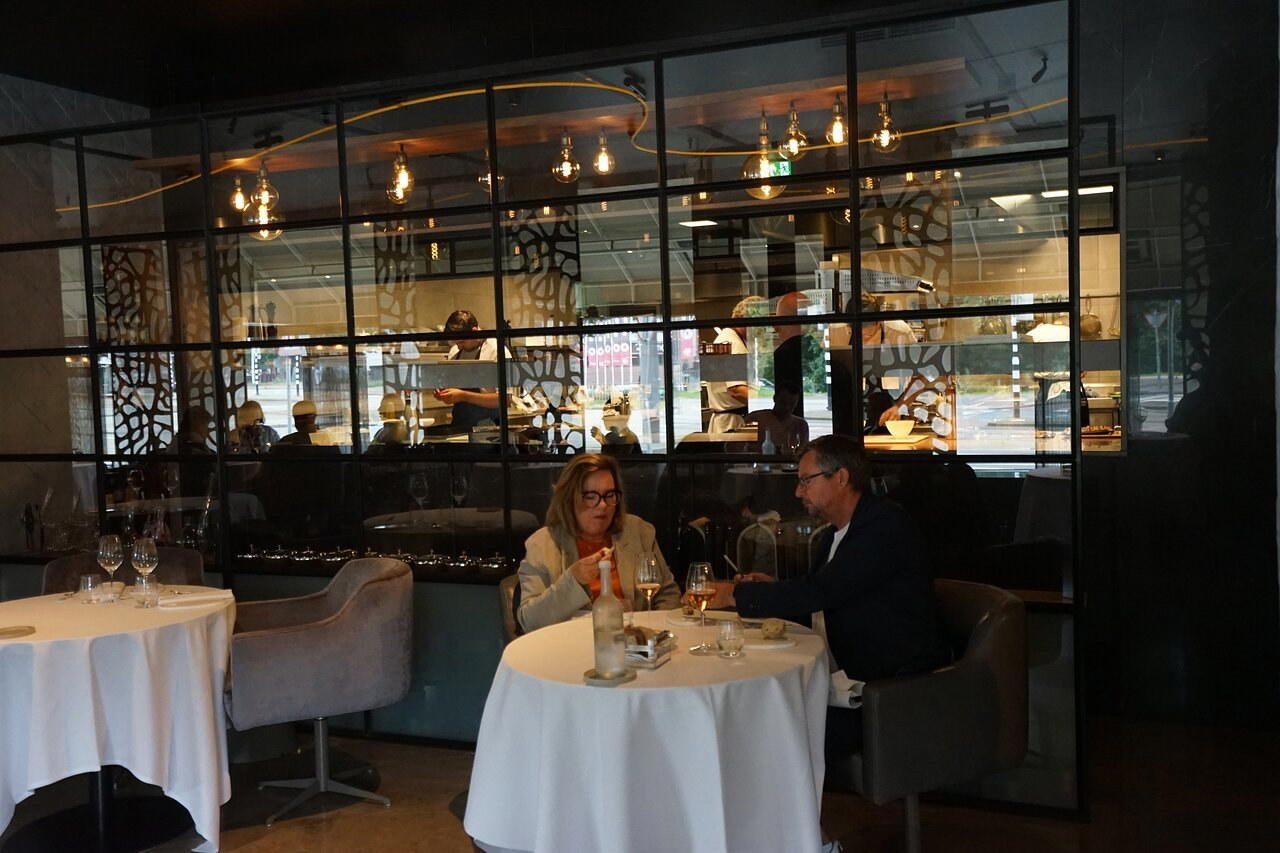
Bars in Stolwijk
Browse all →
Hotels in Stolwijk
Browse all →
Wineries in Stolwijk
Browse all →
De Nieuwe Polderkeuken
The wine
- Wine program
- Curated wine list
- Extensive wine list
Details
- Cozy
- Intimate
- Rustic
- Date Night
- Special Occasion
- Open Kitchen
- Extensive Wine List
- Local Sourcing
- Tasting Menu
- A La Carte
- Vegetarian Friendly
Current opening hours
- Monday
- Closed
- Tuesday
- Closed
- Wednesday
- 6–9 PM
- Thursday
- 12–2:30 PM, 6–10:30 PM
- Friday
- 12–2:30 PM, 6–11 PM
- Saturday
- 12–2:30 PM, 6–11:30 PM
- Sunday
- Closed
Hours can change for holidays and private events. Last verified .
Knus and huiselijk (cozy and homely) atmosphere with personal, professional service.