
Daikanyama’s yakiniku scene sits between polished neighbourhood dining and serious beef-focused counters. Daikanyama Yakiniku Kaneko belongs to the compact, reservation-led end of that spectrum, with 12 seats across box tables, a JPY 10,000–14,999 dinner range, and repeat selection in Tabelog’s Yakiniku TOKYO 100 from 2020 through 2025.
Pearl is the En Primeur Club membership app — saves, bookings, and concierge access live there. Same editors, same standards.
- Address
- Japan, 〒150-0033 Tokyo, Shibuya, Sarugakucho, 17−17 1F
- Phone
- +81 3-6415-4129
- Website
- yakiniku-kaneko.com
 Saves & bookings on Pearl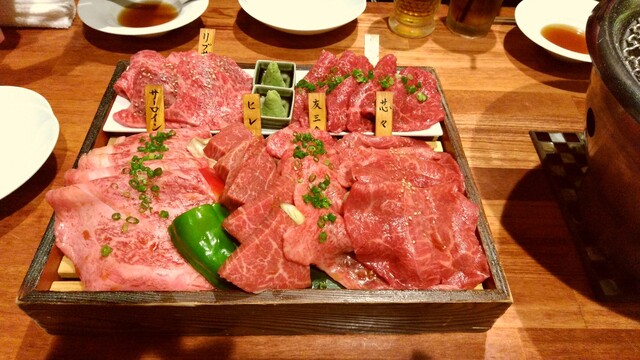
On Daikanyama’s quieter Sarugakucho side, station-front retail polish gives way to residential calm: low-rise buildings, tucked-away ground floors, and restaurants built on planning rather than passing foot traffic. That suits yakiniku. Tokyo’s serious grill restaurants are not only counter theatre or banquet rooms; a small box-seat format can make beef feel less like spectacle and more like a controlled evening for prepared diners.
Daikanyama Yakiniku Kaneko fits that compact category. The room has 12 seats across four box tables, a scale that changes service. Larger grill rooms can feel transactional, with smoke, orders, and turnover setting the rhythm. Here, the format points to narrower, deliberate Japanese barbecue: beef at the centre, drinks alongside, and a dinner budget above casual neighbourhood yakiniku without entering Tokyo’s trophy-counter beef economy.
Small-room yakiniku in a neighbourhood built for planned dinners
Daikanyama has a different dining rhythm from Ginza, Roppongi, or Shinjuku. Its restaurant culture is shaped by destination dining hidden in an almost domestic street pattern, where Italian rooms, French dining rooms, cafés, and grill restaurants sit close together but serve different occasions. Locally, Maison Paul Bocuse and Ristorante Aso represent the formal European side, while IVY PLACE and caffe Michelangelo cover the day-to-night café register. Yakiniku occupies another lane: less ceremony than French dining, more intent than a casual café dinner, and more group-facing than sushi or kappo.
That middle position explains the appeal. Tokyo yakiniku has moved in two directions: value-driven grill shops remain democratic and noisy, while curated beef programs behave almost like omakase, with cuts, sequence, and grilling control carrying the meal. A 12-seat box-table restaurant in Daikanyama sits closer to the second model without becoming counter performance. The point is control, pacing, and enough privacy for a small group to make the grill the evening’s centre of gravity.
The award history is its clearest public credential. Selection for Tabelog’s Yakiniku TOKYO 100 in 2025, with earlier selections from 2020 through 2024, places it in a heavily competitive Tokyo category, not a neighbourhood-only conversation. Tabelog’s audience is especially unforgiving in genres with deep local knowledge, and yakiniku is one: diners parse beef sourcing, cut handling, tare, salt seasoning, grill management, rice, and smoke handling with unusual precision. Repeat selection signals more than broad popularity.
What the format says about the meal
The listed category is yakiniku, Japanese barbecue, and the drinks direction stays familiar but serious: sake, shochu, and wine. Sake brings texture and umami, shochu handles fat and char, and wine gives the meal a Western dining register without forcing steakhouse language. The dining cost, JPY 10,000–14,999, points to a premium evening where spending is tied to beef selection and add-ons rather than one luxury tasting-menu structure.
Published first-meat selection is JPY 9,020 including tax, with appetizers, drinks, rice dishes, and other additions charged separately. That matters because yakiniku bills can expand quietly. Compared with a fixed-price French room nearby, the baseline starts the grill; full spend depends on how the table drinks and extends the order. This is for diners who prefer control over abundance and understand that restraint can be the more expensive choice when beef quality is the point.
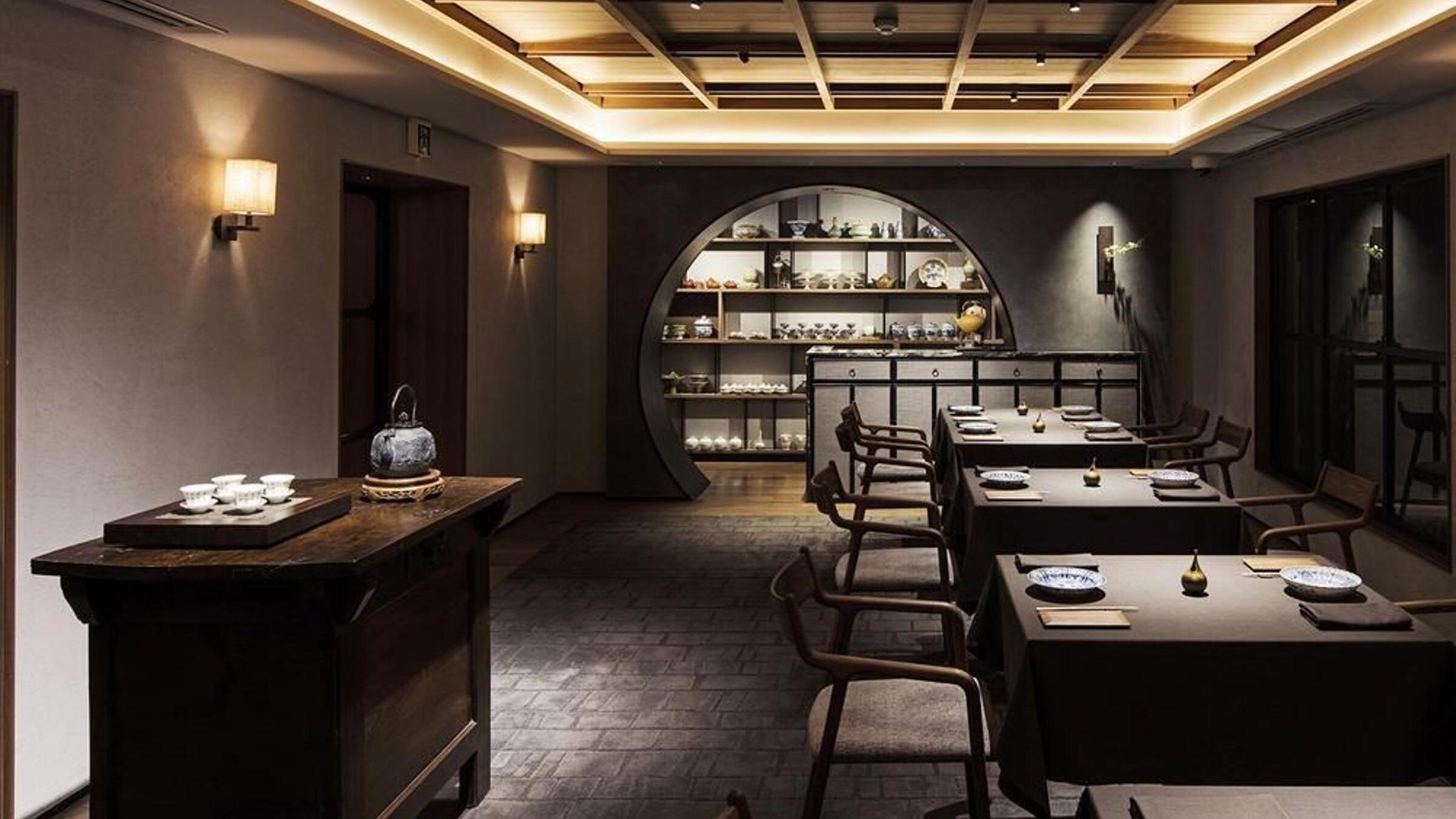
The all-box seating shapes the social use case. This is not a solo counter built around direct chef exchange, nor a large private-room venue for corporate hosting. It is a small-group yakiniku address where the table owns the pace. The family policy, elementary school age and above, reinforces an adult-dinner register without making the room formal. Non-smoking status and ceiling smoke-exhaust equipment offer a contemporary Tokyo answer to an old yakiniku problem: keep the grill central without letting smoke define the night.
For a wider Tokyo itinerary, this belongs in the same decision tree as other genre-specific reservations, not a general Shibuya dinner search. Tokyo rewards choosing by format first. Sushi, yakitori, curry, izakaya seafood, and yakiniku carry different booking patterns, meal lengths, and group dynamics. For contrast, see 124. KAGURAZAKA (Yakitori), 3 Chome no Curry Ya San, . 鮪と炭火焼き うお炭 秋葉原店, and 12/10 Shinjuku ten. They are not substitutes for Daikanyama beef, but show how specialised Tokyo dining becomes when read by genre rather than neighbourhood alone.
How to place it in a Tokyo plan
Daikanyama Yakiniku Kaneko opened in 2015, giving it a decade-long position in a district where restaurants rely on repeat local custom as much as destination traffic. It is reservation-only, and the small seating count makes spontaneity a poor strategy. Hours run evenings Tuesday through Sunday, with Monday closed, so it fits after a Daikanyama or Nakameguro afternoon rather than as a late-night fallback. Payment is card-friendly; electronic money and QR payments are not listed.
The Sarugakucho address is close to Daikanyama Station on the Tokyu Toyoko Line, with the walk measured in minutes rather than transfers. Parking is not provided, typical for this part of Tokyo and another reason it works as a rail-and-walk evening. For hotels, bars, and other planning layers, use Our full Tokyo restaurants guide, Our full Tokyo hotels guide, Our full Tokyo bars guide, Our full Tokyo wineries guide, and Our full Tokyo experiences guide.
Within a Japan-wide itinerary, the useful comparison is not only beef against beef. A focused grill dinner in Daikanyama can sit beside regional and format contrasts such as -Grilled beef Sukiyaki- KAMAKURA TANUKIAN 鎌倉 たぬき庵 in Kamakura, [ki:] in Kyoto.cafe in Osaka.know in Kumamoto, (Shoku) Vietnam in Kawasaki, and [Curry Senmon Ten] Maruyama Kyoju. in Sapporo. For readers extending the Japanese food thread abroad, Jōdo Saké Bar in Los Angeles and Onigiri Time in Pasadena show how specific Japanese formats translate outside Japan.
The editorial call is clear: this is a small, serious yakiniku booking for diners who want Daikanyama’s quieter dinner culture rather than Shibuya’s volume. The case rests on scale, repeat Tabelog 100 recognition, and a pricing structure that rewards attention to the order. Treat it as a planned beef dinner, not a casual grill stop.
The Short List
Comparable venues in the metro at similar price points.
| Venue | Cuisine | Price | Notes |
|---|---|---|---|
| Daikanyama Yakiniku KanekoThis venue — the venue you are viewing | Not listed | $$$ | Not listed |
| Torafugutei | Not listed | $$$ | Shinjuku, Premium Tiger Pufferfish (Fugu) Specialist |
| Aji no Nakamura | Minato, Modern Japanese Izakaya | $$$ | Not listed |
| カサハラ | Minato, Traditional Yakitori | $$$ | Not listed |
| Shokudo Todaka | Not listed | $$$ | Shinagawa, Creative Izakaya-style Japanese |
| 乃木坂 しん | Minato, Modern Kaiseki | $$$ | Not listed |
Recognition history
Dated appearances from independent guides and award organizations, with the underlying list record or original source where available.
Tabelog 100 #69 · No. 69
Tabelog · Tabelog 100 - Yakiniku - TOKYO - 2025












At a Glance
- Quiet
- Cozy
- Intimate
- Date Night
- Business Dinner
- Special Occasion
- Casual Hangout
- Standalone
- Design Destination
- Local Sourcing
Current opening hours
- Monday
- Closed
- Tuesday
- 5–11 PM
- Wednesday
- 5–11 PM
- Thursday
- 5–11 PM
- Friday
- 5–11 PM
- Saturday
- 5–11 PM
- Sunday
- 5–11 PM
Hours can change for holidays and private events. Last verified .
Small and tranquil with a calm, understated atmosphere in a quiet residential part of Daikanyama; seating is limited and reservations are required, creating an intimate, relaxed feel rather than a loud BBQ house vibe.