Our verdict
Da Pepi is one of Trieste's most enduring osmize-style wine bars, occupying a ground-floor address on Via della Cassa di Risparmio in the city centre. The format is rooted in the Carso tradition of cold cuts, hard cheese, and local wine served without ceremony. It sits in a different tier from Trieste's seafood restaurants, functioning as a civic institution rather than a dining destination.

Pearl is the En Primeur Club membership app — saves, bookings, and concierge access live there. Same editors, same standards.
- Address
- Via della Cassa di Risparmio, 3, 34121 Trieste TS, Italy
- Phone
- +393940366858
- Hours
- Mon–Sat 8:30 AM–10 PMSun 10 AM–4 PM
- Website
- buffetdapepi.it
- Directions
- Get directions
The menu
What to order
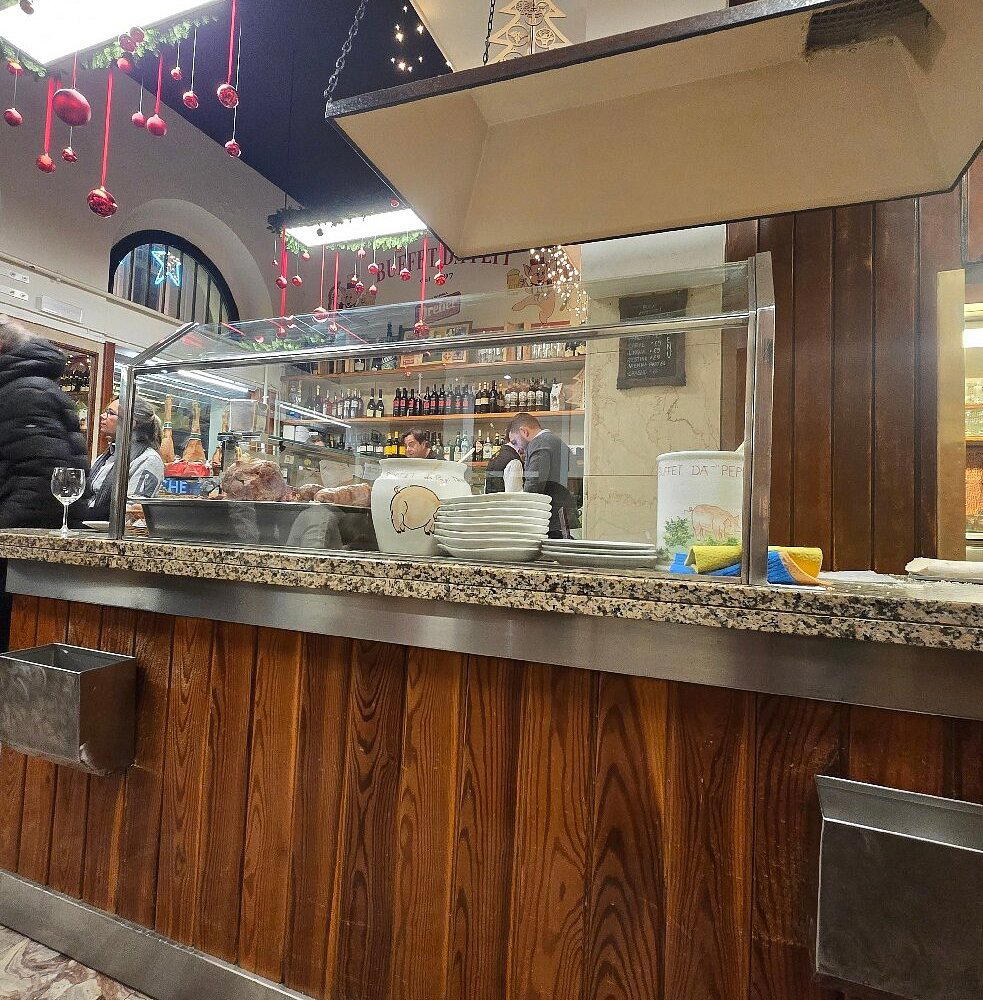
- Piatto misto della caldaia
- Bollito misto
- Panini con lingua
- Cotechino
The Osmiza Tradition at Street Level
Trieste occupies a genuinely unusual position in Italian dining. The city spent centuries as the main port of the Habsburg Empire, and that history left a food culture that reads as Central European as much as Mediterranean: lard-spread bread, cured meats, mustard, and wine served by the glass in standing rooms with no printed menu. The osmiza format, originally a rural Carso custom allowing farmhouses to sell homemade wine for limited periods, migrated into the urban fabric and produced a set of standing wine bars that have become part of everyday civic life. Da Pepi, on Via della Cassa di Risparmio in the city centre, is among the most established of them.
The category itself is worth understanding before visiting. Osmize and buffet-style wine bars in Trieste do not compete with the city's seafood restaurants or modern Italian rooms such as Harry's Piccolo. They occupy a different register entirely: shorter menus, lower prices, shared tables or standing counters, and an expectation that you arrive knowing roughly what the format involves. Ai 3 Magnoni and Ai Fiori work within similar parameters. Where a place like Al Bagatto or Al Civicosei channels the Adriatic through a full service kitchen, Da Pepi draws from the interior plateau and its meat and dairy traditions.
How the Format Has Shifted
The evolution of places like Da Pepi across recent decades illustrates a broader tension in Italian food culture between preservation and adaptation. Buffet wine bars in Trieste spent much of the late twentieth century in a kind of benign stasis, trading on local loyalty and low prices without particular pressure to modernise. That changed as the city attracted greater attention from food writers and visitors interested precisely in its Central European idiosyncrasies. The osmiza and buffet category moved from being an unremarked local habit to something that appeared in specialist travel coverage and guidebook writing about northern Italian regional food.
For Da Pepi, this shift meant an increase in visitors from outside the immediate neighbourhood and, eventually, beyond Trieste itself. The practical consequence is that the room now mixes office workers from the surrounding financial district with tourists who have come specifically for the format. Neither group changes the operating logic of the place, but the composition of the clientele is different from what it was twenty or thirty years ago. The food offering, grounded in the Carso tradition of smoked pork, cured meats, and local cheese served cold with bread and mustard, has remained largely consistent with that tradition even as the audience has broadened.
This trajectory is not unusual among long-running European institutions that held a narrow format while dining culture shifted around them. The difference for Da Pepi is that Trieste's relative distance from Italy's main tourist circuits gave the category more time to evolve on its own terms before outside attention arrived. Compare this with, say, the pressure that has reshaped standing bars in cities with heavier visitor volumes, and the Trieste buffet scene reads as unusually intact.
Placing Da Pepi in the Trieste Scene
Any useful account of where Da Pepi sits requires honesty about the tiers involved. The city's restaurant scene includes formal dining rooms with serious kitchens: the comparison set for those rooms reaches toward destinations like Uliassi in Senigallia or Piazza Duomo in Alba at the furthest end, and within Italy the broader fine-dining field runs through addresses like Osteria Francescana in Modena, Enoteca Pinchiorri in Florence, or Le Calandre in Rubano. Da Pepi is not in that conversation and does not attempt to be. It belongs to a separate tradition where the measure of quality is fidelity to format and consistency of product rather than culinary ambition or kitchen complexity.
Within the buffet wine bar category in Trieste, longevity and address together function as the primary trust signal. The Via della Cassa di Risparmio location puts Da Pepi in the commercial centre, accessible on foot from the main waterfront and the Piazza Unità. For visitors organising a day in the city, the practical logic is to treat it as a midday stop rather than an evening destination: the format suits lunch-hour pacing, and the standing or shared-table setup does not lend itself to a long dinner.
What to Know Before You Go
The format at Da Pepi is self-service in the sense that the offer is limited and legible rather than built around a waitstaff experience. Visitors who have spent time at formal Italian restaurants in the same trip, whether in Trieste or elsewhere in the northeast, will notice the contrast immediately. There is no sommelier, no tasting menu, no elaborate preamble. The wine is local, typically from the Carso or Collio zones, and served by the glass at the counter. The food is cold, the portions are not large, and the experience is measured in twenty to forty minutes rather than two hours.
If you are building a wider picture of Italian restaurant culture through travel, the osmiza stop functions as useful reference material for understanding how regional food traditions persist outside the fine-dining frame. Places like Dal Pescatore in Runate, Reale in Castel di Sangro, or Quattro Passi in Marina del Cantone represent one end of the Italian dining range; Da Pepi represents another. Both ends matter to anyone serious about the subject. Our full Trieste restaurants guide maps the city's dining across both registers.
For visitors coming from high-format experiences, whether at Atelier Moessmer Norbert Niederkofler in Brunico, Enrico Bartolini in Milan, or further afield at Le Bernardin in New York City or Lazy Bear in San Francisco, the buffet wine bar is a deliberate decompression. The value is in the directness of the offer: a specific regional tradition, served without elaboration, at a price that reflects its category.
Planning Your Visit
Da Pepi is on Via della Cassa di Risparmio, 3, in the centre of Trieste, within walking distance of the Piazza Unità d'Italia and the Canal Grande. No booking is required or expected given the format. Midday on weekdays tends to draw a local crowd; weekend afternoons bring a more mixed audience. Current hours and any seasonal changes are best confirmed directly with the venue before visiting, as published information for places in this category is not always current online.
Frequently asked questions
Is Da Pepi child-friendly?
The format at Da Pepi is open and informal — counter service, simple plates, and a limited menu that skips elaborate presentation. Children who eat straightforwardly will manage fine. The venue is in central Trieste on Via della Cassa di Risparmio, so there is no garden or dedicated family space to rely on.
Is Da Pepi formal or casual?
Da Pepi is about as casual as Trieste dining gets. The buffet format means you select from what is on offer rather than working through a plated tasting experience. Dress code is effectively none — locals stop in at lunch in work clothes.
How does Da Pepi differ from a typical Italian trattoria?
Da Pepi follows Trieste's buffet tradition, which draws from Central European rather than strictly Italian dining culture — a legacy of the city's centuries as the Habsburg Empire's primary Adriatic port. There is no multicourse service and no printed menu in the trattoria sense. The offer is narrow and fixed, centred on boiled meats and wine by the glass, at Via della Cassa di Risparmio, 3 in the city centre.
What's the best thing to order at Da Pepi?
Da Pepi's reputation is built on boiled pork cuts and the condiments served alongside them — the kind of standing offer that defines Trieste's buffet tradition rather than rotating seasonal menus. The wine is poured by the glass at the counter. Come for the cured and cooked pork rather than anything more elaborate.
Recognition Snapshot
Comparable venues nearby, for context on price, style, and recognition.
| Venue | Cuisine | Price | Notes |
|---|---|---|---|
| Da PepiThis venue — the venue you are viewing | Austro-Hungarian Boiled Pork Buffet | $10–20 | Not listed |
| Alla Sorgente | Traditional Italian Seafood Trattoria | $20–30 | Trieste center |
| Le Barettine | Traditional Italian Seafood Trattoria | Not listed | city centre |
| Trattoria Alla Sacchetta | Traditional Italian Seafood Trattoria | $20–30 | Riva Tommaso Gulli |
| Suban | Traditional Triestine & Istrian | $30–50 | San Giovanni |
| Arcoriccardo | Traditional Italian Seafood | Not listed | Old Town |
Continue exploring
More in Trieste
Restaurants in Trieste
Browse all →
Bars in Trieste
Browse all →
Hotels in Trieste
Browse all →
Details
- Well Known
- Rustic
- Lively
- Classic
- Casual Hangout
- After Work
- Group Dining
- Historic Building
- Beer Program
- Counter Dining
- A La Carte
- Beer
- Local Wine
Current opening hours
- Monday
- 8:30 AM–10 PM
- Tuesday
- 8:30 AM–10 PM
- Wednesday
- 8:30 AM–10 PM
- Thursday
- 8:30 AM–10 PM
- Friday
- 8:30 AM–10 PM
- Saturday
- 8:30 AM–10 PM
- Sunday
- 10 AM–4 PM
Hours can change for holidays and private events. Last verified .
Warm, crowded, and unpretentious with wooden paneling and small stools; resembles a traditional Central European tavern with a lively standing-room atmosphere.