

On Trieste's grandest civic square, Grand Hotel Duchi d'Aosta occupies a position few Italian hotels can match: directly facing Piazza Unità d'Italia, with the Adriatic a short walk beyond. Holding 91 points in the 2026 La Liste Top Hotels ranking, it represents the serious upper tier of northeast Italy's hotel scene. Rates start from US$392 per night.
Pearl is the En Primeur Club membership app — saves, bookings, and concierge access live there. Same editors, same standards.
- Address
- Piazza Unità d'Italia, 2/1, 34121 Trieste TS
- Phone
- +39 040 760 0011
- Website
- duchidaosta.com
- Directions
- Get directions
 Saves & bookings on Pearl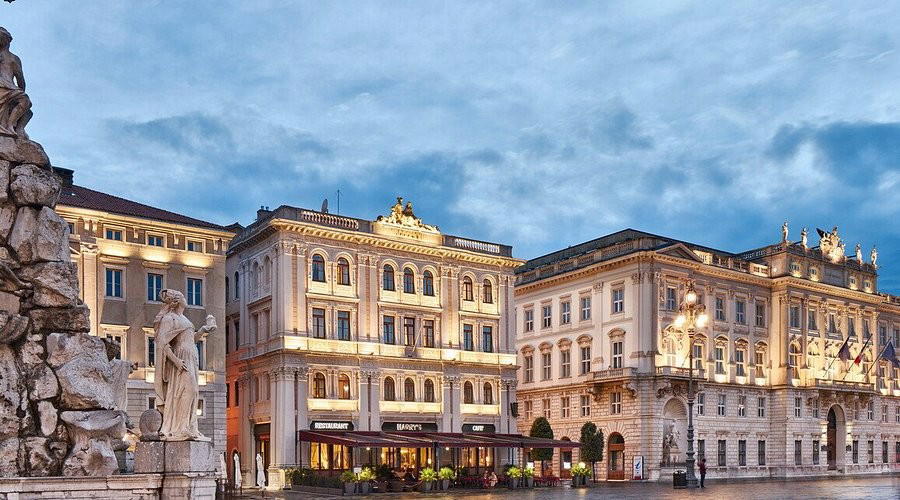
A Palazzo on the Square
Piazza Unità d'Italia is one of the largest seafront squares in Europe, a vast neoclassical stage set with one open side facing the Gulf of Trieste. The buildings that frame the other three sides were designed to project civic authority: the Palazzo del Municipio, the Palazzo del Lloyd Triestino, and, anchoring its own flank with restrained Habsburg grandeur, the Grand Hotel Duchi d'Aosta. Arriving here on foot from the old city, the square announces itself before the hotel does, which is precisely the point. The architecture earns its position, and the hotel earns its position within it.
That relationship between building and square is the central spatial fact of a stay here. Premium hotels in Italy tend to fall into two broad camps: the design-led countryside conversion (a Tuscan borgo, a hillside villa) and the urban palazzo that derives its authority from location and historic fabric. The Duchi d'Aosta belongs firmly to the second category, sitting alongside properties like Aman Venice or the Bulgari Hotel Roma in the sense that the address itself carries weight independent of any renovation program. Trieste is not Venice or Rome in terms of international hotel depth, which means a property with this address and this pedigree occupies a narrower, more singular niche in the northeast Italian market.
The Architecture of Authority
The hotel's facade follows the ordered, slightly austere grammar of Central European commercial architecture from the late Habsburg period, a style that distinguishes Trieste from the Gothic-Venetian and Baroque-Roman registers of other Italian cities. Trieste spent centuries as the principal port of the Austro-Hungarian Empire, and the city's architectural character reflects that inheritance: wider streets than Venice, stone buildings with flat neoclassical fronts, coffeehouses modelled on Vienna rather than Milan. The Duchi d'Aosta's exterior is consistent with this tradition. It does not announce itself with operatic gestures; it holds its ground on the square with the confidence of a building that has been there a long time and intends to stay.
Interior configuration at properties in this class typically separates public volumes (lobby, dining room, bar) from residential floors that rise behind the street facade. The effect, common in converted palazzo hotels across Italy, is that rooms on the upper floors can face either the square or inner courtyards, with the former carrying the stronger spatial argument. Views across Piazza Unità d'Italia toward the water are a specific condition of this building's position that no other hotel in the city can replicate. For a broader sense of how Italian palazzo hotels deploy interior architecture against historic exteriors, the comparison with Four Seasons Hotel Firenze is instructive: both properties work with layered historic fabric, though Florence's version reaches further back and operates at a larger scale.
Where Trieste Places This Property
Trieste is an acquired taste as a destination. It lacks the instant legibility of Florence or the Amalfi Coast, and its hotel market reflects that: there is no deep field of luxury competitors here, which means the Duchi d'Aosta is less a choice among many than a clear conclusion for travellers prioritising location and historic character. The city's appeal runs toward literary and café culture, Habsburg streetscapes, the Carso plateau above the city, and an Adriatic seafront that does not feel like a resort. James Joyce lived here for over a decade. The Caffè San Marco and the Caffè Degli Specchi have served the same square for generations. A hotel stay framed around this particular urban character is different from the Tuscan estate model offered by properties like Rosewood Castiglion Del Bosco or the coastal intensity of Borgo Santandrea. Trieste rewards a slower, more cerebral kind of travel.
The hotel's La Liste Leading Hotels score of 91 points in 2026 places it in the credible upper tier of European city hotels. Rates starting from US$392 per night position the hotel above the mid-market but below the stratospheric pricing of particularly capital-intensive Italian luxury properties. For context, design-intensive rural conversions or ultra-low-key properties like Passalacqua on Lake Como tend to operate at significantly higher rate floors.
The Relais and Châteaux Affiliation
The Duchi d'Aosta is a Relais and Châteaux member, a network that functions as a quality signal across independent hotels and restaurants globally. The affiliation matters most in a city like Trieste, where international travellers cannot rely on brand recognition to calibrate expectations. Relais and Châteaux membership implies independently assessed standards in hospitality and food, which differentiates the property from unaffiliated competitors. It also places the hotel in a peer conversation with Italian properties such as Il Pellicano in Porto Ercole or Borgo Egnazia in Puglia, though the urban city-square format is its own distinct subcategory within that network.
Planning a Stay
The hotel's Piazza Unità d'Italia address places guests within a short walk of Trieste's principal sights, the waterfront Molo Audace, the Teatro Romano, the Borgo Teresiano canal district, and the main café circuit along Corso Italia. The Piazza Unità d'Italia address places guests within a short walk of Trieste's principal sights, the waterfront Molo Audace, the Teatro Romano, the Borgo Teresiano canal district, and the main café circuit along Corso Italia. Travellers who want to extend their northeast Italy circuit can combine Trieste with the Veneto: Aman Venice is the natural hotel complement in that pairing. For those building a longer Italian itinerary that takes in the north before moving south, properties in the EP Club Italy portfolio range from Castel Fragsburg in Merano to Forestis Dolomites in the high Alps and EALA My Lakeside Dream on Lake Garda, each representing a different register of northern Italian hospitality before the character of the country shifts further south.
Fast Comparison
Comparable venues nearby, for context on price, style, and recognition.
| Venue | Cuisine | Price | Awards | Notes |
|---|---|---|---|---|
| Grand Hotel Duchi d'AostaThis venue — the venue you are viewing | Historic luxury hotel in prime city center location | $$$$ | 5-Star | Not listed |
| Savoia Excelsior Palace Trieste – Starhotels Collezione | Historic luxury palazzo with neoclassical facade and modern comforts | $$$$ | 5-Star | Centro |
| Radisson Collection Hotel, Roma Antica | Contemporary luxury palazzo conversion blending rationalist architecture with modern design, emphasizing timeless elegance through tactile materiality and designer furnishings. | $$$$ | 5-Star | Roma Antica |
| NH Collection Firenze Porta Rossa | Historic 13th-century tower transformed into a 5-star luxury hotel blending Renaissance architecture with modern comforts. | $$$$ | 5-Star | Duomo |
| Dimora Palanca Boutique & SPA | Timeless five-star elegance harmonizing classic architecture with bold modern art. | $$$$ | 5-Star | Historic Centre |
| The Pantheon Iconic, Autograph Collection | Modern luxury boutique in historic Roman palazzo | $$$$ | 5-Star | Piazza Navona & the Pantheon |
Recognition history
Dated appearances from independent guides and award organizations, with the underlying list record or original source where available.
La Liste Top Hotels
La Liste
Relais Chateaux Award
Relais Chateaux
Continue exploring
More in Trieste
Hotels in Trieste
Browse all →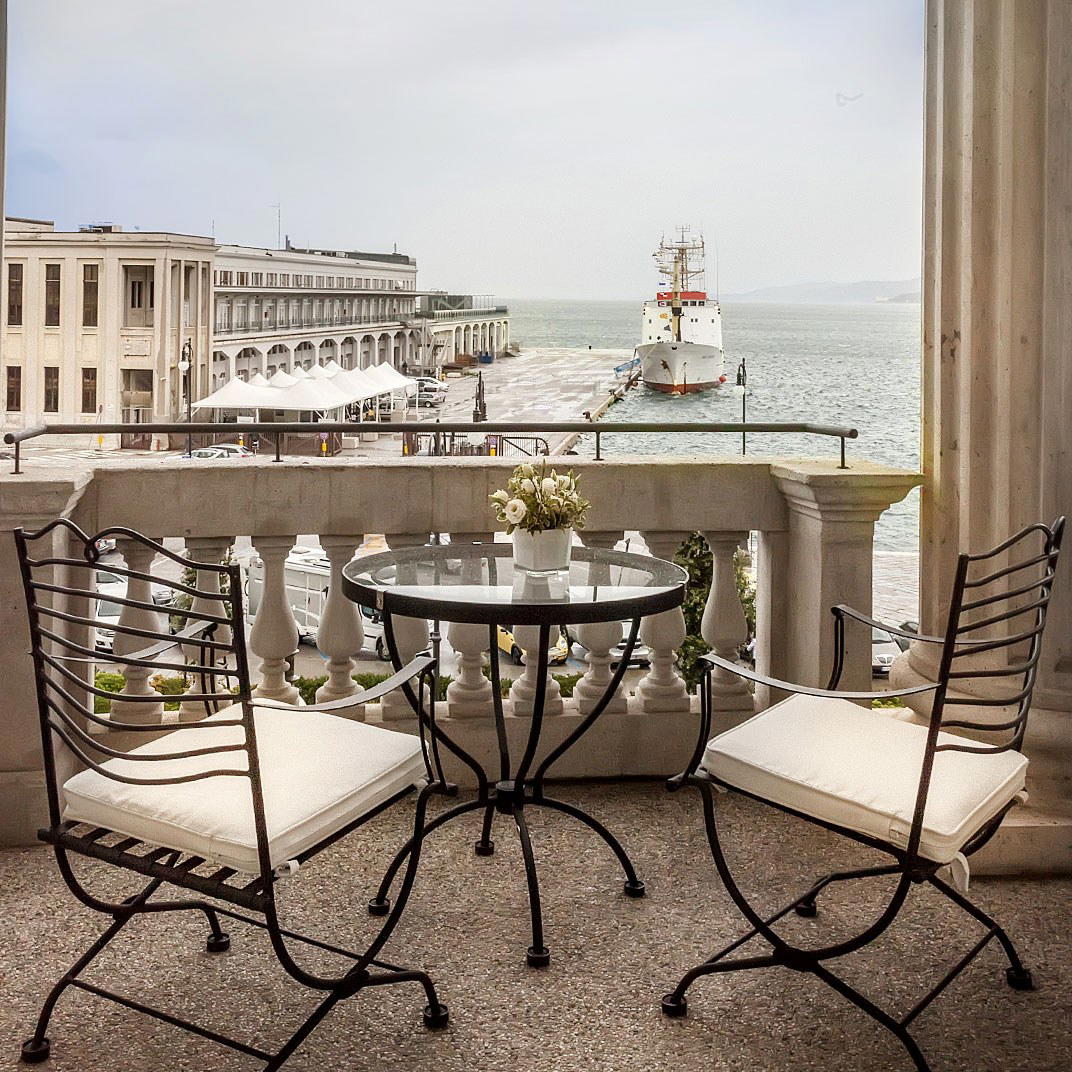
Bars in Trieste
Browse all →
Restaurants in Trieste
Browse all →

At a Glance
- Elegant
- Sophisticated
- Romantic
- Classic
- Ornate
- Romantic Getaway
- Honeymoon
- Anniversary
- Business Trip
- Historic Building
- Panoramic View
- Terrace
- Wi Fi
- Pool
- Spa
- Room Service
- Concierge
- Restaurant
- Bar
- Fitness Center
- Valet Parking
- Waterfront
- Street Scene
- Wi Fi
- Pool
- Spa
- Room Service
- Concierge
- Restaurant
- Bar
- Fitness Center
- Valet Parking
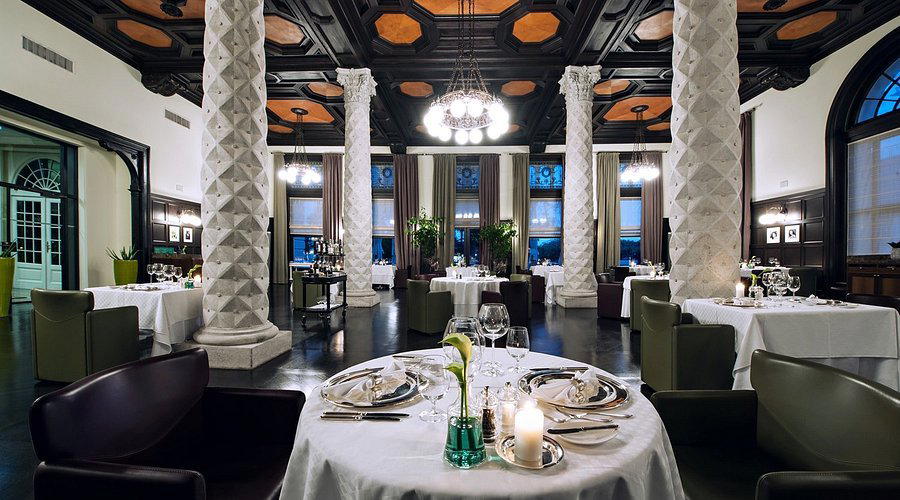
Elegant and refined atmosphere with classic grandeur, soundproofed rooms, and terrace views of the piazza.